


Bagasse Container


The Foundation of Eco-Friendly Packaging
Bagasse, the fibrous byproduct left after extracting juice from sugarcane, serves as the raw material for bagasse food containers. This material, often discarded in traditional sugar production, is now repurposed into sturdy, disposable vessels ideal for food service.
The appeal of the bagasse food container lies in its natural composition. Comprising primarily cellulose, hemicellulose, and lignin, bagasse offers a renewable resource that doesn't compete with food crops for land.

From Sugarcane to Compost

The Production Process

The manufacturing of bagasse food containers is a meticulous process that ensures durability and safety. It starts with depithing, where the soft core of bagasse is separated from the tougher fibers to enhance pulp quality.
The fibers are then washed, cooked in water or mild chemicals to break down lignins, and beaten into a fine pulp. This pulp is mixed with water and sometimes natural binders like starch to form a slurry.
Next, the slurry is poured into molds shaped like plates, bowls, or clamshells. High-pressure thermoforming applies heat (around 180-200°C) and pressure to shape and dry the product, evaporating moisture and creating a rigid structure.
Environmental Benefits
One of the most compelling aspects of bagasse food containers is their biodegradability. Unlike plastics that persist for centuries, bagasse decomposes naturally in 30-90 days under composting conditions, returning nutrients to the soil without toxic residues.
Furthermore, bagasse food containers are compostable, certified under standards like ASTM D6400, ensuring they enrich compost rather than contaminate it. By diverting agricultural waste from burning or dumping, its use reduces methane emissions and air pollution.

Materials Comparison
| Material | Energy Consumption (MJ/kg) | Water Usage (L/kg) | CO₂ Emissions (kg/kg) |
| Bagasse | 15-20 | 50-100 | 0.5-1.0 |
| Plastic (PET) | 70-80 | 200-300 | 2.5-3.5 |
| Styrofoam (PS) | 80-100 | 150-250 | 3.0-4.0 |

Health and Safety Advantages in Food Service

Bagasse food containers are inherently safe for food contact, free from harmful chemicals like BPA or phthalates found in some plastics. They don't leach toxins even when holding hot, oily, or acidic foods, as confirmed by FDA approvals for direct food use.
Their grease-resistant properties prevent sogginess, maintaining food integrity during delivery. Microwave-safe up to certain limits, bagasse food containers offer convenience without compromising health.
Applications Across Industries
Restaurants & Takeout
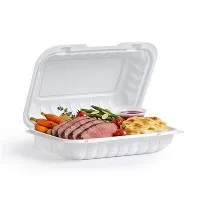
Ideal for takeout boxes for meals, salads, and desserts, with compartmentalized designs preventing mixing of different food items.
Event Catering
Benefit from stackability and disposability, reducing cleanup efforts while maintaining an eco-friendly image.
Supermarkets
Package ready-to-eat foods like fruits or deli items, appealing to eco-conscious shoppers looking for sustainable options.
Healthcare
Used for meal delivery due to their non-toxic nature, they meet strict hygiene requirements in medical facilities.
Challenges in Adoption and Innovative Solutions
Problem 1: High Production Costs
Bagasse food containers often cost more to produce than traditional plastics due to raw material processing and limited economies of scale.
Solution:
Manufacturers can invest in automated production lines to reduce labor costs and increase output efficiency. Bulk purchasing of bagasse pulp from sugarcane mills can lower material expenses by 20-30%.
Problem 2: Temperature Limitations
Bagasse food containers may soften or deform at temperatures exceeding 95°C, limiting their use for extremely hot foods.
Solution:
Researchers are developing enhanced formulations by incorporating natural reinforcements like bamboo fibers or bio-based coatings to boost heat resistance up to 120°C without compromising compostability.
Problem 3: Supply Chain Variability
Dependence on seasonal sugarcane harvests can lead to an inconsistent supply of bagasse, affecting production stability.
Solution:
Diversifying sourcing from multiple regions like Brazil, India, and Thailand mitigates risks from crop failures. Stockpiling dry bagasse during peak seasons optimizes inventory.
Market Trends and Future Prospects
The global market for bagasse food containers is booming, projected to grow at 6-8% annually, driven by bans on single-use plastics. Innovations like antimicrobial additives and colored variants are expanding appeal.
As consumers demand sustainable options, bagasse food containers are poised to dominate eco-packaging. In summary, the bagasse food container represents a harmonious blend of functionality, sustainability, and innovation. By choosing these, we contribute to a healthier planet.