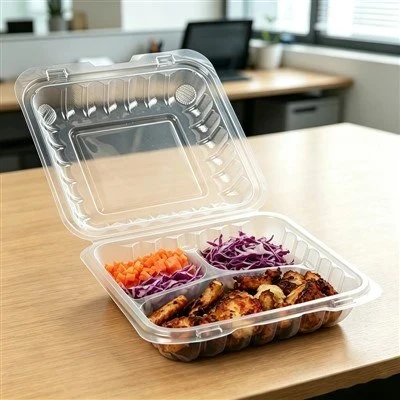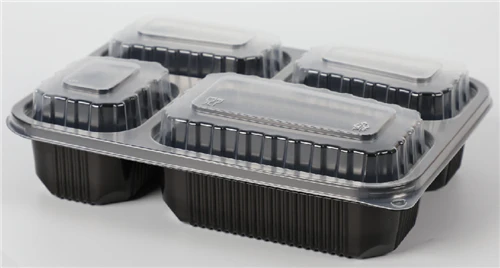
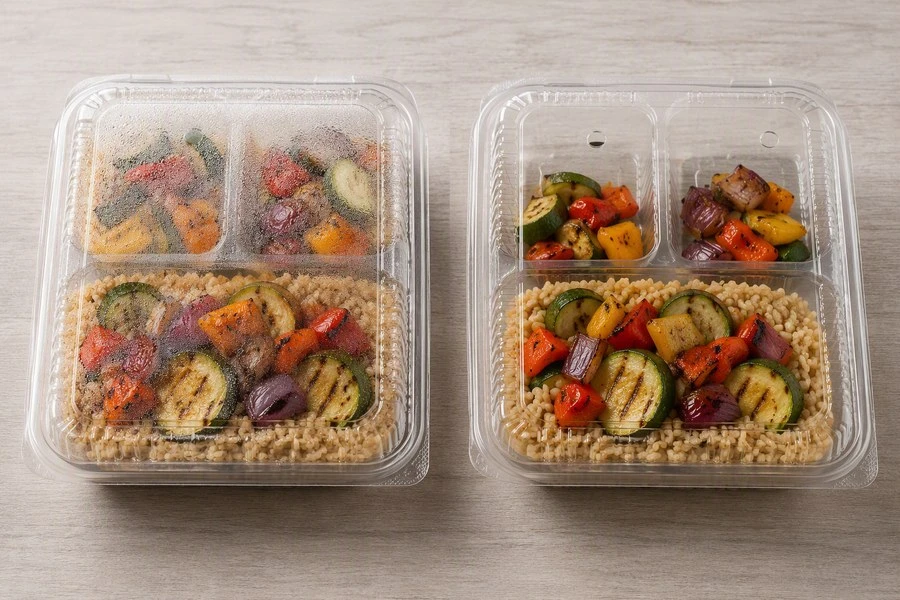
A customer opens their delivery bag, looks at a clear-lidded container, and sees nothing but a gray haze of water droplets where their meal should be visible. Nothing's wrong with the food. Nothing's wrong with the container, either - this is condensation doing exactly what condensation does, and it happens on thousands of takeout lids a day because of one unavoidable fact: hot food releases water vapor, and clear plastic is a cold surface for that vapor to land on.
We've spent years thermoforming clear and semi-clear PP lids for takeout and meal-prep containers, and "why does the lid fog up" is one of the most common questions that comes from new buyers testing a container for the first time. It's worth answering properly, because the fix isn't a mysterious "anti-fog coating" - it's mostly about where you put the vent holes and how much headspace you leave above the food.
1. What's Actually Happening When a Lid Fogs Up
Water doesn't need to boil to turn into vapor. Any food above room temperature is constantly releasing water molecules into the air inside a sealed container - rice, pasta, grilled meat, stir-fry, all of it. Inside a closed clamshell, that vapor has nowhere to go.
The lid is almost always the coldest surface in the container, especially right after the box is sealed and set down on a cool countertop or placed in a delivery bag. When warm, moisture-saturated air inside the box touches that cooler plastic surface, the air can't hold onto the water anymore - this is the same dew-point mechanism that fogs up a bathroom mirror or a cold glass of iced tea on a humid day. The water vapor condenses into tiny liquid droplets directly on the inside of the lid, scattering light and turning a clear surface opaque.
This is why fogging shows up fastest on tightly sealed, zero-airflow lids, and why it's worse with steamy, moisture-heavy foods (soups, rice, steamed vegetables) than with drier items (fries, sandwiches, baked goods).
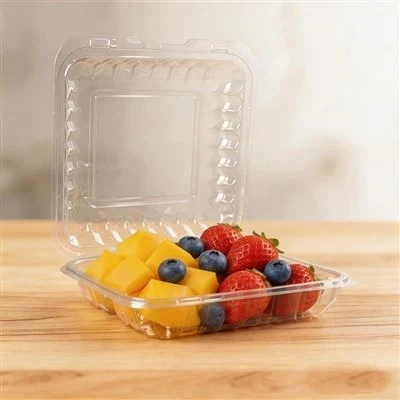
2. Why "Just Make the Plastic Clearer" Doesn't Fix It
It's a reasonable first instinct: if the lid is fogging, maybe a higher-clarity resin or a thinner gauge would help. In practice, it doesn't.
Fogging is a surface condensation problem, not a transparency problem.
A perfectly clear PP sheet will fog exactly the same as a slightly hazier one once water droplets form on its inner surface, because the droplets themselves are what's scattering the light, not the base material.
The two things that actually move the needle are:
- Giving water vapor somewhere to escape (vent design)
- Reducing how much vapor builds up in the first place (headspace and fill level)
3. How Vent Hole Design Actually Reduces Fogging
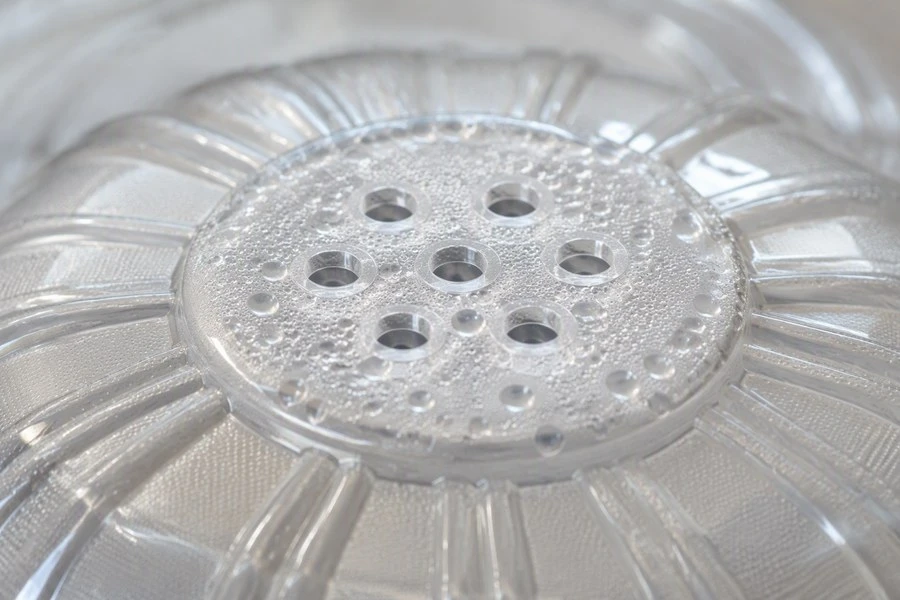
Vent holes are small perforations molded into the lid - usually arranged in a cluster near the highest point of the dome or along the rim - that let a controlled amount of steam and warm air escape instead of condensing on the inner lid surface.
Where they're placed matters more than how many there are. Vents positioned at the top of a domed lid let rising warm, moist air (heat and vapor both rise) exit before it has a chance to cool and condense on the surrounding plastic. Vents placed only at the rim are less effective against fogging because that's not where the warm, saturated air naturally collects first.
What a well-designed vent pattern balances:
| Design goal | Too few / poorly placed vents | Too many / oversized vents |
|---|---|---|
| Fog reduction | Vapor has nowhere to go - heavy fogging | Vapor escapes well |
| Heat retention | Food stays hot longer | Food cools faster, defeats the purpose of a sealed container |
| Leak resistance | No risk from vent holes themselves | Oversized vents near the rim can let thin sauces splash through during transit |
| Structural strength | Lid stays rigid | Too many perforations can weaken the lid's stacking strength |
This is why vent design is a genuine engineering trade-off, not just "add holes until it stops fogging." A hinged lid with a molded dome and a cluster of vents positioned at the dome's peak - rather than scattered randomly - tends to perform best: it lets steam vent from where it naturally accumulates, without creating a direct path for liquid to escape during a bumpy delivery ride.
4. The Role of Headspace: Why Overfilling Makes Fogging Worse
Vent design handles vapor that's already building up - but how much vapor builds up in the first place depends heavily on how much air space is left between the food and the lid.
A container filled right up to the lid line traps a thin, highly saturated layer of warm air directly against the plastic - there's barely any volume for that moisture to disperse into, so it condenses almost immediately. The same food in a container with a slightly higher dome, or filled to 80-85% of capacity instead of the very top, gives that water vapor more air volume to spread into before it reaches the cold lid surface, which measurably slows down how fast fogging appears.
This is a genuinely useful tip for restaurant and catering teams: a container that fogs badly isn't always a container problem - sometimes it's a fill-level habit that's working against the lid's vent design.
5. Material Matters Too: Why PP (and MFPP) Holds Up Better Than Some Alternatives
Resin choice affects how a container behaves around heat and moisture, separately from vent design:
- Standard clear PP has a reasonably high heat tolerance (commonly cited around 250°F before softening), which matters because a lid that's warping slightly from heat changes its surface geometry and can actually make condensation patterns worse, not better.
- MFPP (Modified Foamed Polypropylene) - the material used in several of our clamshell lines - has a foamed microcellular structure that gives it a bit more rigidity-to-weight than solid PP, which helps the lid hold its molded vent geometry consistently across a production run rather than warping unevenly batch to batch.
- PET, by contrast, offers excellent clarity and is a common choice for cold items, but isn't intended for hot, steamy food - it's more heat-sensitive, which is part of why most of the vented, anti-fog lid designs built for hot takeout are molded in PP rather than PET.
None of this means PET or other materials are "bad" - it means the material needs to match the use case. A vented lid design engineered for a cold salad clamshell doesn't need to solve a condensation problem that barely exists at refrigerator temperature.
6. What to Look for When Evaluating a Vented Lid (Buyer's Checklist)
If you're sourcing containers and fogging has been a recurring complaint from your customers or delivery drivers, these are the specifics worth asking a supplier about - not just "do you have anti-fog containers":
- Where exactly are the vents positioned - dome peak, rim, or distributed? Ask for a sample and test with your actual hot menu items, not a generic demo.
- What's the vent-to-lid-surface ratio for that specific model? A supplier who can describe their vent pattern specifically is speaking from real tooling experience, not a marketing claim.
- Does the lid hold its shape under your typical food temperature over a full delivery window (30-45 minutes is a reasonable real-world test), or does it start to warp and change the fogging pattern?
- Is the compartment design compatible with your fill habits? If your kitchen tends to fill containers close to the top, ask specifically whether the dome height and vent placement were designed with that fill level in mind.
Frequently Asked Questions
Does an anti-fog coating actually work, or is vent design enough on its own?
Anti-fog coatings (surfactant treatments that make water spread into a thin, transparent film instead of forming light-scattering droplets) can help on top of good vent design, but they're a secondary layer - they don't address the underlying vapor buildup the way vent placement does, and coatings can wear thin with repeated handling or washing. Vent design and headspace are the more durable, structural fix.
Will adding vents make my container leak sauce during delivery?
Not if the vents are positioned correctly. Vents placed at the dome's peak are above the food line and well away from where liquid pools, so they vent air without creating a path for sauce to escape - this is different from poorly placed rim vents, which can sit closer to liquid contact points.
Does fogging mean the container isn't microwave-safe?
No - fogging and microwave safety are unrelated properties. Fogging is a surface condensation effect from any warm, moist food; microwave safety is about the resin's heat tolerance and whether it was tested for microwave reheating specifically. Check the product's microwave-safe certification separately from how it handles condensation.
Why does fogging seem worse in cold weather deliveries?
Because the temperature difference between the hot food and the lid surface is larger in cold weather, which speeds up condensation. A lid that performs fine on a mild day can fog more noticeably once ambient temperatures drop, which is worth factoring in if your delivery volume skews toward winter months or air-conditioned environments.
Is a flatter lid or a domed lid better for reducing fog?
Domed lids generally perform better when combined with peak-positioned vents, because the dome gives rising warm air somewhere to go before hitting the vent, and more total airspace to disperse into. A flat lid sitting close to the food surface has less room for that buffer, so it tends to fog faster even with similar vent sizing.
Can I request a custom vent pattern for my specific menu?
For custom tooling orders, vent placement can be adjusted as part of the mold design - this is a conversation worth having before committing to a new mold if your menu consistently uses very steamy items (soups, rice bowls, hot pot style dishes) where standard vent patterns from a generic stock design may underperform.
Conclusion
A fogged-up lid isn't a flaw in your packaging - it's condensation doing what condensation always does when warm, moist air meets a cooler surface. The actual engineering lever is vent placement: holes positioned where warm vapor naturally rises and collects, sized to let steam out without creating a leak path, paired with sensible fill-level habits that give that vapor room to disperse before it hits the lid.
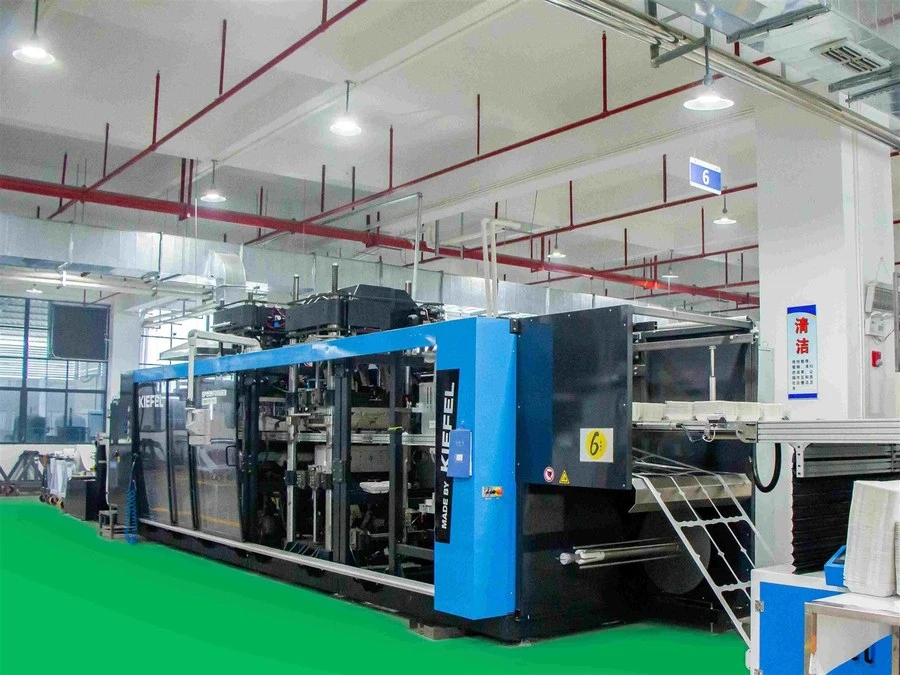
As a manufacturer running our own thermoforming lines, vent geometry is one of the details we test directly against real hot-food fill scenarios before a mold goes into production - because a container that looks great empty in a product photo and fogs over the moment it's filled with your actual menu isn't solving the problem it was designed for.
Dealing with a specific fogging complaint on your current container? Send us your container spec and typical menu items for a side-by-side comparison →