

8 major advantages VS 3 major shortcomings, how to break the environmental dilemma?
Introduction
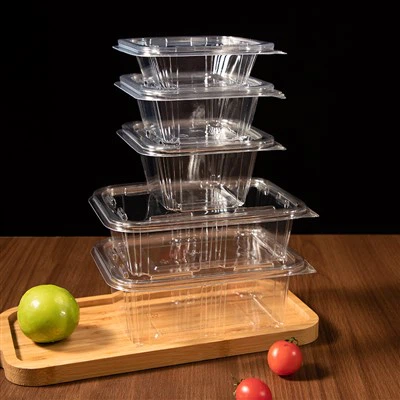
As the "king" occupying 70% of the takeaway market, PP (polypropylene) lunch boxes have become a rigid demand in the catering industry due to their high cost-effectiveness and heat resistance. However, at a time when environmental protection policies are becoming stricter, the current situation of its recycling rate of less than 10% is causing doubts. This article deeply disassembles PP lunch boxes from four dimensions: material properties, safety standards, cost-effectiveness, and environmental disputes, and provides scientific product selection and upgrade directions for enterprises.
8 Irreplaceable Core Advantages
Ultimate Safety
PP material is the only plastic that has passed FDA/GB 4806.7 food contact certification. Compared with PS, it releases styrene, while PP has no plasticizer precipitation at high temperature; this ensures the safety of food packaging to a certain extent.
Experimental data: PP material lunch boxes are resistant to heat preservation. Supported by experimental data, PP material lunch boxes are steam sterilized at 121℃ for 30 minutes without deformation. This is very friendly for some packaging that requires high-temperature food.


Super Functionality
Due to the high temperature resistance of PP material, which can withstand temperatures of -20℃~130℃, its application scenarios are relatively wide, and it is compatible with all scenarios of freezing, microwave, and steaming. It has a wide range of applications for consumers, and PP lunch boxes have become the first choice for merchants.
Follow-up Due to the different production processes of lunch boxes, most PP lunch boxes can be sealed and leak-proof (box cover stretching rate ≥500%), and the leakage rate of soup takeout is <0.3%. This is safer and more reliable for takeout packaging, especially for fast takeout transportation, etc., to reduce the risk of leakage. And ensure the safety and hygiene of ingredients, and improve user satisfaction.

Overwhelming Cost Advantage
 The market unit price of PP lunch boxes is about 0.12~0.2 yuan/piece (3 times the price of paper boxes, 50% of the cost of PLA boxes); in comparison, the cost advantage of PP lunch boxes is obvious.
Due to the characteristics of lightweight and stacking of PP lunch boxes, their lightweight transportation can save logistics costs. 1 truck of PP boxes = 3 trucks of paper box transportation volume, which also has advantages in transportation costs.
Three Major Shortcomings and Risks That Cannot Be Ignored
Environmental dilemma: the pain of a low recycling rate.
Reality: Low recycling rate. According to the 2023 data of the Ministry of Housing and Urban-Rural Development, the recycling rate of PP takeout food boxes in China is only 7%. The main reason is the low recycling value of printing. 1 ton of waste PP = 4,000 yuan, and the cleaning and sorting costs account for 60%, which leads to a low recycling value and a low recycling rate of PP plastics;
Hazards: Low recycling rate leads to large discarding of PP plastics, and landfill degradation takes 500 years. Incineration produces dioxins and other factors, which make the disposal of PP materials difficult.

Oil-Based Food Compatibility Defects
When PP plastic lunch boxes are filled with hot pot oil and spicy hot pot, oil penetration causes the plastic molecular chain to swell, and the lunch box becomes brittle, which poses a safety risk in use.
Experimental comparison: The compressive strength of PP lunch boxes decreases by 35% after 24 hours of filling with oil. Therefore, its applicable scenarios are still relatively limited.

Fake Food Grade Chaos
In order to reduce production costs, some small workshops add recycled materials/talcum powder to reduce costs by 30%. This added plastic will release formaldehyde when heated.
Identification trap: We can identify whether it is a low-quality lunch box through 2 points:
Don't choose lunch boxes with a transmittance of less than 85%. Because the added recycled materials or talcum powder will reduce the transmittance of the lunch box.
Those with many burrs on the edges are inferior products. The limitations of the production process and equipment environment result in many burrs on the lunch boxes, which affect the use and appearance.
Enterprise Upgrading: Finding Breakthrough Points from Defects
 Material Innovation
Adding CaCO₃ (calcium carbonate): PP custom printed Chinese food boxes with added calcium carbonate improve oil resistance and reduce costs by 15%. In addition, the degradation rate is accelerated by 50%;
Developing thin-wall technology: Cost saving can also start from thickness, reducing the thickness of PP sheets from 0.6mm to 0.45mm, saving 25% of raw materials, thereby saving product production costs and improving competitiveness.
Construction of Recycling System
B2B closed-loop model: such as cooperating with Meituan's "Qingshan Plan" to lay intelligent recycling machines (cashback of 0.1 yuan/piece);
Chemical recycling technology: cracking to produce fuel oil (conversion rate 80%), which is 3 times more valuable than physical recycling.
Consumer Education Strategy
Printing the recycling logo on the box + scanning the code traceability system to enhance classification willingness;
Advocating "5 times reuse": PP boxes can reduce carbon emissions by 76% after washing and reuse (LCA life cycle assessment).
Purchase Guide: Three-party Decision-making Flowchart
Consumer safety self-inspection method
Look at the code: the "PP5" triangle mark on the bottom of the box is true;
Burning corners: flammable and black smoke = containing impurities (qualified PP flame blue, waxy smell).
Policy compliance red line
Non-food grade recycled materials are prohibited (GB 4806.7-2016).
EU SUP Directive: PP lunch boxes must contain 30% recycled materials from 2025.
Conclusion
The "high cost performance + safety and convenience" of PP custom printed chinese food boxes and the "recycling dilemma" constitute a contradictory unity. In the short term, it is still an irreplaceable solution, but companies need to reduce their ecological footprint through thin-wall design, recycling alliances, and modified technologies. The ultimate direction is to establish a "production-consumption-regeneration" closed loop, so that PP can be transformed from a "disposable consumable" to a "circular economy carrier."

Where to Buy?
Huizhou Yangrui Printing and Packaging Co., Ltd. is a professional manufacturer specializing in PP lunch boxes with customizable printing and FDA-compliant food-grade materials. Their products are ideal for takeout and delivery services requiring leak-proof, microwaveable containers.
Website: www.packagingbag5.com
Email: sales@packagingbag5.com
Products: PP lunch boxes, MFPP hinged containers, meat, fruit food trays, paper cups
References
- Ministry of Housing and Urban-Rural Development of the PRC (2023). Annual Report on Domestic Waste Classification and Recycling.
- GB 4806.7-2016. National Food Safety Standard: Plastic Materials and Articles for Food Contact.
- FDA U.S. Food and Drug Administration. (2022). Food Contact Substances Notification.
- European Parliament. (2019). Single-Use Plastics Directive (SUP) – Directive (EU) 2019/904.
- Journal of Cleaner Production, Volume 340, 2022. "LCA-Based Carbon Emissions Analysis of Reusable PP Containers."
