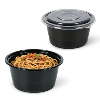
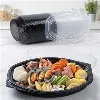
With the global emphasis on carbon neutrality and the growing awareness of environmental protection, the catering industry is undergoing a profound green transformation. Takeout, as an indispensable part of modern life, generates a huge amount of disposable packaging waste every year, which has become a major challenge to ecological sustainability. Against this background, eco-friendly takeout containers have emerged as a key solution. But the question arises: Can eco-friendly takeout containers really become the future of sustainable dining? This article will explore this issue comprehensively from the perspectives of policy impetus, market demand, industry innovation, existing challenges, and practical paths.
The increasing popularity of disposable take out food containers made from sustainable materials signifies a transformative trend in the food industry. As consumers increasingly prioritize environmental responsibility, businesses that adopt biodegradable take-out containers will not only contribute positively to the planet but also secure a competitive advantage in a crowded marketplace. At Huizhou Yangrui Printing and Packaging Co., Ltd., we are dedicated to providing innovative and sustainable packaging solutions, ensuring that embracing eco-friendliness.
1. Policy Impetus: The Rigid Driver for the Popularization of Eco-Friendly Takeout Containers
The global "plastic ban" wave and national green development strategies have laid a policy foundation for the development of eco-friendly takeout containers and disposable take out food containers, making their promotion no longer a voluntary choice of enterprises but a mandatory requirement of the times.
1.1 Strict Regulations at the International Level
The European Union has taken the lead in building a comprehensive and strict plastic management system. Its "Circular Economy Plastic Strategy" sets clear goals for plastic waste recycling rates, aiming to make all plastic packaging on the EU market recyclable or reusable by 2030. The "Single-Use Plastics Directive" implemented in July 2021 prohibits the use of single-use plastic items that can be replaced by non-plastic alternatives, including disposable plates and tableware, and sets mandatory collection quotas for single-use plastic bottles, requiring a collection rate of 90% by 2029. In addition, the EU has put forward clear requirements for the recycled content in plastic packaging: starting from 2025, the recycled content in PET bottles must reach 25%, and increase to 30% by 2030. These policies have strongly promoted European catering enterprises to switch to eco-friendly packaging.
1.2 Strong Promotion of National Strategies
In China, under the dual drive of the "double carbon" strategy and the "14th Five-Year Plan for Plastic Pollution Control Action Plan", the catering industry is accelerating the green transformation of packaging. The national standard GB/T 37422 "Green Packaging Evaluation Methods and Criteria" clearly defines green packaging as "packaging that is less harmful to human health and the ecological environment and consumes less resources and energy throughout its life cycle while meeting packaging function requirements". The "Green Takeout Management Specifications" implemented at the end of 2023 also requires catering enterprises and takeout platforms to provide safe, environmentally friendly, and reduced-quantity takeout packaging forms and materials. It is clearly required that by 2025, non-degradable plastic bags will be completely banned for takeout in cities at or above the prefecture level, which provides a strong policy driving force for the development of eco-friendly takeout container industries, such as pulp molding.
2. Market Demand: Consumer Awareness Upgrade Drives the Growth of Eco-Friendly Containers
The change in consumer concepts has become a powerful market driving force for the popularization of eco-friendly takeout containers. Modern consumers are no longer only concerned about the taste and price of food, but also pay more and more attention to the environmental impact of the entire dining process, including packaging materials.
2.1 Rising Consumer Environmental Awareness
Data from the China Internet Network Information Center shows that by 2023, the number of online takeout users in China has reached 535 million, accounting for 49.6% of the total number of netizens. Among these users, a growing number of people are actively participating in green takeout actions. For example, since Meituan launched the "no tableware needed" function in 2017, 410 million consumers have participated in related actions by 2023, reducing carbon emissions by more than 226,000 tons. It is estimated that consumers can reduce carbon emissions by an average of 38 grams each time they select the "no tableware needed" option. This shows that consumers' acceptance and willingness to pay for eco-friendly packaging are continuously improving, and they are willing to choose catering brands that use eco-friendly takeout containers, which has formed a market incentive for enterprises to transform.
2.2 Enterprise Brand Value Pursuit
For catering enterprises, the use of eco-friendly takeout containers is not only to comply with policy requirements, but also an important way to enhance brand value and gain competitive advantages. Many well-known catering brands, such as Quanjude, Damixian, and Laoxiangji, have actively responded to the call for green takeout, launched small-portioned meals to reduce food waste, and used eco-friendly packaging to convey their environmental protection concepts to consumers. This practice not only wins the recognition of environmentally conscious consumers but also helps enterprises establish a positive brand image, which is conducive to long-term development in the fierce market competition.
3. Industry Innovation: Technological Progress Breaks Through the Bottleneck of Eco-Friendly Containers
The continuous innovation of materials and packaging technology has solved many problems of early eco-friendly takeout containers, such as poor performance and a single type, and laid a technical foundation for their large-scale application
3.1 Diversification of Environmentally Friendly Materials
At present, eco-friendly takeout containers on the market have formed a variety of material routes, including paper-based, easily recyclable and renewable plastics, and degradable plastics. Pulp molding tableware, as a core environmentally friendly packaging material, is recognized as an ideal substitute for foamed polystyrene (EPS) and other plastic tableware due to its degradability, renewable raw materials, and low carbon emission characteristics. In addition, biodegradable materials such as PLA (polylactic acid) made from corn starch and sugarcane fiber have also been widely used. A life cycle assessment (LCA) report by the United Nations shows that compared with traditional plastic materials, PLA packaging has a lower environmental impact under appropriate disposal conditions.
3.2 Improvement of Packaging Solutions and Supply Chain
To promote the practical application of green packaging, the "Catering Takeout Green Packaging Application Working Group" in China has released the "Catering Takeout Green Packaging Solutions" after three years of research, which has publicly provided green packaging solutions for 16 categories of meals, covering pastries, cold drinks, stir-fries, hot pots, and other types. The plan puts forward a "four-step method" of "understanding, selecting, determining and purchasing" green packaging for merchants, and provides a comparison of performance, cost, and green attributes of different schemes, as well as a list of recommended suppliers. Combined with the catering takeout packaging information platform built by Meituan's Qingshan Plan, it has solved the problem of merchants purchasing green packaging in one stop. This systematic solution has greatly lowered the threshold for merchants to use eco-friendly takeout containers.
4. Existing Challenges: The Obstacle to Eco-Friendly Containers Becoming the Future
Although eco-friendly takeout containers have shown broad development prospects, they still face many challenges in the process of popularization, which restrict their ability to become the mainstream of sustainable dining.
4.1 Cost Pressure Restricts Popularization
The high production cost of eco-friendly takeout containers is the biggest obstacle to their large-scale application. Data shows that the total cost of pulp molding tableware is 0.13-0.17 yuan per piece, while the total cost of traditional plastic tableware is only 0.075-0.105 yuan per piece. For small and medium-sized catering merchants with limited profit margins and an inability to reduce costs through bulk purchasing, the cost pressure of switching to eco-friendly packaging is relatively large. This has led to the current situation of "high demand and low penetration" in the eco-friendly takeout container market-although the theoretical replacement space is hundreds of billions of yuan, the actual utilization rate of pulp molding tableware in the disposable tableware market is still less than 15%.
4.2 Gaps in Performance and Imperfect Recycling System
Some eco-friendly takeout containers still have performance gaps compared with traditional plastic products, such as insufficient oil and water resistance, which affects the user experience when holding meals with more soup and oil. More importantly, the recycling system for eco-friendly packaging is not yet perfect. Many eco-friendly takeout containers, due to the lack of clear recycling paths, end up being incinerated or landfilled together with domestic waste, failing to give full play to their environmental advantages. The United Nations report points out that the environmental benefits of biodegradable packaging can only be reflected when industrial composting or anaerobic digestion facilities are in place; in countries where landfills are widely used, biodegradable packaging may produce methane, which exacerbates global warming if the methane capture rate is low. This means that the environmental effect of eco-friendly takeout containers is closely related to the local waste treatment system, and the popularization of eco-friendly containers also requires the synchronous improvement of supporting facilities.
5. Practical Path: Building a Collaborative Ecosystem for Sustainable Dining
To make eco-friendly takeout containers truly become the future of sustainable dining, it is not enough to rely on the efforts of a single subject. It needs the joint cooperation of the government, enterprises, consumers and the whole society to build a complete green catering ecosystem.
5.1 Government: Strengthen Policy Guidance and Support
The government should further improve the policy system, introduce targeted subsidy policies to reduce the cost pressure of small and medium-sized merchants using eco-friendly packaging, and at the same time speed up the construction of recycling systems and supporting facilities, such as composting, and improve the standardization of waste classification and recycling. In addition, the government can promote the popularization of eco-friendly takeout containers through publicity and education, and guide the whole society to form a green consumption concept.
5.2 Enterprises: Promote Technological Innovation and Cost Optimization
Catering enterprises and packaging manufacturers should strengthen technological research and development, improve the performance of eco-friendly materials, and reduce production costs through technological progress and large-scale production. At the same time, enterprises should optimize the packaging design, adhere to the concept of reduction, and reduce the use of packaging materials on the premise of ensuring the packaging function. For example, some manufacturers use paper-plastic combination technology to add an outer paper sleeve and thin the inner plastic bowl, which reduces plastic usage while facilitating classification and recycling.
5.3 Consumers: Participate in Green Consumption and Promote Recycling
Consumers should actively participate in green takeout actions, such as choosing merchants that use eco-friendly packaging, reducing the use of disposable tableware, and correctly classifying takeout packaging waste after use to improve the recycling rate. The formation of a green consumption atmosphere will further promote enterprises to accelerate the transformation to eco-friendly packaging.
6. Eco-Friendly Takeout Containers Are the Core Direction of the Future of Sustainable Dining
To sum up, eco-friendly takeout containers, driven by policies, market demand and technological innovation, have shown strong development vitality and are undoubtedly the core direction of the future of sustainable dining. Although they currently face challenges such as high costs and imperfect supporting facilities, these problems can be gradually solved through the joint efforts of all sectors of society.
The future of sustainable dining is not just a simple replacement of packaging materials, but a systematic transformation covering the entire chain of production, consumption and waste disposal. Eco-friendly takeout containers, as an important part of this transformation, will play an increasingly important role in promoting the green and low-carbon development of the catering industry. With the continuous improvement of policies, technological progress and the enhancement of public environmental awareness, eco-friendly takeout containers will surely become the mainstream of the catering industry, making the "fireworks" of takeout integrate with the concept of sustainability and move towards a greener future





 Data from the China Internet Network Information Center shows that by 2023, the number of online takeout users in China has reached 535 million, accounting for 49.6% of the total number of netizens. Among these users, a growing number of people are actively participating in green takeout actions. For example, since Meituan launched the "no tableware needed" function in 2017, 410 million consumers have participated in related actions by 2023, reducing carbon emissions by more than 226,000 tons. It is estimated that consumers can reduce carbon emissions by an average of 38 grams each time they select the "no tableware needed" option. This shows that consumers' acceptance and willingness to pay for eco-friendly packaging are continuously improving, and they are willing to choose catering brands that use eco-friendly takeout containers, which has formed a market incentive for enterprises to transform.
 To promote the practical application of green packaging, the "Catering Takeout Green Packaging Application Working Group" in China has released the "Catering Takeout Green Packaging Solutions" after three years of research, which has publicly provided green packaging solutions for 16 categories of meals, covering pastries, cold drinks, stir-fries, hot pots, and other types. The plan puts forward a "four-step method" of "understanding, selecting, determining and purchasing" green packaging for merchants, and provides a comparison of performance, cost, and green attributes of different schemes, as well as a list of recommended suppliers. Combined with the catering takeout packaging information platform built by Meituan's Qingshan Plan, it has solved the problem of merchants purchasing green packaging in one stop. This systematic solution has greatly lowered the threshold for merchants to use eco-friendly takeout containers.