

- I. Core Advantages of Plastic Biodegradable Food Containers
- II. Disadvantages and Controversies of Plastic Biodegradable Food Containers
- III. Balancing Advantages and Disadvantages: Why Advantages Outweigh Disadvantages
- IV. Recommendations for Promoting the Application of Plastic Biodegradable Food Containers
- Conclusion
With the accelerated pace of modern life, takeaway services have emerged as an indispensable component of urban existence. From busy office workers grabbing a quick lunch between meetings to families enjoying a diversified dinner without the hassle of cooking, takeaway has reshaped people's dining habits. Nevertheless, the ensuing issue of packaging waste generated by takeaway services-especially the debate over traditional plastic to-go containers and biodegradable food containers-has drawn extensive concern from governments, industries, and the public. While traditional plastic containers are criticized for their environmental hazards, biodegradable alternatives are hailed as a green solution but also face doubts about cost and practicality. This paper aims to explore the advantages and disadvantages of plastic biodegradable food containers, compare them with traditional plastic options, and ultimately arrive at the conclusion that the benefits of biodegradable plastic food containers outweigh the drawbacks.
I. Core Advantages of Plastic Biodegradable Food Containers
Plastic biodegradable food containers inherit the convenience of traditional plastic containers while making breakthroughs in environmental protection, economic value, and social adaptability. These advantages are closely aligned with the needs of modern urban life and the global trend of sustainable development.
1. Unmatched Convenience Adapting to Modern Life Rhythms

Similar to traditional takeaway containers, biodegradable plastic food containers excel in convenience, which is their foundational advantage in catering to the fast-paced urban lifestyle. Firstly, they save users a great deal of time on food preparation. For busy office workers who often have only 30 minutes for lunch, biodegradable takeaway containers allow them to receive hot, properly portioned meals directly at their desks, eliminating the need for grocery shopping, cooking, and dishwashing. A survey conducted by a leading takeaway platform shows that office workers in first-tier cities save an average of 1.5 hours per day on dining-related tasks by using takeaway services, with convenient packaging being a key enabler.
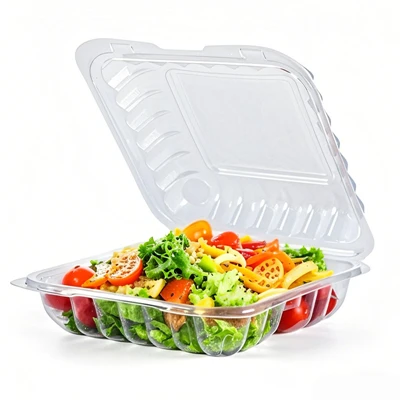
Secondly, biodegradable plastic containers support a diverse range of food choices. Their material properties-such as heat resistance, oil resistance, and leak-proof performance-enable them to hold various foods, from steaming hot stir-fries and soups to cold salads and desserts. For example, clear biodegradable takeaway containers allow consumers to directly see the ingredients and freshness of the food inside, enhancing trust; microwave-safe biodegradable lunch prep containers meet the needs of users who need to reheat meals, combining convenience with practicality. Moreover, these containers can be used anytime and anywhere, whether at home, in the office, during business trips, or even during outdoor activities, ensuring that people can enjoy warm and hygienic meals without being restricted by location.
2. Significant Economic Benefits Driving Industrial Development
The popularization of plastic biodegradable food containers has brought substantial economic benefits, driving the development of the entire takeaway and catering industry chain. On the one hand, it has created a large number of employment opportunities. Beyond the delivery personnel, chefs, and customer service representatives directly involved in the takeaway industry, the production, R&D, and sales of biodegradable containers have spawned new jobs in the packaging industry, such as biodegradable material researchers, eco-friendly container production workers, and supply chain managers. In China alone, the biodegradable packaging industry has created over 500,000 jobs in recent years, according to data from the China Packaging Federation.
 On the other hand, it has strongly promoted the expansion and upgrading of the catering industry. Traditional catering businesses are often limited by their physical store capacity, but with the support of biodegradable packaging, they can easily expand their service scope to cover a wider geographical area, breaking through the constraints of offline traffic. Many small and medium-sized catering brands have achieved revenue growth of 30% to 50% by joining takeaway platforms and using high-quality biodegradable containers. Additionally, the standardized production of biodegradable food containers has improved the efficiency of food processing and distribution. Standardized container sizes facilitate stacking and transportation, reducing logistics costs, while pre-sterilized packaging simplifies the food preparation process, enabling catering businesses to handle more orders in a shorter time
3. Environmental Friendliness: Addressing the Core Shortcoming of Traditional Plastic
The most prominent advantage of plastic biodegradable food containers over traditional plastic ones lies in their environmental protection. Traditional plastic takeaway containers are mostly made of non-degradable materials, which take hundreds of years to decompose in the natural environment, causing severe white pollution. In contrast, biodegradable plastic containers are made of materials such as polylactic acid (PLA) derived from corn starch or sugarcane fiber, which can be completely decomposed into water, carbon dioxide, and organic matter under natural conditions (such as soil, water, or industrial composting) within 3 to 6 months, without leaving harmful residues.
Furthermore, many biodegradable containers are made from recyclable or renewable materials, further reducing environmental burdens. For example, some biodegradable containers use recycled paper pulp mixed with biodegradable plastics, realizing the reuse of resources. At the same time, the use of biodegradable containers helps reduce food waste during transportation. Their excellent sealing and shockproof performance can better protect food from spillage or damage, especially for delicate dishes or liquid foods. A study by the Food and Agriculture Organization (FAO) shows that the use of proper biodegradable packaging can reduce food waste during takeaway transportation by 15% to 20%. Moreover, the promotion of biodegradable containers has raised public environmental awareness. As consumers increasingly recognize the environmental hazards of traditional plastics, they are more willing to choose catering brands that use eco-friendly packaging, forming a positive cycle that encourages more businesses to adopt green practices.
4. Positive Social Impact Meeting Diverse Needs
Plastic biodegradable food containers also exert a positive social impact, playing an important role in promoting social interaction and meeting special needs. Firstly, they facilitate social interaction. The convenience of takeaway and the portability of biodegradable containers make it easier for people to share food with family, friends, or colleagues. For example, during office team-building activities or family gatherings, people can order a variety of dishes in biodegradable containers and share them together, enhancing emotional connections without the trouble of cooking and cleaning.
Secondly, they can meet the specific dietary needs of different groups. For individuals with dietary restrictions-such as vegetarians, diabetics, or people with food allergies-catering businesses can use labeled biodegradable containers to provide customized meals, clearly indicating ingredients and nutritional information. This not only ensures the health and safety of these individuals but also reflects the inclusiveness of the catering industry. Finally, biodegradable food containers play a crucial role in emergency situations. During natural disasters such as earthquakes, floods, or public health emergencies like pandemics, biodegradable containers can be used to quickly distribute food supplies to affected areas. Their lightweight, easy transportation, and hygienic properties make them an ideal choice for emergency relief, while their biodegradability avoids adding additional environmental pressure to the disaster-stricken areas.
II. Disadvantages and Controversies of Plastic Biodegradable Food Containers
Despite their numerous advantages, plastic biodegradable food containers are not without drawbacks. The main controversies focus on cost, performance limitations, and the dependence on disposal conditions.
The most prominent disadvantage is the high cost. Compared with traditional plastic containers, the production cost of biodegradable plastic containers is 2 to 3 times higher. This is because the raw materials for biodegradable plastics (such as PLA) are more expensive, and the production process is more complex. For small and medium-sized catering businesses with thin profit margins, the increased packaging cost can be a heavy burden. Some businesses have reported that switching to biodegradable containers increases their packaging costs by 15% to 25%, which may force them to raise food prices, potentially affecting customer flow.
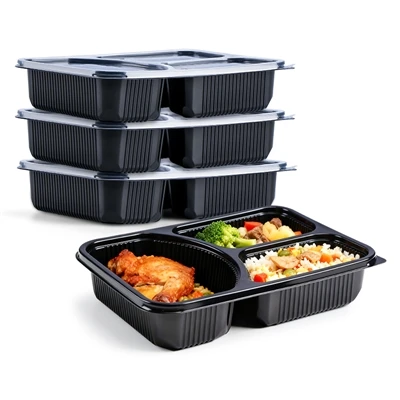
Secondly, there are certain performance limitations. Some biodegradable containers have poor heat resistance, making them unsuitable for holding high-temperature foods (above 100°C) or microwave heating, which limits their application scope. Additionally, some low-quality biodegradable containers may have poor oil resistance and leak-proof performance, affecting the user experience. For example, when holding dishes with a lot of oil or soup, the container may soften or leak, causing inconvenience to consumers.
Thirdly, the degradation effect is dependent on specific disposal conditions. Most biodegradable plastic containers require industrial composting facilities (with controlled temperature, humidity, and microbial environment) to achieve complete degradation. In regions where such facilities are lacking, these containers may still take a long time to decompose in landfills, similar to traditional plastics. This means that the environmental benefits of biodegradable containers can only be fully realized with the support of a complete waste disposal system. At present, the uneven distribution of composting facilities in many countries and regions has weakened the environmental advantages of biodegradable containers to a certain extent.
III. Balancing Advantages and Disadvantages: Why Advantages Outweigh Disadvantages
When evaluating whether the advantages of plastic biodegradable food containers outweigh the disadvantages, it is necessary to adopt a comprehensive and long-term perspective, considering not only the current challenges but also the long-term value for the environment, economy, and society.
Firstly, the high cost issue is gradually being addressed with technological progress and large-scale production. As more enterprises invest in the R&D and production of biodegradable materials, the production process is becoming more mature, and the cost of raw materials is gradually decreasing. For example, the price of PLA, a key material for biodegradable plastics, has dropped by 30% in the past five years due to technological breakthroughs. At the same time, governments in many countries and regions have introduced subsidy policies to support catering businesses in using eco-friendly packaging. For instance, some cities in China provide a subsidy of 0.1 to 0.3 yuan per biodegradable container for small and medium-sized catering enterprises, effectively reducing their cost pressure.
Secondly, performance limitations are being overcome through technological innovation. Many manufacturers are continuously improving the formula and production process of biodegradable materials to enhance their heat resistance, oil resistance, and leak-proof performance. Currently, high-quality biodegradable containers on the market can withstand temperatures up to 120°C and are suitable for microwave heating, fully meeting the needs of most takeaway scenarios. The gap in performance between biodegradable containers and traditional plastic containers is constantly narrowing.
Most importantly, the environmental advantages of biodegradable food containers are irreplaceable by traditional plastic containers. In the context of global climate change and increasing environmental pollution, reducing plastic waste has become an urgent global task. The use of biodegradable containers is an important measure to address white pollution, which is crucial for protecting the ecological environment and ensuring sustainable development. The long-term environmental benefits brought by reducing pollution far outweigh the short-term cost increase. Moreover, the promotion of biodegradable containers drives the transformation and upgrading of the packaging industry towards green and low-carbon development, which will bring more economic and social benefits in the long run.

IV. Recommendations for Promoting the Application of Plastic Biodegradable Food Containers
To give full play to the advantages of plastic biodegradable food containers and address their disadvantages, joint efforts from the government, enterprises, and the public are required.
Firstly, promote the use of eco-friendly materials. Governments should introduce more preferential policies to encourage catering businesses to choose biodegradable food containers or other recyclable eco-friendly packaging materials. At the same time, strengthen the supervision of the packaging market, crack down on the production and use of unqualified non-degradable plastic containers, and create a fair market environment for biodegradable products.
Secondly, improve the recycling and disposal system. Accelerate the construction of industrial composting facilities and waste classification and recycling systems to ensure that biodegradable containers can be properly disposed of and fully degraded. Establish a closed-loop recycling system for biodegradable packaging, encouraging consumers to correctly classify and dispose of used containers, and improving the recycling rate of resources.

Thirdly, strengthen public education. Through various channels such as media publicity, community activities, and school education, raise public awareness of environmental protection, let people understand the advantages of biodegradable food containers and the importance of proper disposal, and enhance everyone's consciousness of participating in green consumption.
Finally, encourage technological innovation. Support enterprises and research institutions in conducting R&D on biodegradable materials, improving product performance, and reducing production costs. Promote the innovation of packaging design, develop more lightweight, multi-functional, and cost-effective biodegradable containers to meet the diverse needs of the catering industry.
Conclusion
Although plastic biodegradable food containers currently face challenges such as high production costs, certain performance limitations, and imperfect disposal systems, these problems are not insurmountable and can be gradually solved with technological progress, policy support, and the joint efforts of the whole society. In contrast, their advantages in convenience, economic benefits, environmental protection, and social impact are remarkable and in line with the needs of modern life and the trend of sustainable development.
The environmental problems caused by traditional plastic containers have become a global concern, and biodegradable plastic food containers provide an effective solution to this problem. With the increasing global awareness of environmental protection, biodegradable food containers have gradually become the mainstream choice in the catering packaging market. They not only help reduce plastic waste and protect the ecological environment but also meet the convenience needs of modern life, driving the healthy development of the takeaway and catering industry. Therefore, it can be concluded that the advantages of plastic biodegradable food containers outweigh the disadvantages. By promoting the widespread application of biodegradable food containers and improving supporting systems, we can enjoy the convenience brought by takeaway services while safeguarding the beauty of our planet.
