

The booming takeaway and meal prep industry has significantly boosted the market demand for disposable food containers. As a crucial link in the food service chain, disposable lunch boxes not only affect the dining experience of consumers but also relate to the brand reputation and operational safety of food businesses. However, the quality of disposable lunch boxes on the market varies greatly due to differences in materials, production processes, and manufacturer standards. For restaurants, cafes, catering companies, and other merchants, choosing high-quality, safe, and suitable disposable containers is particularly critical, especially with the popularity of BPA-free disposable plastic meal prep to go food containers has become a key trend in the industry. This article will comprehensively interpret the core knowledge of BPA-free disposable plastic containers and provide a detailed purchasing guide to help merchants make informed decisions.
1. What is BPA? Why Choose BPA Free Disposable Plastic Containers?
1.1 The Risks of BPA in Food Containers
BPA, short for Bisphenol A, is a common chemical raw material used in the production of polycarbonate plastics and epoxy resins. In the past, it was widely applied in disposable food containers, water bottles, and food packaging materials due to its excellent heat resistance and impact resistance. However, numerous scientific studies have shown that BPA is an endocrine-disrupting chemical that may seep into food or beverages, especially when the container is in contact with high-temperature food, acidic food, or is repeatedly used.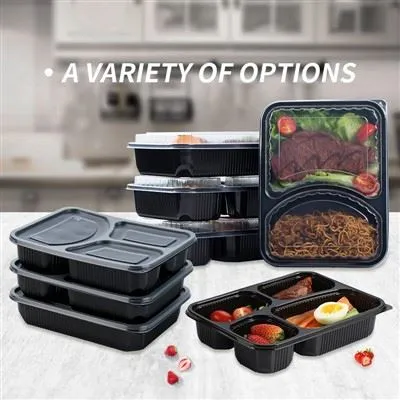
Long-term exposure to BPA may pose potential risks to human health, such as interfering with the normal function of the endocrine system, affecting reproductive development, and increasing the risk of chronic diseases. For food businesses, using disposable containers containing BPA not only violates the increasingly strict food safety regulations in many regions but also may lead to food safety incidents, causing irreversible damage to the brand's reputation and economic losses. Therefore, choosing BPA-free disposable plastic meal prep to go food containers has become a basic requirement for merchants to ensure food safety.
1.2 The Advantages of BPA-Free Disposable Plastic Containers
2. Key Purchasing Factors for BPA-Free Disposable Plastic Meal Prep To Go Food Containers
For food merchants, purchasing BPA-free disposable plastic containers is not just about confirming the "BPA-free" label. It is also necessary to comprehensively consider factors such as the purpose of the container, sanitation quality, practical performance, and sealing performance to ensure that the purchased containers are suitable for their own business needs. The following are the core aspects that need to be paid attention to during the purchasing process:
2.1 Clarify the Purpose and Match the Container Type
 Different types of BPA free disposable plastic containers have significant differences in performance characteristics, so merchants must first clarify the purpose of the containers before purchasing. For example, if you need to pack hot meals such as stir-fries, soups, or hot pot, you should choose containers made of heat-resistant materials (such as PP, which can withstand temperatures up to 120°C) to avoid deformation or melting of the container at high temperatures. If you need to pack cold foods such as salads, fruits, or desserts, you can choose containers made of PE or PLA materials, which have good low-temperature resistance and can maintain the freshness of the food.
In addition, the portion size of the meal also determines the choice of container size. For individual meal prep, small to medium-sized containers (such as 16 oz, 24 oz) are suitable; for family-style takeout or catering services, large-sized containers (such as 32 oz, 48 oz) or multi-compartment containers should be selected to meet the needs of packing multiple dishes or large portions of food. Choosing the right container type according to the meal type and portion size can avoid problems such as inappropriate packaging, food spillage, or waste of containers.
2.2 Prioritize Sanitation and Quality: Focus on Raw Materials

The sanitation and quality of BPA free disposable plastic containers are the core of ensuring food safety. The reliability of the containers mainly depends on the raw materials used in production. Merchants must confirm that the containers are made of food-grade raw materials that meet national standards. Common safe raw materials for BPA free containers include:
- PP (Polypropylene): It is the most widely used raw material for BPA free disposable containers. It has excellent heat resistance, chemical stability, and is non-toxic and odorless. It is suitable for packing hot meals and can be used in microwaves (marked with "microwave safe").
- PE (Polyethylene): It has good toughness and low-temperature resistance, but its heat resistance is relatively poor (generally not exceeding 80°C). It is suitable for packing cold foods or room-temperature foods.
- PLA (Polylactic Acid): A biodegradable material made from renewable resources such as corn starch. It is BPA free, environmentally friendly, and suitable for packing both hot and cold foods, but it has relatively high production costs.
 When purchasing, merchants should ask the manufacturer for relevant certification documents, such as food contact material testing reports, to confirm that the containers are clean, hygienic, non-toxic, and harmless. At the same time, they should observe the appearance of the containers: qualified containers have a smooth surface, no burrs, no uneven coloring, and no pungent odors. Avoid purchasing low-quality containers that are thin, brittle, or have obvious quality defects, as these containers may easily break during use and cause food safety accidents, leading to major losses for the business.
2.3 Evaluate Practical Performance: Heat Resistance, Drop Resistance, and Size
The practical performance of BPA free disposable plastic containers directly affects the efficiency of business operations and the consumer experience. Merchants need to focus on the following aspects:
First, heat resistance. As mentioned earlier, different raw materials have different heat resistance. For containers used to pack hot meals, it is necessary to test their heat resistance-for example, pour boiling water into the container and observe whether it deforms or releases odors. Some low-quality BPA free containers may use inferior raw materials, which will melt and release toxic substances when exposed to high temperatures, so this link cannot be ignored.
Second, drop resistance and toughness. During the process of takeout delivery, containers are often subjected to collisions and squeezes. Therefore, the containers need to have good drop resistance and toughness to avoid breaking or spilling food. Merchants can conduct simple drop tests during purchasing: put a certain weight of items into the container, seal it, and drop it from a height of 1-1.5 meters. If the container does not break or leak, it means it has good drop resistance.

Third, size and specification. The size of the container should match the packaging needs and the size of the takeout bag. Too large a container will waste space and increase transportation costs, while too small a container may not be able to hold the food. In addition, the uniformity of the container size is also important for inventory management and stacking storage-standardized sizes can simplify the stacking process and save storage space in the kitchen.
2.4 Pay Attention to Sealing Performance: Ensure Food Freshness and Avoid Spillage

Sealing performance is a key indicator for takeout containers. Excellent sealing performance can ensure that the food is not contaminated by external air and moisture, maintain the temperature and freshness of the food, and prevent soup or sauce from spilling during transportation. Poor sealing not only affects the consumer's dining experience but also may cause disputes between merchants and customers, and even damage the brand's reputation.
When purchasing BPA free disposable plastic containers, merchants should test the sealing performance: pour an appropriate amount of water or soup into the container, seal the lid tightly, invert it for 1-2 minutes, and observe whether there is water leakage. Qualified containers should have a tight fit between the lid and the body, with no gaps or leakage. Some high-quality containers are also designed with leak-proof edges or silicone sealing rings to further enhance the sealing effect, which is worthy of priority consideration for merchants who need to pack soups, stews, or other liquid-rich foods.
3. Market Trends and Recommendations for BPA Free Disposable Plastic Containers
3.1 Market Trends of BPA Free Plastic To Go Containers

With the increasing awareness of food safety and environmental protection among consumers and the strengthening of national regulatory policies on food contact materials, the market demand for BPA free disposable plastic meal prep to go food containers is showing a steady growth trend. More and more food businesses are taking the initiative to switch to BPA free packaging to meet consumer needs and comply with regulatory requirements. At the same time, the market is also developing towards diversification and environmental protection-for example, the application of biodegradable BPA free materials (such as PLA) is gradually expanding, and multi-compartment, microwave-safe, and customizable BPA free containers are becoming more and more popular.
3.2 Recommendations for Merchants to Purchase BPA Free Containers
Based on the above analysis, merchants can follow the following recommendations when purchasing BPA free disposable plastic containers:
- Choose regular manufacturers with complete qualifications. Regular manufacturers have strict quality control over raw materials and production processes, and can provide reliable certification documents and after-sales service. Avoid purchasing "three-no" products from unknown sources.
- Prioritize cost-effectiveness on the premise of ensuring quality. Do not blindly pursue low prices, as low-cost containers may have hidden quality hazards. At the same time, do not overpay for unnecessary functions-choose products that match your own business needs.
- Conduct small-batch trials before bulk purchase. Before purchasing a large number of containers, it is recommended to buy a small batch for trial use, test their practical performance, sealing performance, and consumer feedback, and then decide whether to purchase in bulk.
- Pay attention to environmental protection performance. With the global emphasis on environmental protection, choosing biodegradable BPA free containers can not only enhance the brand's environmental image but also comply with the future development trend of the industry.
-

Case Introduction: High-Quality BPA-Free Disposable Plastic Container Supplier
As a large domestic manufacturer of disposable lunch boxes, Huizhou Yang Rui Printing And Packaging Co., Ltd. has long been committed to the R&D, production, and sales of high-quality BPA free disposable plastic meal prep to go food containers. The company adheres to the concept of "safety first, quality-oriented", and all products are made of food-grade raw materials that meet national standards, ensuring 100% BPA free and non-toxic and harmless.
 Huizhou Yang Rui Printing And Packaging Co., Ltd. provides a variety of BPA free disposable plastic containers, including single-compartment, multi-compartment, different sizes (16 oz, 24 oz, 32 oz, etc.), and different material options (PP, PLA, etc.), which can meet the diverse packaging needs of different food businesses. The products have passed strict quality testing, with excellent heat resistance, drop resistance, and sealing performance, and are widely used in restaurants, takeout platforms, catering companies, and other fields. In addition, the company also provides customized services, which can print brand logos and related information on the containers according to the needs of merchants, helping to enhance brand promotion effects.
For merchants in need of high-quality BPA free disposable plastic meal prep to go food containers, Huizhou Yang Rui Printing And Packaging Co., Ltd. is a reliable partner. Welcome to contact us for more product information and quotation details.
Choosing high-quality BPA free disposable plastic meal prep to go food containers is an important measure for food merchants to ensure food safety, enhance brand reputation, and meet consumer needs. During the purchasing process, merchants need to comprehensively consider factors such as the purpose of the container, raw material quality, practical performance, and sealing performance, and choose regular manufacturers and suitable products.
With the continuous development of the food service industry and the upgrading of consumer demand, BPA free disposable plastic containers will become the mainstream of the market. Merchants who take the initiative to adapt to this trend and choose high-quality BPA free packaging will gain more competitive advantages in the fierce market competition. Remember, the quality of disposable containers is not only related to the dining experience of consumers but also to the long-term development of the business-only by paying attention to every detail of packaging can we achieve stable development in the takeaway and meal prep industry.
