

- I. The Shocking Scale of Takeout Box Waste: The Industry Pressure Faced by PP Disposable Food Container Factories
- II. The Dual Responsibility of PP Disposable Food Container Factories: Ensuring Food Safety and Reducing Environmental Impact
- III. The Dilemma Faced by PP Disposable Food Container Factories: Balancing Cost, Demand and Environmental Protection
- IV. Breaking the Dilemma: The Green Transformation Path of PP Disposable Food Container Factories
- V. PP Disposable Food Container Factories: From "Packaging Providers" to "Sustainable Development Promoters"
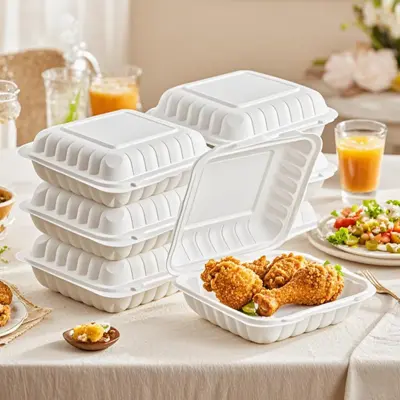
 With the acceleration of urban life rhythm, takeout has become an indispensable part of Chinese people's daily life. The latest industry survey shows that China's annual takeout orders have reached 17 billion, a scale that not only reflects the convenience brought by the takeout economy but also puts forward higher requirements for the upstream packaging supply chain. As the core supplier of takeout packaging, PP disposable food container factories are closely linked to the takeout box waste problem behind these 17 billion orders. More than 80% of takeout boxes are made of PP (polypropylene) and other plastic materials, which means that our factories are not only the providers of convenience for the takeout economy but also the key participants in solving the "white pollution" problem. Based on the industry status of PP disposable food container factories, this article will analyze the challenges brought by the huge takeout order scale, the environmental responsibility of factories, and the specific practice paths of green transformation, providing a reference for the sustainable development of the entire takeout packaging industry.
I. The Shocking Scale of Takeout Box Waste: The Industry Pressure Faced by PP Disposable Food Container Factories
 The 17 billion annual takeout orders have spawned a staggering demand for disposable packaging, and PP disposable food container factories are at the forefront of meeting this demand. According to the survey data of environmental protection organizations, each takeout order consumes an average of 3.27 disposable plastic boxes or cups, and based on this calculation, China's takeout industry consumes nearly 56 billion disposable food containers every year. As the main material of takeout boxes, PP materials account for more than 60% of the total, which means that PP disposable food container factories need to complete the production of nearly 34 billion boxes every year to meet market demand. If each PP takeout box is stacked at a height of 5 centimeters, the total height of these boxes can reach 170 million meters, which is equivalent to nearly 19,000 Mount Everest peaks. Such a huge production and consumption scale has put unprecedented pressure on our factories: on the one hand, we need to ensure the stability of output to match the takeout demand; on the other hand, we have to face the environmental pressure brought by the subsequent waste of these PP boxes.
From the perspective of PP material characteristics, PP is a recyclable plastic material with good heat resistance and oil resistance, which is very suitable for the packaging of Chinese food with high oil and high temperature. However, the current recycling rate of PP takeout boxes is not optimistic. A report points out that the large-scale recycling rate of plastic takeout boxes in China is only about 5%, and the recycling rate of PP takeout boxes is slightly higher but still less than 10%. As PP disposable food container factories, we clearly know that the root cause of this problem is not the material itself, but the lack of systematic design in the production link and the imperfect recycling system in the later stage. At present, most of the PP takeout box wastes enter the urban sanitation system, with about half being landfilled and the other half incinerated. In fact, PP materials can be recycled and reused after professional cleaning and processing, and the low recycling rate means a huge waste of resources while causing environmental pollution


II. The Dual Responsibility of PP Disposable Food Container Factories: Ensuring Food Safety and Reducing Environmental Impact
Faced with the huge scale of 17 billion takeout orders, PP disposable food container factories shoulder dual responsibilities: ensuring the food safety of consumers and reducing the environmental impact of products. The massive accumulation of takeout box waste has brought dual impacts on the ecological environment and public health, and our factories are duty-bound to take action to mitigate these impacts.

In terms of ecological environment, the landfilling of plastic takeout boxes will occupy a lot of land resources. The non-degradable plastic will remain in the soil for a long time, destroying the soil structure and affecting the growth of plants. The incineration process will produce a variety of toxic and harmful gases, including dioxins and other persistent organic pollutants, which will cause serious pollution to the atmosphere and increase the difficulty of air pollution control. In addition, a large number of takeout boxes that are randomly discarded will flow into rivers and oceans with rainwater, becoming part of marine plastic pollution and endangering the survival of aquatic organisms.
 In terms of public health, ensuring the safety of PP takeout boxes is the bottom-line responsibility of our factories. At present, some low-cost, inferior PP takeout boxes on the market use recycled materials that do not meet food-grade standards, which may release bisphenol A (BPA) and other toxic substances when holding high-temperature food, endangering human health. As a standardized PP disposable food container factory, we have always adhered to the use of food-grade new PP materials and strictly implemented national food contact material safety standards in the production process. We have established a complete quality inspection system, from the inspection of raw materials to the sampling inspection of finished products, to ensure that every PP takeout box leaving the factory is non-toxic, harmless, and meets the requirements of food safety. A survey of office workers in CBD areas of first-tier cities shows that more than 60% of respondents have concerns about the safety of takeout boxes, which also reminds us that we must unswervingly do a good job in quality control to gain consumer trust.
III. The Dilemma Faced by PP Disposable Food Container Factories: Balancing Cost, Demand and Environmental Protection
The formation of the takeout box waste problem is not an accident, and PP disposable food container factories are also in the game of multiple factors, such as cost pressure, market demand, and an imperfect supervision system. For us, how to balance the three is the core dilemma of development.
 Cost control is the primary challenge for PP disposable food container factories to promote green transformation. At present, the cost of producing PP takeout boxes with high recyclability and environmental performance is 20%-30% higher than that of ordinary PP boxes. For factories with thin profit margins, the increase in production costs will directly affect market competitiveness. At the same time, catering merchants, as our direct customers, are also very sensitive to the price of takeout boxes. The cost of a degradable takeout box is 2-3 times that of a traditional PP takeout box. Although PP materials are recyclable, merchants often choose cheaper ordinary PP boxes to control their own operating costs. In addition, Chinese food is characterized by more soup and oil, which have higher requirements for the sealing and oil resistance of takeout boxes. Merchants have strict requirements on the practical performance of PP takeout boxes. If the environmental transformation of the factory affects the performance of the products, it will lead to the loss of customers. Therefore, how to reduce the cost of green PP takeout boxes while ensuring product performance has become a key problem for us to solve.
From the perspective of consumers, the demand for convenience and the lack of environmental awareness also exacerbate the waste problem. Most consumers pay more attention to the taste and delivery speed of takeout, and have little concern for the environmental performance of packaging. Even if some takeout platforms set up the option of "no tableware needed", the number of consumers who actively choose it is still small. Some consumers even habitually discard takeout boxes at will after use, ignoring the basic classification requirements.
The imperfect supervision system and industry standards also bring difficulties to the green transformation of PP disposable food container factories. Although relevant national departments have issued the "Plastic Pollution Control Opinions" and other policies, clarifying the requirements for restricting the use of non-degradable plastic packaging in the takeout industry, there is still a lack of unified and detailed standards for the recyclability, environmental protection indicators and production processes of PP takeout boxes. This leads to uneven product quality in the market, and some inferior PP takeout boxes flood the market, disrupting the market order and making it difficult for formal factories that invest in green transformation to gain competitive advantages. In addition, the lack of unified national recycling standards for PP takeout boxes makes it difficult for us to carry out targeted production design (such as optimizing product structure to facilitate recycling) and also makes it difficult to form a standardized recycling system, which affects the enthusiasm of factories to promote recyclable PP takeout boxes.


IV. Breaking the Dilemma: The Green Transformation Path of PP Disposable Food Container Factories
To solve the problem of takeout box waste against the background of 17 billion annual orders, PP disposable food container factories cannot wait passively. We need to take the initiative to take responsibility and join hands with the government, platforms, merchants, and consumers to build a full-chain green governance system. From the perspective of factories, the green transformation should start from production, design, technology and cooperation.
 First, optimize production processes and promote clean production. We should increase investment in environmental protection equipment, transform production lines, and reduce energy consumption and pollutant emissions in the production process of PP takeout boxes. For example, adopting energy-saving motors, recycling waste heat in the production process, and treating waste water and waste gas to meet emission standards. At the same time, we should strictly control the source of raw materials, only use food-grade new PP materials that meet national standards, and resolutely put an end to the use of inferior recycled materials. In response to the policy guidance of the government, we should actively participate in the formulation of industry standards for PP takeout boxes and promote the improvement of mandatory standards for takeout packaging, so as to realize the standardized development of the industry. We also hope that the government can introduce corresponding subsidy policies to support PP disposable food container factories in carrying out green transformation, such as subsidizing the research and development of environmentally friendly materials and the transformation of production lines, to reduce the pressure of cost increase.
Second, strengthen cooperation with takeout platforms and build a green supply chain. Takeout platforms are an important link connecting factories, merchants and consumers. We should actively cooperate with platforms such as Meituan's "Qingshan Plan" to enter the list of recommended environmentally friendly packaging enterprises, and rely on the platform's scale advantage to reduce the procurement cost of green PP takeout boxes. At the same time, we can work with platforms to establish a traceability system for PP takeout boxes, marking the material, recyclability and other information on the product, so that consumers and merchants can clearly understand the environmental performance of the product. We can also cooperate with platforms to carry out joint promotion activities, such as giving preferential policies to merchants who purchase green PP takeout boxes, and guiding merchants to choose environmentally friendly packaging.
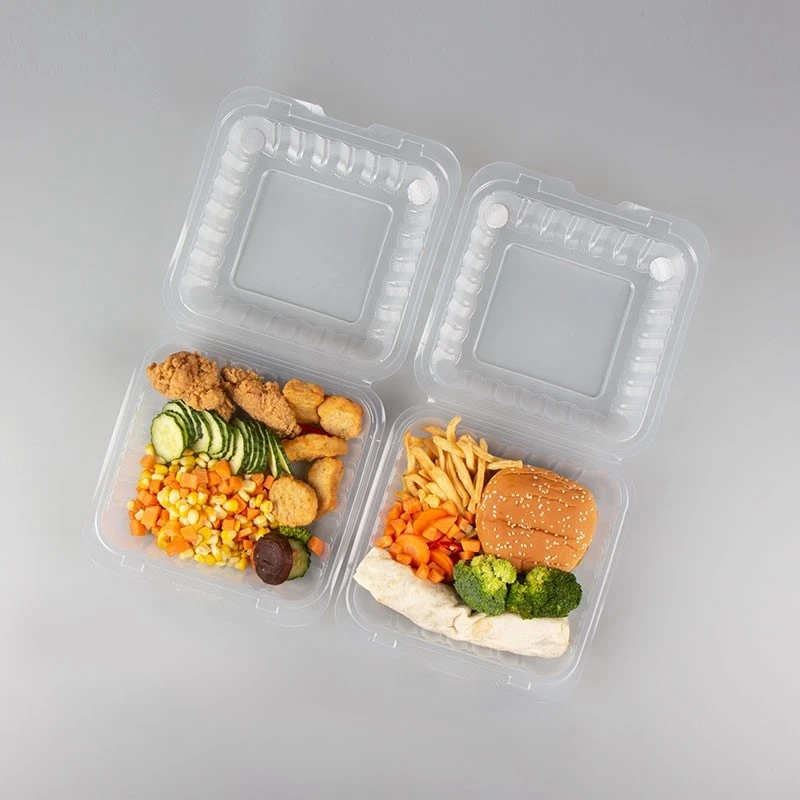
 Third, optimize product design to improve recyclability and practicality. In the product design stage, we should fully consider the subsequent recycling problem, adopt a single PP material design, avoid the use of composite materials and excessive additives, and reduce the difficulty of recycling. At the same time, we can optimize the product structure, such as designing stackable PP takeout boxes to reduce transportation costs and resource waste. For the characteristics of Chinese food with more soup and oil, we should improve the sealing and oil resistance of PP takeout boxes through technological innovation, such as adding a leak-proof coating and optimizing the lid design, to reduce complaints from merchants and consumers and avoid unnecessary waste caused by product damage. In addition, we can develop multi-specification PP takeout boxes to meet the packaging needs of different portions of food, avoid excessive packaging, and realize the rational use of resources.

Fourth, strengthen the publicity of environmental protection concepts and guide consumers to participate in recycling. We should take the initiative to assume the responsibility of popular science, and publicize the recyclability of PP materials and the correct disposal methods of PP takeout boxes to consumers through product packaging, platform cooperation, and other channels. For example, printing recycling guidelines on PP takeout boxes to guide consumers to sort and dispose of them correctly after use. We can also cooperate with communities and recycling enterprises to set up special recycling points for PP takeout boxes, and improve the recycling rate of products through incentives such as green points.
Fifth, increase investment in technological innovation to promote high-value recycling of PP materials. Technological innovation is the key to solving the problem of PP takeout box waste. We should increase investment in R&D, cooperate with scientific research institutions to develop more efficient and low-cost PP material recycling technology, and improve the recycling rate and utilization value of PP takeout boxes. For example, through multi-level purification technology, waste PP takeout boxes can be converted into raw materials for clothing, auto parts and other products, improving the economic value of recycling and forming a benign recycling chain. At the same time, we can carry out research on modified PP materials to improve the performance of products while reducing the amount of materials used, such as making the box wall thinner under the premise of ensuring strength, so as to reduce resource consumption and carbon emissions.

V. PP Disposable Food Container Factories: From "Packaging Providers" to "Sustainable Development Promoters"
The 17 billion annual takeout orders are a sign of the prosperity of China's takeout economy, and also a test for PP disposable food container factories. As the upstream supplier of takeout packaging, we clearly realize that the problem of takeout box waste cannot be solved by a single subject, and factories must take the initiative to assume environmental responsibility. The era when PP disposable food container factories only pursued output and cost has passed. In the future, we must transform from simple "packaging providers" to "promoters of sustainable development" in the takeout industry.

In the future, with the continuous improvement of relevant policies, the strengthening of cooperation with platforms and merchants, and the gradual enhancement of public environmental awareness, PP disposable food container factories will surely find a better balance between environmental protection and economic benefits through technological innovation and product upgrading. We believe that through the joint efforts of all parties, PP takeout boxes will no longer be a source of pollution, but will become a part of the circular economy. When every PP takeout box can be properly recycled and reused, the convenience brought by 17 billion orders will no longer be accompanied by the burden of environmental pollution, and the takeout industry will move towards a more sustainable development path together with PP disposable food container factories.
