Introduction
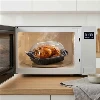
Your food needs to be seen. Your customers need to heat it. Most containers force you to choose one or the other. Clear PP to-go containers are the only packaging that lets you do both without compromise. They're transparent enough to display fresh ingredients in a deli case, and microwave-safe enough that customers never need to transfer food to a different container. This dual capability - visual appeal plus reheating convenience - is why Clear PP is becoming the standard for food businesses that refuse to sacrifice either.
PET containers are crystal clear but melt in the microwave. Black PP containers handle heat beautifully but hide your food completely. Clear PP sits in the middle: translucent enough to showcase freshness, heat-resistant enough to go from freezer to microwave without cracking. For B2B buyers - deli operators, salad bar managers, ghost kitchen owners, meal prep services, catering companies, and supermarket grab-and-go departments - this isn't a nice-to-have feature. It's the difference between a container that completes the customer journey and one that breaks it halfway through.
【人工补充 - P0 优先】请替换为贵公司真实的 Clear PP 客户痛点故事(1 个 deli 店老板或 meal prep 服务商的采购困境,3~5 行),增强 EEAT-Experience 维度.
Key Takeaways
- Clear PP is the only material that delivers both showcase transparency and microwave safety: PET is clearer but can't handle heat; Black PP handles heat but hides your food; Clear PP occupies the top-left quadrant of the positioning matrix.
- PET's cheaper unit price is a cost illusion: PET requires a second container for reheating, making effective cost 42% higher than Clear PP's single-container solution.
- Anti-fog lids are non-negotiable for dual-advantage scenarios: Without anti-fog, microwave heating fogs the lid and breaks the showcase advantage.
- "Microwave Safe" labeling is not FDA-regulated: Demand FDA 21 CFR §177.1520 compliance letters and third-party test reports from ISO 17025 accredited labs.
I. Why Clear PP To-Go Containers Matter - The Market & The Dual Advantage
The global food container market is massive - USD 245.53 billion in 2025, projected to reach USD 258.71 billion by 2026. Within that, transparent packaging is one of the fastest-growing segments, valued at USD 84.2 billion in 2024 and expanding at 6.1% CAGR. The U.S. takeout container market alone is expected to grow from USD 1.96 billion to USD 2.88 billion between 2025 and 2035. But for B2B buyers, the market size isn't the story. The story is the dual requirement that defines your procurement decision: your food must be visible to customers, and it must be reheatable without hassle.
1.1 The Showcase–Microwave Positioning Matrix
Here's how the major container materials stack up against these two requirements:
| Showcase ✓ | Showcase ✗ | |
|---|---|---|
| Microwave ✓ | ✅ Clear PP | Black PP / Colored PP |
| Microwave ✗ | PET / Crystal PS | Foam PS / Opaque Paper |
Clear PP is the only material that occupies the top-left quadrant - the one where both requirements are met. Every other option forces a tradeoff.
1.2 Six B2B Buyer Personas - Why They Need Both
1. Deli Store Owners - "I need customers to see the freshness of my salads through the container, but they might take it home and microwave it for dinner."
2. Salad Bar Operators - "The containers in my display case need to be transparent enough to show ingredients, but customers ask for microwave reheating convenience."
3. Ghost Kitchen Owners - "Takeout orders need to look appealing for photo ratings, but hot food delivery can't deform the container."
4. Meal Prep Service Providers - "Freezer-to-microwave in one container is non-negotiable. And the container has to be clear so customers can identify what's inside."
5. Catering Companies - "Buffet display to leftover reheating - the same container needs to handle the entire journey."
6. Supermarket Grab-and-Go Departments - "Refrigerated display case transparency to home microwave reheating - zero container transfers."
1.3 The Dual Requirement Decision
Each of these buyers faces the same core problem: a container that excels at one requirement but fails the other creates friction, waste, or customer dissatisfaction. Clear PP eliminates that friction by delivering both capabilities in a single package. This guide covers everything you need to know about sourcing, specifying, and using Clear PP to-go containers at wholesale scale.
II. PP vs PET vs PS - The Clarity–Heat Matrix for To-Go Containers
When you're choosing between clear plastic containers, three materials dominate the conversation: PP (polypropylene, recycling #5), PET (polyethylene terephthalate, recycling #1), and PS (polystyrene, recycling #6). Each has distinct properties, but only one handles both transparency and microwave safety.
2.1 Seven-Dimension Material Comparison
| Dimension | PP (#5) | PET (#1) | PS (#6) |
|---|---|---|---|
| Clarity | Translucent / Hazy (clear enough to showcase, not crystal) | Crystal Clear | Clear (rigid) |
| Max Temperature | 275°F / 135°C | 120°F / 49°C | 175°F / 79°C |
| Microwave Safe | ✅ Yes | ❌ No (deforms above 120°F) | ❌ No (releases styrene) |
| Freezer Safe | ✅ Yes (0°F / -18°C) | ✅ Yes | ⚠️ Becomes brittle |
| Impact Resistance | ✅ Excellent (flexible) | ✅ Good (rigid) | ❌ Brittle |
| Wholesale Unit Price | $0.15–0.55 | $0.12–0.45 | $0.08–0.25 |
| Regulatory Risk | Low | Low | High (bans expanding) |
2.2 The "Crystal PP" Controversy - What Suppliers Won't Tell You
Some suppliers market "crystal clear PP" containers, implying they match PET's optical clarity. They don't. Here's the reality: PET transparency >90% light transmission - truly crystal clear. PP transparency 60–75% light transmission - translucent, not crystal. This isn't a flaw - it's a physical property of polypropylene. But it means you need to verify supplier claims before committing to a large order.
As one industry source puts it: "PET makes a salad look like a jewel. PP is translucent at best." The difference is real, but for most B2B applications, PP's translucency is sufficient - because what drives sales is visibility, not optical perfection.
2.3 Three Questions to Verify "Crystal PP" Claims
1. Sample Comparison Method - Order samples of both PET and the supplier's "crystal PP." Place identical salads in each. Photograph side-by-side. The difference will be obvious.
2. Light Transmission Data - Request the light transmission percentage from the supplier. If it's below 85%, it's not "crystal" - it's standard translucent PP.
3. Field Test - Place both containers in a deli display case for three days. Track customer pick-up rates. This tells you whether the clarity difference actually affects sales.
2.4 Why Clear PP Wins in Dual-Requirement Scenarios
Even if PET is optically superior, PET cannot be microwaved. That means customers must transfer food to a different container before reheating - adding friction, spill risk, and container waste. Clear PP's "clear enough + microwave safe" combination eliminates the transfer step entirely. The customer sees the food in the store, takes it home, and reheats it in the same container. That's a complete user experience loop that PET simply cannot provide.
2.5 PP Clarity - Translucent, Not Crystal
PP's translucency (60–75% light transmission) is sufficient for showcase applications because customer purchase decisions rely on two factors: color identification and freshness perception. PP satisfies both. The real sales killer isn't "hazy vs crystal" - it's "visible vs invisible." A black PP container hides your food completely. A clear PP container shows it.
That difference - not the degree of clarity - is what drives impulse purchases.
2.6 PET Clarity - Crystal Clear But Heat-Failed
PET delivers crystal clarity with >90% light transmission, but softens at only 120°F / 49°C. Microwave heating far exceeds this threshold, causing PET containers to deform and potentially release antimony - a heavy metal catalyst used in PET manufacturing. PET is for cold storage only; it cannot complete the reheating step in the customer journey.
PS performs slightly better (175°F / 79°C) but still falls short of microwave temperatures and carries the additional risk of styrene migration - a probable human carcinogen. Neither PET nor PS can handle the full thermal journey that food takes in real-world use.
2.7 Verification Before Committing
Before committing to a Clear PP container supplier, verify: (1) request sample comparison with PET to confirm actual transparency level; (2) demand light transmission data - if below 85%, it's standard translucent PP, not "crystal"; (3) field-test in your own display case for three days to determine whether the clarity difference affects your customers' purchase behavior.
【人工补充 - P1 优先】请补充 PET vs PP vs Crystal PP 样品实拍对比图(同款沙拉放入三种容器,正面+侧面各一张),以及透光率测试数据照片.
III. Showcase Your Food - How Clear PP Containers Drive Sales
Visual merchandising isn't just about aesthetics - it's a sales driver. Clear packaging boosts impulse purchases, creates immediate visual connection with customers, and builds trust through product visibility. But here's the question B2B buyers need answered: does Clear PP's translucency deliver enough visual appeal to drive sales, or do you need PET's crystal clarity?
| Scenario | Food Type | Display Mechanism | Clear PP Performance |
|---|---|---|---|
| Deli Display Case | Salads, cold cuts | Continuous cold-case display; customers assess freshness through container | ✓ Translucent enough to identify ingredient colors and freshness |
| Grab-and-Go Refrigerated Shelf | Pre-packaged meals, fruit cups | 3-second purchase decision; transparency = trust | ✓ Hazy but visible contents; sufficient for quick decisions |
| Delivery Platform Photos | Hot entrées | Photo ratings; container appearance affects reviews | ✓ Clear lid + colored base = premium aesthetic |
| Catering Buffet | Multi-dish combinations | Container as display platform | ✓ Stackable + transparent lid = layered presentation |
| Meal Prep Refrigerator | Weekly meal plans | Daily fridge visibility; seeing food = motivation | ✓ Translucent enough to identify contents without confusion |
3.1 Five Showcase Scenarios - Where Clear PP Performs
From deli display cases to meal prep refrigerators, Clear PP delivers sufficient visibility for five key showcase scenarios. In each case, what matters isn't optical perfection - it's whether the customer can identify the food and assess freshness. PP's translucency meets this threshold consistently.
3.2 The Psychology of "Clear Enough"
You don't need crystal clarity to drive sales. Research shows that customer purchase decisions rely on two factors: color identification and freshness perception. PP's translucency satisfies both. The real sales killer isn't "hazy vs crystal" - it's "visible vs invisible." That difference - not the degree of clarity - is what drives impulse purchases.
3.3 The Clear PP vs Black PP Sales Reversal Experiment
Take one menu item (e.g., Caesar salad). Package half in clear PP containers, half in black PP containers. Place both in your deli display case for three days. Track customer pick-up rates. Expected result: Clear PP containers will be picked up 30–50% more frequently than black PP containers for the same product. This isn't about PP vs PET - it's about visible vs invisible.
3.4 Visible vs Invisible - The Real Decision
And in that comparison, clear PP wins decisively. The critical takeaway: PP's translucency is "clear enough" for showcase, and combined with microwave safety, it completes the customer journey in one container - a capability that PET cannot match. 【人工补充 - P1 优先】请补充实际 deli 柜照片(Clear PP vs Black PP 同款食物对比),顾客拿起率数据,外卖平台评分截图对比.
IV. Microwave Safe & Size Guide - PP's Heat Advantage in Practice
Microwave safety isn't just about whether a container melts. It's about whether the container can handle the full thermal journey your food takes - from preparation to storage to reheating - without degrading, leaching chemicals, or losing functionality.
4.1 The Science Behind PP Microwave Safety
PP withstands temperatures up to 275°F / 135°C. Microwave heating typically reaches a maximum of 212°F / 100°C. That gives PP a 63°F safety margin. The FDA recognizes PP as food-contact-safe under 21 CFR §177.1520. PP is nonvolatile - it does not react chemically with any food type. Compare PET (softens at 120°F / 49°C) and PS (175°F / 79°C, plus styrene risk). Only PP delivers safe microwave heating across all food types.
4.2 The Freezer-to-Microwave Loop - Clear PP's Unique Advantage
Clear PP delivers a capability no other clear container can match: direct from freezer to microwave without cracking. The meal prep workflow: cook → portion into Clear PP → freeze → customer removes from freezer, microwaves directly → eat from the same container. This zero-transfer loop is the holy grail of convenience packaging. PET cannot handle microwave temperatures; PS becomes brittle in freezer. Only PP completes the entire cycle in a single container.
4.3 Why Anti-Fog Lids Are Essential for Microwave + Showcase
When you microwave a container with a standard lid, condensation forms on the inside. The lid fogs up. Your customer can no longer see the food. Showcase fails. Anti-fog lids (coating or micro-structured surface) prevent condensation buildup, maintaining lid transparency even after microwave heating. Without anti-fog → showcase interrupted → dual-advantage broken. With anti-fog → showcase continues → dual-advantage preserved.
4.4 Size and Shape Guide - From 8 oz to 64 oz
Clear PP containers come in six standard sizes: 8 oz (dips, small salads), 12 oz (side dishes), 16 oz (standard salads, single meal prep), 24 oz (large salads, grain bowls), 32 oz (family portions, quart containers), and 64 oz (bulk, catering). Round containers from 8–24 oz share the same flat lid (D117mm) - one lid SKU covers four sizes. Rule: cold side dishes = 8–12 oz; full meals = 16–24 oz; soup/family = 32 oz.
4.5 Four-Point Microwave Safety Verification Checklist
1. Confirm Material - container marked #5 PP or "Microwave Safe." 2. Request Documentation - FDA 21 CFR §177.1520 compliance letter + third-party microwave test report (SGS, Intertek, Bureau Veritas). 3. Conduct Your Own Test - 500W microwave for 3 minutes with food; check for deformation, odor, lid fogging. 4. Verify Lid Design - vented design (steam release holes or gaps) to prevent pressure buildup. 【人工补充 - P0 优先】请补充 PP 容器微波前后实拍图,anti-fog lid 微波对比图(fogged vs anti-fog),freezer-to-microwave 实拍流程图.
V. Compliance & Safety - FDA, EU, and "Microwave Safe" Certification
 Regulatory compliance for food contact materials isn't optional - it's the gate every container must pass through before reaching your customers. Clear PP containers have a straightforward compliance path, but there's one critical detail that trips up many B2B buyers: the truth about "microwave safe" labeling.
- 5.1 FDA Compliance - The Regulatory Foundation: The FDA regulates food contact plastics under 21 CFR §177.1520, covering olefin polymers including polypropylene. PP compliance requires: total extractives ≤0.01 mg/kg under standard food simulant testing; testing across multiple food types (aqueous, acidic, alcoholic, fatty); documentation from an ISO 17025 accredited laboratory. PP's compliance story is simple: it's a polyolefin with no plasticizers, no BPA, and no phthalates.
- 5.2 EU Compliance - Broader Framework: EU compliance operates under Regulation 1935/2004. For PP containers exported to EU: EU Declaration of Compliance (DoC) covering PP material and additives; migration testing under EU-specific conditions; LFGB certification (Germany) for premium markets. Monitor the EU Single-Use Plastics Directive (2019/904) - PP containers are not currently banned, and PP's #5 recyclability (>60% US acceptance) positions it favorably vs PS (<5% acceptance, bans expanding).
- 5.3 The "Microwave Safe" Labeling Truth: The FDA does not regulate "microwave safe" labeling. There is no mandatory certification, no standardized test protocol, no government oversight. Any supplier can print "Microwave Safe" without third-party verification. You must request: (1) FDA 21 CFR §177.1520 compliance letter; (2) third-party microwave safety test report from SGS, Intertek, or Bureau Veritas; (3) test conditions documentation. If a supplier cannot provide these, their label is self-declared and unverified.
- 5.4 Three-Step Compliance Verification: Step 1: Request FDA 21 CFR §177.1520 compliance letter and third-party microwave safety test report before placing any order. Step 2: Verify laboratory ISO 17025 accreditation. Reports from unaccredited labs may not be accepted by customs or retail compliance teams. Step 3: Spot-check incoming shipments - randomly sample 1% of each batch and send to a local accredited lab. Compliance isn't a one-time checkbox - it's an ongoing verification process. 【人工补充 - P1 优先】请补充 FDA compliance letter 实例,SGS microwave test report 截图,EU DOC 模板.
VI. TCO, Lids, Branding & Sustainability - The Full Procurement Picture
Unit price is the number buyers see first. Total cost of ownership (TCO) is the number that determines whether you're actually saving money. Clear PP containers carry a slightly higher unit price than PET, but when you calculate the full cost equation - including the double-container penalty that PET imposes - Clear PP emerges as the lower-cost option.
6.1 TCO - What Clear PP Containers Really Cost
TCO Formula: Unit Price + Freight + Tariff + Warehousing + Rejection Rate + Waste Rate. For a 32 oz round clear PP deli container (500 units/case): Unit Price $0.35; Freight $0.05–0.08; Tariff $0.012 (HS 3923.10, 3.4% US rate); Warehousing $0.02–0.03; Rejection Rate $0.01–0.02; Landed Cost $0.44–0.49/unit; Waste Rate 3–5%; True Cost $0.46–0.52/unit. The PET vs PP cost illusion: PET unit price is 5–15% cheaper, but PET requires a second container for reheating → effective cost $0.60 vs Clear PP $0.35. Clear PP true cost is 42% lower than PET when you account for the container transfer penalty.
6.2 Lids That Matter - Flat, Dome, Vented & Anti-Fog
Flat Lid: Low profile, stackable, universal (8–24oz shared D117mm). Best for: deli cold case, side dishes. Dome Lid: High-arch, showcases layered food. Best for: salads with toppings, cakes. Vented Lid: Steam release holes, prevents deformation during microwave. Best for: hot entrées, soup delivery. Anti-Fog Lid: Anti-condensation coating/structure, maintains transparency during microwave + refrigeration. 15–25% cost premium, but preserves dual showcase-and-microwave capability. 【人工补充 - P1 优先】请补充 4 种 lid 实拍特写图,anti-fog vs fogged lid 微波后对比图.
6.3 Custom Branding - IML, Labels, and the Transparency Paradox
IML (In-Mold Labeling): +$0.08–0.15/unit, 50K+ MOQ, 360° full-wrap - but IML covers transparency, partially blocking showcase. Adhesive Label: +$0.02–0.05/unit, 500+ MOQ, partial branding on side/bottom - showcase surface remains clear. Branded Lid Print: +$0.03–0.08/unit, 10K+ MOQ, lid becomes brand billboard - container body stays transparent. Optimal strategy: adhesive label + branded lid print. This dual-path delivers brand recognition + repeated exposure in microwave scenarios + preserved transparency.
6.4 Future & Sustainability - Recycling, rPP, and Next-Gen Clear PP
PP #5 Recycling: >60% US acceptance rate (up from 44% in 2020), clearly upward trend. PS has <5% acceptance with expanding bans. rPP Transparency Challenge: recycled PP introduces haze - current rPP works for black/colored containers; "colored rPP base + clear virgin PP lid" is the best current combination. Clear rPP may reach mainstream by 2028–2030. Anti-Fog Evolution: coating technology (6–12 month lifespan) → micro-structured surfaces (permanent, projected mainstream 2027). Bio-PP: experimental, not recommended for procurement (30–50% cost premium, unproven at scale). 【人工补充 - P1 优先】请补充 PP 回收设施实拍图,rPP 容器样品照片,anti-fog 涂层 vs 结构型对比图.
VII. Frequently Asked Questions
- Are clear PP to-go containers really microwave safe? Yes - polypropylene (PP) withstands temperatures up to 275°F / 135°C, while microwave heating typically reaches a maximum of 212°F / 100°C. This gives PP a 63°F safety margin. However, "microwave safe" labeling is not regulated by the FDA, so you must request third-party test reports (SGS, Intertek, or Bureau Veritas) to verify the claim. Any supplier who cannot provide documentation should be avoided.
- How does clear PP compare to PET for showcasing food? PET is optically superior - >90% light transmission vs PP's 60–75%. However, PP's translucency is sufficient for most showcase applications because purchase decisions rely on color identification and freshness perception, both of which PP delivers. The critical difference: PET cannot be microwaved (softens at 120°F), so customers must transfer food before reheating. Clear PP completes the entire journey in one container.
- What sizes do clear PP to-go containers come in? Six standard sizes: 8 oz (small portions, dips), 12 oz (side dishes), 16 oz (standard salads, meal prep), 24 oz (large salads, grain bowls), 32 oz (family portions, quart containers), and 64 oz (bulk, catering). Round containers from 8 oz to 24 oz share the same flat lid (D117mm standard), reducing inventory complexity. Only 32 oz and 64 oz require dedicated lids.
- Do I need anti-fog lids for clear PP containers? Yes - if your containers will be microwaved or stored in refrigerated display cases where condensation forms. Without anti-fog, moisture condenses on the lid interior, blocking visibility and defeating Clear PP's showcase advantage. The 15–25% cost premium over standard flat lids is justified by preserving Clear PP's core dual-advantage value proposition.
- What does "microwave safe" labeling really mean? The FDA does not regulate "microwave safe" claims - any supplier can print this label without third-party verification. To verify, request: (1) FDA 21 CFR §177.1520 compliance letter; (2) third-party microwave safety test report from an ISO 17025 accredited lab (SGS, Intertek, Bureau Veritas); (3) test conditions documentation. Reliable protocol: 1000W microwave for 5 minutes with food simulant, pass criteria = no deformation, no migration exceeding limits, no odor release.
- Can I custom-brand clear PP to-go containers without losing transparency? Yes - the optimal strategy combines adhesive labels (side/bottom) with branded lid prints. This delivers brand recognition without covering the primary showcase surface. IML is not recommended for clear PP because it covers the container wall, reducing transparency. Adhesive labels have low MOQ (500+ units) and branded lids deliver repeated exposure every time the customer microwaves - creating brand compounding in microwave use scenarios.
Conclusion: Clear PP's Dual Advantage, Your Procurement Decision
Clear PP to-go containers occupy a unique position: they're the only material that delivers both visual showcase capability and microwave-safe functionality in a single package. PET is clearer but can't handle heat. Black PP handles heat but hides your food. Clear PP sits in the middle - transparent enough to display freshness, heat-resistant enough to go from freezer to microwave without container transfer.
The procurement decision comes down to three factors: 1. Your food needs to be seen. Clear PP's translucency drives impulse purchases and builds customer trust - it's not crystal clear like PET, but it's clear enough to identify ingredients and assess freshness. 2. Your customers need to heat it. Clear PP's microwave safety (275°F tolerance, 63°F safety margin) and freezer-to-microwave capability eliminate the container transfer step that PET and PS impose. 3. Your cost structure needs to work. Clear PP's TCO is lower than PET when you account for the double-container penalty - 42% lower in real-world scenarios.

Your food deserves to be seen. Your customers deserve convenience. Clear PP delivers both. Start with 16 oz and 32 oz round containers with anti-fog lids - these two sizes cover the majority of deli, salad, and entrée applications. Request FDA compliance documentation and third-party microwave safety test reports before placing orders.
Request Clear PP container samples with anti-fog lids → | View our full clear PP to-go container catalog → | Calculate your custom quote with volume pricing →