

Introduction
On February 28, 2026, the Islamic Revolutionary Guard Corps of Iran announced a prohibition on any vessel transiting the Strait of Hormuz. This decision immediately triggered severe turbulence in the global energy market. As the sole maritime passage connecting the Persian Gulf to the Gulf of Oman, the Strait of Hormuz handles 25% of the world's seaborne oil trade and 20% of its liquefied natural gas (LNG) trade, with an average daily transport of approximately 20 million barrels of crude oil and refined products. The blockade of this critical waterway not only directly impacts global energy supply but also, through complex industrial chain transmission mechanisms, exerts an unprecedented shock on the takeaway plastic food box industry, which relies heavily on petrochemical raw materials.

As a vital component of the modern food service industry, the industrial chain of plastic food box products used for takeaway is highly dependent on petrochemical feedstocks. According to the latest data, polypropylene (PP) containers account for 68.4% of the global takeaway packaging market, and PP raw material prices show a strong positive correlation with crude oil prices. A $10 per barrel increase in crude oil prices raises PP production costs by approximately 400 RMB per ton. The blockade of the Strait of Hormuz not only severs a crucial oil transportation route but also disrupts the supply of petrochemical raw materials, profoundly impacting the global takeaway plastic food box industry.
This article will comprehensively analyze the impact of the Strait of Hormuz closure on businesses utilizing plastic food box solutions for takeaway, exploring dimensions such as industrial chain structure, cost transmission mechanisms, and market supply-demand dynamics. It will also discuss relevant coping strategies, providing decision-making references for industry participants.
I. The Industrial Chain Structure of Takeaway Plastic Food Boxes and the Strategic Significance of the Strait of Hormuz
1.1 Composition of the Takeaway Plastic Food Box Industrial Chain
The industrial chain for takeaway plastic food box products exhibits a characteristic of "raw materials and end-markets externally dependent, manufacturing clustered internally." It spans multiple stages from raw material supply to end-use applications. The upstream segment primarily involves petroleum refining (producing PP, PS feedstocks) and bio-fermentation (for PLA monomers), with petroleum-based plastic raw materials holding a dominant position. In 2023, China's PP production capacity reached 38 million tons, accounting for 32% of global capacity, yet still requiring substantial imports to meet demand.
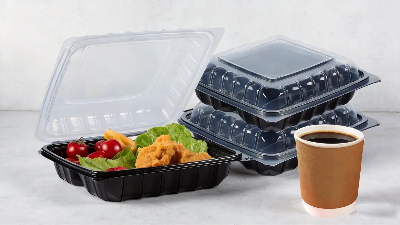
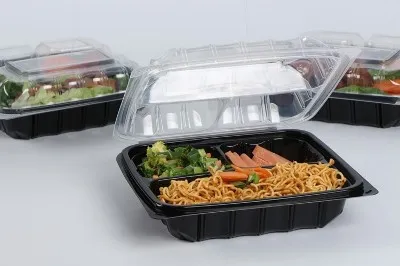
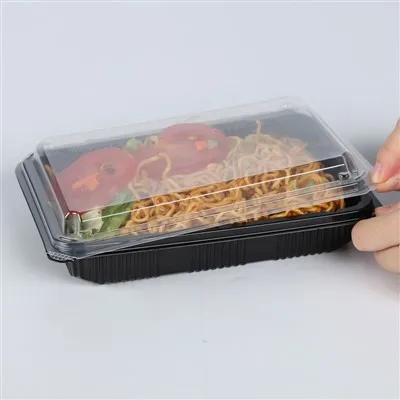
The midstream manufacturing segment shows a production capacity distribution that is dense in the East and sparse in the West, with the Yangtze River Delta and Pearl River Delta regions concentrating approximately 65% of the national capacity. These manufacturers primarily use injection molding and thermoforming processes for disposable container production. Injection molding is suitable for producing structurally complex takeaway plastic food box containers, while thermoforming is better suited for thin-walled, large-area containers.
Downstream applications are highly concentrated in online food delivery platforms (accounting for about 68%), chain restaurants (18%), and commercial ready-to-eat meal channels (10%). In 2024, China's takeaway order volume surpassed 100 billion, projected to reach 120 billion by 2025. This indicates a continued surge in demand for packaging materials.
1.2 The Strategic Role of the Strait of Hormuz as an Energy Transport Hub
As the world's most critical energy transport chokepoint, the strategic importance of the Strait of Hormuz is unparalleled. According to the latest data from the U.S. Energy Information Administration (EIA), approximately 20 million barrels per day of oil were transported through the Strait of Hormuz in 2024, equivalent to about 20% of global liquid petroleum consumption. This includes 14 million barrels per day of crude oil and condensate and 6 million barrels per day of refined products.
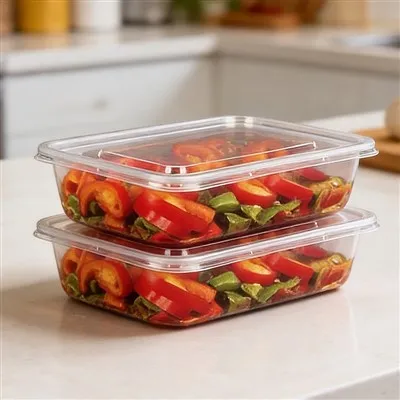
Regarding destination, 84% of the crude oil and condensate and 83% of the LNG transiting the Strait flow to Asian markets. China, India, Japan, and South Korea are the primary destinations, together accounting for 69% of all crude oil flow through the Strait. This highly concentrated transport pattern makes Asian markets particularly vulnerable to supply disruption risks.
Crucially, the Strait of Hormuz is not only a corridor for crude oil but also a vital artery for petrochemical feedstocks. Approximately one-third of the global seaborne fertilizer trade also passes through this strait, significantly impacting the supply of raw materials for the petrochemical industry. As the world's largest plastic importer, China relies on Iranian sources for about 10% of its PE and 45% of its methanol. The blockade directly cuts off these key raw material supply channels.
1.3 Historical Blockade Events and Their Impacts
While never completely shut down, the Strait of Hormuz has experienced severe shipping disruptions. The most notable was the "Tanker War" during the Iran-Iraq War in the 1980s, where both sides attacked tankers within and near the Strait, using mines to disrupt traffic. Iran threatened to close the Strait at least three times during that period, though it remained open due to international intervention.

Similar risk events have occurred more recently. In June 2019, attacks on two tankers near the Strait of Hormuz led to a 13% short-term spike in oil prices and a tenfold surge in insurance premium rates. These historical incidents demonstrate that even localized shipping disruptions can significantly impact energy markets.
The February 28, 2026, closure event represents the most severe blockade in the history of the Strait of Hormuz. Real-time data from international oil tanker flow monitoring systems shows vessel speeds in the surrounding waters have generally dropped to zero, indicating a complete halt to shipping in the area. Major international shipping lines, including Maersk, MSC, and CMA CGM, have fully suspended services in and around the Strait of Hormuz.
II. Cost Transmission Mechanism: The Price Chain from Crude Oil to Takeaway Plastic Food Boxes
2.1 Direct Impact of Crude Oil Prices on Petrochemical Feedstocks
The closure of the Strait of Hormuz first impacts the petrochemical feedstock market through crude oil price transmission. Industry estimates suggest that a $10 per barrel increase in crude oil prices raises polypropylene (PP) production costs by approximately 400 RMB per ton. Since March 2026, oil prices have risen by $12 per barrel due to the blockade, directly pushing up the theoretical cost of PP by 480 RMB per ton.
This cost transmission mechanism exhibits significant time lags and amplification effects. Rising crude oil prices initially inflate the costs of refining feedstocks like naphtha and liquefied petroleum gas (LPG), with prices for these "chemical industry bottlenecks" surging by over 20% following the conflict. This pressure then transmits to core intermediates like ethylene and propylene – the base materials for polyethylene (PE) and polypropylene (PP), respectively – which also saw price increases exceeding 20%.
Taking PP as an example, when crude oil prices reach $90-100 per barrel, the cost of oil-based PP can approach approximately 8980-9700 RMB per ton. Given that oil-based processes account for over half of China's PP production, the impact of rising crude oil prices on PP costs is particularly pronounced.
2.2 Transmission of Petrochemical Feedstock Costs to Takeaway Container Production
In the cost structure of plastic food box manufacturing for takeaway, raw material costs constitute 65-70% of total costs, labor costs account for 15-20%, and equipment depreciation and management expenses together make up the remaining 15-20%. Substantial increases in raw material costs directly compress the profit margins of manufacturing enterprises.
The unit cost for traditional polypropylene (PP) containers is approximately 0.12-0.18 RMB, molded pulp containers range from 0.25-0.40 RMB, while PLA containers can reach as high as 0.35-0.60 RMB. Following the Strait of Hormuz closure, the rise in PP prices significantly erodes the cost advantage of traditional plastic containers, while the relative competitiveness of biodegradable materials improves.
More severely, raw material supply shortages have left many manufacturers facing a "lack of input" dilemma. China relies on imports for about 45% of its methanol, a crucial intermediate for certain plastic raw materials. The blockade has disrupted these key supplies, forcing manufacturers to seek alternative suppliers or adjust production plans, further escalating production costs.
2.3 Cascading Effects on Logistics Costs
The Strait of Hormuz blockade impacts not only raw material costs but also amplifies cost pressures through logistics channels. With shipping routes disrupted, many cargo vessels are forced to reroute around the Cape of Good Hope, adding 3,500-4,000 nautical miles to the journey and extending transit times by 10-15 days. This change in shipping routes directly leads to substantial increases in logistics costs.
Market data indicate that freight rates have surged 3-4 times following the rerouting around the Cape of Good Hope, while war risk insurance premiums have skyrocketed by 300%-500%. For instance, the freight cost for a standard container from the Persian Gulf to Asia, originally around $3,000, has risen to $12,000-$15,000 post-blockade. These additional costs are ultimately passed through to final prices, including the transportation costs for takeaway containers.
Furthermore, extended transit times necessitate increased inventory levels to ensure production continuity, thereby raising capital carrying costs and warehousing expenses. For small and medium-sized enterprises with weaker financial positions, such cost pressures can be fatal.

2.4 Cost Pass-Through Mechanisms Across the Industrial Chain
Facing cost pressures, all segments of the industrial chain are seeking ways to pass through costs. Market research suggests that a 10%-15% increase in takeaway packaging costs is transmitted to the end market through several channels:
At the petrochemical enterprise level, producers pass on cost pressures by raising ex-factory prices. In the first week of March, acrylic acid prices surged 22.26% week-on-week, while PET rose 7.40% in a single day, marking a 22.68% year-on-year increase. Chemical giant BASF announced price hikes of up to 20% for key plastic additives.
At the packaging enterprise level, given that raw materials account for over 75% of production costs, rising raw material prices directly squeeze profit margins. Many packaging companies are forced to raise product prices to survive, with ex-factory prices for takeaway plastic food box units increasing by 0.1-0.2 RMB on average.
At the restaurant business level, facing rising packaging costs, operators face a dilemma. Increasing packaging fees or meal prices could lead to order volume decline, while absorbing the costs would squeeze their own profit margins. Surveys indicate many businesses are subtly raising meal prices by 1-3 RMB or reducing discounts and promotions to compensate.
III. Global Supply and Demand Dynamics in the Takeaway Plastic Food Box Market
3.1 Market Size and Growth Trends
The global takeaway plastic food box market has maintained rapid growth in recent years. According to recent data, the global food takeaway packaging market reached $55.93 billion in 2025 and is projected to reach $87.57 billion by 2032, with a compound annual growth rate (CAGR) of 6.7%. The Chinese market holds a significant position, with its takeaway food container market reaching 116.167 billion RMB in 2025.
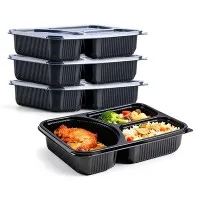
From a product structure perspective, traditional polypropylene (PP) remains dominant, holding a 68.4% market share in 2025, though this share is gradually declining. The penetration of biodegradable materials (PLA, PBAT, etc.) is rapidly increasing, rising from 5.2% in 2021 to 12.7% in 2025, with an average annual growth rate exceeding 25%. This shift in material composition reflects growing market demand for eco-friendly packaging.
The rapid development of the takeaway market is the primary driver of packaging demand. In 2025, China's takeaway user base exceeded 580 million, with total annual orders surpassing 22 billion. Globally, food delivery platform users number over 2.5 billion, generating more than 3.1 trillion food packaging units annually.
3.2 Supply-Side Capacity Changes and Supply Chain Disruption
The Strait of Hormuz blockade has severely impacted the supply side, primarily manifested in:
Raw material shortages have the most direct impact. China's dependence on Iranian imports for about 10% of its PE and 45% of its methanol has been cut off by the blockade. Concurrently, import costs for major raw materials like PP and PS have surged, forcing many small and medium-sized enterprises to reduce production or shut down due to unaffordable cost pressures.
Reduced capacity utilization. Industry data suggests capacity utilization rates for leading enterprises generally range between 75%-85%, while the average for SMEs is below 60%. Post-blockade, due to raw material shortages and cost increases, capacity utilization among SMEs has further declined, with some facing production suspension risks.
Supply chain restructuring. Facing supply disruptions, many companies are seeking alternative suppliers and adjusting supply chain layouts. Some are turning to regions like Southeast Asia or other parts of the Middle East for raw material sourcing. However, supply capacity in these regions is limited, and transportation costs have also risen sharply. Others are increasing procurement from domestic sources, but domestic capacity is also under strain.
3.3 Structural Adjustments on the Demand Side
Changes on the demand side primarily involve shifts in consumer behavior and market structure: Increased price sensitivity. The rising cost of takeaway packaging ultimately translates into higher takeaway prices for consumers. Estimates suggest packaging fees and plastic bag costs have increased by 0.2-0.5 RMB per order. For price-sensitive consumers, this could lead to reduced takeaway consumption or a shift towards lower-priced alternatives.
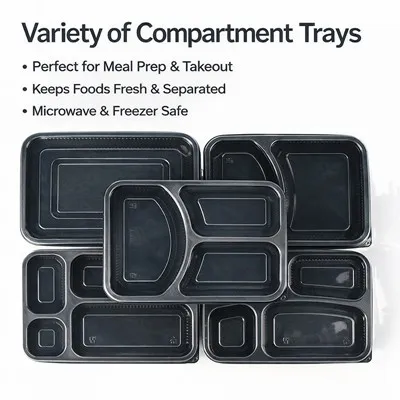
Growing demand for eco-friendly options. Amidst cost pressures, the relative competitiveness of biodegradable materials has improved. Although PLA containers cost 0.35-0.60 RMB, 2-3 times that of traditional PP takeout containers, the proportion of consumers willing to pay a premium for environmentally friendly packaging is increasing due to heightened environmental awareness.
Market segmentation intensifies. The high-end market is relatively less price-sensitive, placing greater emphasis on product quality and environmental attributes. Hence, biodegradable packaging is gaining faster penetration in this segment. The mid-to-low-end market remains more cost-focused, where traditional plastic packaging still dominates, albeit with a gradually shrinking market share.
3.4 Differentiated Regional Market Impacts
The impact of the Strait of Hormuz blockade varies significantly across different regional markets:
Asia-Pacific: The most severely affected. Relies on the Strait for 84% crude oil and 83% LNG. Tight plastic raw material supplies and sharply higher prices.
Europe: Relatively less impacted. Lower energy dependence, developed recycling system, and biodegradable material adoption.
North America: Complex impact. Shale oil reduces reliance, but the massive takeaway market faces packaging supply tightness.
Middle East: Unique challenges. Underdeveloped petrochemical sectors, disrupted imports and exports, double blow to the local industry.
IV. Coping Strategies and Transformation Paths for Takeaway Plastic Food Box Businesses
4.1 Short-Term Emergency Measures
Facing cost pressures and supply disruptions from the Strait of Hormuz blockade, takeaway plastic food box businesses need to implement several short-term emergency measures. Optimizing inventory management is a top priority. Businesses should adjust inventory levels reasonably based on historical sales data and market forecasts to avoid stock-outs due to supply interruptions.
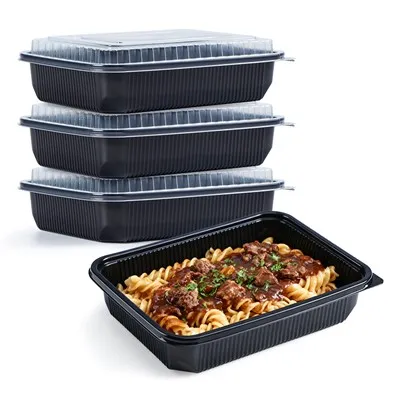
Finding alternative suppliers. When traditional suppliers cannot fulfill orders, businesses must actively seek alternatives. Sourcing from regions like Southeast Asia or Europe may be an option, but supplier qualifications and product quality must be thoroughly evaluated. Price negotiations should aim for reasonable procurement costs.
Adjusting product mix. Under cost pressure, businesses can consider adjusting their product mix to increase the proportion of high-margin products and reduce production of low-margin ones. For instance, focusing on higher-value biodegradable containers, despite higher costs, can tap into growing market demand and potentially offer better profit margins.
Strengthening cost control. Businesses need to implement comprehensive cost controls across all operations. This can involve enhancing production efficiency, optimizing processes, reducing defect rates, and tightening expense management to cut unnecessary spending.
4.2 Medium-to-Long-Term Transformation Strategies
Beyond short-term measures, businesses need medium-to-long-term transformation strategies to adapt to structural industry shifts: Accelerating material innovation. Biodegradable materials represent the future trend. Companies should increase investment in R&D and the application of bio-based materials like PLA and PBAT.

Promoting technological upgrades. Enhancing production efficiency through technological innovation can reduce costs. Examples include adopting automated production lines, implementing smart warehousing systems to reduce inventory costs, and utilizing digital management systems to improve operational efficiency.
Expanding market channels. Facing intense competition in the traditional takeaway market, businesses can explore new market channels. Constructing a circular economy model. Developing a circular economy is crucial for sustainable development. Businesses can establish packaging collection and recycling systems. Although the current recycling rate for takeaway plastic food box containers is only around 5%, this rate is expected to increase significantly with technological progress and policy support.
4.3 Policy Support and Industry Collaboration
Facing industry challenges, businesses should actively seek policy support and strengthen industry collaboration: Apply for government subsidies. Many local governments have implemented policies supporting the development of eco-friendly packaging. Businesses can apply for relevant subsidies, such as tax incentives or financial grants, for using biodegradable packaging.
Participating in industry-standard development. Industry standards play a crucial role in market regulation and industry development. Businesses should actively participate in setting these standards to advocate for their interests. Simultaneously, they must strictly adhere to relevant standards to ensure product quality.
Strengthening industry collaboration. In difficult times, companies within the industry should collaborate to tackle shared challenges. Establishing industry alliances for resource and information sharing, conducting joint procurement to enhance bargaining power, and co-developing new technologies and products to share R&D costs are effective strategies.
4.4 Risk Management and Sustainable Development
While navigating the current crisis, businesses must also establish a robust risk management system to ensure sustainable development: Establishing risk early warning mechanisms. Companies need a comprehensive risk early warning system to identify and address various risks promptly. Focus should be on factors like raw material price volatility, exchange rate fluctuations, and policy changes, with corresponding contingency plans developed.
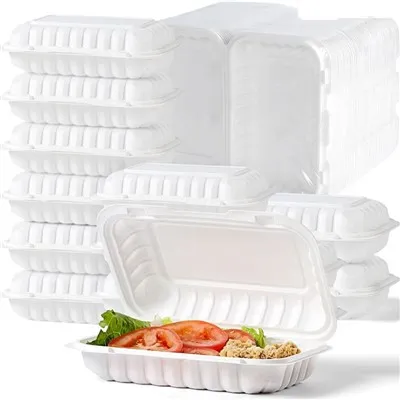
Diversifying operations. Relying on a single product or market carries significant risk. Businesses should consider diversification, such as developing products with different materials and specifications to meet varied customer needs, and expanding into different application scenarios like airline catering or railway dining services.
Strengthening brand building. In a competitive market, brand is a core competitive advantage. Companies should invest in brand building to enhance brand awareness and reputation. A strong brand can command premium pricing, partially offsetting cost pressures.
Focusing on social responsibility. A company's development relies on societal support, making social responsibility crucial. Actions like reducing packaging waste, promoting environmental concepts, and participating in public welfare activities can build a positive corporate image.
Conclusion
The blockade of the Strait of Hormuz has delivered a comprehensive shock to the takeaway plastic food box industry. The entire industrial chain, from raw material supply to end-use applications, faces unprecedented challenges. Rising crude oil prices have increased PP costs by 480 RMB per ton, leading to a 10%-15% increase in takeaway packaging costs, severely squeezing the viability of many businesses.
However, within this crisis lie opportunities. The penetration rate of biodegradable materials has increased from 5.2% in 2021 to 12.7% in 2025, reflecting rapidly growing market demand for eco-friendly packaging. This provides a direction for business transformation and upgrading. Through technological innovation, product upgrades, and business model innovation, enterprises can find their place within the new market landscape.
For takeaway plastic food box businesses, the key is to formulate a clear strategic plan that addresses both the immediate crisis and positions for future development. Short-term actions should focus on inventory optimization, finding alternative suppliers, and adjusting product mixes to ensure operational continuity. Medium-to-long-term strategies should prioritize accelerating material innovation, promoting technological upgrades, expanding market channels, and building a circular economy model to achieve sustainable development.
Simultaneously, governments, industry associations, and financial institutions should form a coalition to provide necessary support and assistance. Through policy support, standard setting, and financial backing, the healthy development of the industry can be promoted. Only then can the takeaway plastic food box industry undergo a transformation amidst the backdrop of global supply chain restructuring, emerging stronger and embracing new opportunities for growth.
The Strait of Hormuz blockade is a severe test, but also an opportunity for transformation and upgrading. Those enterprises that can adapt to the trends of the times and embrace innovation and change will undoubtedly secure favorable positions in the new market landscape. Through this transformation, the industry as a whole will move towards a greener and more sustainable direction.
