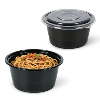
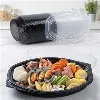
Degradable plastics have become a hot topic in environmental protection in recent years, and are particularly common in takeout containers such as disposable to-go containers, biodegradable to-go containers, and recyclable to-go containers. However, there are many misconceptions in the market, leading to confusion among restaurant operators and consumers. Let's take a look at five common misconceptions to help clarify this issue.


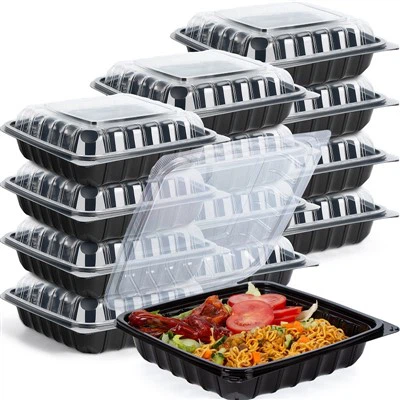
Myth 1: Degradable Means It Can Be Degraded Anywhere
Many people believe that degradable plastics will decompose quickly, no matter where they are thrown. This is not true. Degradation requires specific conditions; otherwise, they may remain unchanged for years.
Degradation May Not Necessarily Occur in the Natural Environment
For example, some biodegradable to-go containers require the right combination of temperature, humidity, and microorganisms to decompose. If directly discarded in soil or water, they may remain there for years. This also shows that carelessly discarding disposable to-go containers does not immediately disappear and still has an impact on the environment.
Industrial Composting Differs from Household Disposal
Many biodegradable to-go containers are designed for use in "industrial composting plants," where temperatures can reach over 50°C and the environment is ideal for decomposition. However, in ordinary household trash cans, the conditions are insufficient, making decomposition difficult. Therefore, companies need to clearly explain the intended use of their products when promoting them, otherwise they could mislead consumers.
Degradation Performance Varies Significantly in Different Locations
In a composting plant, disposable to-go containers may decompose in a few weeks, but in a landfill, due to a lack of oxygen, they may remain largely unchanged for decades. Therefore, the performance varies significantly in different environments, and generalizations cannot be made.


Myth 2: Biodegradable Plastics Are Necessarily More Environmentally Friendly Than Traditional Plastics
Many people believe that "biodegradable" equals environmentally friendly. In fact, environmental protection depends on the entire process, not just a single material.
The Production Process Also Consumes a Lot of Resources
Although biodegradable to-go containers are made from plant-based materials, such as corn starch and sugarcane fiber, the cultivation and processing require a lot of water and energy, and also generate carbon emissions. In some cases, the energy consumption of manufacturing these materials is even higher than that of ordinary plastic.
Environmental Protection Has Value, But It Has Limitations
Biodegradable to-go containers can indeed reduce long-term waste problems, but they also have drawbacks, such as high cost, the need for specific recycling methods, and the presence of degradation byproducts. Therefore, they can only be part of an environmental solution, not the sole answer.
Look at the Entire Life Cycle
Whether a lunch box is environmentally friendly depends on the entire process, from production, transportation, to disposal. Even recyclable to-go containers can be environmentally unfriendly if they are transported over long distances or have an inadequate recycling system. Therefore, environmental protection must be considered across the entire supply chain, not just by whether they are "biodegradable."


Myth 3: Degradable Plastics Are Always Recyclable
"Degradable" and "recyclable" are two different things; don't confuse them.
Degradable ≠ Recyclable
Recyclable to-go containers, such as PET bottles or PP lunch boxes, are recyclable and reusable. Biodegradable to-go containers are degraded by microorganisms. Mixing the two together could potentially render the entire recycling batch useless.
The Recycling System Has Requirements
Recyclable to-go containers must meet the recycling plant's standards before they can be reused. Mixing biodegradable to-go containers will damage the original recycled material and reduce its quality. Therefore, the two types of containers should not be mixed.
Mixed Recycling Can Cause Problems
If consumers cannot distinguish between the two and discard the to-go containers indiscriminately, the recycling plant will have to discard the entire batch, wasting resources and increasing processing costs. Therefore, companies should clearly label their products, and consumers should learn how to properly sort them.
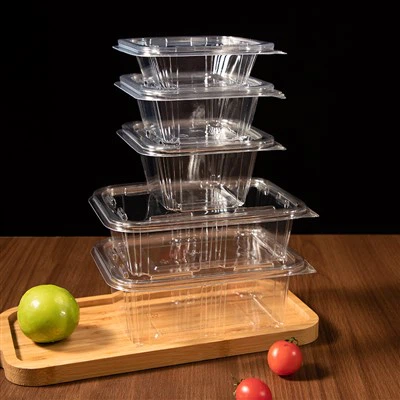


Myth 4: All Biodegradable Plastics Have the Same Properties
There are many types of biodegradable plastics, and their performance varies significantly, so it's difficult to generalize.
Differences Between Materials
PLA is commonly used in transparent cups and boxes, but it has poor heat resistance. PBAT is flexible and suitable for bags. Starch-based materials degrade quickly but are prone to deformation. These different materials determine their suitability for different scenarios.
Different Heat Resistance, Cold Resistance, and Sealing Properties
Many biodegradable to-go containers are not heat-resistant and easily deform when filled with hot soup or microwaved. PLA becomes brittle in cold environments, while PBAT is more resilient. Therefore, when choosing lunch boxes, companies should consider their specific needs rather than using a random selection.
Real Case Study
Some coffee brands used PLA for their cups, but when customers poured hot drinks directly into them, the cups deformed, forcing them to switch back to traditional materials. However, PLA worked fine for cold drinks. This demonstrates that different biodegradable to-go containers have specific applications and shouldn't be a one-size-fits-all approach.


Myth 5: Using Biodegradable Plastics Equals Green Transformation
Environmental protection isn't just about changing a single material; it requires a holistic approach.
Businesses Need a Comprehensive Strategy
Simply changing to-go containers doesn't guarantee environmental protection. Companies must also consider production energy consumption, transportation methods, waste disposal, and even the supply chain. Without these changes, the impact will be limited.
Balancing the Use of Different Materials
In some scenarios, recyclables are more suitable than biodegradables. For example, for long-distance deliveries, using durable, recyclable containers can reduce waste. Businesses should consider their specific needs rather than blindly pursuing "full biodegradability."
Policies and Consumer Education Are Crucial
Different markets have different requirements for biodegradable to-go containers, such as the different certification standards in Europe and the United States. Companies must meet the regulations of their target markets. At the same time, consumers must also understand how to use and dispose of them properly to ensure that environmental protection is truly realized.


Conclusion
Degradable plastics do play an important role in the biodegradable and recyclable to-go container market, but they are not a panacea. True environmental protection requires a comprehensive consideration of material properties, recycling systems, and regulatory requirements.
Yangrui offers businesses a variety of solutions in this regard. The company holds international certifications such as ISO and FDA to ensure food safety. It also offers strong production capacity and customized services to help clients reduce costs, comply with environmental regulations, and enhance their brand image and market competitiveness.


Where to Buy Disposable To-Go Containers?
 If you're looking for a reliable supplier of disposable lunch boxes, Huizhou Yangrui Printing & Packaging Co., Ltd. is your ideal partner. With over a decade of production experience, our product line includes disposable, biodegradable, and recyclable to-go containers, supporting customized designs and bulk purchases.
Contact information:
Email: sales@packagingbag5.com
Tel: +86 180 8644 3226
References
- Song, J. H., Murphy, R. J., Narayan, R., & Davies, G. B. H. (2009). Biodegradable and compostable alternatives to conventional plastics. Philosophical Transactions of the Royal Society B: Biological Sciences, 364(1526), 2127–2139.
- European Bioplastics. (2023). Environmental benefits of bioplastics.
- Greene, J. (2014). Sustainable Plastics: Environmental Assessments of Biobased, Biodegradable, and Recycled Plastics. Wiley.
- Rujnić-Sokele, M., & Pilipović, A. (2017). Challenges and opportunities of biodegradable plastics: A mini review. Waste Management & Research, 35(2), 132–140.