

Chinese New Year, the most important traditional festival in China, is a symbol of family reunion, feasting, and cultural inheritance. The way people celebrate this festival has undergone profound changes over the past decade, especially in terms of catering consumption and packaging habits. Disposable containers with lids, as an indispensable part of catering packaging during Chinese New Year, have witnessed a dramatic transformation in material, function, application scenario, and social cognition-from a simple, low-cost tool for leftover packaging to a product integrating safety, environmental protection, functionality, and brand value. This article systematically compares the application of disposable containers with lids in traditional and modern Chinese New Year scenarios, explores the driving forces behind the changes, analyzes the current challenges, and looks forward to future development trends. By combing through the evolution context, it provides a comprehensive reference for catering enterprises, packaging manufacturers, and relevant institutions to understand the market changes and industry trends.
1. Overview of Disposable Containers with Lids and Their Role in the Chinese New Year

2. Disposable Containers with Lids in Traditional Chinese New Year (2006-2015): Practicality as the Core, Low-End and Homogeneous
In the traditional Chinese New Year period, China's economy was in a stage of rapid growth, but the catering packaging industry was still in its initial development stage. Disposable containers with lids, as a supporting product for catering consumption, were characterized by low cost, simple production, and a single function. Their application in Chinese New Year scenarios was relatively limited, and the overall level was low-end and homogeneous. Combined with the market status at that time and relevant industry surveys, the specific performance is as follows:
2.1 Material: Dominated by Low-Cost, Low-Safety Plastics
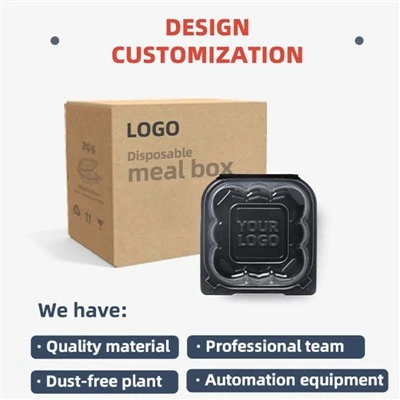
2.2 Function: Simple Structure, Single Function, Poor User Experience
Traditional disposable containers with lids had a simple structure and a single function, which could not meet the diverse needs of Chinese New Year catering scenarios, and the user experience was poor. In terms of structural design, most of them were single-compartment rectangular or round containers, with simple snap-on lids or flat lids, and the sealing performance was generally poor. It was common for soup and oil to leak during the packaging and transportation of leftover dishes, which brought great inconvenience to consumers.
 In terms of functionality, traditional disposable containers with lids lacked a targeted design for Chinese New Year catering characteristics. For example, Chinese New Year family gatherings often have a variety of dishes, and consumers need to package different types of leftovers separately to avoid flavor mixing, but the single-compartment design of traditional containers made this demand difficult to realize. In addition, most traditional containers were not microwave-safe-due to the limitations of materials (such as PVC and EPS), they would deform or release harmful substances when heated in a microwave, which made it inconvenient for consumers to reheat leftover food. During Chinese New Year, many families would store leftovers for 2-3 days, and the inability to microwave reheat greatly reduced the practicality of the containers.
In addition, the thickness of traditional disposable containers with lids was generally thin (0.1-0.2mm), and they were easy to deform or break when subjected to extrusion or heavy pressure. During the peak period of the Chinese New Year, the logistics and transportation volume was large, and a large number of containers were damaged during the transportation of takeout or gifts, resulting in food waste and economic losses for catering businesses and consumers.
2.3 Application Scenarios: Limited to Leftover Packaging, Low Demand

2.4 Consumer Cognition: Low Awareness of Safety and Environmental Protection, Focus on Cost
During the traditional Chinese New Year period, consumers' cognition of disposable containers with lids was relatively backward, with low awareness of food safety and environmental protection, and the core demand was "low cost". Most consumers believed that disposable containers were only used once, and there was no need to pursue high quality or safety, as long as they could complete the packaging function.
In terms of food safety, most consumers did not know the difference between food-grade and non-food-grade plastic materials, and could not distinguish the safety of disposable containers with lids. When choosing containers, they only considered the price, and low-cost PVC and EPS containers were their first choice. A survey conducted in 2014 showed that more than 70% of consumers did not pay attention to the material and safety certification of disposable containers with lids when using them during Chinese New Year, and only 15% of consumers would take the initiative to choose containers marked with "food-grade" .
In terms of environmental protection, consumers' awareness was even weaker. At that time, the concept of "environmental protection" was not deeply rooted in the hearts of the people, and most consumers discarded disposable containers with lids at will after use, without considering the impact on the environment. There was no perfect recycling system for disposable plastic containers in society, and most containers were landfilled or incinerated, causing serious environmental pollution. However, this problem did not attract widespread attention from consumers and society.

3. Disposable Containers with Lids in Modern Chinese New Year (2016-2025): Integration of Safety, Environmental Protection, and Aesthetics, Diversified Development
Since 2016, China's catering industry has entered a new stage of high-quality development. The rapid rise of the takeout industry, the implementation of the new "Plastic Ban" and other environmental protection policies, and the upgrading of consumer demand have jointly promoted the transformation and upgrading of the disposable container with lids industry. During the modern Chinese New Year period, disposable containers with lids have undergone earth-shaking changes in material, function, application scenarios, and consumer cognition, moving towards the direction of safety, environmental protection, functionality, and diversification. Combined with industry data and market performance, the specific characteristics are as follows:
3.1 Material: Food-Grade and Environmentally Friendly Materials Become Mainstream, Technological Innovation Advances
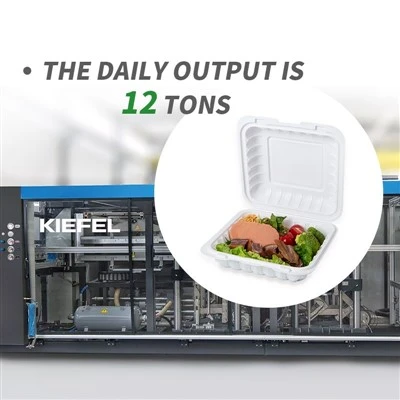
3.2 Function: Diversified Design, Humanized Experience, Adapted to Festival Scenarios
Modern disposable containers with lids have broken through the simple functional positioning of traditional products, and have carried out diversified and humanized design according to the characteristics of Chinese New Year catering scenarios, greatly improving the user experience. In terms of structural design, multi-compartment, hinge-lid, and snap-on sealed containers have become mainstream, meeting the diverse needs of consumers.
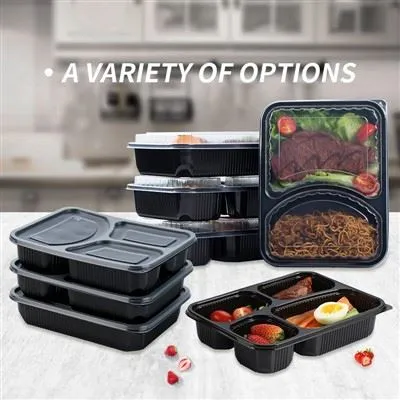
Multi-compartment disposable containers with lids are specially designed for Chinese New Year family gatherings and takeout New Year's Eve dinners. They are divided into 2-5 compartments, which can package different types of dishes separately, avoiding flavor mixing and maintaining the original taste of the food. For example, during the 2025 Chinese New Year, a number of takeout platforms launched New Year's Eve dinner packages using 4-compartment PP disposable containers with lids, which can package staple foods, meat dishes, vegetarian dishes, and soups separately, and the lids are equipped with leak-proof gaskets to ensure no leakage during transportation. This design has been widely praised by consumers, with a satisfaction rate of more than 90%.
Hinge-lid containers have also become popular due to their convenience. The lid and the container are integrated, which avoids the loss of the lid and makes it easy to open and close. They are widely used in the packaging of snacks, desserts, and small portions of leftovers during the Chinese New Year. Snap-on sealed containers are equipped with double-layer sealing gaskets, which have excellent sealing performance, effectively preventing soup and oil leakage, and are suitable for packaging liquid foods such as hot pot soup, braised soup, and porridge.
 In terms of functionality, modern disposable containers with lids have added a variety of humanized designs. Most PP and PLA containers are marked with "microwave-safe" and "heat-resistant up to 130°C", which is convenient for consumers to reheat leftover food. Some containers are also designed with vent holes on the lid to avoid pressure buildup during microwave heating and prevent the lid from popping open. For frozen foods such as dumplings and glutinous rice balls, which are commonly eaten during Chinese New Year, low-temperature resistant disposable containers with lids have been developed, which can withstand temperatures as low as -20°C without deformation, ensuring the freshness of the food.
In addition, the thickness of modern disposable containers with lids has been increased to 0.25-0.35mm, which has better pressure resistance and impact resistance, reducing the damage rate during transportation. According to statistics, the damage rate of disposable containers with lids during Chinese New Year transportation in 2024 was only 3%, a decrease of 12 percentage points compared with 2015.
3.3 Application Scenarios: Diversified Expansion, Takeout and Gift-Giving Become New Growth Points

3.4 Consumer Cognition: Safety and Environmental Protection Become Core Demands, Brand Awareness Improves
In the modern period, with the improvement of people's living standards and the popularization of food safety and environmental protection concepts, consumers' cognition of disposable containers with lids has undergone a fundamental change. Safety and environmental protection have become core demands, and consumers are more willing to pay for high-quality, environmentally friendly products.
 In terms of food safety, consumers' awareness has been significantly improved. More than 85% of consumers will take the initiative to check the material, safety certification, and production date of disposable containers with lids when using them during the Chinese New Year, and food-grade PP and PLA containers have become their first choice. Consumers can also simply distinguish the quality of containers: good PP containers are translucent and tough, while inferior containers are opaque and brittle or colored. The demand for safe and high-quality containers has prompted catering businesses and packaging manufacturers to improve product quality and obtain relevant safety certifications.
In terms of environmental protection, consumers' awareness has been greatly enhanced. Under the promotion of the new "Plastic Ban" and environmental protection publicity, more and more consumers have realized the harm of plastic pollution and are willing to choose degradable or recyclable disposable containers with lids. A survey conducted in 2024 showed that 78% of consumers are willing to pay 10%-20% more for environmentally friendly disposable containers with lids during the Chinese New Year, and 65% of consumers will take the initiative to classify and discard used containers. In addition, many communities and catering businesses have set up recycling points for disposable plastic containers during the Chinese New Year, encouraging consumers to participate in recycling, forming a good social atmosphere.
Consumers' brand awareness of disposable containers with lids has also been improved. In the past, consumers paid little attention to the brand of disposable containers, but now more and more consumers will choose well-known brands of containers, believing that well-known brands have higher quality and safety guarantees. Many packaging manufacturers have built their own brands, launched high-quality, personalized disposable containers with lids, and gained market recognition. For example, some brands have launched festive-themed disposable containers with lids during Chinese New Year, which are not only functional but also have high aesthetic value, becoming a new bright spot in the market.
4. Comparative Analysis: Key Differences and Driving Forces of Change
Through the analysis of disposable containers with lids in traditional and modern Chinese New Year scenarios, it can be found that there are significant differences in material, function, application scenarios, and consumer cognition. These differences are not accidental, but the result of the joint action of policy, economy, technology, and society. This section will systematically compare the key differences and explore the driving forces behind the changes.
4.1 Key Differences Between Traditional and Modern Disposable Containers with Lids in the Chinese New Year

4.2 Driving Forces Behind the Transformation of Disposable Containers with Lids in Chinese New Year
The transformation of disposable containers with lids in the Chinese New Year from traditional to modern is driven by multiple factors, mainly including policy guidance, economic development, technological innovation, and changes in consumer demand.
 First, policy guidance is the core driving force. Since 2020, the Chinese government has implemented the new "Plastic Ban", which clearly prohibits the use of non-degradable disposable plastic tableware in catering takeout and other fields, and encourages the promotion and application of environmentally friendly and degradable packaging materials. During Chinese New Year, governments at all levels have strengthened supervision and introduced policy incentives, such as subsidies for catering businesses that use degradable containers, which have strongly promoted the upgrading of disposable containers with lids. In addition, the formulation and implementation of national standards such as GB 4806.6-2016 have standardized the production and use of disposable food contact containers, ensuring product safety.
Second, economic development and the growth of the takeout industry provide a market foundation. With the rapid development of China's economy, people's living standards have been significantly improved, and the demand for high-quality catering and packaging has increased. The rapid growth of the takeout industry has brought a huge market demand for disposable containers with lids. During Chinese New Year, the surge in takeout New Year's Eve dinner orders has directly driven the upgrading of container products, requiring containers to be more functional, safe, and beautiful. According to statistics, the scale of China's disposable container with lids market reached 80 billion yuan in 2024, of which the demand during the Chinese New Year accounted for 25%, an increase of 18 percentage points compared with 2015.
Third, technological innovation provides technical support. The improvement of plastic processing technology has reduced the production cost of food-grade PP and rPP materials, making them popular in the market. The development of degradable material technology has solved the problem of plastic pollution, providing a new direction for the development of the industry. In addition, the innovation of structural design and production technology has improved the functionality and quality of disposable containers with lids, such as the development of multi-compartment molds and sealing technology, which has enhanced the competitiveness of products.
Fourth, changes in consumer demand are the internal driving force. With the improvement of consumers' living standards and the popularization of safety and environmental protection concepts, consumers' demand for disposable containers with lids has shifted from "low cost" to "safety, environmental protection, and practicality". Consumers are more willing to pay for high-quality, environmentally friendly products, which has prompted catering businesses and packaging manufacturers to adjust their product strategies and launch products that meet consumer demand. During Chinese New Year, consumers pay more attention to the quality and safety of food and packaging, and the demand for personalized and festive containers has also increased, driving the diversification and upgrading of products.
The evolution of disposable containers with lids in the Chinese New Year from traditional to modern is a microcosm of China's social progress, economic development, and changes in people's lifestyles. In the traditional period, disposable containers with lids were low-end, homogeneous products with simple functions, mainly meeting the basic needs of leftover packaging; in the modern period, driven by policy, technology, and consumer demand, they have evolved into high-quality products integrating safety, environmental protection, functionality, and aesthetics, with diversified application scenarios and become an indispensable part of Chinese New Year catering consumption.
 The comparative analysis of disposable containers with lids in traditional and modern Chinese New Year scenarios shows that the changes in the product are not only reflected in the material and function but also in the application scenarios and consumer cognition. These changes have not only improved the user experience and food safety but also promoted the green and sustainable development of the catering packaging industry. Although the industry still faces challenges such as the high cost of degradable materials and imperfect recycling systems, with the continuous advancement of policy, technology, and consumer demand, the future development prospect is broad.
For catering enterprises, they should keep up with the market changes, choose high-quality, safe, and environmentally friendly disposable containers with lids, and launch personalized packaging solutions according to the characteristics of the Chinese New Year, to improve brand image and consumer satisfaction. For packaging manufacturers, they should strengthen technological innovation, reduce the cost of degradable materials, improve product quality and functionality, and actively participate in the construction of a circular economy system. For the government, it is necessary to further improve policies and regulations, strengthen supervision, and guide the healthy and sustainable development of the industry. For consumers, they should continue to enhance their awareness of safety and environmental protection, actively choose environmentally friendly products, and participate in the classification and recycling of containers to jointly promote the green development of the catering packaging industry.
In the future, with the continuous integration of policy, technology, and consumer demand, disposable containers with lids will play a more important role in Chinese New Year catering scenarios, not only bringing more convenience and safety to people's festival life but also making positive contributions to the construction of a green and sustainable society.
