


1. Why Does the Durability of Lunch Boxes Determine Customer Purchasing Decisions?
Lunch boxes are being updated and replaced faster and faster, and durability has now become the core standard for customer purchasing decisions.

Core Market Demand for Durable Lunch Boxes
Fast food, airline catering, and high-end takeaway markets have put forward higher requirements for the durability of plastic Chinese food containers. Not only must they be anti-fall and leak-proof, but they must also be able to be stacked for a long time without deformation and not easily damaged during transportation. Therefore, lunch boxes that are resistant to falling, pressure, and high temperatures are becoming more and more popular in the market.


The Relationship Between Durability and Brand Reputation

If disposable plastic lunch boxes are deformed during heating or broken during transportation, it is easy to have a negative impact on the store, especially negative comments from customers, and more seriously, it may affect the brand's reputation. Using durable plastic Chinese food containers can effectively avoid such problems. A good packaging experience not only improves customer satisfaction but also directly increases the repurchase rate and platform rating.


How Do B2B Customers Prioritize the Durability Indicator When Purchasing?
In B2B international inquiries, I believe that more and more people encounter this kind of situation, especially European and American buyers, whose first question is: "How is the resistance to falling? Can it withstand high temperatures?" Customers can ask suppliers to issue durability test reports, material descriptions, and actual sample tests of plastic Chinese food containers to determine whether the products meet the standards.


2. Analysis of the Three Key Durability Test Standards for Plastic Lunch Boxes
High-quality plastic Chinese food containers can only enter the international market after passing the three core tests of anti-fall, pressure resistance, and high temperature resistance. These standards determine the safety and practicality of lunch boxes in actual use.
Anti-Fall Test: Simulated Fall During Transportation
The anti-fall test usually drops the plastic lunch box from a height of 1 meter, 1.2 meters, or 1.5 meters at multiple angles, and completes the free fall experiment to test its impact resistance. Plastic Chinese food containers are considered qualified if they do not crack, deform, or fall off after the test.


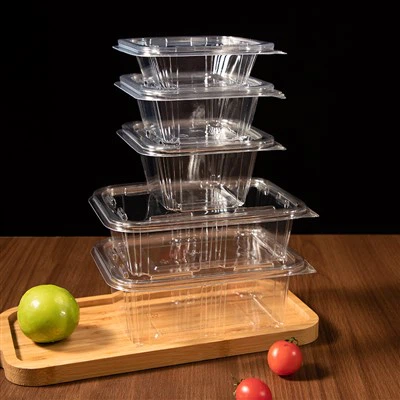

Pressure Resistance Test: Compressive Strength Under Stacking Storage
The pressure resistance test usually includes static stacking and dynamic pressure testing, which involves stacking 10 boxes of plastic Chinese food containers for 24 hours continuously to observe whether the product surface is cracked, dented, or tilted. Stacking without collapse and a stable shape are the basic requirements for export packaging. Good pressure resistance means that the lunch box can remain intact during storage or transportation, and will not be deformed or damaged due to excessive stacking.

High Temperature Resistance Test: Microwave Heating and Direct Contact with Hot Meals
Microwave heating and boiling water immersion are common ways to test the high-temperature resistance of lunch boxes. Plastic Chinese food containers are usually placed in a microwave oven for 5-10 minutes, or soaked in boiling water to detect whether there will be problems such as softening, odor, or leakage. Lunch boxes that pass the high-temperature resistance test are suitable for hot meal delivery and microwave heating. They can be used stably even in cold chain + hot meal mixed takeout scenarios, which is safe and reliable.

3. Durability Comparison of Different Materials (PP, PET, PS, PLA)
Choosing the right material is particularly important for purchasing plastic Chinese food containers.
PP: High Temperature First Choice, Both Shatterproof and Pressure-Resistant

 PP material has excellent shatterproof and high temperature resistance, and is one of the most common materials in disposable plastic lunch boxes. Plastic Chinese food containers made of PP can not only be safely microwaved, but also have strong pressure resistance during transportation, are not easy to deform or break, and are widely used in hot food takeout, airline meals, and large-capacity lunch box packaging.
PET: High Transparency but Weak at High Temperatures Resistance
PET material has medium shatterproof performance, but is widely used in cold food and salad takeout due to its high transparency. However, it cannot be microwaved and is easily deformed when exposed to high temperatures. It is more suitable for cold food packaging to meet customers who have high requirements for appearance display.

PS: Low Price but High Brittleness
PS plastic is relatively brittle, has poor shatterproof performance, and is not good at high temperatures. It is low-cost and is often used in economical disposable lunch boxes. Plastic Chinese food containers made of PS are prone to after-sales problems due to transportation losses in the export market, so they are not recommended for hot food and long-distance transportation needs.

PLA/Pulp: Good Environmental Protection, But Limited Strength
PLA and pulp materials are resistant to high temperatures, but have limited drop resistance. In hot food delivery over 50°C, plastic Chinese food containers made of PLA or pulp are prone to softening or leakage, and are mainly used in cold meals and lightweight, environmentally friendly scenarios.

4. How to Quickly Judge the Durability of Lunch Boxes? Practical Skills That Purchasers Must Know
Even without a professional laboratory, purchasers can quickly judge the durability of plastic Chinese food containers through simple methods, helping to quickly screen high-quality suppliers.
View Product Parameters: Thickness (G), Wall Thickness (Mm), Cover Buckle Structure
 Check weight (g), wall thickness (mm), and other parameters on the product details page to quickly judge the durability of lunch boxes. For example, plastic Chinese food containers with a wall thickness of more than 0.7mm usually have better drop resistance and pressure resistance. The sealed cover buckle design is also an intuitive indicator for judging drop resistance and leakproof performance.
Samples Received, Three-Step Basic Test Method
 Step 1: Hand pressure squeeze test to confirm that the lunch box is not easy to collapse.
Step 2: Microwave for 3 minutes to see if there is softening or odor.
Step 3: 1-meter hand-throw test to confirm that the plastic Chinese food containers do not crack or fall off the cover. In three simple steps, you can quickly determine whether the supplier's samples meet the export standards.
Ongoing Cooperation: Factories Provide Third-Party Test Reports + Batch Sampling
High-quality factories usually provide ISO9001, FDA, BSCI, and other certifications, as well as third-party test reports on the resistance to falling, pressure, and high temperature of plastic Chinese food containers. In the process of ongoing cooperation, it is recommended to conduct regular batch sampling to ensure the stability and durability of each batch of lunch boxes, reduce after-sales risks, and ensure export quality.


Where to Buy?
 Huizhou Yangrui Printing & Packaging Co., Ltd., specializes in the export of plastic Chinese food containers. It has ISO9001 and FDA certifications. Its products have passed three rigorous tests of drop resistance, pressure resistance, and high temperature resistance. It supports OEM/ODM customization services.
Contact information:
Email: sales@packagingbag5.com
Tel: +86 180 8644 3226
References
- Li, X., & Chen, Z. (2023). A Study on the Durability Testing Standards of Disposable Plastic Food Containers. Packaging Technology & Science, 36(1), 51-63.
- European Commission. (2021). EU Food Contact Materials Regulations Overview.
- United States Food and Drug Administration (FDA). (2024). Guidance for Industry: Use of Recycled Plastics in Food Packaging.
- Zhang, Y., & Wang, L. (2022). Comparison of Mechanical Properties of PP, PET, PS, and PLA for Food Packaging. Journal of Polymer Research, 29, Article 179.
- Statista Research Department. (2024). Global Disposable Food Container Market Size and Forecast 2024-2030.


