

MFPP Lunch Box vs. Ordinary PP Lunch Box: Full Analysis of Performance, Application and Procurement
With plastic lunch boxes becoming more and more popular, the choice of lunch box materials is no longer just about price factors. In particular, MFPP lunch boxes (Modified Filled Polypropylene), a material that has emerged in recent years, are becoming a high-end option for many take out food container manufacturers. What is the essential difference between it and the ordinary PP lunch boxes we are familiar with? Which one is more suitable for you? This article answers them one by one.


1. Mfpp and Ordinary Pp: What Are They?
We must first clarify the definitions and basic characteristics of these two materials before we can further understand their performance differences.
What is PP? (Polypropylene)
 Ordinary PP (Polypropylene) is one of the most common plastic materials on the market and is widely used in cheap take out food containers. Its advantages and limitations are also quite obvious.
The advantages of PP are low cost, light weight, microwaveable, non-toxic and tasteless. But at the same time, the disadvantages are that it has average heat resistance, cannot be heated in a high temperature environment, may deform at about 110°C, and has poor stability. It is generally suitable for salads, cold meals, and ordinary fast food scenes.
What is MFPP? (Modified Filled Polypropylene)
 MFPP containers are made by adding mineral fillers such as talcum powder and calcium powder to traditional PP materials, which makes the lunch boxes made of MFPP materials have a certain degree of biodegradability.
The advantages are improved heat resistance (up to 135℃), higher hardness, and less deformation. It is widely used in airline catering, bento, high-temperature hot meals, brand-customized meal packages, etc. More and more take out food container manufacturers are turning to MFPP as the core material for mid-to-high-end takeout packaging.
2. Performance Comparison: Five Key Differences Between MFPP and Ordinary PP
Don't just look at the price comparison, you need to pay more attention to the five major differences behind the material, which will determine your customer experience and operating costs.
- Heat Resistance
 Ordinary PP can reach up to 110℃, and exceeding 110℃ may cause the lunch box to melt.
MFPP is up to about 135℃, supports repeated microwave heating, and is not easy to deform or precipitate odor
- Structural Strength
MFPP has a 20%-30% increase in compressive performance compared to PP material, can be stacked, and is not easy to collapse. More suitable for batch distribution, stacked transportation, and heavy loads
- Cost Difference
PP has a low cost and is more suitable for low-price fast consumption, while MFPP has a slightly higher cost, but can bring higher customer satisfaction and repurchase rate.
- Appearance Texture
MFPP's material is closer to matte and frosted textures, so it looks more high-end and suitable for high-end catering, and can more clearly reflect the brand image. The PP material is smooth and transparent, and some models have a strong sense of 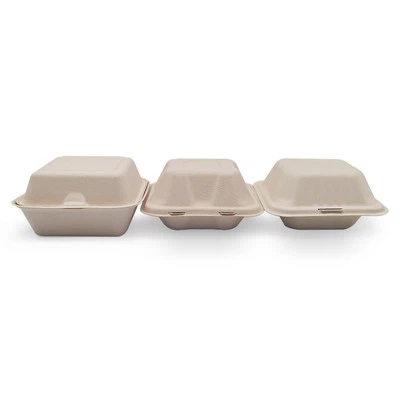 plastic.
- Environmental Protection and Recyclability
Both MFPP and PP are recyclable. Some recyclers are reluctant to process MFPP due to its filler components. Enterprises with high environmental awareness need to understand local policies in advance.
3. Recommended Practical Application Scenarios: Which Merchants Are More Suitable for MFPP?
The selection of lunch box materials should be based on the attributes of the dishes, consumer positioning and operating budget.
Mfpp Containers Are More Suitable for the Following Scenarios:
- High-temperature hot meals (such as hot pot, self-heating rice)
- Airline/railway catering
- Chain brands, central kitchens
- High-end takeout, holiday customized gift box meals
- Merchants who focus on the texture and brand image of lunch boxes
Ordinary PP Is More Suitable for These Types:
- Light salads, cold drinks
- Fast-paced street fast food, takeaway platform, hot-selling products
- Agents or small restaurants with large purchases and price sensitivity
- Fast turnover scenarios that require the use of cheap take out food containers in batches
4. Procurement suggestions: How to choose the right lunch box for you?
 How to find the "balance point" between performance and budget is the key to successful procurement.
Make Reasonable Choices Based on Budget
If the brand needs to improve its image and has sufficient budget, it is more cost-effective to choose MFPP containers; if the brand hopes to prioritize the goal of fast food delivery and cost control, it can choose PP lunch boxes and match them with high-quality sealing lids to enhance the experience.
Finding Professional Manufacturers to Cooperate Is More Critical
- Preferably, take out food container manufacturers with MFPP and PP dual-line production capabilities;
- Require manufacturers to provide proofing tests (such as pressure resistance/heat resistance/sealing);

- Support customized LOGO, color, and packaging form, which is conducive to brand unification and marketing communication.
Pay Attention to Certification and Regulatory Compliance
- Especially for exporting to the European and American markets, it is necessary to require manufacturers to provide international food contact material certifications such as FDA and LFGB;
- The material identification is clear to avoid compliance risks in the import link.
Where to Buy MFPP Containers?
MFPP and ordinary PP are not a simple "plastic battle"; they reflect the multi-dimensional thinking of user experience, brand positioning, and long-term costs. In the scenarios of high-temperature bento, high-end delivery, and brand customization, MFPP is undoubtedly better; in cost control and cold food products, ordinary PP is still one of the reliable choices.
If you need to purchase MFPP or PP lunch boxes in bulk, please contact the professional food packaging manufacturer, Huizhou Yangrui Printing and Packaging Co., Ltd.
Tel: +86 180 8644 3226
Email: sales@packagingbag5.com
Official website: www.packagingbag5.com
References
- European Food Safety Authority (EFSA) on Polypropylene Food Contact Materials
- "Thermal and Mechanical Properties of Mineral-Filled Polypropylene" – Journal of Polymer Science
- China Plastics Processing Industry Association – MFPP Application White Paper
- U.S. FDA CFR 21 – Food Contact Substances Regulations
- Plastics Today – MFPP Materials in Food Packaging
