I. Comparison of Basic Material Properties
1.1 PP (Polypropylene) Material Characteristics
PP (polypropylene) is a thermoplastic polymer formed by the polymerization of propylene monomers. It has a regular molecular chain structure and high crystallinity. As one of the five major general-purpose plastics, it is widely used in the packaging field. Its raw materials originate from petroleum refining, obtained through naphtha cracking to produce propylene, followed by catalytic polymerization.
According to data from the China Petroleum and Chemical Industry Federation, currently, the oil-based route accounts for 55% of China's PP production capacity, coal-based olefins account for 15%, and propane dehydrogenation (PDH) accounts for 18%.
Key Performance Advantages of PP
- Physical Properties: Density ≈ 0.9 g/cm³ (lowest among mainstream plastics), lightweight design while maintaining strength
- Mechanical Properties: Tensile strength 23-32 MPa, elongation at break 300% (far exceeding polystyrene's 50%)
- Chemical Stability: Resists acids, bases, salts, and most organic solvents
- Safety: Non-toxic and odorless, FDA food contact safety certification
- Production Efficiency: Advanced processes reduce energy consumption and emissions by over 10%
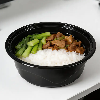
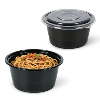
A chain restaurant uses PP food containers plastic portion cups for soup delivery, resulting in a 67% reduction in breakage rate compared to PS containers, demonstrating its superior toughness and durability.


PP production process flow and molecular structure diagram
1.2 PLA (Polylactic Acid) Material Characteristics

PLA (polylactic acid) is polymerized from lactic acid monomers. Its raw materials are renewable biomass such as corn and cassava, and its bio-based nature aligns with environmental trends. Its production requires multiple steps, including biomass saccharification, fermentation to produce lactic acid, dehydration and polycondensation into oligomers, depolymerization into lactide, and ring-opening polymerization.
Key Performance Characteristics of PLA
- Appearance: High transparency and gloss, excellent product appearance
- Mechanical Properties: Tensile strength 50-70 MPa, elastic modulus 3-4 GPa (outstanding rigidity)
- Toughness: Elongation at break ≤10% (poor toughness, brittle)
- Biodegradability: Degrades into CO₂ and water under industrial composting conditions
- Renewability: Derived from biomass resources, reducing reliance on fossil fuels
By 2025, new-generation saccharification and fermentation technologies will reduce the cost of PLA to 12,000 yuan/ton (a 40% decrease compared to 2020). Chinese continuous polymerization plants have achieved a single-line capacity of 100,000 tons/year, three times the efficiency of traditional batch methods.
1.3 Essential Differences Between the Two Materials
| Comparison Dimension | PP (Polypropylene) | PLA (Polylactic Acid) |
|---|---|---|
| Raw Material Source | Non-renewable fossil resources (petroleum), cost linked to oil prices | Renewable biomass (corn/cassava), 2.5-3 tons of corn per ton of PLA |
| Molecular Structure | Carbon-carbon single bonds are stable and corrosion-resistant | Abundant ester bonds, easily hydrolyzed (biodegradable), hygroscopic |
| Production Process | Petroleum refining + catalytic cracking, low energy consumption, mature technology | Complex biological fermentation, 1.5-2× energy consumption of PP |
| Environmental Impact | High carbon footprint, non-biodegradable | Carbon sequestration during plant growth offsets emissions, biodegradable |
"While PLA offers environmental advantages through renewable resources and biodegradability, its production process is more energy-intensive and may compete with food production. PP's mature production technology and stable performance make it more cost-effective, but it relies on non-renewable resources and contributes to plastic pollution."
II. Cost Comparison Analysis
2.1 Raw Material Cost Comparison
PP raw material costs are affected by oil prices. Market data from December 2025 shows that the price of PP (filament grade) was 6253.33 yuan/ton, with a price index of 6368 yuan/ton (a new low in the past five years).
PLA raw material costs are more complex; the price of agricultural products such as corn is affected by climate, planting area, and policies. In March 2025, the price of PLA was $2800/ton (FOB US Gulf, equivalent to approximately 20,000 yuan/ton), three times that of PP (6000-7000 yuan/ton) during the same period.
It is expected that PLA raw material costs will decrease by more than 30% by 2030, and production costs are expected to be less than 14,000 yuan/ton, narrowing the price difference with PP to within a factor of two.

2.2 Production Cost Comparison
PP Production Energy Consumption
- Loop reactor method: 520 kg standard coal/ton
- Gas-phase method: 560 kg standard coal/ton
- Bulk polymerization method: 480 kg standard coal/ton
- Electricity consumption: 8,000-10,000 kWh/ton
PLA Production Energy Consumption
- 2025 comprehensive cost: 18,000 RMB/ton (-40% vs 2020)
- Electricity consumption: 15,000-18,000 kWh/ton
- Strict temperature/pH control required
- Renewable energy is narrowing the gap
PP production technology is mature with lower energy consumption due to simplified processes and heat integration. PLA production involves more steps and requires strict control, resulting in significantly higher energy consumption (1.5-2 times that of PP). However, the application of renewable energy in PLA production is gradually narrowing this gap, making it more competitive in regions with abundant green energy.

2.3 Transportation and Storage Costs
Transportation Cost Factors
- PP density (0.9 g/cm³) - 25% more per container than PLA
- PLA density (1.24-1.25 g/cm³) - higher transportation cost per unit
- 20-foot to go container holds more PP products, with a lower unit cost
Storage Requirements
- PLA hygroscopic - humidity control (≤60%), sealed storage
- PLA storage costs 20-30% higher than PP
- PLA shelf life: 6-12 months vs PP: 2-3 years
- PLA requires more frequent inventory turnover

Proper storage conditions are critical for maintaining PLA material properties
2.4 Waste Recycling Value
PP Recycling Characteristics
PP has good recyclability; EU data shows a theoretical recycling rate exceeding 90%. Waste can be reused after processing, and recycled PP is priced at 60-80% of new material, offering high economic value.
PLA Recycling Characteristics
PLA is difficult to recycle, requiring strict separation from other plastics, and is prone to degradation during recycling, leading to performance degradation. Currently, the recycling rate is only 10-20%. However, PLA is industrially compostable, degrading into carbon dioxide and water within 3-6 months.
In scenarios where recycling is not feasible (such as disposable plastic portion cups) and in areas with high landfill costs, the waste disposal cost of PLA has an advantage despite its low recycling rate. PP remains more economically viable in regions with established recycling infrastructure and high material recovery value.
III. Environmental Performance Comparison
3.1 Degradation Mechanism and Degradation Rate
PP has a stable molecular chain and is extremely difficult to degrade in the natural environment, with a degradation time exceeding 500 years. In the ocean, it only breaks down into microplastics, not truly degrading.
Due to the presence of ester bonds, PLA degrades in two steps: first, the ester bonds are hydrolyzed under hydrothermal conditions, causing the molecular chains to break; then, microorganisms metabolize it into carbon dioxide and water. The degradation rate is greatly affected by the environment – it degrades in 3-6 months under industrial composting conditions (55-60℃, 90% humidity, sufficient oxygen), 1-2 years in soil, and 4-6 years in the ocean.

3.2 Life Cycle Environmental Impact Assessment
| Life Cycle Stage | PP Environmental Impact | PLA Environmental Impact |
|---|---|---|
| Raw Material Stage | 2.1-3.1 tons CO₂ eq/ton (petroleum extraction and refining) | 1.6-2.5 tons CO₂ eq/ton (slightly lower, but land-use change may increase) |
| Production Stage | 8,000-10,000 kWh/ton energy consumption | 15,000-18,000 kWh/ton energy consumption (biomass energy narrowing gap) |
| Use Stage | Stable performance allows repeated use | Hygroscopicity may shorten lifespan |
| Disposal Stage | Landfill does not degrade, produces microplastics | Industrial composting has no long-term burden, and slow degradation in ordinary landfills |
Overall, PLA has a clear environmental advantage in areas with well-developed composting facilities, while PP may be better in areas with well-developed recycling systems.
3.3 Microplastic Pollution Issues

Microplastic Release Comparison (76 days UV Irradiation)
Research from the University of Portsmouth shows that after 76 days of UV irradiation, PP releases nine times more microplastics than PLA. In the experiment, cylindrical samples of both 3D-printed materials broke down into 50-5000 micrometer microplastics in seawater under simulated natural sunlight, but PP broke down more severely.
PP's non-polar surface easily adsorbs pollutants, and UV light easily causes photo-oxidative degradation; although PLA also undergoes photodegradation, its polar surface groups may slow down the process. However, PLA still produces microplastics under mechanical wear and chemical corrosion, and remains largely intact in the ocean for 428 days.
3.4 Comparison of Recycling Performance
PP Recycling Performance
- Easy mechanical recycling, recycled material for low-performance products
- Some countries have a recycling rate exceeding 30%
- Mature recycling technology and infrastructure
- Compatible with existing plastic recycling systems
PLA Recycling Performance
- Requires strict separation, prone to thermal degradation during processing
- Poor compatibility with other plastics, reduced recycling performance
- Chemical recycling is still in the laboratory stage (high cost)
- May interfere with mixed plastic recycling streams
IV. Performance Comparison and Analysis 04
4.1 Heat Resistance Comparison
PP Heat Resistance
- Heat distortion temperature: 100-110°C (0.45 MPa), 60-65°C (1.82 MPa)
- Melting point: 160-170°C
- Vicat softening point: 158°C
- Withstands 120°C for extended periods, 150°C short-term
PLA Heat Resistance
- Glass transition temperature: 60-65°C
- Heat distortion temperature: 50-60°C (traditional PLA)
- Modified PLA: melting point up to 227°C, heat distortion >100°C
- Only suitable for room temperature/refrigerated foods (traditional PLA)

4.2 Mechanical Strength Comparison
| Mechanical Property | PP | PLA |
|---|---|---|
| Tensile Strength (MPa) | 23-32 | 50-70 |
| Flexural Strength (MPa) | 35-45 | 60-90 |
| Elastic Modulus (MPa) | 1300-1900 | 3000-4000 |
PP: elongation at break 300%, excellent toughness, impact resistant, and not easily broken, maintains toughness at low temperatures (-20°C), suitable for transportation and low-temperature environments.
PLA: strong rigidity and crisp appearance, but elongation at break is only 2-10%, brittle and easily broken, especially at low temperatures. After modification (e.g., blending with PBAT), the elongation at break of PLA can be increased to 200-350%, improving toughness.
4.3 Barrier Performance Analysis
Barrier performance is crucial for sauce quality: PP has moderate barrier properties against oxygen (permeability 2000-3000 cm³·μm/(m²·d·kPa)) and water vapor (2-5 g·μm/(m²·d·kPa)), which meets the needs of most sauces, and is resistant to oil penetration, making it suitable for oil-based sauces. PLA's oxygen permeability is 1500-2500 cm³·μm/(m²·d·kPa) (slightly better than PP), but its water vapor permeability is 5-10 g·μm/(m²·d·kPa) (2-3 times that of PP), which can easily lead to product moisture absorption. Improving PLA's barrier properties can be achieved through multi-layer co-extrusion (compounding with EVOH), surface coating (silicon oxide coating reduces oxygen permeability by more than 90%), and adding nanofillers (such as montmorillonite). In addition, PLA degradation produces weakly acidic substances, with a surface pH of 5.5-6.5 and an antibacterial rate exceeding 90%, which is beneficial for the long-term preservation of sauces.

4.4 Comparison of Processing Performance
PP has excellent processing properties: processing temperature of 180-240℃ (wide range), good melt flow, and easy mold filling; shrinkage rate of 1.5-2.5% (uniform), resulting in dimensional stability; it does not easily degrade during processing, has low corrosiveness to equipment, and is suitable for various processes such as injection molding, extrusion, and thermoforming. PLA processing requires attention to the following: it needs to be dried to a moisture content of ≤0.02% (otherwise hydrolysis and degradation will occur); the processing temperature is 170-200℃ (narrow range), and high temperatures easily lead to thermal degradation; the melt viscosity is sensitive to temperature, requiring precise temperature control; injection molding requires higher pressure and speed, and rapid cooling easily generates internal stress; lubricants and antioxidants are often needed, making its processing adaptability weaker than PP.
V. Application Scenario Suitability Analysis
5.1 Food Delivery Scenario
PP has outstanding advantages: heat resistance (for hot food), high toughness (less damage during transportation), resistance to chemical corrosion from sauces, and low cost (0.15-0.25 yuan/container), which meets the needs of Chinese food delivery. PLA is favored by companies that value brand image (especially in Europe and the US) due to its environmental attributes, and its high transparency allows for the display of sauces. However, traditional PLA is not heat-resistant, brittle (easily broken at low temperatures), and expensive. Although modified PLA improves heat resistance, its cost is even higher, limiting its application in price-sensitive markets.

5.2 Food Processing Scenarios
PP offers strong adaptability: it is resistant to chemical corrosion (suitable for strong acid/alkaline sauces), resistant to high-temperature sterilization (steam/microwave sterilization without deformation), recyclable (companies can build their own recycling systems to reduce costs), stable for long-term storage, and compatible with existing production lines. PLA has advantages in the organic/health food sector (fitting the product positioning), but its applications are limited, and processing parameters or equipment need to be adjusted to adapt to production lines.
2.2 Production Cost Comparison
PP Production Energy Consumption
- Loop reactor method: 520 kg standard coal/ton
- Gas-phase method: 560 kg standard coal/ton
- Bulk polymerization method: 480 kg standard coal/ton
- Electricity consumption: 8,000-10,000 kWh/ton
PLA Production Energy Consumption
- 2025 comprehensive cost: 18,000 RMB/ton (-40% vs 2020)
- Electricity consumption: 15,000-18,000 kWh/ton
- Strict temperature/pH control required
- Renewable energy narrowing the gap
PP production technology is mature with lower energy consumption due to simplified processes and heat integration. PLA production involves more steps and requires strict control, resulting in significantly higher energy consumption (1.5-2 times that of PP). However, the application of renewable energy in PLA production is gradually narrowing this gap, making it more competitive in regions with abundant green energy.
5.3 Retail Packaging Scenarios
- PLA has many advantages: transparency close to glass (attracting customers), environmental friendliness (60% of consumers are willing to pay a 10-20% premium), good printability, and easy access to environmental certifications (BPI, OK Compost), enhancing brand image. PP costs only 1/3 of PLA, making it suitable for the mass market, and its temperature and chemical resistance are suitable for a variety of products, providing stable long-term storage and adapting to retail environments with large temperature fluctuations.
5.4 Special Application Scenarios
-
Airline Catering: PP is resistant to high and low temperatures, making it suitable for high-altitude environments and the preferred choice for sauce packaging.
Microwaveable Foods: PP can be microwaved, while traditional PLA cannot; modified PLA is expensive.
Medical Foods: PLA has good biocompatibility, making it suitable for enteral nutrition preparations packaging, and its degradability also facilitates medical waste disposal.
Extreme Environments (Polar Regions, Deep Sea): PP is resistant to extreme temperatures, while PLA is not suitable due to low-temperature brittleness.
Religious Foods: PLA is plant-derived, easily complying with halal and kosher food regulations.

VI. Comprehensive Assessment and Recommendations
6.1 Summary of Advantages and Disadvantages
|
Material |
Advantages |
Disadvantages |
|---|---|---|
|
PP |
Low cost (1/3 of PLA), stable performance (heat-resistant, chemical-resistant, good toughness), easy processing, high recycling rate, wide application |
Non-biodegradable (natural degradation takes over 500 years), high carbon footprint, produces microplastics |
|
PLA |
Biodegradable (3-6 months in industrial composting), renewable raw materials, high transparency, biocompatible, enhances brand image |
High cost (3 times that of PP), limited performance (low heat resistance, poor toughness), strict storage requirements (humidity control, short shelf life), difficult to recycle, requires industrial composting for degradation |
6.2 Recommended Application Scenarios
- PP recommended scenarios: Hot food delivery, long-distance transportation, price-sensitive markets, industrial food processing (high-temperature sterilization), refrigerated and frozen foods, reusable scenarios (canteens).
- PLA recommended scenarios: High-end retail (organic/healthy food), environmentally strict regions (Europe and America), single-use scenarios (fast food/convenience stores), short-term storage products, medical/religious food packaging, and brands focusing on social responsibility.
- Scenarios requiring caution: Microwave heating (PLA needs modification), extreme temperature environments, long-term storage (over 6 months), and regions with underdeveloped recycling systems.
6.3 Selection Recommendations
- Catering companies: Choose PP for hot food delivery; use PLA for some product lines (light meals); consider modified PLA; establish a PP recycling system.
- Food processing companies: Choose PP for high-temperature products, PLA for low-temperature products; evaluate the suitability of PLA for storage/transportation; prioritize PLA for exports to Europe and America; explore PP/PLA composite solutions.
- Retail companies: Use PLA for high-end customers, PP for mass market customers; choose PLA for products requiring display; control PLA inventory turnover; use different materials for different product lines.
- Policymakers: Establish a classified recycling system; set reasonable environmental standards (avoiding a one-size-fits-all approach); support cost reduction for PLA and chemical recycling technology for PP; strengthen consumer education on environmental protection and waste sorting.

In summary, neither PP nor PLA is absolutely superior; the choice depends on the scenario, cost, and environmental requirements. Future technological advancements will narrow the performance gap, allowing for more flexible choices.