

Plastic togo containers are becoming increasingly popular. Early on, foam togo containers were widely used due to their low cost, but this resulted in environmental pressure. This led to further research, leading to the development of plastic togo lunch containers, which are both durable and convenient. In response to global environmental initiatives, compostable togo containers are also gradually entering the market. Whether the evolution of food packaging is driven by market demand or an inevitable result of environmental policies has become a core concern for the industry.


1. From Foam to Plastic Togo Containers
With the development of food delivery, foam was the primary choice in the early days. However, as pollution issues became more prominent, plastic products gradually replaced them as a new option. Plastic togo lunch containers, balancing functionality and cost, became the industry standard.
The Rise and Limitations of Foam Togo Containers
Foam togo containers once gained rapid market popularity due to their low cost, lightweight, and waterproof and oil-resistant properties. For the fast food and takeout industries, these containers initially met basic meal packaging needs. However, due to their difficult-to-decompose and recycle materials, they gradually became a source of "white pollution." Residues of these containers can be found in urban landfills, waterways, and marine environments. This unsustainable situation not only exacerbates the environmental burden but also leads to consumer and regulatory backlash, ultimately prompting the industry to search for alternatives.

Plastic Togo Lunch Containers: An Alternative
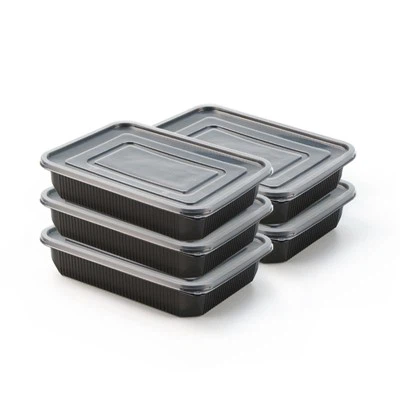
As environmental awareness grows, plastic togo lunch containers have rapidly entered the market. These containers are not only heat- and cold-resistant but also microwave-safe, meeting consumers' demand for convenient meals. Compared to foam-based products, plastic togo containers are stronger and can withstand the pressure and temperature fluctuations of transportation. These advantages have enabled them to quickly gain a dominant position in the fast food and takeout markets. The widespread adoption of plastic togo containers marks a transition in the disposable togo container industry, where functionality and practicality are equally important.
Market Advantages of Togo Plastic Containers
Togo plastic containers are easily scalable, effectively reducing the cost of each product. With the explosive growth of the food delivery industry, these containers have become an ideal choice for bulk supply. Their diverse specifications and designs not only meet the packaging needs of different food and beverage categories but also improve the efficiency and safety of food delivery. For food and beverage companies, to-go plastic containers are more than just a packaging tool; they are also crucial for improving service quality and brand image.




2. Environmental Regulations and Market Drive
Driven by both environmental policies and consumer awareness, compostable togo containers have gradually gained public attention and become a key area of industry transformation.
The Impact of Environmental Policies on Togo Containers
In recent years, many regions around the world have introduced plastic bans or regulations restricting foam products, directly driving the foodservice packaging industry towards environmentally friendly practices. While traditional plastics offer practical advantages, their long-term resistance to degradation makes them unsuitable for sustainable development. Under regulatory pressure, companies must seek alternative materials to ensure compliant production and market competitiveness. This regulatory drive has not only transformed the industry landscape but also provided an opportunity for the development of new, environmentally friendly togo containers.
The Rise of Compostable Togo Containers
Driven by both policies and the market, compostable togo containers have rapidly gained popularity. Made from PLA, bagasse, or paper pulp, these containers are not only sourced from renewable resources but are also compostable. These containers decompose naturally after use, reducing environmental impact. Compared to plastic togo lunch containers, compostable products are more environmentally friendly and provide a new competitive advantage for foodservice companies. They have gradually become the preferred choice for food delivery platforms and major restaurant brands, driving the green upgrade of the entire packaging industry.
Market and Consumer Acceptance of Eco-Friendly Packaging
With rising environmental awareness, consumers are increasingly inclined to choose eco-friendly packaging. Some groups are even willing to pay a premium for compostable to-go containers to support sustainable development. Restaurant companies are also leveraging this opportunity to enhance their brand image and demonstrate a sense of social responsibility through eco-friendly togo containers. This dual push from the market and consumers has made compostable packaging no longer a niche option, but a mainstream trend.


3. Material Innovation and Sustainable Development
Continuous material innovation is providing new impetus for the disposable togo container industry. The integration of plastic togo lunch containers and compostable togo containers is driving the entire industry towards low-carbon, high-efficiency development.
Technological Breakthroughs in Degradable Materials
In recent years, continuous breakthroughs in the production technology of bio-based materials such as PLA have significantly improved product performance and stability. These materials are not only heat- and cold-resistant but also naturally degrade over time, meeting the catering industry's dual requirements for environmental protection and practicality. Furthermore, with the expansion of production scale, the cost of degradable materials has gradually decreased, creating conditions for large-scale application. This technological advancement has broadened the market prospects for compostable togo containers.
Integration of Plastic Togo Lunch Containers with Environmentally Friendly Products
While plastic togo containers remain the mainstream market, some companies are exploring ways to combine environmental protection with functionality through material mixing and recycling. For example, they are combining plastic with degradable materials or promoting the recycling and reuse of plastic togo containers to reduce the environmental impact. This integration approach not only meets the production needs of companies but also conforms to the long-term market trend towards environmental protection. In the future, plastic and biodegradable togo containers are likely to coexist and develop, complementing each other.
Future Prospects of Compostable To-Go Containers
With increasingly stringent environmental regulations, the market prospects for compostable to-go containers are growing. As production technology matures and costs continue to decline, these products are expected to become widely adopted worldwide. They not only provide more environmentally friendly solutions for the catering industry but will also become a key force in driving the green transformation of the entire packaging industry.


4. Conclusion
The development of disposable togo containers, from foam to to-go plastic containers, and finally to compostable to-go containers, demonstrates the integration of continuous industry upgrades and environmental trends. When selecting togo containers, companies must consider both cost and functionality, as well as environmental considerations, to stand out in the fierce competition.
Yangrui's Environmental Advantages
Yangrui prioritizes environmental protection in the production of disposable togo containers, extensively utilizing biodegradable and recyclable materials. This not only meets the requirements of various national policies but also provides customers with a green option that aligns with current trends. These environmental advantages help customers enhance their brand image and gain the trust of more consumers.
Yangrui's Quality and Safety Assurance
Yangrui's disposable togo containers strictly adhere to food-grade safety standards. Our products have obtained multiple international certifications, including ISO and FDA, ensuring heat and cold resistance and safety. Choosing Yangrui means customers can expect high-quality togo containers that balance practicality and safety, avoiding food safety risks.
The Value Yangrui Creates for Customers
Leveraging extensive production experience and advanced equipment, Yangrui not only provides bulk supply of plastic togo lunch containers and compostable togo containers, but also offers customized solutions tailored to customer needs. Through this partnership, companies can achieve cost control, brand differentiation, and market expansion, gaining a competitive advantage.


Where to Buy Plastic Togo Lunch Containers?
Since its establishment in 2014, Huizhou Yangrui Printing and Packaging Co., Ltd. has specialized in the production of plastic togo lunch containers and togo plastic containers. Equipped with advanced KIFEL equipment and automated production lines, its products are ISO9001 and FDA certified, ensuring environmental and food safety while maintaining large-scale supply capabilities.
Contact information:
Email: sales@packagingbag5.com
Tel: +86 180 8644 3226


References
- Geyer, R., Jambeck, J. R., & Law, K. L. (2017). Production, use, and fate of all plastics ever made. Science Advances, 3(7), e1700782.
- European Bioplastics (2023). Bioplastics market data.
- Ministry of Ecology and Environment of the People's Republic of China (2020). Opinions on Further Strengthening the Control of Plastic Pollution.
- Ritchie, H., & Roser, M. (2018). Plastic Pollution. Our World in Data.
- Singh, N., Hui, D., Singh, R., Ahuja, I. P. S., Feo, L., & Fraternali, F. (2017). Recycling of plastic solid waste: A state of art review and future applications. Composites Part B: Engineering, 115, 409–422.
