

With growing concerns about environmental sustainability, businesses and consumers are seeking better alternatives to traditional plastic packaging. One of the most promising solutions is biodegradable materials in disposable food containers. These materials are designed to break down naturally, reducing plastic waste and its long-term impact on the environment. But how exactly are biodegradable materials being used in takeaway food containers, and what are the latest innovations in this field? Let's take a closer look.
1. What Are Biodegradable Materials?
Biodegradable materials are substances that can decompose naturally through the action of microorganisms, such as bacteria and fungi. Unlike traditional plastics, which can take hundreds of years to break down, biodegradable materials decompose within months or years under the right conditions.
In the disposable food container industry, some of the most commonly used biodegradable materials include:
- PLA (Polylactic Acid) – Made from cornstarch or sugarcane, PLA is compostable and widely used for takeaway food containers and cold beverage cups.
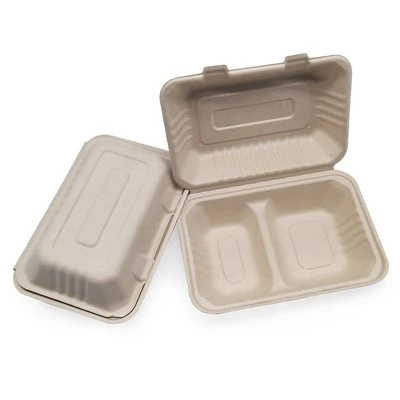
- Bagasse (Sugarcane Fiber) – A byproduct of sugar production, bagasse is durable, heat-resistant, and an excellent alternative to plastic containers.
- PBAT (Polybutylene Adipate Terephthalate) – A biodegradable polymer often blended with PLA to enhance flexibility and degradation speed.
- PHA (Polyhydroxyalkanoates) – A newer, plant-based plastic alternative that decomposes quickly in both soil and water environments.
- Bamboo Products: Bamboo grows quickly and is a highly renewable resource. It's used to make sustainable cutlery, plates, and containers. Bamboo products are not only biodegradable but also have natural antibacterial properties .
- Recycled Paper and Cardboard: These materials are popular for their recyclability and biodegradability. They're versatile and can be used for wraps, boxes, and paper cups. Many restaurants use recycled paperboard for their takeaway containers due to its cost-effectiveness and environmental benefits .

2. The Latest Applications of Biodegradable Materials in Disposable Food Containers
With advances in material science, biodegradable packaging is becoming more functional and accessible. Here are some of the latest developments in disposable food containers made from eco-friendly materials.
A. Multi-Compartment Biodegradable Lunch Boxes
For meal-prep services and restaurants, 5 compartment lunch box disposable options are now available in biodegradable materials. These are ideal for:
- Portion control – Perfect for meal prep businesses and diet-conscious customers.
- Separation of food items – Keeps sauces, proteins, and sides fresh without mixing.
- Microwave and freezer safety – Many bagasse and PLA-based options are heat-resistant.
Restaurants and catering businesses are switching to 5 compartment lunch box disposable products made from bagasse instead of plastic, reducing their carbon footprint.
B. Compostable Takeaway Containers
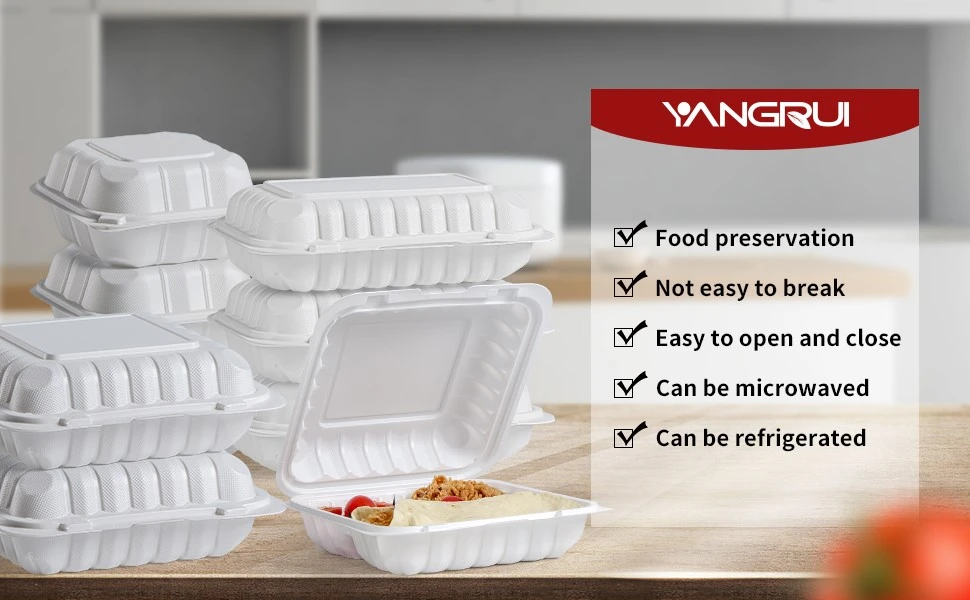
Compostable takeaway food containers are growing in popularity, especially in eco-conscious cities. Unlike regular biodegradable plastics that need industrial composting facilities, newer materials like PHA and modified PLA can break down in home composting conditions. This means consumers can simply throw them into their backyard compost bins without worry.
Some features of compostable containers include:
- Water and grease resistance – Great for hot and oily foods.
- Structural integrity – Improved designs prevent leaks and collapses.
- No toxic residue – Unlike traditional plastics, these materials leave no harmful microplastics.
C. Edible and Water-Soluble Packaging
One of the most innovative applications of biodegradable materials is edible packaging. Some companies are developing food containers made from algae or wheat bran, which can be eaten along with the food or easily dissolved in water.
Benefits of edible packaging include:
- Zero waste – Since it can be consumed, it eliminates disposal concerns.
- Natural ingredients – Made from plant-based materials without synthetic additives.
- Strong durability – Can hold liquids and semi-solid foods without breaking.
Though still in early stages, this technology could revolutionize the disposable food container industry in the coming years.
3. Challenges of Biodegradable Materials in Food Packaging
While biodegradable food containers are a great step forward, they are not without challenges. Some of the key obstacles include:
Higher Costs – Biodegradable packaging is often more expensive than plastic, which can be a barrier for small businesses.
Composting Infrastructure – Many biodegradable plastics require industrial composting, which is not available in all regions.
Durability Concerns – Some biodegradable materials break down too quickly, making them unsuitable for long-term storage.
Despite these challenges, ongoing research and innovation are making biodegradable takeaway food containers more accessible and effective.
4. The Future of Biodegradable Disposable Food Containers
The demand for eco-friendly disposable food containers is growing rapidly. Governments are implementing stricter regulations on single-use plastics, and consumers are becoming more environmentally conscious. Here's what we can expect in the near future:
More Cost-Effective Solutions – As production scales up, biodegradable materials will become more affordable.
Improved Performance – New formulations will enhance durability, making them more competitive with plastic.
Greater Adoption in Restaurants – Fast-food chains and restaurants will increasingly adopt biodegradable containers to meet sustainability goals.
In short, the future of disposable food containers is looking greener than ever.

Conclusion
Biodegradable materials are transforming the disposable food container industry. With advancements in PLA, bagasse, and compostable packaging, businesses now have more sustainable alternatives than ever. Whether you need a 5 compartment lunch box disposable or other eco-friendly takeaway food containers, the future of food packaging is moving toward a greener, more responsible approach.
Where to Buy Biodegradable Takeaway Food Containers?
If you're looking for high-quality biodegradable takeaway food containers, Huizhou Yangrui Printing & Packaging Co., Ltd. offers a wide range of eco-friendly packaging solutions, including 5 compartment lunch box disposable and compostable meal prep containers.
Contact us at: sales@packagingbag5.com or +8618086443226.
References
- Narayan, R. (2019). Biodegradable Plastics: A New Approach to Waste Management. Journal of Sustainable Packaging, 14(2), 101-118.
- Robertson, G. L. (2016). Food Packaging: Principles and Practice (3rd ed.). CRC Press.
- Song, J. H., Murphy, R. J., Narayan, R., & Davies, G. B. (2009). Biodegradable and compostable alternatives to conventional plastics. Philosophical Transactions of the Royal Society B: Biological Sciences, 364(1526), 2127-2139.
- Mohanty, A. K., Misra, M., & Drzal, L. T. (2002). Sustainable bio-composites from renewable resources: Opportunities and challenges in the green materials world. Journal of Polymers and the Environment, 10(1/2), 19-26.
