I. Introduction
1.1 Current Status and Development Trends of the Market
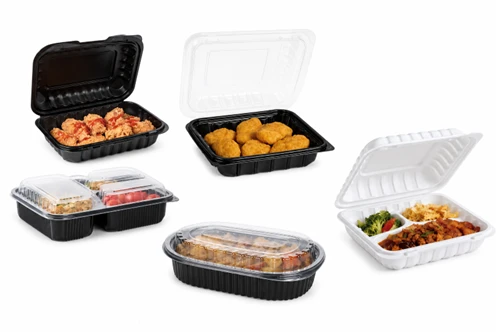
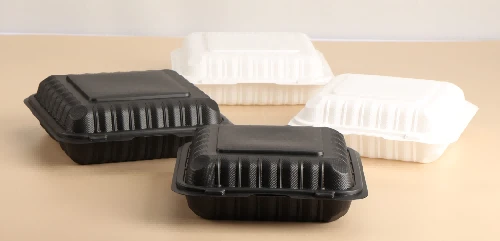
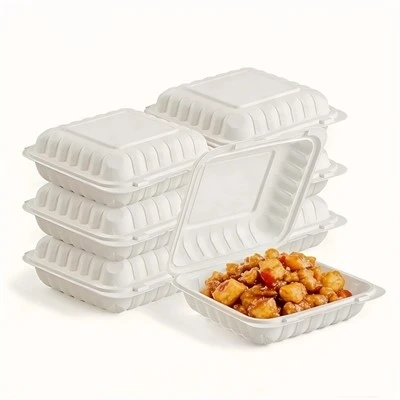
As a core supporting product for the catering service industry, the market size of disposable plastic to go food containers continues to grow with the expansion of the takeaway economy. In 2024, the market size of disposable to go food containers in China was approximately 45 billion yuan, and is expected to reach 50 billion yuan in 2025, with an average annual compound growth rate of 10%-12%.
In terms of product structure, plastic to go food containers still dominate, accounting for 65%, but the proportion of biodegradable to go food containers is rapidly increasing, expected to exceed 30% by 2030.
In terms of raw materials, polypropylene (PP) and polystyrene (PS) are the traditional mainstream raw materials, with a single unit production cost of 0.15-0.25 yuan. The cost structure shows that raw materials account for 65% and labor accounts for 18%; the raw material cost of biodegradable to go food containers accounts for 78%, of which PLA granules account for 60% of the raw material cost.

II. Core Advantages of Direct Factory Supply
2.1 Cost Advantages: Price Competitiveness and Cost Control
2.1.1 Price Advantages from Eliminating Intermediate Links
In the traditional distribution model, products are circulated through multiple intermediaries, with each link adding 10%-15% to the price, resulting in a cumulative price increase of 30%-40%; direct factory supply directly connects to end customers, completely eliminating intermediate price increases, allowing catering companies to reduce procurement costs by 15%-30%.
Taking ordinary PP to go food containers as an example, the market price is 0.3-0.6 yuan/piece, while the direct factory supply price is as low as 0.36-0.65 yuan/set (0.05-0.09 USD/set), with a minimum order quantity of 24,000 sets. A catering company adopted a "532 procurement method," saving 28,800 yuan annually.

Cost Reduction Example
From 0.4 yuan/unit to 0.32 yuan/unit (20% reduction)
| Procurement Channel | Price (CNY/unit) | MOQ | Cost Saving |
|---|---|---|---|
| Traditional Distributor | 0.40-0.60 | 100-1,000 | - |
| Factory Direct Supply | 0.32-0.48 | 24,000+ | 15-30% |
2.1.2 Economies of Scale in Bulk Purchasing
Large factories have a daily production capacity of 100,000 to 1 million units. For example, Shandong Aoqiang Packaging has an annual production capacity of 120 million units and a daily meal box production capacity exceeding 500,000 sets. Large-scale production can reduce unit costs significantly.
Small Quantity (1k-5k)
$0.12-0.15
per unit
Medium Quantity (10k-50k)
$0.08-0.10
per unit
Large Quantity (50k+)
$0.05-0.06
per unit
Forecast: A certain food delivery platform's average purchase price for meal boxes in 2024 was 0.35 RMB per unit, and it is expected to decrease to 0.28 RMB per unit by 2030 due to economies of scale.
2.1.3 Transportation Costs and Logistics Efficiency Optimization
Traditional distribution requires multiple transfers, increasing costs and product damage; direct factory supply enables point-to-point delivery from factory to customer, combined with distributed warehousing to improve efficiency.
- Shandong Aoqiang: 8 regional warehousing centers for emergency replenishment within 72 hours
- Guangzhou Leqiao: 3 large warehouses for rapid replenishment within 48 hours nationwide
- Full truckload transportation reduces costs by 30%-40% vs LTL shipping
- Actual logistics cost reduction: 15%-20%
2.2 Quality Assurance: Product Quality and Safety Control
2.2.1 Standardized Production Processes and Quality Control System
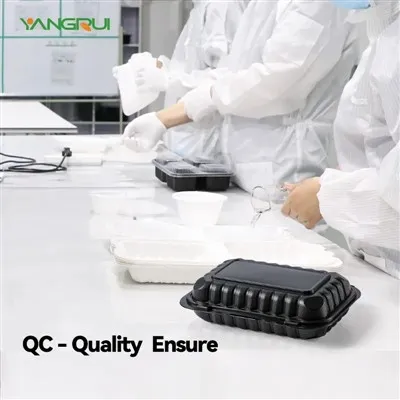
Leading factories use fully automated production lines, such as those equipped with German Kiefel equipment, achieving controllable processes from raw material input to finished product packaging. Key parameters (temperature, pressure, and injection molding time) are precisely controlled by computers.
Taking a 1000ml square meal box as an example, the wall thickness is controlled at 0.35 mm, with a cycle time of 4-5 seconds per mold, resulting in a 24-hour production of 76,800 units.
Quality control must comply with GB 4806.7-2023 "National Food Safety Standard for Plastic Materials and Products for Food Contact," prohibiting the use of recycled materials, and requiring raw materials to be food-grade (PP, PE, PET, etc.).

Key Quality Testing Parameters
Temperature Resistance
-20℃ to 100℃
Compression Resistance
≥50kg
Drop Resistance
1.2m without damage
Sealing Performance
0.5MPa leakage ≤0.1%
2.2.2 Raw Material Source Traceability
Reputable factories establish a complete "raw material-finished product" traceability system: signing quality agreements with suppliers and requiring them to provide raw material testing reports; assigning a "raw material batch number" to each batch of raw materials and linking it to the original factory number.
One factory case shows that the traceability system reduced the time to resolve quality issues from 7 days to within 24 hours.

2.2.3 Product Certification and Compliance Assurance
Domestic Certifications
- SC Production License
- GB 4806 Series
- ISO9001, ISO14001
- HACCP
International Certifications
- US FDA
- German LFGB
- EU CE, BRC
- SGS Testing
The factory can provide complete certification documents to assist customers in compliant operations for both domestic and international markets.
2.3 Supply Stability: Production Capacity and Delivery Capability
2.3.1 Production Scale and Capacity Advantages
Industry-leading companies have sufficient production capacity: Taishan Green Environmental Protection covers 35,000 square meters with a monthly capacity of 5 million sets; Tianjin Tongxinyi covers 30,000 square meters with an annual capacity of 3.6 million boxes.
Daily production capacity varies among factories of different sizes: small factories produce 10,000-50,000 units, medium-sized factories 100,000-500,000 units, and large factories 500,000-1,000,000 units, which can meet the different volume requirements of chain enterprises and food delivery platforms.

Shandong Aoqiang
500,000+
daily meal box capacity (sets)
Guoxing Plastic Industry
3,000,000
daily blister packaging capacity (units)
Taishan Green Environmental
5,000,000
monthly capacity (sets)
2.3.2 Inventory Management and Emergency Replenishment Capabilities
The factory maintains reasonable inventory levels: 15 days' worth of raw materials and 7-10 days' worth of finished goods to ensure production continuity. Emergency replenishment can be achieved through activating backup production lines (activated within 24-48 hours), overtime production, inter-plant transfers, and expedited raw material supply.
Emergency Supply Capabilities
- 48-hour delivery for urgent orders (24-hour response for core customers)
- Backup production lines activated within 24-48 hours
- Priority capacity guarantees through emergency supply agreements
- Inter-plant transfer capabilities for regional supply balance
2.3.3 Order Response Speed and Delivery Cycle
| Order Type | Processing Time | Delivery Cycle | Key Notes |
|---|---|---|---|
| Stock Orders | Within 2 hours | 24 hours | Immediate shipping |
| Customized Orders | Within 4 hours | 7-15 days | Including sampling (3-5 days) |
| Mold-making Orders | Within 8 hours | 15-30 days | Mold development time included |
| Urgent Orders | Within 1 hour | 48 hours | Priority production scheduling |
Average order processing time: 2 hours | Entire process completion: within 24 hours
2.4 Customization Capabilities: Product Design and Service Flexibility
2.4.1 Product Specifications and Size Customization
Covering the full capacity range of 200ml-4000ml, including round, square, and rectangular shapes: 200-500ml suitable for snacks and desserts, 500-1000ml suitable for fast food main courses, 1000-2000ml suitable for soups and hot pot, and over 2000ml suitable for family-sized/group meals.
Flexible size customization: Bowl diameter 8-25cm, depth 4-12cm adjustable, wall thickness 0.3-0.5mm optional, supporting irregular designs (heart-shaped, cartoon) and special structures (compartments, layers, ventilation holes).

Customization Success Cases
- Compartmentalized meal boxes for Nanjing light food brand: reduced flavor mixing by 80%
- Bowls with ventilation holes for Hefei fast food company: 95% solution rate for steam condensation
2.4.2 Printing Design and Brand Customization Services
Screen Printing
Simple patterns, low cost
MOQ: 5000 pieces
Heat Transfer
Complex gradients, curved surfaces
Turnaround: 12-15 days
In-mold Labeling (IML)
Waterproof, stain-resistant, high-end
Turnaround: 20-25 days
Self-adhesive Printing
Easy to operate, moderate cost
Suitable for small batches
Free layout design + brand image upgrade + packaging solution planning
2.4.3 Special Function and Material Customization
Function Customization
- High-temperature resistant (120℃) with a heat insulation layer for hot pot/barbecue
- Leak-proof (double-layer sealing + silicone ring): leakage rate < 0.5%
- Microwaveable: 25% increase in heating efficiency
- Fresh-keeping with a special breathable design
- Easy-to-open user-friendly structure
Material Options
- PP/PS: low cost, stable performance
- PLA: biodegradable, environmentally friendly
- Pulp: sugarcane/bamboo pulp, fully biodegradable
- PP+PET composite: high temp resistance + transparency
- Special materials for aviation/medical sterile boxes
2.5 Service Support Advantages: Professional Technology and After-Sales Guarantee
2.5.1 Technical Support and Training Services
Technical support includes product selection guidance (recommendations based on scenario/budget), usage training (new materials/new functions), storage suggestions (to ensure quality), and problem diagnosis (immediate resolution of usage problems).
The factory provides 7x24-hour technical support and arranges on-site service within 24-48 hours, reducing customer usage risks.

Product Knowledge
Materials/temperature resistance/shelf life
Safe Operation
Unpacking/storage/use guidelines
Environmental Protection
Recycling of biodegradable materials
Emergency Handling
Quality/safety incident response
2.5.2 Market Information Feedback and Industry Trend Sharing
The factory obtains customer feedback through direct supply channels: consumer usage experience, changes in market demand (growth in food delivery/new business models), competitor activities, and policy updates (environmental/safety standards). Based on this feedback, they optimize products and plan ahead.
Trend Sharing Includes
- New technologies (biodegradable/smart packaging)
- Market forecasts (scale/consumption trends)
- Policy interpretations (plastic ban/safety standards)
- Best practices (successful industry case studies)
Example: Developing leak-proof to go food containers based on feedback resulted in a 30% increase in monthly sales
2.5.3 Customer Service System and Response Mechanism
Multi-channel Access
- Telephone/WeChat/QQ
- Online customer service
- Email support
Tiered Response Mechanism
Simple inquiries: answered within 24 hours
Emergencies (quality/safety incidents): receive a 1-hour response and a solution within 4 hours
After-sales service: 7-day no-reason returns and exchanges (for quality issues), logistics tracking, monthly follow-ups, and standardized complaint handling
2.6 Environmental Compliance Advantages: Sustainable Development and Policy Adaptation
2.6.1 Biodegradable Materials and Environmental Technology Innovation
 Leading factories invest 5%-8% of their annual revenue in R&D of new materials, collaborating with universities/research institutions to advance biodegradable technology and quickly achieve industrialization. Mainstream biodegradable materials include PLA (corn starch raw material, compostable in 90 days, 60% reduction in carbon footprint), paper pulp (sugarcane bagasse/bamboo pulp, fully biodegradable), starch-based (corn starch + additives), and PLA+PBAT composite (balanced performance).
Environmental process improvements: clean production to reduce emissions, waste recycling and reuse, equipment modification to reduce energy consumption, and renewable energy/optimized transportation to reduce carbon emissions.
2.6.2 Recycling and Reduction Design Capabilities
Reduction is achieved through structural optimization (maintaining function while reducing materials), lightweighting technology (using new materials to reduce weight), and standardized design (reducing specifications to improve utilization). Examples include a factory reducing paper cup weight from 12 grams to 9 grams and reducing the wall thickness of to go food containers from 0.8mm to 0.6mm, saving customers over 3 million RMB in raw material costs annually.
The recycling system includes the construction of a recycling network, recycling material regeneration technology, supply chain collaboration (upstream and downstream linkage), and innovative models (leasing/deposit systems to improve reuse rates), covering the entire life cycle management from "design (recyclable/biodegradable) - production (clean) - use (guidance) - recycling (channels) - reuse (regeneration)".
2.6.3 Adaptability to Environmental Policy Changes
 The factory establishes a policy monitoring system (tracking domestic and international standards), a professional team for interpretation (assessing impact), proactive planning (adjusting products/processes), and government-enterprise communication (participating in policy formulation). For example, in response to domestic plastic restrictions, they adjusted product structure (expanded biodegradable capacity), upgraded equipment (introduced biodegradable production lines), developed differentiated solutions (adapted to regional policies), and provided customer training (to help customers comply).
International market adaptability includes multi-country certifications (FDA/CE/LFGB, etc.), customized solutions (designed according to national standards), flexible production (switching standards), and technical document support (export certification materials), meeting compliance requirements in different regions.
III. Analysis of the Advantages of Factory Direct Supply in Different Catering Scenarios
3.1 Matching Chain Restaurant Procurement Needs with Direct Supply Advantages
2.1.1 Price Advantages from Eliminating Intermediate Links
Characteristics of chain restaurant procurement: unified standards (consistent store image), large volume (hundreds to thousands of units per store per day, large scale nationwide), stable quality (zero batch differences), cost-sensitive (requires economies of scale), and complex supply chain (coordination of multiple warehouses and stores).
Direct supply advantages match these needs: customization (unified brand packaging), stable supply (long-term contract guarantee), competitive pricing (15%-30% cost reduction), consistent quality (standardized production), and optimized logistics (customized delivery based on store distribution). After partnering with a chain fast-food brand for direct supply, annual procurement costs decreased by 20%, to go food container performance improved, brand image was unified, and supply chain efficiency increased.

3.2 Alignment of Food Delivery Platform Supply Chain Needs and Direct Supply Model
Food delivery platform needs: Large and fluctuating order volume (peak season several times higher than off-season), high delivery requirements (leak-proof and shock-proof packaging), strict time constraints (30-60 minute delivery cycle), cost control (reducing packaging expenses), and significant environmental pressure (consumer concern).
Direct supply advantages for precise response: Rapid response (emergency capacity + inventory to cope with fluctuations), professional design (food delivery-specific leak-proof, shock-proof, and insulated containers), supply chain integration (connecting with platform logistics), cost optimization (scale + logistics cost reduction), and environmentally friendly solutions (various biodegradable materials). After partnering with a platform, the delivery leakage rate decreased from 3% to below 0.5%, the positive review rate increased by 15%, packaging costs decreased by 18%, and the environmental image improved.

3.3 Procurement Pain Points of Small and Medium-Sized Catering Businesses and Direct Supply Solutions
Procurement pain points of small and medium-sized catering businesses: Small volume (tens to hundreds of units per day), weak bargaining power (high-priced procurement), poor quality (diverse sources from small wholesalers), high costs (high-frequency small-batch purchases), poor delivery (no free delivery/high shipping costs), and inventory pressure (fear of stockouts tying up capital).
Direct supply solutions: Flexible procurement (minimum order quantity as low as 1000 units), tiered pricing (encouraging increased volume), one-stop service (selection-design-delivery), quality assurance (certification + test reports), convenient delivery (door-to-door/same-day/next-day delivery), and inventory guidance (reducing inventory buildup). One factory's "small-batch customization service" (minimum order of 500 units, 10%-15% lower price than traditional channels, free design + 24-hour regional delivery + technical training) helps small and medium-sized catering businesses reduce procurement costs by 20%-30%, stabilize quality, and improve efficiency.

IV. Challenges and Risk Assessment of the Factory Direct Supply Model
4.1 Minimum Order Quantity Requirements and Financial Pressure
Minimum order quantity thresholds: Standard products 1000-10000 units, custom printed products 5000-20000 units, molded products over 50000 units. Small and medium-sized restaurants need to purchase several months' worth of supplies at once, facing significant upfront investment (e.g., 5000 units × 0.5 yuan = 2500 yuan), capital tied up in inventory, shelf-life risks (long-term storage leading to expiration), and product update risks (specification/design changes leading to obsolete inventory).
Mitigation measures: Phased delivery (reducing inventory pressure), joint procurement (regional small and medium-sized restaurants pooling orders to meet minimums), flexible payment terms (installments/payment upon delivery), and inventory management services (factory storage, on-demand delivery).

4.2 Payment Terms and Financial Risks
Strict payment terms: 30%-50% down payment (over 50% for customized products), short payment cycles (payment upon delivery/payment before shipment, no traditional 30-60 day credit terms), significant pressure from large one-time payments, and also facing exchange rate risks (imported raw materials/equipment), price fluctuation risks (raw material price increases leading to factory price adjustments), quality loss risks (returns resulting in financial losses), and breach of contract risks (failure to fulfill obligations resulting in loss of deposit).
Risk reduction measures: Sign detailed contracts (clarifying rights, responsibilities, quality, and breach of contract terms), select reputable factories (on-site visits + customer reviews), purchase insurance (cargo insurance/quality insurance), establish a supplier evaluation system (regularly evaluating financial performance/compliance), and diversify procurement (cooperating with multiple factories to reduce dependence).
4.3 Return and Exchange Policies and After-Sales Service Limitations
Return and exchange limitations: Requires third-party testing to prove quality issues, shipping costs borne by the customer (high costs for large quantities), long processing times (several weeks), and customized products are not eligible for returns or exchanges; After-sales service limitations: Slow response during peak seasons, narrow service scope (no value-added services), geographical limitations (no on-site service for distant locations), and difficulty in defining responsibility (disputes over quality issues).
Suggestions for mitigation: Clearly define return and exchange policies in the contract (conditions/procedures/costs), select factories with comprehensive after-sales service (check customer reviews), establish a receiving inspection system (to detect problems promptly), retain evidence (photos/videos/test reports), and purchase appropriate insurance (to compensate for losses).