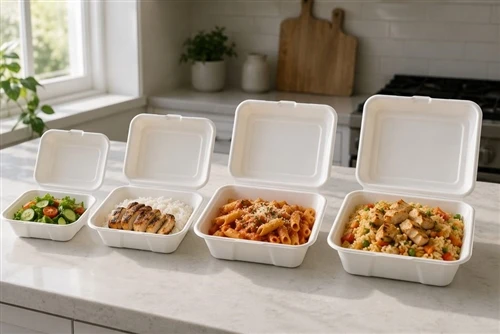
"Is this container big enough for a full rice plate?" is a question we field from new buyers every week. It sounds basic. The answer, though, depends on three things most buyers don't have written down before they place their first bulk order: the actual volume of a filled portion, the headspace the food type needs, and how the container's stated oz rating maps to usable interior space - not just the rim measurement.
Getting this wrong is easy. A 16 oz container sounds right for a lunch portion, but fill it with steamed rice and a sauced protein and you're looking at a lid that won't close properly. Order 32 oz containers to be safe and your soups look lost, your portion costs go up, and customers start sending photos of "half-empty" boxes.
This guide works through the full oz range we carry - 13 oz through 47 oz - with the actual dish types each size was designed to hold.
1. How Food Container Capacity Is Actually Measured (and Why It Confuses Buyers)
The number printed on a container spec sheet - 16 oz, 24 oz, 32 oz - refers to brim-full volume: the total liquid that fits if you fill the container right to the top of the walls before the lid is placed.
Usable food capacity is roughly 15–20% less than brim-full volume, because:
- Hot food generates steam and needs 1–1.5 cm of headspace to avoid condensation pooling on the lid
- Sauced dishes slosh during delivery - you need buffer room
- Lid closure pressure can push contents upward on soft foods like rice or noodles if you fill to the brim
The practical rule: fill to about 80% of rated volume for hot food, closer to 90% for cold, dry food like salads or baked goods.
| Container Rating | Brim Volume | Practical Hot Fill | Practical Cold Fill |
|---|---|---|---|
| 13 oz / 400 ml | 400 ml | ~320 ml | ~360 ml |
| 16 oz / 480 ml | 480 ml | ~380 ml | ~430 ml |
| 30 oz / 900 ml | 900 ml | ~720 ml | ~810 ml |
| 34 oz / 1000 ml | 1000 ml | ~800 ml | ~900 ml |
| 47 oz / 1400 ml | 1400 ml | ~1120 ml | ~1260 ml |
2. The Size Map: Which Container Fits Which Dish
13 oz / 400 ml - Portions and Sides
This is the smallest practical size for a full side dish. At 400 ml, it comfortably holds a single portion of:
- A side salad (100–130 g greens)
- A soup portion (not a main, too shallow for a full bowl experience)
- A single-item snack like edamame or a small appetizer
The small plastic containers in this range are common in Japanese bento-adjacent cuisine and Korean side dishes (banchan), where the visual separation between small portions is part of the presentation. They're also used in hospital meal kits for controlled portion delivery.
Who uses 13 oz containers most: caterers building multi-container meal kits, meal prep subscription boxes, and foodservice operators who charge per side separately from the main.
16 oz / 480 ml - The Single-Protein Lunch Standard
This is the most-ordered size for a reason. A standard North American lunch portion - a chicken breast or thigh with one side - fits cleanly in a 16 oz container at the 80% practical fill level.
What 16 oz actually holds in common dish types:
| Dish | Approximate Weight | Fit at 16 oz? |
|---|---|---|
| Grilled chicken + small side | 300–350 g | ✓ Comfortable |
| Rice bowl (protein + rice) | 380–420 g | ✓ Tight but workable |
| Pasta (plain, no heavy sauce) | 350 g | ✓ Good |
| Stew / curry main | 400 ml liquid-heavy | ✗ Too full, lid may bulge |
| Burger + small fries | 300 g solid | ✓ Comfortable |
The 16 oz to-go containers in our hinged MFPP line are designed with 2.3–2.5 cm wall height, which keeps single-protein portions from sliding around during delivery.
A common first-order mistake at 16 oz: buyers from markets where "portions are bigger" (US, Middle East, Australia) sometimes find their local portion standards push past this size. Test with a full portion in your kitchen before committing to a large run.
24–30 oz / 700–900 ml - Full Meals and Multi-Item Trays
This range is where combo meals live. At 900 ml practical capacity, a full meal with a main, starch, and vegetable side sits at the right fill level. The added depth also matters: at this size, a chicken thigh doesn't get compressed against the lid.
For the 30 oz multi-compartment containers with a 3-section layout, the actual per-section capacities matter more than the total:
- Section 1 (largest): typically ~480 ml - fits a full rice portion or main protein
- Section 2: ~250 ml - side vegetable or salad
- Section 3: ~150 ml - sauce or small second side
This is the size most often seen in North American fast-casual restaurants running "build-your-own bowl" formats. The compartments prevent the dressing from sogging the greens before the meal is opened.
Who uses 24–30 oz most: poke bowl and grain bowl concepts, meal prep delivery brands, hospital systems running full meal trays for patients.
34 oz / 1000 ml - The Restaurant Family Portion
At 34 oz, you're in full-meal territory for markets where portions are larger. This size fits:
- A full order of rice noodles or pasta with sauce (500–550 g)
- Bone-in chicken pieces (2 thighs or 1 leg + thigh) with rice
- A large Middle Eastern-style rice dish (kabsa, mandi, biryani portions)
The 34 oz microwavable takeaway containers in our MFPP 801 line are specifically rated for microwave reheating - the material handles temperature cycling from refrigerator temperature (~4°C) to 85°C without warping. This matters for meal prep subscription boxes where the customer is reheating at home, not eating at the restaurant.
Market note: In the Middle East and parts of Southeast Asia, 34 oz is often the minimum expected size for a "full meal" serving. What reads as a generous portion in the US reads as a standard lunch in Dubai.
47 oz / 1400 ml - Sharing, Catering, and Large Portions
At this size, you are no longer in single-meal territory. The 47 oz clear PP containers are used for:
- Sharing platters in takeout (a single-sized portion of a sharable appetizer)
- Retail-ready meal kits where the container holds multiple portions before splitting
- Catering bulk distribution (a "half-tray" equivalent for buffet-to-go formats)
The crystal-clear PP at this size also serves a retail display function - the food is visible through the lid, which is relevant for supermarket hot deli counters and prepared food sections where the customer is buying by visual inspection.
3. Three Sizing Mistakes That Cost Money (And How to Avoid Them)
Mistake 1: Sizing from the oz number instead of the dish
A buyer reads "16 oz" and assumes it covers their standard meal. They order 50,000 pieces. First shipment arrives, kitchen fills a container with their signature dish, and the lid bows upward. The fix is to test physically: fill a sample container with your actual portion before confirming the order spec.
Mistake 2: Ordering one size for multiple menu categories
It's tempting to standardize on one container size to simplify inventory. The problem is that a size that works perfectly for a chicken rice box creates a poor presentation for a half-portion soup, which looks undersized and spills during transport. Most serious restaurant operators end up with 2–3 container sizes covering different menu segments.
Mistake 3: Ignoring market destination when specifying size
A 16 oz container that sells well in a Shanghai lunch market may look undersized at a Houston food truck. The reverse applies too - ordering 34 oz containers for a Japanese convenience store-style operation produces oversized, expensive packaging for small portions. The destination market's portion norms should be the starting point for size selection, not the supplier's most popular SKU.
4. Volume vs. Dimension: When the Shape Changes the Answer
Two containers with identical oz ratings can have completely different usability for the same dish, depending on base footprint and depth.
| Container Type | Same 30 oz Capacity | Practical Difference |
|---|---|---|
| Wide, shallow (8"×8"×1.8") | 900 ml | Better for rice/grain bowls; food visible through lid |
| Narrow, deep (6"×6"×3") | 900 ml | Better for soups, stews; reduced splash during delivery |
| Oval, medium depth | 900 ml | Better for single-protein display; different visual presentation |
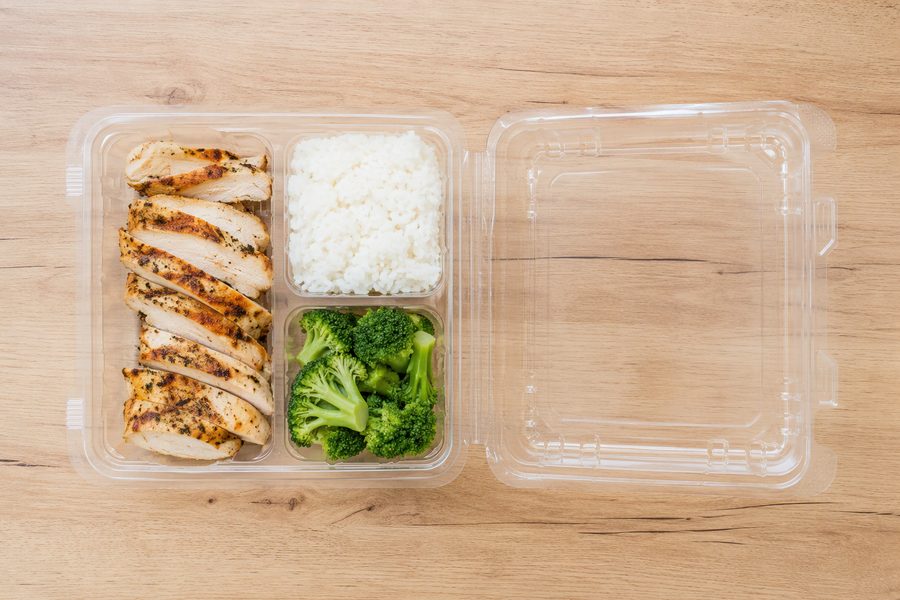
For multi-compartment containers, the total oz rating is less useful than the per-compartment breakdown. A "30 oz 3-compartment container" might have one section at 400 ml and two at 250 ml each - or it might be 500/250/150. These numbers should be in the spec sheet you receive from your supplier before you commit to a production run.
5. A Practical Pre-Order Checklist for Container Sizing
Before confirming any container size in a bulk order, run through these:
☑ Fill test with actual portion Take your standard portion, fill a sample container to 80% capacity, close the lid. Does it close without resistance? Does food contact the lid underside? Is there visible headspace?
☑ Transport shake test Fill the container, close it, and place it in a bag. Walk briskly or simulate a delivery route for 90 seconds. Does the lid stay closed? Does liquid migrate to the lid? Is the headspace sufficient?
☑ Destination market portion check What does a "standard main" look like in your target market? A North American buyer's 24 oz portion may be a small serving in some Middle Eastern markets. Confirm before you stock.
☑ Stacking compatibility If your operation stacks filled containers in a delivery bag or on a shelf, check the stacking stability of the specific size. Some container shapes are designed for empty stacking only.
☑ Microwavability requirement If the end user will reheat in the container, verify the material grade is rated for microwave use. PET containers are generally not microwave-safe; MFPP and certain PP grades are. This affects which size range is appropriate for different menu items.
Frequently Asked Questions
What is the most common food container size for takeout restaurants? 16 oz (approximately 480 ml) is the most widely ordered size for single-meal takeout in North American and Chinese export markets. It covers a standard single-protein-and-starch portion at the right fill level for most cuisines.
How do I convert food container ml to oz? Divide the ml number by 29.57 to get fl oz. A 500 ml container is approximately 16.9 oz; a 1000 ml container is approximately 33.8 oz. Keep in mind that "32 oz" in a container spec refers to US fluid ounces based on brim-full volume.
Can a 16 oz container hold a full burger and fries? A burger without the fries fits in a standard 16 oz container comfortably. Adding fries typically requires either a 24 oz container or a separate side container for the fries - a standard burger with a medium portion of fries combined exceeds 16 oz usable capacity.
What container size works for Middle Eastern rice dishes like mandi or biryani? A full individual serving of a rice-based dish in Middle Eastern foodservice typically requires 34 oz (1000 ml) or larger. The 30 oz size works for a lighter portion; 34–47 oz is more common for restaurant-standard servings in that market.
Do I need different sizes for cold and hot food? You can often use the same container for both, but the fill level differs - hot food needs more headspace for steam. The practical implication is that a container sized for hot food at 80% fill will look underfull if used for cold food like salad. Some operators prefer slightly smaller containers for cold applications to maintain a "full" visual presentation.
CTA
Matching container size to your menu isn't a one-size-fits-all exercise. We supply samples across the full range - 13 oz through 47 oz - before any bulk commitment. Tell us your dish type, portion weight, and destination market, and we'll confirm which size and material grade fits before you place an order.