Table of Contents
What Is That Triangle Symbol on Your To Go Containers, Really?
The Full List: What Each Resin Code Number (1–7) Means
Resin Code 5: What Polypropylene (PP) Means for Your To Go Containers
"Recyclable" vs. "Accepted Locally": Why the Difference Matters
How to Answer Your Customers' Most Common Questions About Resin Code 5
What This Means for Foodservice Buyers and Brands in 2026
Frequently Asked Questions
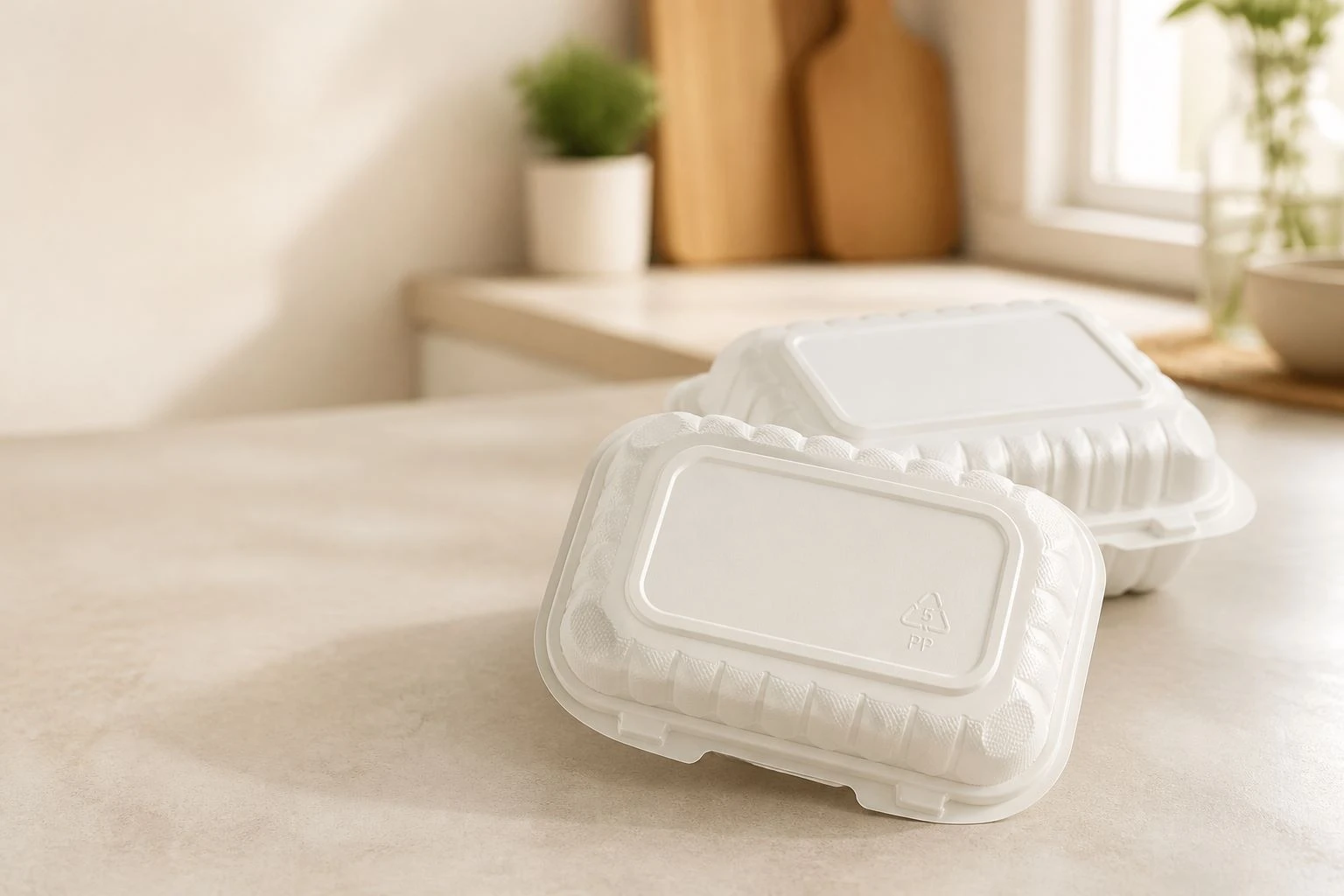
What Is That Triangle Symbol on Your To Go Containers, Really?
Let's clear up the confusion at the source. The number inside that triangle on your to go containers is called a Resin Identification Code (RIC) - a system the plastics industry created in 1988 to identify which of seven common polymer types a product is made from.
It is not a recycling guarantee. That's the single most important thing to understand, and it's also the single most common misconception.
The triangle looks a lot like the universal recycling symbol (technically called the "Mobius loop" - the three chasing arrows you see on recyclable paper or metal). But they're two different symbols serving two different purposes:
- The Mobius loop signals that a material is generally recyclable in principle
- The Resin Identification Code simply tells sorting facilities, manufacturers, and recyclers what type of plastic they're looking at, so it can be separated correctly during processing
Sorting facilities rely on this code constantly. Different resins melt at different temperatures and react differently during reprocessing, so correctly identifying the material is the first step before any recycling can happen at all - regardless of whether that specific item ends up getting collected in your town.
There's also a practical reason this distinction gets missed so often: the RIC triangle and the Mobius loop use nearly identical visual language - a triangle made of arrows. That visual overlap wasn't intentional deception, but it has genuinely confused consumers for decades, which is part of why some manufacturers have shifted to a solid (non-arrow) triangle outline for the RIC specifically, to reduce that confusion at the design level.
This confusion is exactly why foodservice buyers hear the same question from their own customers over and over: "does the 5 mean I can recycle this?" Having an accurate answer ready - rather than deflecting or guessing - is a small thing that builds real trust. The system itself is now codified under the ASTM D7611 resin identification standard, which plastics manufacturers follow when molding these codes into containers. For more on how we select materials for our own containers, see how we source our PP containers.
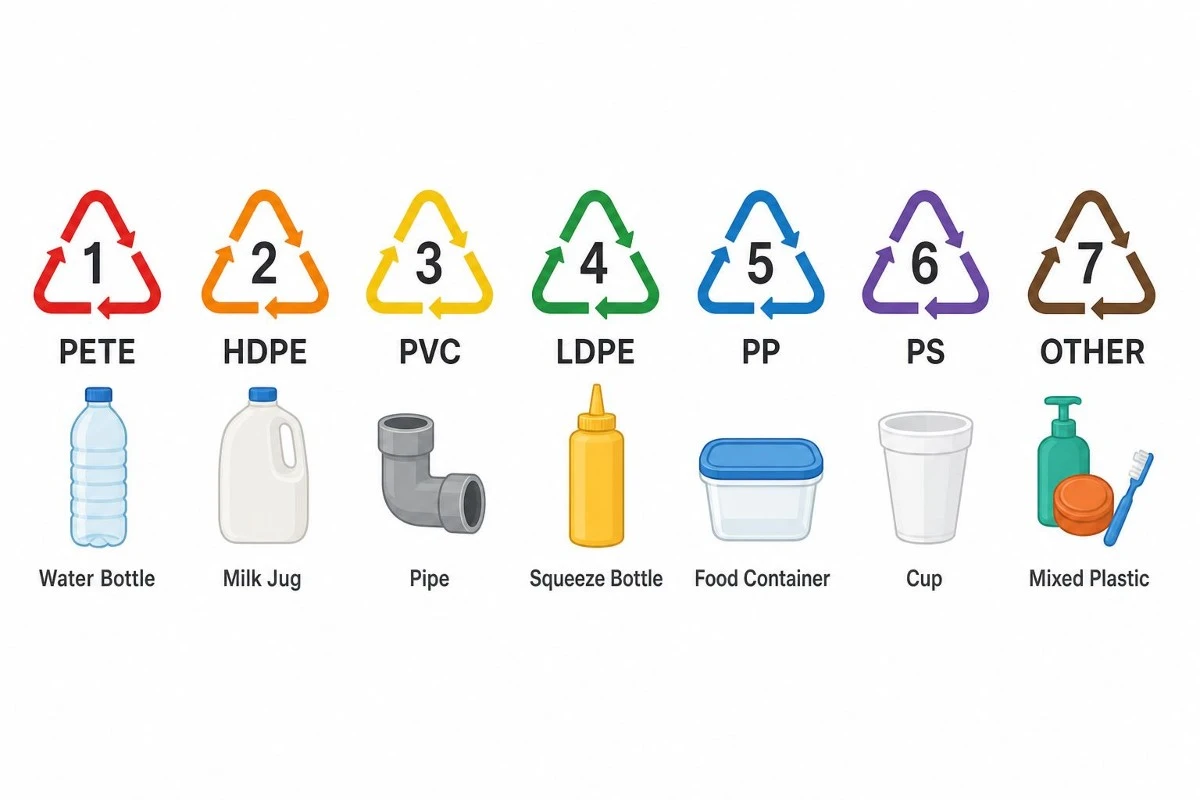
The Full List: What Each Resin Code Number (1–7) Means
Before zooming into code 5 specifically, it helps to see where it fits in the full system. Here's what plastic recycling codes explained actually looks like across all seven numbers:
|
Code |
Resin Name |
Common Products |
Typical Curbside Acceptance |
|
1 |
PET (Polyethylene Terephthalate) |
Water/soda bottles |
Widely accepted |
|
2 |
HDPE (High-Density Polyethylene) |
Milk jugs, detergent bottles |
Widely accepted |
|
3 |
PVC (Polyvinyl Chloride) |
Pipes, some packaging film |
Rarely accepted |
|
4 |
LDPE (Low-Density Polyethylene) |
Squeeze bottles, bags |
Variable, often drop-off only |
|
5 |
PP (Polypropylene) |
To go containers, bottle caps, yogurt cups |
Variable, expanding |
|
6 |
PS (Polystyrene) |
Foam cups, disposable cutlery |
Rarely accepted |
|
7 |
Other (mixed/multilayer resins) |
Various specialty items |
Rarely accepted |
Codes #1 and #2 tend to be the most consistently accepted in curbside programs nationwide. Everything from #3 through #7 - including the #5 found on most to go containers - varies considerably depending on where you live.
That's not a vague caveat; it's backed by real numbers. National data shows EPA's facts and figures on plastic recycling have consistently placed overall U.S. plastics recycling rates in the single digits, underscoring just how much "it depends on your program" is the honest answer, not a brush-off. For a deeper breakdown of exactly how this applies to our own product lines, see our full container materials guide.

Resin Code 5: What Polypropylene (PP) Means for Your To Go Containers
Here's the core answer: resin code 5 means the container is made from polypropylene (PP) - a durable, heat-resistant plastic used across a huge range of everyday products, from bottle caps and yogurt cups to medicine bottles and, very commonly, to go containers.
Why does PP get its own code in the first place? Because it has a distinct melting point and chemical makeup compared to other plastics. Recyclers need to process each resin type separately - mixing PP into a batch of PET, for example, can compromise the whole reprocessed material. The code exists to prevent exactly that kind of cross-contamination during sorting.
From a manufacturing standpoint, PP earns its place in foodservice packaging for practical reasons:
- Heat tolerance - holds up under hot entrées without warping
- Durability - resists cracking under stacked, transported loads
- Moisture and grease resistance- performs well without needing an added chemical coating
What's the current recycling reality for resin code 5? It's genuinely improving, though not yet universal. Recent tracking of PP curbside access by The Recycling Partnership's Polypropylene Recycling Coalition has documented real, measurable gains in the number of U.S. communities now accepting PP at the curb - a meaningful shift from just a few years ago, when PP acceptance was far rarer.
That said, "expanding" is not the same as "everywhere." Whether your specific program accepts resin code 5 still depends entirely on local rules. How2Recycle's local-check label system exists precisely to help consumers verify this instead of assuming based on the code alone.
For context on the scale of this shift: The Recycling Partnership's State of Curbside Recycling research has estimated well over a billion pounds of PP are potentially available for recycling annually in the U.S. from single-family households alone - a strong signal of where the market is headed, even if today's coverage remains uneven. That's a meaningfully different starting point than just a decade ago, when PP was rarely accepted anywhere outside dedicated drop-off programs.
"Recyclable" vs. "Accepted Locally": Why the Difference Matters
This is where most of the frustration lives, so let's be direct about it: a material being technically recyclable and a municipality actually collecting it are two different things.
PP (resin code 5) is technically reprocessable - the resin itself can be melted down and remade into new products. But whether your local program picks it up, sends it to a drop-off center, or sends it to landfill is a separate, entirely local decision.
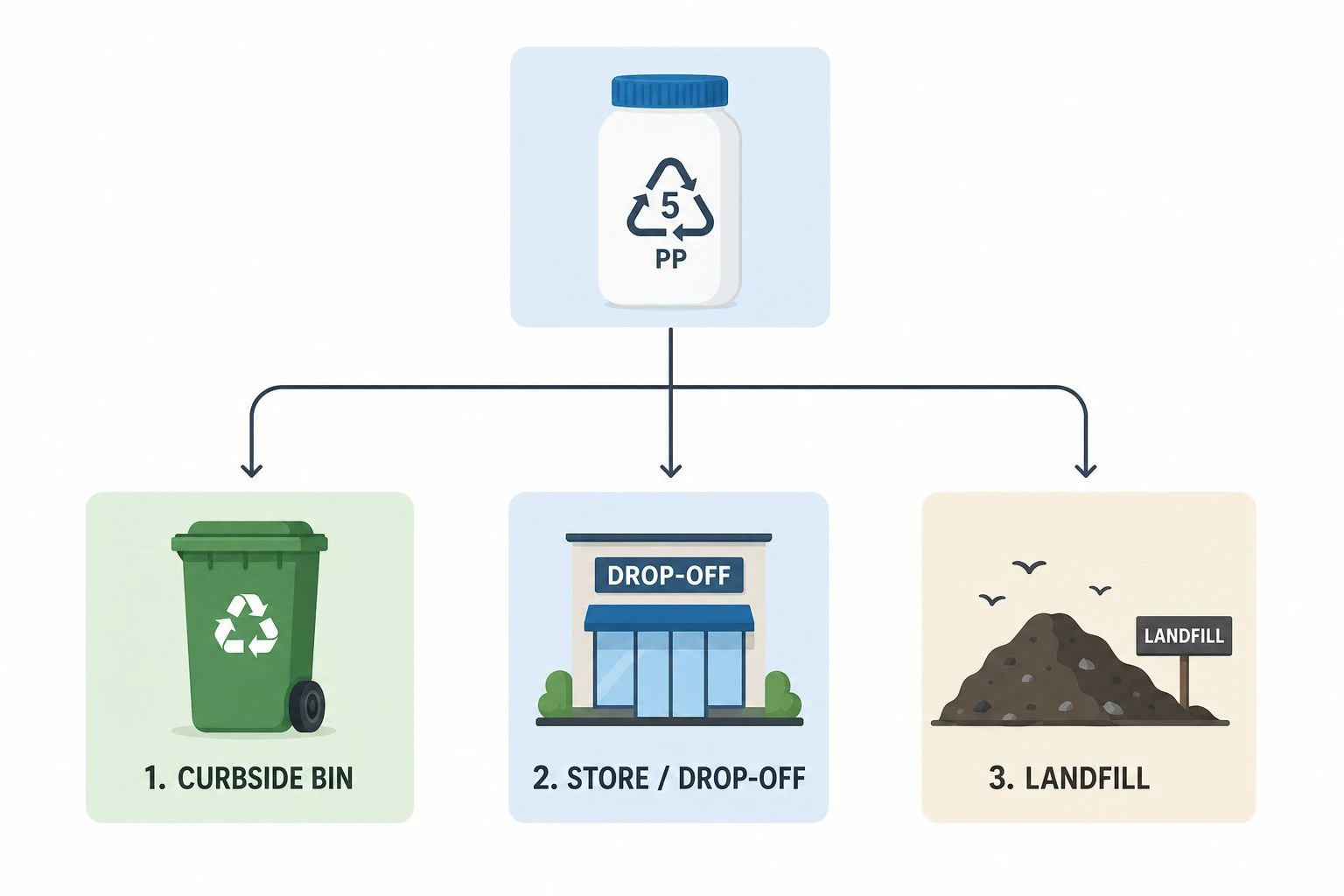
Realistically, any coded plastic has three possible paths:
- Curbside acceptance - picked up directly from your recycling bin
- Drop-off or store take-back programs - some retailers collect specific plastics even when curbside won't
- Landfill - if neither applies in your area, this is the honest outcome
This is exactly the gap How2Recycle's local-check label system was built to close - instead of assuming a resin code guarantees recyclability, it prompts consumers to check what's actually available where they live.
Being upfront about this matters more than it might seem. Documented consumer confusion around recycling labels shows that unclear or overstated claims are a major driver of public skepticism toward packaging generally - plastic or otherwise. Giving a straight answer, even when it's "it depends," builds more trust than a feel-good oversimplification ever could.
If you're the kind of buyer who likes verifying claims before repeating them to your own customers, you'll want the same mindset applied elsewhere too - see how to verify any packaging claim before you trust it in our guide to PFAS-free packaging.
How to Answer Your Customers' Most Common Questions About Resin Code 5
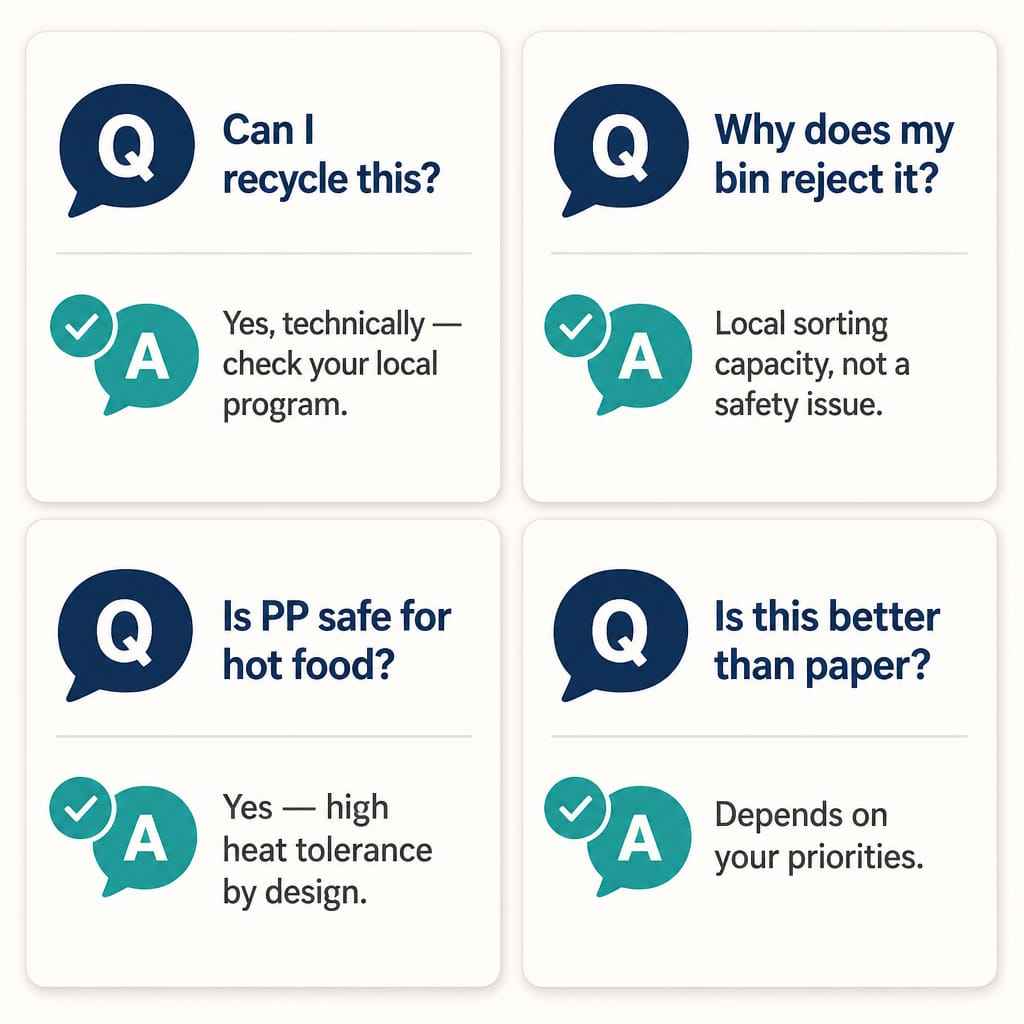
This section is built to be forwarded. If you're a restaurant, caterer, meal-kit service, or institutional foodservice buyer, feel free to copy these answers directly for your own customer-facing materials.
"Can I recycle this?" Yes, technically - it's resin code 5 (polypropylene), which is accepted in a growing number of curbside programs. Check your local guidelines or How2Recycle to confirm.
"Why does my recycling bin reject it?" Not every program accepts resin code 5 yet, even though acceptance is expanding. It's a sorting-capacity issue at your local facility, not a safety or quality issue with the container itself.
"Is PP safe for hot food?" Yes. Polypropylene has a high heat tolerance and is widely used specifically because it holds up well under hot entrées without warping or leaching.
"Is this better or worse than paper?" It depends on the criteria. PP offers stronger heat and stacking performance; some paper/fiber options have different end-of-life pathways. Neither is universally "better" - it depends on your priorities.
A simple, practical tip for small businesses: printing one short, accurate line on your packaging or signage - something like "Resin #5 (PP) - check local guidelines to recycle" - cuts down on repeat questions and signals you actually know your own materials.
What This Means for Foodservice Buyers and Brands in 2026
To go containers in 2026 are under more customer scrutiny than ever - and accurate labeling has quietly become a brand-trust asset, not just a compliance detail. Customers notice when a business can answer a packaging question confidently versus deflecting with "I'm not sure."
For small business buyers specifically, this guide is designed to be forwarded, linked, or adapted into your own customer materials at no extra cost. You don't need a sustainability team to communicate this clearly - you just need the right answers on hand.
If you're currently evaluating suppliers for the best to go containers for restaurants or any foodservice operation, add one more question to your checklist: can this supplier clearly explain their own materials and resin codes? If they can't, that's worth noting - transparency about materials tends to correlate with transparency about everything else.
Ready to move forward? Get a quote for PP to go containers, download the customer FAQ card, or speak with our team about your specific packaging needs.
FAQ
Q: What does the number 5 mean on plastic containers?
A: The number 5 inside a triangle is a Resin Identification Code (RIC) indicating the container is made from polypropylene (PP). It identifies the plastic type for sorting purposes and is not itself a guarantee that the item will be recycled in every local program.
Q: Is polypropylene (resin code 5) recyclable?
A: Polypropylene is technically recyclable, and curbside acceptance has been expanding in recent years, but availability still depends on your local municipal recycling program. Checking locally or using a tool like How2Recycle is the most reliable way to confirm.
Q: Why do some recycling programs not accept code 5?
A: It typically comes down to local sorting-facility capacity and processing economics, not a safety or quality concern with the material itself. Many facilities are still building out the equipment needed to process PP efficiently.
Q: Is PP safe for hot food in to go containers?
A: Yes. Polypropylene has a high heat-deflection tolerance, which is a major reason it's widely chosen for hot food packaging - it resists warping and deformation under heat.
Q: How can I tell if my local program accepts resin code 5?
A: Check your municipal recycling program's guidelines directly, or use How2Recycle's local-check label system to verify. Looking at our PP to go containers can also show you exactly where the code is molded into a container.
Certificate Display


FDA Certification (SGS): YANGRUI take out containers are make from the safe & new material