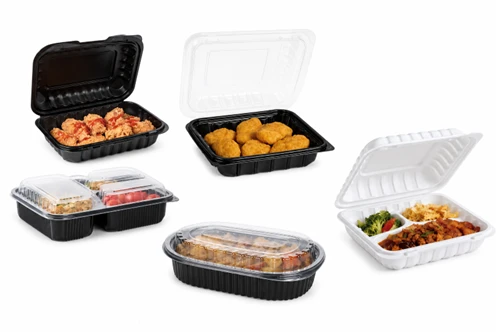
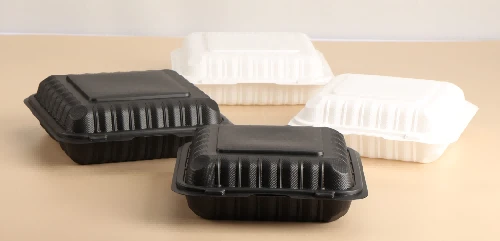
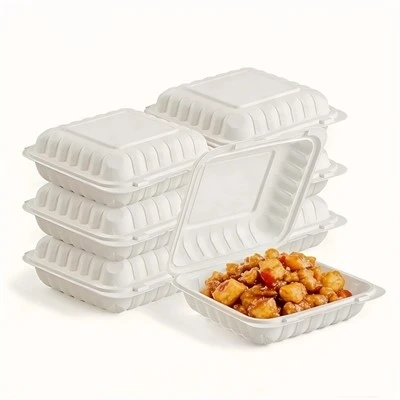
In today's fast-paced lifestyle, disposable lunch containers have become an essential item for households and the catering industry. Whether it's office workers' takeout lunches, students' simple meal storage in dormitories, or the hundreds of millions of orders on food delivery platforms, these convenient food-to-go containers are indispensable. With the comprehensive upgrade of national food safety standards in 2025 and the further tightening of plastic restriction orders in various regions, how to make the optimal choice from multiple dimensions such as compliance, safety, cost-effectiveness, and environmental protection has become a focus of attention for both consumers and businesses. This article, starting from materials science, national standards, and practical scenarios, provides a clear and actionable purchasing logic for home and commercial users, helping you make the right decision in the shortest possible time.
I. Materials Basics and the Latest National Standard (2025) (Essential Knowledge)
1.1 Comparison of Performance of Four Mainstream Materials
Currently, over 95% of food to-go containers on the market are made of the following materials. Performance differences directly determine their application scenarios:

-
- PP (Polypropylene):
Temperature resistance range -30℃ to 130℃, microwaveable, elongation at break up to 300%, excellent toughness, almost a "versatile" material. Currently, over 90% of hot food delivery uses PP food to-go containers.
-
- PS (Polystyrene):
Highest transparency and lowest cost, but heat resistance is only 70-90℃. It is prone to brittleness at low temperatures and can only be used for refrigerated or room-temperature foods. A typical example is the transparent plastic boxes in the deli section of supermarkets.
-
- PET (Polyethylene Terephthalate):
Transparency similar to PS, but lower heat resistance (60-85℃). Microwaveable is strictly prohibited. Primarily used for cold chain applications such as beverage cups and salad bowls.
-
- PLA (Polylactic Acid, derived from corn starch):
Heat resistant ≤60℃, requires industrial composting conditions (55-60℃, high humidity) to degrade within 6 months.
- Biodegradable Materials: PLA, PBAT, PLA+PBAT.
- PBAT (Petroleum-based Biodegradable): Heat resistant 60-70℃, good toughness.
- PLA+PBAT Composite Material: Heat resistant up to 90℃, currently the biodegradable solution closest to PP in terms of user experience.
1.2 Two National Standards Must Be Mastered by 2025
 - GB 4806.7-2023 (enforced in September 2024): Completely prohibits the use of recycled materials, adds a requirement that "aromatic primary amines" must not be detected, and requires labels to indicate "for food contact use." This means that after 2025, any food to-go containers without proof of virgin materials will be considered non-compliant products.
- GB/T 18006.1-2025 (Effective March 2026, some companies have already implemented it ahead of schedule): Capacity deviation ≤5%, height change ≤5% after 1 minute with a 3kg load, no deformation or leakage after immersion in 95℃ hot water/oil for 30 minutes. This virtually eliminates all ultra-thin, counterfeit lunch boxes on the market.
II. Household Scenarios Procurement Strategies (Comprehensive Coverage from Daily Use to Emergency)
2.1 Daily Food Storage/Microwave Heating Scenarios
 90% of household users still prefer PP material food to-go containers. Recommended Capacity Distribution:
- 300-500ml: For sauces, portioning side dishes
- 750-1000ml: Standard capacity for a single meal
- 1250-1500ml: For multiple servings or leftovers from the next day
Purchase Tips:
- Sealing Test: Fill with water and invert for 2 minutes without leaking (pressure ≥ 2.0kPa)
- The lid should have a clear "Microwave Safe" label; it needs to be opened or punctured before use.
High-Value Recommendations (Latest Prices in 2025):
- Economy: Meiliya 450ml (50 bottles for 12.9 yuan, approximately 0.26 yuan/bottle)
- Standard: Jingdong Jingzao 900ml Black and White Classic (20 sets for 16 yuan)
- Premium: Xintianli Thickened Square Box (with silicone ring, 5+ yuan/box, similar to Lock & Lock in user experience)
2.2 Commuting/Travel Scenarios
Office workers and students are most afraid of spills, so "leak-proof" is the primary concern. Recommended choices:
- PP lunch boxes with silicone sealing rings or four-sided locking mechanisms
- Capacity controlled between 500-1000ml to avoid excessive weight
2025 Hot Selling Items:
- Temeju 500ml Square Black Base (20 pieces for 14.9 yuan)
- Baijie 1000ml Four-Compartment Lunch Box (20 pieces for 17.9 yuan)
- Tangzong Aluminum Foil Lunch Box 1800ml (Heatable over open flame + insulated bag, suitable for long journeys)

2.3 Emergency/Stockpiling Scenarios
It is recommended to purchase 50-100 or more at a time, prioritizing genuine products with the "Food Contact Use" QS/SC mark. Recommendation:
- Toyota Wotek 300-piece mixed pack (100 small, 100 medium, and 100 large, total price 180-240 yuan, equivalent to 0.6-0.8 yuan/piece)
Reliable Brands: Fuling, Jialian Technology, Zhongxin Shares, and Xintianli are all A-share listed companies, guaranteeing quality.


III. Commercial Scenarios Procurement Strategy (Covering Takeout, Group Catering, and Retail)
3.1 Takeout/Dine-in Packaging Scenarios
Takeout is the largest consumption scenario for food to-go containers. Merchants with millions of daily orders have extremely high requirements for "leak-proof" and "load-bearing capacity".
Core Requirements:
- Double lock or anti-theft buckle design
- Hot food must be made of PP or PLA+PBAT (heat resistant to 90℃)
- 79% of consumers are willing to pay an extra 0.1-0.2 yuan for lunch boxes with a "traceability QR code"
Recommended Products:
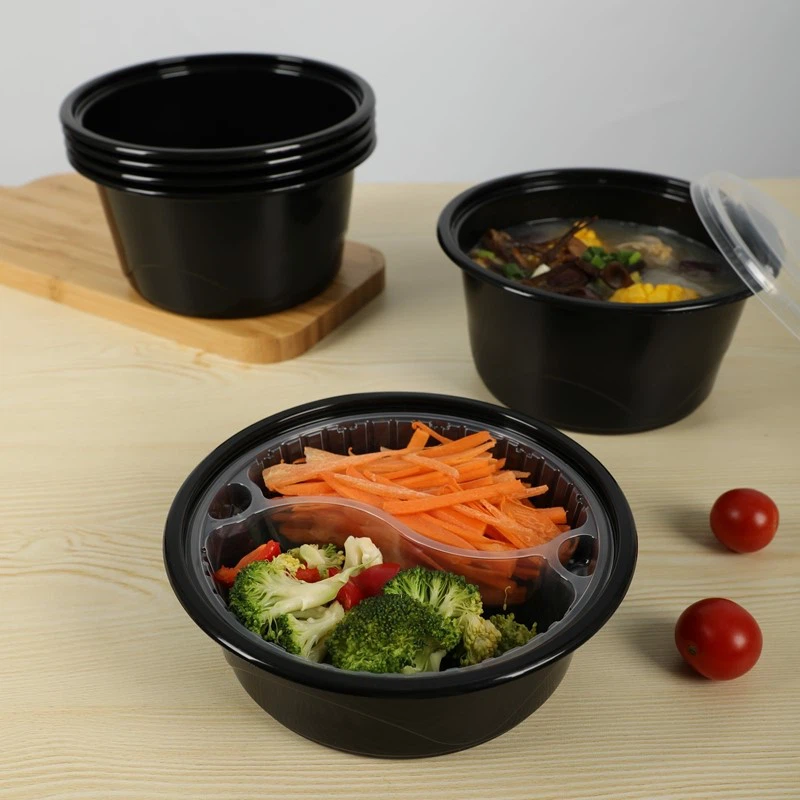
- Saizhuo SZ Thickened Series (1000ml, starting at 0.85 yuan/piece, 0.68 yuan for orders over 100,000 pieces)
- Minshun Anti-theft Buckle Lunch Box (with disposable tear strip, suitable for high-end brands)


3.2 Group Catering/Central Kitchen Scenarios
 Group catering has higher requirements for heat preservation performance:
- Hot Chain: Center temperature of lunch box ≥ 60℃ within 3 hours
- Cold Chain: Freezing at -18℃ for 30 days without deformation
Tiered Selection:
- Basic Model (0.3-0.5 yuan): Ordinary thin PP
- Professional Model (0.8-1.5 yuan): Thickened PP + foam insulation layer
- High-end customization (2-5 RMB): Includes temperature display sticker, stackable design
3.3 Supermarket/Fresh Produce Retail Packaging
 Must be 100% compliant with GB 4806.7-2023, and must not contain fluorescent whitening agents or heavy metals ≤1mg/kg. By the end of 2025, the consumption of non-degradable tableware for takeout in prefecture-level cities and above should decrease by 30%, and it is recommended to switch to PLA+PBAT composite materials in advance.
Price Range:
- Basic Model: 0.2-0.4 RMB
- Standard Model: 0.5-1 RMB
- High-end Traceable Model: 1.5-3 RMB
3.4 Cost-Saving Tips for Bulk Procurement
- 5%-10% discount for orders over 100,000 units
- Annual agreement + bundled procurement of paper bags/labels can further reduce overall costs by 8%-12%
- High-quality supplier standards: Daily production capacity ≥ 100,000 units, ISO9001 certification, defect rate ≤ 0.3%
IV. Core Performance Comparison and Usage Precautions
Temperature Resistance Ranking: PP (-30~130℃) > PLA+PBAT (90℃) > PBAT > PS > PLA > PET
Sealing Performance Ranking: Silicone Ring Four-Sided Buckle > Double-Layer Locking Buckle > Ordinary Buckle Microwave Safety: Only PP food containers marked "Microwave Safe" are microwaveable, and the lid must be opened/punctured, with heating time not exceeding 3 minutes.
The Truth About Biodegradability: 90% of food to-go containers claiming to be "biodegradable" are actually PLA or PBAT. They only degrade within 6 months under industrial composting conditions (55-60℃, high humidity), and degrade extremely slowly in natural environments. Legitimate products must bear a green smiley face logo and the "GB/T 18006.3-2020" standard number.


V. Risk Warnings and Ultimate Decision-Making Matrix
Three Major Risks to Avoid:
Material Risk: Absolutely refuse recycled materials (they have a pungent odor).
Usage Risk: PS/PET should never be used to hold food above 80℃; disposable lunch boxes should not be reused.
Environmental Risk: Biodegradable lunch boxes must also be disposed of separately; otherwise, you're essentially paying an "environmental tax" in vain.
2025 Fastest Decision-Making Table:
| Scenarios | Budget | Recommended Materials | Core Requirements | Reference Unit Price |
| Household Daily Use | 0.5-5 RMB | PP | Microwaveable + Sealed | 0.26-0.8 RMB |
| Household Portable | 2-10 RMB | Thickened PP | Leak-proof + Portable | 0.9-1.5 RMB |
| Commercial Takeout | 0.7-3 RMB | PP/PLA+PBAT | Leak-proof + Load-bearing | 0.7-1 yuan |
| Group meal delivery | 0.8-5 yuan | PP/biodegradable composite |
Thermal insulation + high and low temperature resistance |
0.8-2 yuan |
| Environmental necessity | 1.5-10 yuan | PLA+PBAT | Compostable + compliant | 1.7-5 yuan |


VI. 2025 Trend Outlook and Final Recommendations
Technology Trends: Biodegradable materials are poised to break the 100℃ heat resistance barrier; smart traceability QR code food containers will become standard.
Policy Trends: Cities like Beijing, Shanghai, Guangzhou, and Shenzhen have piloted a "deposit system for takeout containers," and non-compliant companies will be fined by the platform.
Ultimate Recommendation:
- For ultimate cost-effectiveness → Continue to choose food-grade virgin PP.
- For brand/policy-driven needs → Switch to PLA+PBAT composite materials (heat resistance of 90℃ already meets 95% of scenarios).
- Regardless of your choice, look for "food contact" certification + national standard number, and reject products priced below 0.2 yuan ("rock-bottom price").