Polypropylene (PP) disposable plastic containers dominate the global foodservice packaging market primarily because of their lower total cost, wider temperature resistance (-20°C to 120°C), and highly mature supply chain compared to PLA (polylactic acid). While PLA is often positioned as a biodegradable alternative, its unit cost is typically 15%–35% higher (according to packaging procurement industry data), and it requires industrial composting conditions around 58°C to degrade effectively. In contrast, PP containers support microwave reheating, frozen storage, and hot food delivery in a single material system, making them more economically efficient for restaurants, takeout platforms, and large-scale catering operations. This article explains the full cost, performance, and operational logic behind why PP remains the dominant choice in disposable plastic container applications.
I. Introduction: Understanding PP and PLA in Disposable Plastic Containers
Polypropylene (PP) and polylactic acid (PLA) are two of the most widely discussed materials in the global food packaging industry. Both are used in disposable plastic containers, but they serve very different economic and operational roles in foodservice supply chains.
 PP is a petroleum-derived thermoplastic polymer with a highly stable molecular structure. It is widely used in food packaging because it is lightweight, heat-resistant, chemically stable, and inexpensive to produce at scale. PLA, on the other hand, is a bio-based polymer derived from renewable resources such as corn starch or sugarcane. It is marketed as a more environmentally friendly alternative due to its compostability under industrial conditions.
However, when evaluated from a commercial foodservice perspective rather than a material science perspective, the decision between PP and PLA is not driven solely by environmental branding. It is driven by cost efficiency, operational reliability, supply chain maturity, and functional performance under real-world conditions.
Global production capacity highlights this gap clearly. PP production exceeds 80 million metric tons annually worldwide, while PLA production remains below 3 million metric tons (according to global plastics industry reports). This difference in scale directly impacts price, availability, and procurement stability.
II. PP vs PLA Cost Structure: Where the Price Difference Actually Comes From
To understand why restaurants and foodservice operators prefer PP disposable plastic containers, it is necessary to break down the cost structure beyond simple per-unit pricing.
1. Raw Material Cost Comparison
| Category | PP Containers | PLA Containers |
|---|---|---|
| Raw material cost | Baseline (low) | 15%–35% higher |
| Production scale | Very large | Limited |
| Price volatility | Low | Medium–High |
PP benefits from a mature petrochemical supply chain that has been optimized for decades. This results in stable pricing and predictable procurement cycles. PLA, in contrast, depends on agricultural feedstocks such as corn or sugarcane, which are influenced by seasonal yield variations, climate conditions, and agricultural commodity pricing.
This introduces structural cost volatility that directly affects restaurant procurement budgets.
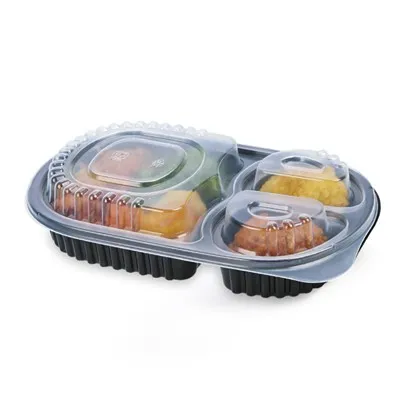
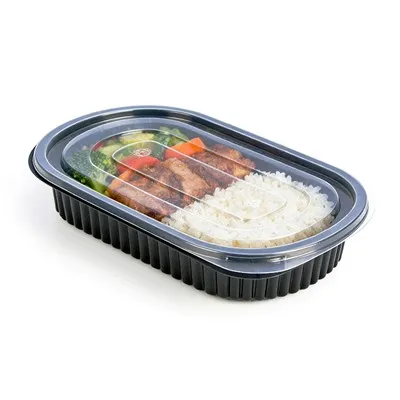
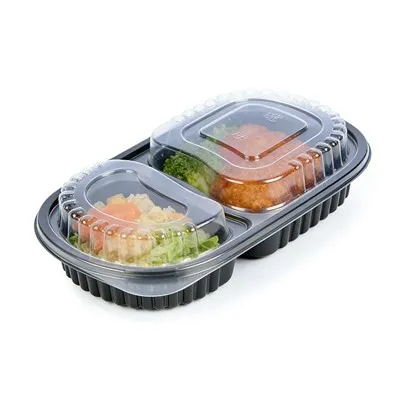
YANGRUI'S Products




2. Manufacturing Cost Efficiency
PP disposable plastic containers are produced using highly efficient injection molding and thermoforming processes. These production systems operate at high speed with low defect rates.
PLA requires more controlled processing conditions, including tighter temperature management and lower tolerance for thermal variation during molding. This increases:
- Energy consumption per unit
- Production rejection rates
- Machine calibration complexity
Industry estimates suggest PLA manufacturing costs can be 10%–25% higher than PP due to these process constraints.
3. Hidden Operational Costs in Foodservice
 Beyond raw material pricing, foodservice operators must consider hidden operational costs:
- Need for double packaging for heat resistance
- Increased breakage or deformation during transport
- Limited microwave compatibility
For example, PLA containers typically soften above 60°C, while PP containers remain stable up to 120°C. This means PLA often requires additional protective packaging or reduced use cases, increasing total system cost by an estimated 10%–20% in delivery operations.
III. Performance Comparison: Why Functionality Determines Market Preference
In disposable plastic container applications, performance is not a secondary factor-it directly determines operational feasibility.
1. Temperature Resistance
PP: -20°C to 120°C
PLA: 0°C to ~60°C
This difference is critical in foodservice logistics. PP supports a full cold-to-hot supply chain, including:
- Frozen meal storage
- Refrigerated transport
- Microwave reheating
PLA is limited to low-heat or room-temperature applications, restricting its usability in fast-food and delivery markets.

2. Microwave Compatibility
PP containers are microwave-safe under standard heating cycles (2–5 minutes) without structural deformation. PLA containers may warp, soften, or lose structural integrity under similar conditions.
This makes PP significantly more suitable for modern delivery ecosystems where reheating is expected.
3. Chemical Stability and Food Safety
 Food-grade PP containers are:
- BPA-free
- Plasticizer-free
- Resistant to oil, acid, and alkaline foods
PLA containers can degrade faster when exposed to high-fat or high-temperature foods, reducing their structural reliability in real-world restaurant use.
IV. PP vs PLA in Real Foodservice Applications
The adoption pattern of PP disposable plastic containers is strongly linked to real-world usage scenarios rather than theoretical environmental benefits.
1. Takeout and Delivery Platforms
Food delivery platforms require packaging that can withstand:
- Long transportation times
- Temperature fluctuations
- Mixed food types (soups, fried foods, sauces)
PP performs better because it maintains structural integrity under pressure and heat variation.
Industry data from North American food packaging markets suggests that PP accounts for approximately 70%–85% of disposable food containers used in delivery applications.
2. Chain Restaurants and Fast Food Operations
Chain restaurants prioritize:
- Standardization
- Cost control
- Bulk procurement efficiency
PP disposable plastic containers meet these requirements due to low unit cost and stable supply chain availability.
3. Frozen and Prepared Food Industry
Frozen food applications require materials that can withstand -18°C storage conditions and rapid temperature transitions.
PP is more resistant to cracking under cold stress compared to PLA, making it more suitable for frozen meal packaging systems.

V. Environmental and Recycling Considerations: The Evolving Role of PP
1. Industrial Composting Limitations of PLA
PLA requires industrial composting conditions:
- Temperature: ~58°C
- Controlled humidity
- Specific microbial activity
Without these conditions, PLA degradation can take significantly longer than expected, often behaving similarly to conventional plastics in landfill environments.
2. PP Recycling Progress
 PP recycling systems are improving globally:
- Global PP recycling rate increased from 23.3% to 29.6% (plastic circular economy reports)
- Recycled PP costs approximately 20%–30% less than virgin PP
- European recycling systems show annual growth of 3%–5%
This indicates that PP is increasingly integrated into circular economy models rather than remaining a linear waste material.
3. Lifecycle Perspective
When evaluated across a full lifecycle:
- PP: recyclable, durable, widely collected
- PLA: compostable under limited conditions, infrastructure-dependent
This shifts the sustainability discussion from material type to system capability.
VI. Economic Decision Logic in Foodservice Procurement
Foodservice businesses do not choose packaging based on material ideology. They choose based on operational economics.
Three dominant decision factors explain PP preference:
1. Total Cost Advantage
PP disposable plastic containers are generally 15%–35% cheaper per unit compared to PLA equivalents. In high-volume operations, this difference scales significantly.
2. Operational Flexibility
PP supports a wide range of applications:
- Hot food
- Cold storage
- Microwave reheating
- Oil-heavy dishes
PLA does not consistently support all these conditions.
3. Supply Chain Reliability
PP benefits from a global petrochemical infrastructure with over 50 years of optimization. PLA supply chains are more concentrated and sensitive to agricultural output and regional production capacity.


VII. Market Reality: Why PP Still Dominates Disposable Plastic Containers
Despite growing environmental awareness, PP remains dominant in global foodservice packaging because it aligns with the operational reality of restaurants.
Key reasons include:
- Lower procurement cost
- Higher temperature resistance
- Better mechanical durability
- Mature recycling infrastructure
- Predictable supply chain
Even as sustainability trends evolve, the transition away from PP is gradual rather than disruptive, primarily because foodservice systems prioritize reliability and cost control over material ideology.
VIII. Future Outlook: Will PLA Replace PP in Disposable Containers?
In the medium term (5–10 years), PP is expected to remain the dominant material in disposable plastic containers due to its cost and performance advantages.
However, long-term trends suggest:
- Expansion of PP recycling systems
- Development of bio-based PP alternatives
- Hybrid packaging systems combining recycled PP and biodegradable materials
Rather than a full replacement, the market is more likely to evolve toward material diversification.

IX. Conclusion: The Core Reason Foodservice Prefers PP
The preference for PP disposable plastic containers over PLA is not driven by a single factor but by a combination of economic and operational realities:
- PP costs 15%–35% less per unit
- PP withstands -20°C to 120°C temperature range
- PP integrates into existing global supply chains
- PP supports high-volume, high-speed foodservice operations
PLA offers environmental branding advantages, but its higher cost and limited performance range restrict its widespread adoption in commercial foodservice systems.
In practical terms:
PP is the cost-optimized, performance-stable solution for disposable plastic containers in modern foodservice logistics.

Frequently Asked Questions (FAQ)
Q1: Is PLA more environmentally friendly than PP?
PLA is bio-based and can be composted under industrial conditions, but it requires around 58°C controlled environments. Without industrial composting systems, its real-world environmental advantage is limited.
Q2: Are PP disposable plastic containers safe for microwave use?
Yes. Food-grade PP containers are microwave-safe up to approximately 120°C and do not release harmful substances under standard heating durations of 2–5 minutes.
Q3: Why is PLA more expensive than PP?
PLA production depends on agricultural feedstocks and more complex processing systems, resulting in 15%–35% higher costs compared to PP.
Q4: What is the main disadvantage of PLA containers in food delivery?
PLA has lower heat resistance (around 60°C), making it unsuitable for hot food delivery and microwave reheating scenarios common in foodservice.
Q5: Will PP be replaced by PLA in the future?
Unlikely in the short term. PP remains dominant due to cost efficiency and infrastructure maturity, while PLA adoption is limited by cost and performance constraints.
X. Welcome to Huizhou Yangrui Printing & Packaging Co., Ltd.
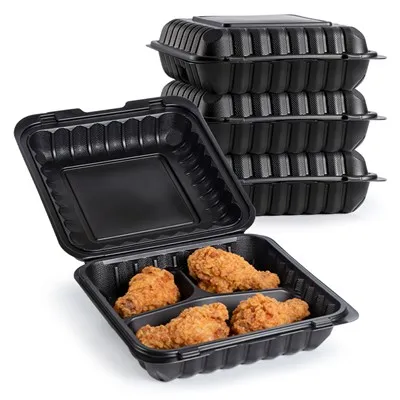 Huizhou Yangrui Printing & Packaging Co., Ltd. is a professional manufacturer specializing in the research, development, production, and global distribution of food-grade packaging products, with a core focus on PP disposable plastic containers and related food packaging solutions for restaurant combo meals, meal prep, catering, supermarket ready meals, and food delivery take out packaging.
YANGRUI operates an integrated production system covering material selection, mold development, thermoforming molding, quality inspection, and export packaging. This vertically integrated structure allows better control over product consistency, cost efficiency, and delivery reliability.
Core Product Portfolio
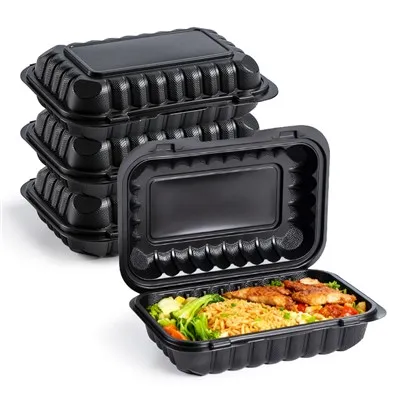
- PP disposable food containers (microwave-safe and leak-resistant series)
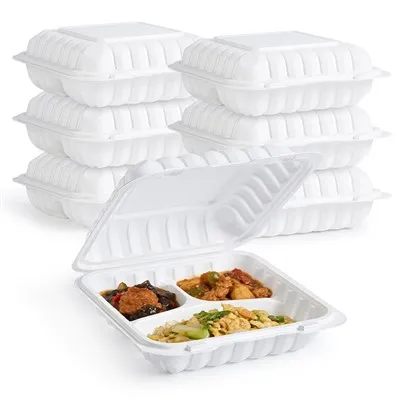
- Takeout lunch boxes with compartment designs
- Frozen food packaging containers
- Customizable OEM/ODM packaging solutions for restaurants and food brands
Manufacturing and Quality Standards
- Food-grade PP raw materials
- BPA-free formulation
- Heat resistance testing up to 120°C
- Oil and acid resistance performance verification
Production processes are designed to meet international food packaging requirements across North American, European, and Asian markets.
Market Coverage
- Restaurant chains and catering companies
- Food processing enterprises
- Takeout and delivery platform suppliers
- Wholesale packaging distributors
Its export-oriented operations support global demand for cost-effective and stable PP packaging solutions, especially in markets where price-performance balance is critical.
Strategic Positioning
In the competitive disposable packaging industry, Huizhou Yangrui positions itself as a cost-efficient and scalable PP packaging supplier, focusing on:
 Stable mass production capacity
- Competitive bulk pricing
- Flexible OEM customization
- Long-term supply chain reliability
This positioning aligns directly with global foodservice demand trends favoring PP-based packaging systems.