Introduction
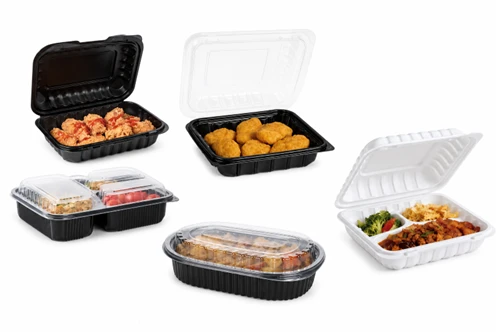
In our fast-paced urban lives, food takeout boxes have become an indispensable part of daily routines. From clear salad containers to white hinged-lid boxes for burgers and fries, and vibrant, colorful specialty packages, these seemingly simple containers represent a complex interplay of material science, food safety standards, and environmental considerations.
In September 2024, China implemented the updated national food safety standard for plastic materials and articles intended to come into contact with food (GB 4806.7-2023). This marks a more stringent regulatory phase for plastic food takeout boxes, imposing stricter requirements on materials, additive migration limits, and temperature usage labeling. Faced with a dazzling array of choices, consumers often wonder: Do different colors signify different safety levels? Which type is safer for reheating? Which is more environmentally friendly? This article will delve into the essential differences between clear, white, and colored food takeout boxes from four key dimensions-food safety, environmental performance, cost structure, and visual marketing-to provide a scientific guide for your choices.
II. Food Safety Dimension: The Deeper the Color, the Higher the Risk
2.1 Clear Food Takeout Boxes: The Safest Choice Due to High Purity
Clear food takeout boxes are typically made from high-purity, food-grade Polypropylene (PP), which is heat-resistant up to over 120°C, or Polyethylene Terephthalate (PET), which has a lower heat resistance (≤70°C). Their primary advantage lies in the high purity of the raw materials, often exceeding 99.5%, with no added color masterbatches, whitening agents, or fillers.
 This "additive-free" characteristic makes them the safest among the three types: there is no risk of colorant migration, the total migration of chemical substances is strictly controlled within the national standard limit of 10 mg/dm², and the transparent material allows for easy visual inspection of the food's condition. Clear PP boxes are microwave-safe and suitable for hot foods and soups, while clear PET boxes offer exceptional clarity but are best reserved for cold items like salads and fruits.
Consumers should be wary of "fake clear" boxes on the market that incorporate recycled materials. These often appear uneven in transparency, hazy, or have visible specks. Careful inspection during purchase is recommended.
2.2 White Food Takeout Boxes: The Double-Edged Sword of Whitening Agents
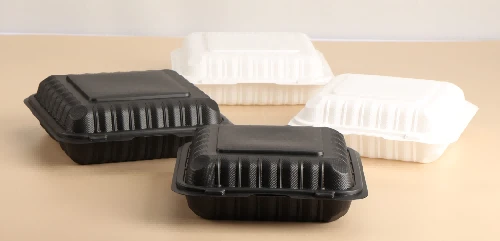
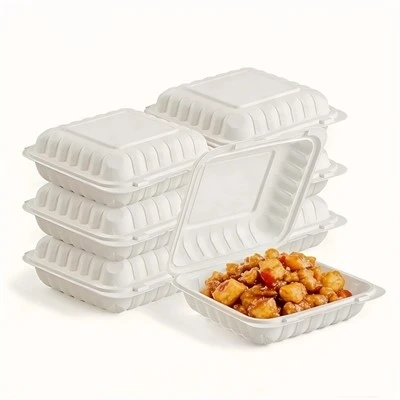
White food takeout boxes are based on food-grade PP but require the addition of whitening agents like titanium dioxide to achieve their bright appearance. High-quality products use food-grade whitening agents (typically 0.5%-2% addition), and their safety profile is close to that of clear boxes. In contrast, inferior products may blend in 30%-50% recycled material and excessively add industrial-grade fluorescent whitening agents to mask the impurities.
 The primary safety risks are twofold. First, the illegal addition of fluorescent whitening agents-some products exhibit a bright blue fluorescence under UV light, with detected amounts reaching 12.7 mg/kg. Long-term exposure to such substances may cause allergies. Second, the use of recycled materials introduces potential hazards like heavy metals and plasticizers. When selecting white boxes, avoid those with an unnaturally bright, fluorescent sheen and request test reports for whitening agents used.
2.3 Colored Food Takeout Boxes: Hidden Dangers from Color Masterbatches
Colored food takeout boxes carry the highest safety risks. Their color is achieved entirely through color masterbatches. High-quality products use food-grade masterbatches that comply with the GB 9685 standard, maintaining raw material purity above 98%. Conversely, low-quality products use industrial-grade masterbatches combined with 100% recycled material, leading to significant hazards.
The main risks include: heavy metal contamination-industrial masterbatches may contain lead, cadmium, mercury, etc., which can migrate, especially when in contact with hot or acidic foods; and azo dye decomposition, which can potentially produce carcinogenic primary aromatic amines. Darker colors generally require more masterbatch, increasing the risk of migration. It's best to avoid purchasing colored boxes if possible. If necessary, opt for lighter, uniformly colored ones, request proof of food-grade masterbatch compliance, and perform a simple wet wipe test upon arrival-reject the product if any color rubs off.


III. Environmental Performance Comparison: Clear Boxes Hold the Highest Recycling Value
3.1 Ease of Recycling
The large-scale recycling rate for plastic food takeout boxes in China is only about 5%. Color is a critical factor influencing recyclability:
- Clear food takeout boxes are the easiest to recycle and are favored by the recycling market. Pure PP clear boxes can fetch a recycling price of 2-3 RMB per kilogram due to their uniform color (easy sorting) and pure material (wide applicability). However, grease and food residue from their use as takeout containers require cleaning before recycling, adding to the processing cost.
- White food takeout boxes have a medium difficulty in recycling. High-quality white boxes can sometimes be recycled alongside clear ones but command a slightly lower price. Low-quality products containing industrial whitening agents can contaminate the recycled plastic stream. If mixed with other materials, sorting becomes more difficult, further reducing their recycling value.
- Colored food takeout boxes are the most difficult to recycle and have the lowest recycling rates. Dark colors, especially black, interfere with optical sorting equipment, making material identification impossible. The color masterbatch affects the color of the recycled plastic, limiting its use to low-value dark products. Furthermore, colored boxes are often made from complex material blends that are hard to separate. In the United States, black rigid plastic is almost never accepted by residential recycling programs.


3.2 Degradation and Environmental Impact
 It's crucial to understand that recyclable does not equal biodegradable. Traditional plastics like PP and PET, regardless of color, can take hundreds of years to decompose in the natural environment. The impact of color on degradation is primarily indirect: darker plastics absorb more UV radiation, which may slightly accelerate their physical breakdown into microplastics (not true decomposition), thereby exacerbating microplastic pollution. Certain organic pigments might also inhibit microbial activity, hindering any potential biodegradation process.
Considering the full lifecycle, clear boxes generally require less energy to produce and generate less waste. The production of white and colored boxes involves additional steps and chemicals, increasing their environmental footprint. After disposal, clear boxes are more likely to enter the recycling stream, whereas most colored boxes end up in landfills or incinerators.
IV. Cost Structure Analysis: Clear Boxes Offer the Best Value
4.1 Raw Materials and Production Processes
Raw material costs typically account for 60%-70% of the total cost:
 Clear food takeout boxes use high-purity PP or PET resin (priced around 8,000-12,000 RMB/ton) with no additive costs and raw material purity ≥99.5%. Their production process is simple, efficient, and yields low rejection rates (under 3%).
- White food takeout boxes incorporate 5%-10% food-grade titanium dioxide (priced around 20,000-30,000 RMB/ton) into the PP resin, adding a mixing step and resulting in rejection rates of about 5%-8%. Low-quality products using recycled materials can reduce costs by 30%-50%, but pose significant safety risks.
- Colored food takeout boxes have the most complex raw material composition: base resin (70%-85%) and color masterbatch (15%-30%). Food-grade masterbatch can cost 50,000-100,000 RMB/ton, while industrial-grade is only one-third of that price. Darker colors require more masterbatch, increasing costs. The production process is complex, involving color matching, risk of color variation, and frequent equipment cleaning, leading to high rejection rates of 10%-15%.
4.2 Market Price Differences (Example: 250ml container)
 Clear PP Box: 0.15 - 0.25 RMB/unit (cost 0.10-0.12 RMB, gross margin 30%-40%)
- Clear PET Box: 0.18 - 0.30 RMB/unit
- Premium White Box: 0.18 - 0.28 RMB/unit (cost ~0.11 RMB, margin 35%-50%)
- Low-Quality White Box: 0.12 - 0.18 RMB/unit (cost ~0.07 RMB, margin 50%-60%, but quality is unguaranteed)
- Standard Colored Box: 0.25 - 0.35 RMB/unit (cost 0.13-0.15 RMB, margin 45%-50%)
- Dark Colored Box: 0.30 - 0.45 RMB/unit (cost ~0.15 RMB)
- Special Effect Colored Box: 0.50 - 1.00 RMB/unit (margin 60%-70%)
In summary, clear boxes offer the best price-to-performance ratio, while colored boxes provide higher profit margins but come with greater risks.
V. Visual Marketing and Consumer Behavior
5.1 The Impact of Color on Purchasing Decisions
Color can influence a consumer's first impression of a product within 90 seconds, with 62%-92% of that assessment being based on color alone.
Clear food takeout boxes offer significant visual advantages:
 They eliminate information asymmetry, allowing consumers to see the food's condition directly, which builds trust.
- This transparency can increase order rates by 15%-20% and repurchase rates by 8%-12%.
- They are particularly effective for visually appealing foods like sushi, salads, and desserts, making them ideal for sharing on social media.
White food takeout boxes convey a sense of cleanliness, hygiene, and simplicity. They are versatile, pairing well with any food color, and are suitable for fast food, light meals, and major chains like McDonald's and Starbucks.
Colored food takeout boxes leverage color psychology:
- Warm colors (red, orange, yellow) can stimulate appetite, making them suitable for fast food and kids' meals.
- Cool colors (green, blue) convey health and freshness, fitting for salads and seafood.
- Black, gold, and silver are associated with premium quality, ideal for high-end brands or limited-edition products.
5.2 Consumer Preferences and Selection Advice
Young consumers (18-35) are highly influenced by appearance (67.3% cite it as important), prefer clear or vibrant colors, and are willing to pay a 10%-20% premium for attractive packaging.
Middle-aged consumers (36-55) prioritize practicality and value, favoring white or clear boxes.
Senior consumers (56+) focus on functionality like heat retention and tend to prefer traditional white boxes.
 Selection by Food Type:
- Fresh/raw items (sushi, fruit): Clear PP or PET to showcase freshness.
- Hot foods (stir-fries, soups): Clear or white PP for heat resistance and safety.
- Cold foods (salads, desserts): Clear PET for maximum clarity.
- Kids' meals: Can use colored boxes, but must verify food-grade masterbatch.
Selection by Delivery Distance:
- Short distance: Any type is acceptable, but clear is preferable.
- Medium/long distance (30-60 mins): Prioritize white or clear PP for better sealing and heat retention.
VI. Comprehensive Comparison and Selection Guide
6.1 Core Differences Between the Three Types
| Dimension | Clear Boxes | White Boxes | Colored Boxes |
|---|---|---|---|
| Food Safety | High (Purity ≥99.5%, no additives) | Medium (Contains whitening agents, requires compliance) | Low (Risk of color masterbatch migration) |
| Heavy Metal Risk | Extremely Low | Low (for compliant products) | High (industrial grades may exceed limits) |
| Recycling Value | High (2-3 RMB/kg) | Medium (0.5-1 RMB/kg) | Low (0.2-0.5 RMB/kg) |
| Cost (250ml) | 0.10-0.12 RMB | 0.11-0.15 RMB | 0.13-0.20 RMB |
| Market Price | 0.15-0.25 RMB | 0.18-0.35 RMB | 0.25-0.50 RMB |
| Order Rate Impact | +15%-20% | +5%-10% | +10%-15% |
| Best Use Cases | Fresh food, light meals, premium dining | Fast food, chain restaurants | Kids' meals, holiday/limited editions |

6.2 Key Selection Recommendations
- Food Safety First: Clear boxes are the safest and best daily choice. If selecting white or colored boxes, always verify the use of food-grade additives, request test reports, and avoid suspiciously cheap products.
- Environmental Responsibility: Prioritize clear boxes to support higher recycling value. Clean used containers before disposal and support brands using biodegradable materials like PLA.
- Balancing Cost and Marketing: Clear boxes offer the best value, combining safety with visual appeal. Colored boxes suit specific marketing needs (e.g., kids' meals) but require strict safety checks. White boxes are a reliable choice for fast-food chains.
- Risk Avoidance: Be wary of boxes that are unnaturally bright white, have uneven color, bleed color when wiped, or have strong odors. Avoid using colored boxes for hot, acidic, or oily foods. Do not reuse single-use containers.
VII. Conclusion and Future Outlook
 The differences between clear, white, and colored food takeout boxes fundamentally boil down to a trade-off between purity and additives. Clear boxes gain safety and environmental advantages through "purity." White boxes seek a balance between aesthetics and safety. Colored boxes trade higher visual appeal for potentially greater risks.
Looking ahead, stricter regulations like GB 4806.7-2023 will continue to drive industry consolidation. Technological innovations are on the horizon:
- Biodegradable Materials: The cost of materials like PLA and PHA is decreasing (domestic biobased material capacity is projected to reach 820,000 tons/year by 2025, with PLA costs down 41% from 2020).
- Chemical Recycling: Holds promise for true closed-loop plastic recycling.
- Smart Packaging: Features like temperature-sensitive color-changing indicators are beginning to be explored.
 Consumer preferences are also evolving. Younger generations show increasing concern for environmental and food safety issues and are willing to pay a premium for sustainable products. The "appearance economy" continues to drive packaging design as a key brand differentiator.
Ultimately, the choice of which food takeout box to use involves weighing food safety, environmental responsibility, cost, and brand identity. Through the combined efforts of governments, businesses, and consumers, the food packaging industry can move towards a safer, more sustainable, and more innovative future.