


I. Introduction
Recent fluctuations in plastic raw material prices have directly impacted the cost of downstream disposable polypropylene (PP) togo boxes for restaurants. In the US market, disposable PP togo boxes for restaurants are widely used in food delivery, food retail, home storage, and airline catering due to their advantages such as high temperature resistance, high safety, and significant cost-effectiveness. Their cost structure is deeply linked to the price of PP raw materials. This article focuses on the fluctuations in US PP raw material prices from September to December 2025, and analyzes in depth their impact mechanisms and specific extent on the cost of disposable PP togo boxes for restaurants, providing a reference for industry cost management.
II. Product Positioning and Cost Structure of Disposable PP Togo Boxes for Restaurant
2.1 Product Characteristics and Market Positioning
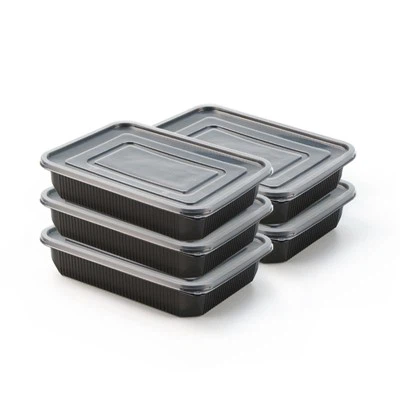
Disposable PP togo boxes for restaurants, made from polypropylene as the core raw material through injection molding or thermoforming, dominate the US market. Their core advantages are reflected in four aspects:
- High temperature resistance: Can withstand temperatures from -20℃ to 130℃, and remains undeformed after 30 minutes of steam sterilization at 121℃, suitable for microwave heating and cold storage.
- Safety: The only plastic certified by FDA/GB 4806.7 for food contact, with no harmful substances released at high temperatures and no plasticizer leaching, meeting food packaging safety requirements.
- Functional design: Excellent sealing and leak-proof performance, with a lid stretch rate of 500%, and a leakage rate of less than 0.3% for soup takeout, enhancing the consumer experience.
- Cost-effectiveness: The unit price is 0.12-0.2 yuan/piece (approximately 0.016-0.027 US dollars/piece), which is three times the price of paper togo boxes for restaurants, but only 50% of the cost of polylactic acid (PLA) togo boxes for restaurant, suitable for price-sensitive markets such as fast food and takeout in the US.
From a market positioning perspective, US disposable PP togo boxes for restaurants exhibit three main characteristics:
- Diversified application scenarios: The US uses nearly 1 trillion disposable togo boxes for restaurant annually, with the catering industry's annual procurement cost reaching US$24 billion. PP togo boxes for restaurant cover diverse scenarios such as hamburger packaging and multi-compartment Chinese food takeout. Consumer habits have a significant impact: In the "low-price, high-frequency" model of the US fast food and coffee industries, even small changes in packaging costs have a huge impact on profits. For example, for a restaurant chain that uses tens of millions of containers annually, an increase of just a few cents in cost per container translates to tens of millions of dollars in additional expenses.
- Regional regulations vary significantly: Some states strictly restrict the use of disposable plastics, requiring the use of recyclable paper bags, directly affecting the regional market share and cost structure of PP togo boxes for restaurants.


2.2 Typical Cost Structure Analysis
The cost of PP togo boxes for restaurant is composed of multiple components, with the proportion and specific calculations of each part as follows (based on November 2025 Chinese market prices, exchange rate 1 USD = 7.3 RMB):
| Cost Item | Proportion Range | Cost per Container (RMB) | Cost per Container (USD) | Core Components and Calculation Basis |
| Raw Material Cost | 55-65% | 0.21-0.25 | 0.029-0.034 | The largest proportion; PP resin accounts for 70% of material costs. Taking a 26-gram container as an example, with PP raw material at 8 RMB/kg and color masterbatch at 10 RMB/kg (2% added), the material cost per container is approximately 0.21 RMB. |
| Production & Processing Costs | 20-40% | 0.08-0.15 | 0.011-0.021 | Includes equipment depreciation, labor, and utilities. For a factory producing 2 million 650ml containers per month, labor costs account for ≤12%; an 80T injection molding machine (100,000 RMB) depreciated over 5 years results in a depreciation cost of 0.003 RMB per container. |
| Mold Amortization Cost | 5-12% | 0.02-0.05 | 0.003-0.007 | Mold prices range from 30,000 to 150,000 RMB, with a lifespan of 300,000 to 500,000 cycles. A 60,000 RMB mold (400,000 cycle lifespan) has an amortization cost of 0.015 RMB per container. |
| Post-processing Costs | 5-15% | 0.02-0.06 | 0.003-0.008 | Includes trimming, printing, and packaging. Printing: 0.10-0.30 RMB/unit, assembly: 0.05-0.20 RMB/unit, packaging: 0.05-0.10 RMB/unit. |
| Logistics and Warehousing Costs | 1-10% | 0.01-0.04 | 0.001-0.006 | Logistics cost for a box of 200 meal boxes (6 kg) is 5 RMB, approximately 0.025 RMB per box. |
| Other Costs | 5-10% | 0.02-0.04 | 0.003-0.006 | Includes indirect costs such as management, quality inspection, and R&D. |
| Total Cost | 100% | 0.36-0.54 | 0.049-0.074 |
Note that costs in the US market are 30-50% higher than the above estimates due to higher labor, energy, and environmental compliance costs; company size also affects costs. Factories with a monthly output of 2 million units have a gross profit margin of 28-35%, while high-end custom manufacturers can achieve a gross profit margin of 40-45% (material costs account for up to 65%).

III. Analysis of US PP Raw Material Price Fluctuations (September-December 2025)
3.1 Price Trends
In the second half of 2025, the US PP market price showed a trend of "weak decline - stabilization - slight rebound," with the following characteristics in each stage:
September: Continued weakness: Affected by oversupply and weak demand in August, the price fell from US$1080/ton at the beginning of the month to US$1070/ton at the end of the month, a decrease of 0.9% month-on-month; the average price in the third quarter was US$1068/ton, with a quarterly decrease of 3.75% (according to ChemAnalyst data).
October: Continued downward trend: North American PP prices were US$1.11/kg (Business Analytiq index), a 2.6% decrease from September, falling to US$1055/ton by the end of the month (a 0.9% decrease month-on-month). Key reasons: weak downstream demand from construction, automotive, and packaging sectors; impact of low-priced Asian imported PP (CFR WCSA price US$910-980/ton) on the market; sufficient propylene monomer supply and reduced cost pressure.
November: Stabilized at a low level: Prices fell slightly to US$1045/ton by the end of the month (a 0.5% decrease month-on-month), with the rate of decline slowing. Although a €25/ton decrease in propylene contract prices dragged down polymer prices, manageable inventory levels and production cuts by some manufacturers mitigated the price decline (according to Plastics Information Europe).
Early December: Slight rebound: Supported by rising crude oil prices and year-end stocking demand, prices rebounded to US$1050/ton, a 0.5% increase month-on-month (according to Tai Hing Nylon report).
Note: The above are average market prices. Actual transaction prices are affected by trading methods and payment terms, and prices vary for different grades of PP (e.g., injection molding homopolymer PP is 3-5% lower than impact copolymer PP).




3.2 Key Factors Affecting Price Fluctuations
3.2.1 Supply-Demand Imbalance (Core Factor)
In the third quarter of 2025, the US PP market shifted from a supply shortage to a surplus: concentrated commissioning of new capacity (especially large-scale integrated projects) led to a surge in supply; downstream demand from construction, automotive, and packaging sectors was weak; and trade policy restrictions reduced exports to Asian and other markets, exacerbating the supply-demand imbalance.
3.2.2 Raw Material Cost Transmission
Propylene monomer accounts for 70-80% of PP production costs. In the third quarter of 2025, the average price of polymer-grade propylene in the US was US$739.6/ton, and its price fluctuations directly affected PP costs. For example, a propylene plant malfunction at the end of August led to a supply shortage, causing a short-term rebound in PP prices. 3.2.3 Trade Policy Impacts
In 2025, several US policies reshaped the PP market: a 10% tariff on Chinese plastic resins and a 15% tariff on Middle Eastern petrochemical raw materials increased import costs and protected domestic production; reciprocal tariffs on PET resins from nine Asian countries indirectly affected the competitive landscape of plastic packaging; the US relies on China for 70% of its plastic machinery and 50% of its molds, and increased tariffs on these items raised equipment costs and suppressed PP demand.
3.2.4 Seasonality and Inventory Factors
- Weakened seasonality: The traditional peak demand in the construction industry during September-October did not materialize (due to the sluggish real estate market), and year-end stocking demand in November-December (for food packaging to meet holiday needs) provided only weak support.
- Inventory fluctuations: Low inventory levels at the beginning of the third quarter led to short-term price increases due to restocking demand; subsequent oversupply and weak demand caused inventory levels to rise to over 30 days (normally 20-25 days), suppressing the upward price elasticity.

3.2.5 Substitutes and Financial Factors
- Competition from substitutes: Biodegradable togo boxes for restaurant are expanding at an average annual growth rate of 15.2%, and their market share will reach 54% by 2030 (38% in 2025). Strict environmental regulations in some regions restrict the use of PP togo boxes for restaurant, diverting demand away from PP.
- Financial factors amplifying volatility: Crude oil price fluctuations drove speculation in plastic futures, with a 30% increase in futures trading volume in the second half of 2025. Market sentiment and capital flows exacerbated PP price volatility (e.g., the decline in crude oil prices in October amplified the decline in PP prices).

IV. The Transmission Mechanism of PP Price Fluctuations on Togo Boxes for Restaurant Costs
4.1 Transmission Path and Influencing Factors
4.1.1 Direct Material Cost Transmission (Main Path)
Raw materials account for 55-65% of togo box for restaurant costs, and PP resin accounts for 70% of material costs. PP price fluctuations are immediately transmitted to costs. Calculations show that for every $100/ton increase in PP price, the material cost of a 26-gram togo box for restaurant increases by $0.0027, which is reflected in the next production cycle.
4.1.2 Production Efficiency and Technological Buffering
Production efficiency can partially offset raw material fluctuations: advanced injection molding processes increase raw material utilization from 95% to over 98%. When the PP price increases by 10%, the efficiency improvement can reduce the cost increase to about 7%; automated production lines and intelligent control increase the product pass rate from 95% to 99%. For every 1 percentage point increase in the pass rate, the unit cost decreases by 0.5%.
4.1.3 Inventory and Economies of Scale
- Inventory strategy: 60% of US togo box for restaurant companies use "first-in, first-out" inventory management, resulting in a cost transmission lag of 1-2 weeks; 30% use weighted average, with a lag of more than one month.
- Economies of scale: Companies with a monthly production capacity exceeding 10 million units have raw material procurement prices 5-10% lower than small and medium-sized enterprises; a $60,000 mold producing 10 million togo boxes for restaurant has a per-container amortization cost ($0.006) that is only 1/10 of that for producing 1 million units ($0.06).


4.2 Quantitative Analysis of Transmission
4.2.1 Basic Transmission Coefficient
Research shows that the cost transmission coefficient for US PP togo box for restaurant companies is 0.6-0.8 (a 1% change in PP price results in a 0.6-0.8% change in cost). The reason the coefficient is less than 1 is due to companies adjusting their product structure, fixed cost allocation, and market competition limiting cost pass-through. 4.2.2 Cost Impact of Different Fluctuation Amplitudes
Taking a single box cost of $0.06 and a transmission coefficient of 0.7 as an example, the impact of PP price fluctuations on costs is as follows:
| PP Price Fluctuation Amplitude | togo box for restaurant Cost Fluctuation Amplitude | Change in Single togo box for restaurant Cost (USD) |
| +10% | +7% | +0.0042 |
| +20% | +14% | +0.0084 |
| +30% | +21% | +0.0126 |
| -10% | -7% | -0.0042 |
| -20% | -14% | -0.0084 |
| -30% | -21% | -0.0126 |

4.2.3 Differences in Enterprise Scale
There are significant differences in transmission capabilities among enterprises of different sizes:
| Enterprise Size | Large Enterprises | Medium-sized Enterprises | Small Enterprises |
| Monthly Production Capacity | >10 million units | 1-10 million units | <1 million units |
| Bargaining Power | Strong (long-term contracts) | Medium (partial long-term procurement) | Weak (spot market procurement) |
| Raw Material Utilization Rate | >98% | 96-97% | 95% |
| Cost Transmission Coefficient | 0.6-0.65 | 0.7-0.75 | 0.8-0.85 |
| Core Advantages/Disadvantages |
Significant economies of scale, low fixed cost allocation, and strong cost absorption capacity |
Flexible transmission, but limited economies of scale | Fast cost transmission, but weak bargaining power and high fixed costs |


V. Quantitative Assessment of Price Fluctuation Impact
5.1 Specific Impact from September to December 2025
5.1.1 Price Fluctuations and Cost Changes
From early September to the end of November 2025, the price of PP (polypropylene) fell from US$1080/ton to US$1045/ton, a cumulative decrease of 3.2%. Based on a transmission coefficient of 0.7, the theoretical cost of togo boxes for restaurant should have decreased by 2.2%, but due to offsetting increases in other costs, the actual cost only decreased by 1.375%. The specific offsetting factors are as follows:
Energy costs increased by 5% (accounting for 8-10% of total costs), increasing costs by 0.4-0.5%;
Labor costs increased by 3% (accounting for 10-12% of total costs), increasing costs by 0.3-0.36%;
Some states require the addition of 30% recycled materials (recycled PP is 20-30% more expensive), increasing raw material costs by 2-3%, affecting total costs by 0.1-0.15%;
The depreciation of the RMB against the US dollar by 2% increased costs for companies relying on raw materials imported from Asia by 2%.


5.1.2 Impact on Different Products and Companies

- Product type differences: The cost savings for a standard single-compartment togo box for restaurant (26 grams) were US$0.0009 per unit, while a four-compartment container (60 grams) saved US$0.0021 per unit; a factory producing 2 million standard single-compartment containers per month saved US$1800 per month.
- Company size differences: Among companies producing 2 million togo boxes for restaurant per month, large companies saved US$1080 per month (a 0.15% cost reduction), medium-sized companies saved US$1260 per month (a 0.175% reduction), and small companies saved US$1440 per month (a 0.2% reduction) – small companies had a larger relative reduction, but a lower absolute amount.
5.1.3 Regional Market Differences
Different regions in the United States experienced different cost changes due to regulations and supply chain influences:
- California: High environmental requirements (30% recycled materials), resulting in only a 0.9% cost reduction;
- Texas: Concentration of the petrochemical industry, lower transportation costs, resulting in a 1.5% cost reduction;
- New York: High labor and logistics costs, resulting in a 1.2% cost reduction;
- Florida: Seasonal demand (winter tourist season), resulting in a 1.3% cost reduction.
5.2 Comparison with Historical Periods
5.2.1 Comparison with the same period in 2024
From September to December 2024, PP prices increased by 6.1% (from $1150 to $1220/ton), resulting in a 4.3% increase in togo box for restaurant costs (with a transmission coefficient of 0.7); in the same period of 2025, costs decreased by 1.375%, a difference of 5.7 percentage points. For a company with annual sales of $10 million, this translates to cost savings of approximately $570,000 in the same period of 2025.
5.2.2 Comparison with the same period in 2023
From September to December 2023, PP prices fluctuated by ±1.5%, while in the same period of 2025, the fluctuation was 3.2%, doubling the volatility and increasing the difficulty of cost management for businesses; furthermore, the seasonal price increase pattern in the fourth quarter of 2023 (stockpiling at the end of the year) is absent in 2025, reflecting that fundamental factors (supply and demand, policies) have a greater impact on prices than seasonality.

5.2.3 Insights from Historical Volatility Trends
Before 2020, the average annual fluctuation of US PP prices was less than 10%, but after 2021, it rose to 15-35%, with increased volatility forcing companies to optimize cost management.
The volatility in 2025 shows a "step-down" trend, which is clear, and companies can respond by adjusting inventory (reducing inventory during price declines) and signing long-term contracts (locking in costs).
Regional regulatory differences are widening, requiring differentiated cost strategies for different states (e.g., California focusing on recycled material cost control, Texas focusing on supply chain efficiency).


Ⅵ. Comprehensive Impact Assessment
The impact of US PP price fluctuations on the cost of disposable PP togo boxes for restaurant from September to December 2025 can be summarized in three points:

- Overall impact is limited but requires careful consideration: A 3.2% decrease in PP prices theoretically leads to a 2.2% decrease in costs, but after offsetting increases in energy, labor, and environmental costs, the actual cost decrease is only 1.375%. Companies need to focus on comprehensive management across multiple cost dimensions. The impact of the price fluctuations was significantly differentiated: large enterprises, relying on scale and long-term contracts, experienced the smallest cost reduction (1.05%) but had strong risk resistance; small enterprises saw the largest cost reduction (1.4%) but had lower absolute profits and weaker bargaining power; and regions with strict environmental regulations, such as California, experienced a cost reduction of only 0.9%, lower than Texas (1.5%).
- Transmission lag and response space: The average cost transmission lag was 15-20 days (10-14 days for the "first-in, first-out" model, and 25-30 days for the weighted average). Companies can mitigate the impact of price fluctuations by optimizing inventory strategies, improving production efficiency (such as raw material utilization and pass rate), and signing regional supply contracts.
Overall, while this PP price fluctuation did not bring about a drastic cost shock to the food packaging industry, it highlighted the industry trends of "multiple cost factors" and "widening regional differences," prompting companies to transform towards more refined cost management and differentiated operations.


