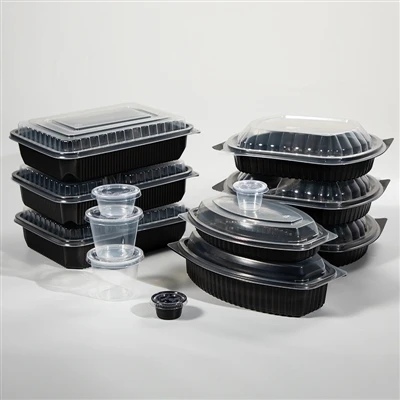
"Is PP banned in Australia now?" is the wrong question, and it's the one we keep getting asked by buyers who skimmed a headline instead of their own state's actual regulation. The honest answer is messier and more useful: nothing in the 2026 wave of Australian plastic rules bans polypropylene outright. What changed is narrower - specific exemptions that used to let plain PP slide through certain use cases are closing, state by state, on different dates, with different fine print.
That distinction matters for anyone sourcing containers into Sydney, Perth, Adelaide, or Brisbane right now, because the actual compliance gap isn't "switch everything to bagasse" - it's knowing which exemption in your state just ended and whether your current container falls on the wrong side of it.
1. What Actually Changed in 2026 (Not What Headlines Said)
Australia doesn't run one national plastic ban - it runs eight separate state and territory regimes, each phasing out different items on different timelines, loosely coordinated under the federal National Plastics Plan framework that set the original direction back in 2021 (dcceew.gov.au). 2026 was described by industry trackers as a "wave" because several states hit new milestones in the same year, not because one unified law took effect (mitti.com).
Two specific, verifiable changes stand out for PP container buyers:
Western Australia had been allowing an exemption for plastic packaging used with hot, soupy, or liquid food - a carve-out that mattered a lot for soup containers, noodle bowls, and anything with sauce. That exemption ended August 31, 2026 (plasticsbanwa.com.au). After that date, the kind of plain PP container that used to be fine for wet hot food in WA needs a second look.
South Australia didn't ban PP containers directly, but it closed a different loophole: mixed packaging combining a conventional PP or PET lid with a compostable base is no longer permitted for ready-to-eat takeaway food, and - separately - any container marketed as compostable must now carry certified labelling showing exactly what composting environment it's designed for (home vs. industrial), effective March 1, 2026 (replacethewaste.sa.gov.au). A plain PP container was never claiming to be compostable in the first place, so this rule mostly hits businesses that were trying to have it both ways with hybrid packaging.
Penalties are not symbolic - Mitti's 2026 roundup cites fines reaching up to $550,000 for non-compliance, and notes that "not knowing the rules isn't a valid excuse" in regulator guidance (mitti.com).
2. State-by-State Snapshot for PP Buyers
Here's the practical breakdown, organized by what it means for someone sourcing standard PP hinged containers rather than by legal text:
Western Australia - The exemption for hot/soupy/liquid food packaging ended August 31, 2026. If you're supplying soup, noodles, curry, or anything liquid-heavy into WA, plain PP packaging for that specific use case needs re-checking against current rules - this is the state where the ground shifted most recently and most specifically for PP.
South Australia - No outright PP ban, but two rules now apply: mixed PP-lid-plus-compostable-base packaging is out for ready-to-eat takeaway, and any product claiming compostability needs certified labelling from March 1, 2026 onward. Standard PP hinged containers that aren't marketed as compostable aren't directly targeted by the labelling rule - the risk is specifically around hybrid or ambiguous packaging claims.
New South Wales and Queensland - Earlier phases targeted plastic plates, cutlery, and specific single-use items attached to packaged food; transition periods for some of these categories closed by early 2025, per the Circular Blueprint state guide (circularblueprint.com). These rules were largely already in effect before 2026 rather than newly introduced this year.
Victoria and ACT - Also enforcing single-use plastic plate and cutlery bans under their own timelines, consistent with the broader national direction but - like NSW and QLD - not introducing a new PP-container-specific rule in 2026 itself based on currently available sources.
What this table doesn't cover: state rules change on their own schedules and sometimes get amended after initial announcement. Treat this as a starting point for your own compliance check with a customs broker or local counsel, not a substitute for one.
3. The Real Question: Does This Affect Your Specific Order?
Three questions determine whether any of this actually touches your current PP container order:
Is the end-use wet, hot, or liquid food, and is it going into Western Australia specifically? If yes, this is the one change in 2026 worth checking against your exact product and delivery destination - the exemption that used to cover this ended August 31.
Are you marketing any part of your packaging line as compostable, biodegradable, or eco-friendly, anywhere in Australia? If yes - even if the base container is plastic - South Australia's labelling requirement is relevant, and it's worth checking whether your claims need certified backing.
Is your container a standard PP hinged clamshell for dry or room-temperature food, sold outside WA's wet-food exemption gap? If yes, none of the specific 2026 changes identified above appear to target this use case directly based on currently published guidance.
4. Where PP Still Makes Sense, and Where to Add a Bagasse Option
None of this is an argument that PP containers are becoming unusable in the Australian market - the changes are narrow and use-case specific, not a blanket phase-out. For the bulk of dry and room-temperature takeout - sandwiches, baked goods, salads, and most restaurant-style portions - a standard PP hinged container remains unaffected by anything identified in this update.
Where it's worth reconsidering is the narrower wet-food gap in WA specifically, or anywhere a customer is actively asking for a compostable claim. That's the scenario where keeping a sugarcane bagasse container option alongside your standard PP line gives you a direct answer instead of a scramble - bagasse is naturally compostable without needing to retrofit a labelling claim onto a plastic base, and it sidesteps the WA wet-food exemption question entirely since it was never relying on that exemption in the first place.
A buyer running both lines side by side - PP for the bulk of dry-food volume, bagasse for the specific wet-food-into-WA or compostability-claim scenarios - covers both the current rules and the direction state regulators have been moving for several years now.
5. What to Ask Your Supplier Before Your Next Australia-Bound Order
- What's the end-use case for this specific container - dry food, or hot/wet/liquid food - and which Australian state is it shipping to? The WA exemption change only matters for one specific combination of those two answers.
- Are we making any compostability or eco-friendly claim anywhere in the packaging or marketing for this order? If yes, that claim needs to be backed by certification that would hold up under SA's labelling rule, regardless of which state the product actually ships to - claims made nationally can still be checked against the strictest applicable state rule.
- Does our current PP container line need a bagasse counterpart for specific markets or use cases, rather than a wholesale material switch? This is usually the more cost-effective framing than treating every order as needing to move off PP entirely.
- What's the lead time difference between reordering standard PP and adding a bagasse SKU to an existing order? Knowing this before a compliance deadline hits gives you room to transition gradually rather than under pressure.
Frequently Asked Questions
Is polypropylene (PP) packaging banned across Australia in 2026?
No. Based on currently published state regulations, there's no nationwide ban on PP food containers as a material. What exists is a patchwork of state-specific rules, and the 2026 changes identified here are narrower than "PP is banned" - they target a specific wet-food exemption in WA and a compostable-labelling requirement in SA, not standard PP packaging generally.
If my container is already in transit or in a warehouse in Australia, does the new rule apply retroactively?
This is a legal compliance question specific to your contract and the exact regulation text, not something to infer from a general guide - check with the relevant state authority or a customs/compliance advisor for stock already in-market.
Does switching to bagasse automatically satisfy every state's compostability labelling rule?
Not automatically - South Australia's rule specifically requires certified labelling indicating the composting environment (home vs. industrial), so a bagasse product still needs the right certification and label, not just the right base material.
Are other Australian states expected to adopt similar wet-food exemption changes after WA?
Mitti's 2026 coverage notes that further changes are already planned for 2027 and 2028 (mitti.com), though specific details for other states weren't part of the sources reviewed for this article - this is worth monitoring rather than assuming will mirror WA exactly.
Why doesn't this article list every single banned item (straws, cutlery, bags, etc.)?
Because the focus here is specifically on what changed for PP food containers in 2026, for buyers sourcing that category - the broader single-use plastics list (straws, stirrers, cutlery, bags) has its own separate and mostly earlier timeline across these same states, and conflating the two makes it harder to see what's actually new.
Is there a single source that tracks all Australian state plastic rules in one place?
Not an official unified one - Australia's rules are state-administered, so the most reliable approach is checking each destination state's own environment department page directly, using third-party trackers like the ones cited in this article as a starting point rather than a final source.
Conclusion
The 2026 Australian plastic ban wave didn't close the door on polypropylene - it narrowed two specific exemptions that a subset of buyers were relying on. If you're not shipping hot or liquid food into Western Australia, and you're not making compostability claims you can't back with certification, the practical changes identified here likely don't touch your current PP order at all.
As a manufacturer running both PP and bagasse production lines, we'd rather walk a buyer through exactly which of these two changes applies to their specific shipment than let a vague headline push an unnecessary full material switch. Tell us your destination state and use case, and we'll tell you plainly whether anything here actually applies to your order →