Introduction
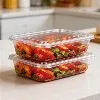
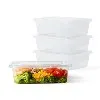
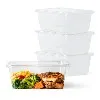
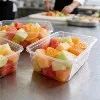
Food to go boxes are also known as takeaway containers, disposable food service containers, or carry-out packaging, have become indispensable to the global food service industry. These to go containers encompass a wide range of single-use packaging solutions designed for transporting and serving food outside traditional dining settings, including plastic food containers, paperboard food boxes, aluminum foil containers, and biodegradable alternatives.

The global market for food to go boxes has experienced unprecedented growth, reaching USD 2.16 billion in 2025 with projections to reach USD 3.70 billion by 2035, exhibiting a compound annual growth rate (CAGR) of 5.53%. This expansion reflects fundamental shifts in global food consumption, with over 58% of food orders now involving off-premise consumption across regions.
Understanding who uses food to go boxes is crucial for industry stakeholders, policymakers, and environmental advocates. This comprehensive analysis examines global usage patterns across different regions, user groups, and industries, while also exploring the significant trends that have shaped consumption over the past decade.
I. Global Usage Patterns by Region
Asia-Pacific dominates the global market for food to go boxes with approximately 38% market share, driven by dense urban populations and the rapid growth of food delivery platforms. The region's leadership position is particularly evident in China, where the online food delivery industry has experienced explosive growth.
 China's remarkable growth story illustrates the region's dominance. The online food delivery user base reached 542 million people in 2024, representing a 38.7% increase from 2020. Annual usage of disposable food containers exceeded 800 billion pieces in 2024, with a compound annual growth rate of 12.3%. In 2025, China's total food delivery orders reached 28.9 billion, with 63.5% using compartmentalized containers, a 22.1 percentage point increase from 2020.
The application distribution in China reveals diverse usage scenarios. Food delivery accounts for 45.7% of usage, convenience stores and supermarkets represent 28.9%, restaurant takeaway contributes 16.8%, and other applications make up the remaining 8.6%. The region's packaging preferences also reflect cultural and practical considerations. Bowl and meal containers account for approximately 49% of packaging formats in Asia-Pacific, reflecting the popularity of rice and noodle-based dishes. This has made the food to go box an essential component of daily dining habits across the region.
North America represents 32% of the global market for to go boxes, characterized by a well-established takeaway culture and mature food delivery infrastructure. The United States exemplifies this trend with nearly 61% of foodservice transactions involving takeaway or delivery formats.
Key statistics from the U.S. market show that 49% of packaging demand comes from beverages, followed by meal containers at 38%. Household usage has increased by approximately 31%, particularly for social gatherings and ready-to-eat meals. In urban areas, 58% of food orders are takeaway or delivery-based. The North American market shows distinct preferences in packaging types: cups dominate usage with 56% share, while plates and bowls account for close to 29%. Interestingly, 43% of US consumers prefer packaging perceived as environmentally responsible, indicating growing sustainability consciousness. This trend is increasingly influencing the design and material selection of the typical to go boxes in the region.
 Europe represents approximately 22% of the global market for to go boxes, characterized by high environmental awareness and stringent regulations. The European market shows unique characteristics. Around 46% of demand comes from commercial foodservice, while household usage accounts for close to 39%. Sustainability awareness is particularly high, influencing nearly 44% of packaging choices. Beverage cups account for about 51% of usage across cafés and bakeries.
The European Union has implemented progressive regulations, including a ban on PFAS in food packaging from August 12, 2026, and requirements for 30% recycled content in single-use plastic bottles by 2030, rising to 65% by 2040. These regulations are fundamentally reshaping what a compliant to-go box looks like in this market.
The Middle East & Africa region accounts for approximately 8% of global demand, with notable characteristics. Commercial foodservice represents nearly 61% of usage, supported by growing café and fast-food culture. Cups and beverage containers contribute around 52% of packaging demand, reflecting strong on-the-go beverage consumption. This region's growth potential is significant, driven by urbanization and rising takeaway food consumption, suggesting a rapidly expanding future market for the to go containers.
II. User Groups Analysis
2.1 Consumers: The End Users
Consumer behavior patterns reveal the widespread adoption of food to go boxes across different demographics and usage frequencies. Frequency of use varies significantly among consumers: 13% consume takeaway meals more than four times per week, while 20% consume takeaway drinks more than four times per week. Demographic distribution in China shows white-collar workers holding 48.7% market share, students representing 29.1%, and housewives and other home users accounting for 22.2%.
Notably, 68.9% of respondents use self-prepared meal containers more than three times per week, with double-layer separated designs achieving a 42.3% repurchase rate. This reflects growing consumer interest in meal prep and portion control, where the humble food-to-go box serves as a daily companion. Environmental consciousness is increasingly shaping consumer choices: 68% of Gen Z consumers are willing to pay 10% or more premium for eco-friendly or aesthetically pleasing packaging. In Shanghai, following the implementation of plastic restrictions, the proportion of orders requesting "no cutlery" surged from 8% to 71%.


2.2 Foodservice Establishments: The Primary B2B Users
Foodservice establishments form the backbone of demand for food to go boxes, with diverse usage patterns across different business types. Restaurant chains and fast food outlets represent the largest B2B segment. According to industry data, 90% of off-premise customers indicate they would order a greater variety of food items if restaurants used upgraded packaging that maintains food temperature, taste, and quality. For these businesses, the food to go box is a critical touchpoint with their brand.
Small and medium-sized restaurants show significant daily consumption. Ordinary small restaurants use 70-100 containers daily, while convenience stores and markets use approximately 50 plastic bags daily. Food delivery platforms have revolutionized packaging demand. In China, major platforms show massive scale. Meituan processed 21.89 billion orders in 2023, involving 1.427 million tons of plastic containers. The average order contains 3.44 containers, with nearly 70% being plastic.
2.3 Government Agencies and Public Institutions
Government agencies and public institutions use food-to-go boxes in specific, regulated contexts. School lunch programs represent a significant institutional use. In Hong Kong, 30% of students use recyclable polypropylene (PP) lunch boxes, while 19% use other disposable containers. The Hong Kong government requires schools to stop providing all types of disposable cutlery, including cups, plates, bowls, and meal boxes. In Nova Scotia, Canada, a pilot program in 34 schools serves approximately 26,000 lunches weekly using reusable containers. Government catering services face specific restrictions. Government canteens must prioritize reusable containers and avoid disposable plastic tableware. Special circumstances requiring disposable products must be approved by department heads.

2.4 Other Key User Groups
Aviation catering represents a specialized but significant market for to-go containers. In 2024, China's civil aviation served 650 million passengers, with an average occupancy rate of 82.6%. The aviation catering box penetration rate reached 98.3%, with 82.6% using aluminum foil containers. The aviation catering box market was valued at 4.86 billion yuan in 2025, growing 7.3% year-over-year.
Healthcare facilities and hospitals use specialized packaging for patient meals and catering services. Event catering and banquet services require large quantities of disposable packaging for temporary dining setups.

III. Industry-Specific Usage Analysis
3.1 Fast Food Industry: The Traditional Powerhouse
The fast food industry remains the most significant user of food to go boxes globally. Major chains have standardized their packaging to support their operational models. For these brands, the to go box functions as both a functional necessity and a mobile brand ambassador. Usage characteristics of the fast food sector reveal that drive-thru and takeaway orders often exceed dine-in orders in many locations. Standardized portion sizes require specific container types and sizes, and branding and marketing considerations heavily influence packaging design. The industry's impact on packaging demand is substantial. According to market research, the global takeout container market was estimated at USD 40 billion in 2023, with projections to reach USD 65 billion by 2032.
3.2 Food Delivery Platforms: The Growth Engine
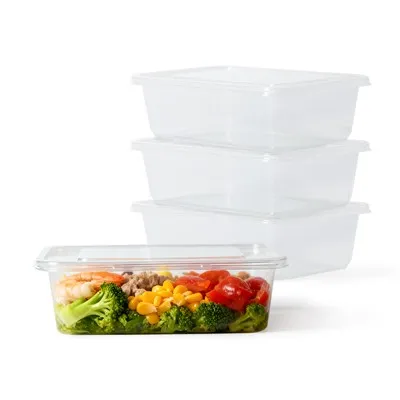 Food delivery platforms have become the primary driver of recent growth in the consumption of to-go boxes. Platform statistics reveal the massive scale. In 2023, China's food delivery orders reached 85 billion, with approximately 70% using disposable containers. The average order uses 1.2-1.5 containers, resulting in annual consumption exceeding 35 billion containers from delivery channels alone.
Platform innovations have shaped packaging requirements. Meituan and Ele.me (China's major platforms) launched "no cutlery" options, with 520 million users having used this feature, generating over 10 billion orders. By 2023, Meituan's platform will use over 30 million food packaging boxes daily, with eco-friendly materials increasing from less than 15% in 2020 to 38% in 2024.
3.3 Aviation Catering: High Standards and Specialized Needs
Aviation catering represents a unique segment with stringent requirements for food-to-go boxes. Market scale and usage show that China's aviation catering requires approximately 845 million servings annually, with 698 million aluminum foil containers actually used. The average price per container is 2.35 yuan, with the total market valued at 1.64 billion yuan. Quality and safety requirements are paramount. All aviation catering must meet HACCP certification standards. Temperature control and food safety during long-haul flights require specialized packaging solutions. International flights have higher standards, with the average price per set reaching 42.7 yuan, significantly higher than domestic flights' 28.4 yuan.
3.4 Other Industries
Convenience stores and supermarkets show consistent daily usage. These outlets primarily use packaging for ready-to-eat foods, sandwiches, salads, and snacks. The format often requires clear plastic containers to showcase products. Daily usage averages around 50 plastic bags per store. The hospitality industry (hotels and resorts) uses food to go boxes for room service meals, breakfast to-go options, and conference and event catering. Quick service restaurants (QSRs) and casual dining establishments show high takeaway and delivery volumes and increasing demand for eco-friendly packaging options.
IV. Historical Trends and Growth Patterns
4.1 Pre-Pandemic Period (2015-2019)
The pre-pandemic period saw steady growth in food to go box usage, driven by urbanization and changing lifestyles. China's market evolution illustrates this growth. In 2015, China's food delivery orders exceeded 3 billion, driving annual usage of over 10 billion disposable containers. Online channels accounted for over 60% of container usage for the first time, marking the industry's entry into an "online-driven" era. Global market development during this period was characterized by a gradual increase in delivery services, the introduction of eco-friendly alternatives, and the standardization of packaging sizes and formats.
4.2 Pandemic Impact and Post-Pandemic Surge (2020-2023)
 The COVID-19 pandemic dramatically accelerated the consumption of food to go boxes. Immediate pandemic effects in 2020 saw China's food delivery user base reach 456 million, growing 16.8% year-over-year. Annual food delivery transactions exceeded 700 billion yuan, driving disposable container shipments to grow 32.5% to approximately 4.8 million tons. Meituan's plastic container usage reached 1.07 million tons in 2020.
Recovery and continued growth from 2021 to 2023 showed that by 2023, Meituan processed 21.89 billion orders, involving 1.427 million tons of plastic containers. The increase from 2020 to 2023 represents a 33.4% growth in plastic container usage. China's total food delivery orders reached 85 billion in 2023, with 70% using disposable containers.
4.3 Recent Developments and Current Trends (2024-2025)
The current period shows continued growth with significant structural changes in the food to go box market. The global market for to-go packaging reached USD 2.16 billion in 2025, projected to reach USD 3.70 billion by 2035 with a CAGR of 5.53%. China's disposable container annual demand will exceed 60 billion pieces in 2025. The market is expected to grow at an annual rate of 11.5% through 2030, potentially exceeding 105 billion yuan.
Material composition changes reflect sustainability trends. In China, biodegradable materials increased from 18% in 2022 to 45% in 2025. In 2024, the breakdown was disposable biodegradable containers at 55%, traditional PP plastic at 22.3%, reusable materials at 15.2%, and paper containers at 5.8%. Regional variations in growth patterns show China's market size reached 112 billion yuan in 2025, growing 64.7% from 2020 with a CAGR of 10.3%. The global takeout container market hit USD 30.5 billion in 2024, projected to reach USD 52.1 billion by 2033 with a CAGR of 5.3%.
4.4 Environmental Impact and Regulatory Response
 The growth in food-to-go boxes has led to increasing environmental concerns and regulatory responses. Waste management challenges are significant. According to the China Materials Recycling Association, only 3-5% of plastic food containers are recycled. In 2020, China produced approximately 1.07 million tons of plastic containers, with only 3% undergoing large-scale recycling.
Regulatory interventions have started to reshape consumption patterns. In Shanghai, following plastic restrictions, disposable plastic cutlery usage dropped by 92% in the first week, while eco-friendly container searches increased six-fold. The EU's new regulations require 15% reduction in overall packaging waste by 2040.
Industry responses to environmental pressures have been notable. Major platforms have launched recycling initiatives. Meituan's recycling project has collected over 37,000 tons of containers across 24 cities. Material innovation has accelerated, with PLA container costs dropping from 2.68 yuan in 2021 to 1.85 yuan in 2024.
V. Future Outlook and Industry Transformation
5.1 Technology and Material Innovation
The food to go box industry is undergoing rapid transformation through technological advancement and material innovation. Smart packaging technologies are emerging, including temperature-sensitive color-changing packaging with RFID traceability, containers that can automatically alert consumers to temperature anomalies, and packaging with built-in sensors for quality monitoring. Advanced materials are being developed, such as seaweed-based materials with carbon footprints as low as 0.98 kg CO₂e per container, bamboo fiber and straw composite materials containing 60% agricultural waste, and PLA/PHA blends achieving cost reductions from 2.68 yuan to 1.85 yuan per container.
5.2 Circular Economy Models
Circular economy principles are increasingly being adopted for food-to-go boxes. Reusable container programs show promising results. In office buildings and universities, single containers achieve average reuse rates of 27 times, reducing carbon emissions by 62%. Beijing and Shanghai have piloted programs with daily circulation exceeding 120,000 containers. Closed-loop recycling systems are being established, with major cities building specialized recycling infrastructure, collection points with incentive programs (point exchange systems), and partnerships between platforms, restaurants, and recycling facilities.

5.3 Market Concentration and Industry Consolidation
Industry concentration is increasing significantly. The top five companies' market share increased from 19.3% in 2020 to 34.7% in 2023. Regional clusters are forming, with Zhejiang, Guangdong, and Shandong provinces accounting for 62% of China's total capacity. Supply chain integration is becoming more common, with leading companies establishing integrated supply chains from raw materials to finished products. Strategic partnerships with food delivery platforms ensure stable demand for their food to go box offerings.
5.4 Regulatory Evolution and Compliance
Regulatory frameworks are becoming more stringent globally. China's regulatory timeline requires that by 2025, disposable non-degradable plastic cutlery consumption in food delivery must decrease by 30%. New national standards for food delivery containers will be fully implemented. Global regulatory trends include the EU's PFAS ban from August 2026, increasing requirements for recycled content in packaging, and carbon footprint disclosure requirements for food packaging.
5.5 Consumer Preferences and Market Evolution
Consumer preferences are driving significant market changes. Sustainability preferences are shaping demand, with 68% of Gen Z consumers willing to pay 10% or more premium for eco-friendly packaging. There is growing demand for transparency in materials and sourcing, and a preference for minimalist, functional designs. Convenience and functionality remain key drivers, with demand for leak-proof, stackable designs, preferences for microwave-safe and freezer-compatible containers, and increasing use of compartmentalized containers for meal prep.

Conclusion
The global market for food to go boxes has evolved from a simple convenience product to a complex ecosystem serving diverse user groups across multiple industries. With the market valued at USD 2.16 billion in 2025 and projected to reach USD 3.70 billion by 2035, the industry shows no signs of slowing down.
Regional dominance by Asia-Pacific (38%) and North America (32%) reflects different market dynamics-Asia-Pacific driven by population density and delivery platform growth, while North America benefits from an established takeaway culture. In both regions, the food to go box has become deeply embedded in daily life.
Diverse user groups range from individual consumers (with 13% consuming takeaway meals four or more times weekly) to massive institutional users like Meituan, processing 21.89 billion orders annually. For each of these groups, the food-to-go box serves a unique purpose, from convenience to operational efficiency.
Industry transformation is being driven by environmental regulations and consumer preferences, with biodegradable materials increasing from 18% to 45% of the Chinese market in just three years. This shift is fundamentally redefining what a sustainable to-go box looks like.

Technology and innovation are reshaping the industry through smart packaging, circular economy models, and advanced materials that reduce environmental impact while maintaining functionality.
For industry stakeholders, several strategic implications emerge. Manufacturers should invest in R&D for sustainable materials and circular economy solutions, given the regulatory push toward reduced plastic waste. The future will increasingly need to balance performance with environmental responsibility.
Foodservice providers must balance cost efficiency with sustainability, as 68% of Gen Z consumers show willingness to pay premiums for eco-friendly packaging. For these businesses, the food-to-go box is not just a container but a reflection of their brand values.
 Investors should focus on companies with strong environmental credentials and technological innovation capabilities, as these are increasingly becoming competitive advantages in the to-go box sector.
Policymakers need to continue developing comprehensive regulatory frameworks that encourage innovation while addressing environmental concerns.
The food-to-go box industry stands at a critical juncture. While growth remains robust, the industry must navigate increasing environmental scrutiny, regulatory pressures, and evolving consumer preferences. Success will require a delicate balance between meeting convenience demands and environmental responsibilities, ultimately reshaping how food is packaged and consumed globally.