


Revealing the Secrets Behind Anti-Fog Technology and Material Structure
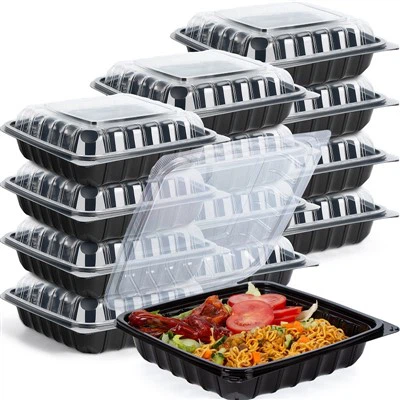
Transparent lunch boxes are popular because of their strong display and high appearance, but at the same time, there is a problem: are all clear togo containers prone to fogging? In fact, the lid can also be designed to be anti-fogging. This article will comprehensively analyze the secrets behind anti-fogging from the fogging principle, anti-fogging technology, material properties, to the production process.
1. Analysis of Fogging Phenomenon: Is It a Common Problem of Transparent Lunch Boxes or a Solvable Problem?
Is the fogging of transparent lunch boxes due to the fact that technology cannot be changed, or can it be changed?


A.
Causes of Fogging
The reason for the formation of fog is that when hot food is placed in a transparent lunch box, water droplets will form when the hot air of the food encounters the relatively cold lunch box lid. This phenomenon is the reason why most clear togo containers fog up. This phenomenon is particularly common in winter.
B.
Impact of Fogging on User Experience
Fogging will seriously affect the visual effect of food, especially clamshell togo containers. If the first thing customers see is a blurry lid instead of tempting food, it will greatly reduce their satisfaction with the brand or restaurant, and will also indirectly affect the repurchase rate of lunch boxes, which will have a negative impact on the brand.
C.
Are All Transparent Lunch Boxes Prone to Fogging?
Of course, not all transparent lids will fog. Now, more and more food container manufacturers have updated their technology to address this phenomenon and designed anti-fog effects. For example, Yangrui's transparent lid products can be selected from anti-fog or ordinary models. Our anti-fog model has an anti-fog design added to the surface layer to ensure that no fog will be generated when hot food is loaded.
2. Classification and Principle of Mainstream Anti-Fog Technology
 The update of anti-fog technology makes it possible for transparency not to necessarily cause fogging. This technology is an important factor in purchasing transparent-lid lunch boxes.
Anti-Fog Coating
The most widely used anti-fog solution is the anti-fog coating, which is generally divided into two types: water-based and UV-curable, and is widely used in clear togo containers. The application of anti-fog technology is very suitable for high-temperature food packaging and display.
Modified Plastic Raw Materials
In addition to coatings, there are also material updates. Some food container manufacturers use PET or PP materials with anti-fog masterbatch added to make lunch boxes anti-fog. Compared with adding coatings, this method of replacing materials is more stable, but at the same time, it has higher requirements for material ratio and processing. When clamshell togo containers use this material, they can not only ensure transparency but also extend the anti-fog effect.
Structural Anti-Fog Design
In addition to the above two categories, the unique design of the lunch box itself can also achieve a certain anti-fog effect. For example, the lunch box lid adds ventilation slots, etc. This design is also used by many food container manufacturers.

3. Strong Correlation Between Material Selection and Anti-Fog Effect
Whether a transparent lunch box fogs or not depends more on the matching degree between the material selection and its thermal responsiveness.

PET Material
PP Material

PLA Material
4. How Do Lunch Box Manufacturers Ensure Anti-Fog Effects?
Not all manufacturers can guarantee good anti-fog effects.
 How to Control the Consistency of Anti-Fog Performance During the Production Process?
In actual production, every link affects the stability of the anti-fog effect. Professional food container manufacturers will be equipped with exclusive coating workshops and conduct regular sampling to ensure that the anti-fog performance of each batch of clamshell togo containers meets the standards.
We Support Customized Anti-Fog Cover Solutions
Yangrui can customize anti-fog clear togo containers according to different customers' needs for transparency, heat sealing, and anti-fog performance, such as PET cover anti-fog, PP cover anti-fog, etc. All products can provide anti-fog test reports and free samples to help customers stand out in the market.
 Successful Cooperation Cases
Take the clamshell to-go containers provided by Yangrui for a high-end European and American brand as an example. The original product caused a surge in customer complaints due to frequent fogging. We significantly improved transparency through customized anti-fog coatings. After the brand began selling Yangrui's products, data showed that customer satisfaction increased by 23% and repurchase rate increased by 41%, which is a typical example of a successful anti-fog application.
Where to Buy Clear Togo Containers?
Yangrui offers a full range of anti-fog transparent lunch boxes, including PP and PET materials, and provides customizable lids, test reports, and free samples.
Contact Yangrui now:
Website: www.packagingbag5.com
Email: sales@packagingbag5.com
Tel: +86 180 8644 3226
References
- Zhang, Y., & Lin, H. (2020). Application of Anti-Fogging Coatings in Food Packaging Materials. Journal of Packaging Technology, 12(4), 102–108.
- Wang, Q., et al. (2021). Thermal Response and Fogging Behavior of Polymer-Based Transparent Containers. Polymer Science & Technology, 18(7), 511–520.
- European Food Packaging Association. (2022). Guidelines for Anti-Fog Food Packaging Materials in the EU Market.
- Huizhou Yangrui Printing and Packaging Co., Ltd. (2025). Internal Case Study: Anti-Fog Lid Customization for Clamshell Containers (Unpublished data).
- Wang, S. (2019). PET vs. PP: Material Selection in Transparent Food Containers. China Plastics Review, 34(2), 73–80.


