


I. The Prosperity of the Plastic Lunch Box Industry and the Root Cause of the Environmental Dilemma
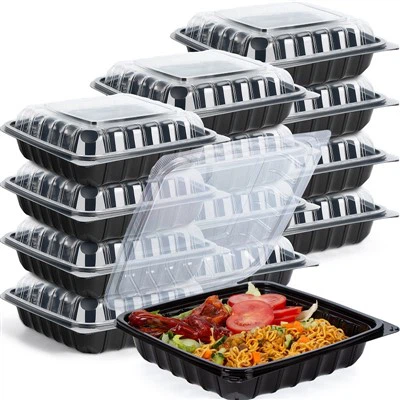
Industry status and demand drivers: The Takeaway economy, fast-paced life, and expansion of the catering industry have huge demands for disposable lunch boxes; plastics (especially PP and PS) have become mainstream materials due to their low cost, lightness, durability, and good processing performance.




Core Environmental Issues
Resource consumption: Dependence on non-renewable petroleum resources.
Waste surge
The use cycle is extremely short (mainly disposable), generating massive amounts of waste ("white pollution").
Environmental pollution
Landfill occupies land, incineration produces harmful gases (if not handled properly), and entering the natural environment (rivers, oceans) causes long-term ecological damage (ingestion, microplastic problems).

Recycling dilemma
Low recycling value (large volume, light weight, easy to be contaminated by food), imperfect classification and recycling system, and high quality requirements for recycled materials lead to generally low recycling rates.
Microplastics risk
The degradation process (especially photo-oxidative degradation rather than biodegradation) may produce microplastics, which enter the food chain and water bodies.
II. Increasing Environmental Pressure and Policy and Regulatory Drive
Global and National Policy Tightening


"Plastic restriction order"/"plastic ban order": Countries and regions have introduced policies to restrict or prohibit the production, sale, and use of non-degradable disposable plastic products (including lunch boxes) (such as the EU SUP directive and China's new version of the plastic restriction order).
Extended producer responsibility system: Require food packaging box manufacturers and brand owners to be responsible for the entire life cycle of the product, especially the recycling and disposal after disposal.
Circular economy goals: Promote waste reduction and resource utilization, and require higher recycling rates and recycled materials for packaging materials.
Social awareness improvement: Consumers' environmental awareness has increased, and the demand for sustainable packaging has increased; "green consumption" has become an important part of the brand image.
III. Industry Response Strategies and Environmental Transformation Paths
Material Innovation
 Degradable plastics: Research, develop, and promote bio-based or fossil-based degradable materials such as PLA, PBAT, and PHA (pay attention to the supporting issues of industrial composting facilities).
Recycled plastics: Increase the proportion of food-grade recycled plastics (rPP, rPET) in lunch boxes.
Other alternative materials: Explore plant fiber materials such as pulp molding, bamboo fiber, and bagasse (waterproof and oilproof, cost issues need to be resolved).
Design Optimization
Lightweight: Reduce the use of raw materials.
Easy to recycle design: Reduce the use of composite materials, use a single material, and clearly identify the material.
Explore reuse modes: Promote the rental/deposit system for recyclable to go containers (face challenges such as recycling and cleaning, logistics costs, and consumer habits).
Improve the recycling and processing system:
- Strengthen the publicity and facility construction of post-meal garbage classification.
- Establish a dedicated and efficient lunch box recycling chain (sorting, cleaning, and recycling).
- Explore chemical recycling technology to treat contaminated mixed plastic lunch boxes.
IV. Challenges, Controversies, and Future Prospects
-
Current Main Challenges

Cost and Technical Bottlenecks: Environmentally friendly materials are expensive, and their performance (heat resistance, sealing) may not be as good as traditional plastics; the degradation conditions (industrial composting) of degradable plastics are not widely used, which can easily cause confusion and "pseudo-degradation".
Efficiency of recycling system: It is difficult to establish an efficient, wide-coverage, and low-cost cheap food box recycling system, and consumer participation is the key.
Standards and Supervision: Degradable material standards and recycled material food contact safety standards need to be improved and uniformly supervised; avoid "greenwashing" behavior. -
-
Future Development Trends

Diversified material solutions: Different materials (degradable, recycled, and recycled) are used in different scenarios.
Deepening of the circular economy model: Deposit return system, shared lunch box system, etc., are expected to be promoted in specific scenarios (such as office buildings, campuses, and large-scale events).
Continued policy strengthening and coordination: Stricter regulations, economic incentives (taxes, subsidies), and punitive measures are implemented in parallel.
Technology innovation drive: More efficient recycling technology (such as advanced sorting, and chemical recycling), research and development of bio-based materials with better performance and lower cost.
Why Choose Us?
Huizhou YANGRUI Printing and Packaging Co., Ltd. is a trusted supplier specializing in the production of plastic lunch boxes, biodegradable containers, and customized food packaging. With many years of professional experience and ISO9001 and FDA certifications, Yangrui offers the following products:
- PP/MFPP/PET plastic lunch boxes
- Biodegradable PLA, bagasse, and pulp containers
- OEM/ODM customization of various food packaging
- Microwave-safe, stackable, leak-proof design
Contact us for the most affordable quote:
Website: www.packagingbag5.com
Email: sales@packagingbag5.com
Phone: +86 180 8644 3226
References
- Ellen MacArthur Foundation. (2021). The Circular Economy in Detail.
- European Commission. (2021). Directive (EU) 2019/904 on the reduction of the impact of certain plastic products on the environment (SUP Directive).
- Ministry of Ecology and Environment of the People's Republic of China. (2020). Notice on Further Strengthening Plastic Pollution Control.
- Jambeck, J. R., et al. (2015). Plastic waste inputs from land into the ocean. Science, 347(6223), 768–771.
- Geyer, R., Jambeck, J. R., & Law, K. L. (2017). Production, use, and fate of all plastics ever made. Science Advances, 3(7), e1700782.


