

Large-scale restaurant chains have a high demand for lunch boxes, making cost control a crucial challenge. This article will help companies analyze the costs and usage scenarios of common lunch box materials, focusing on the practical application of the best togo boxes for food, oven-safe togo boxes, and rectangle togo boxes.
I. Classification and Cost Characteristics of Common Lunch Box Materials
When selecting lunch boxes, restaurant companies should not only consider their brand positioning and customer needs, but also understand the differences in cost, functionality, and environmental performance of different materials.
Plastic Lunch Boxes (PP, PET)
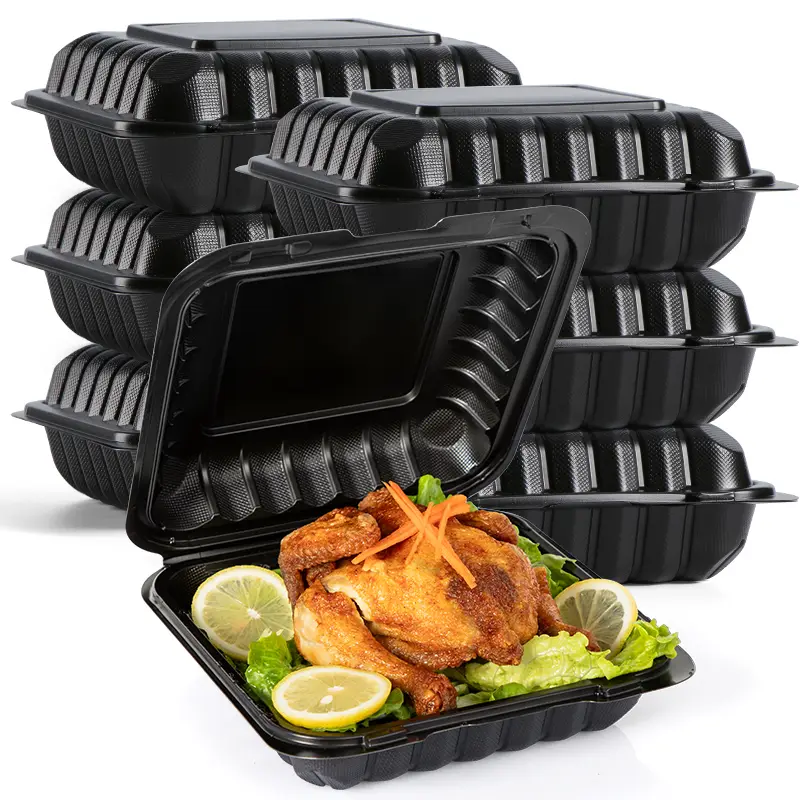
Plastic lunch boxes remain the most widely used choice due to their mature technology, low cost, and wide applicability. Common shapes like the rectangle togo box are ideal for fast food, providing convenient food storage while ensuring stability during transport. Compared to other materials, its lower unit price makes it suitable for large-scale procurement. Its excellent heat resistance and leak-proof properties also ensure food freshness.


Pulp and Paper Lunch Boxes
Pulp and paper lunch boxes are made from renewable resources and are highly environmentally friendly, aligning with green consumption. However, compared to plastic, they are more expensive. Furthermore, if oil- and water-resistant paper lunch boxes are required, additional production steps are required, reducing their environmental performance and increasing costs. These boxes are more suitable for mid- to high-end catering businesses, particularly those seeking to emphasize green practices and enhance consumer appeal.
Oven-Safe To-Go Boxes (Aluminum Foil, High-Temperature-Resistant Materials)
For catering businesses requiring heating functions, oven-safe to-go boxes are an option. They can be heated directly in microwaves and ovens, making them ideal for Western restaurants, bakeries, and takeout chains. While they may be more expensive, they enhance brand recognition and add value, providing a guarantee of quality and peace of mind for consumers.


2. Cost Comparison: Investment and Return of Lunch Boxes Made of Different Materials
Cost encompasses more than just the unit price; hidden factors include procurement scale, usage efficiency, transportation and storage, and brand value.
Unit Cost and Procurement Scale
 The best togo boxes for food have mature production processes, allowing for a stable supply and competitive pricing even with bulk purchases. While paper-pulp lunch boxes have a higher unit price, long-term supply can help spread the cost. Aluminum foil prices fluctuate significantly, making it suitable only for certain dishes.
Lifespan and Functionality Compatibility
The functional performance differences of different lunch box materials directly impact their economic viability. Plastic lunch boxes, particularly rectangular togo boxes, offer excellent leak-proof and impact resistance, making them suitable for frequent use. Some models can even be reused. Paper-pulp lunch boxes excel in environmental performance, but have limitations in heat and moisture resistance. In contrast, oven-safe togo boxes can be directly oven-safe or used in high-temperature environments, ensuring food quality, but at a higher unit cost. Therefore, when choosing a suitable container, companies need to consider the characteristics of each dish, its lifespan, and its functional compatibility to determine whether the investment is justified.
Transportation and Storage Costs
Transportation and warehousing are often overlooked, but they are crucial for large-scale chains. Plastic lunch boxes, due to their high stacking efficiency, can accommodate more items in the same space, significantly reducing storage and transportation costs. Paper lunch boxes take up more space and are prone to deformation and collapse when stacked for long periods, making them unsuitable for long-distance transportation and large-scale warehousing. Aluminum foil oven-safe to-go boxes must be stored to avoid excessive compression, resulting in relatively higher transportation and management costs. Therefore, if scaled operations are the goal, plastic lunch boxes offer particularly significant advantages in logistics.


3. Selection Strategies for Large-Scale Restaurant Chains
 Different restaurants have different needs: some seek cost-effectiveness and practicality, others prioritize environmental friendliness, and still others prioritize a high-quality experience. A balanced combination of materials is the optimal approach for large-scale chains.
Choosing the Best To-Go Boxes for Food by Dish Type
Different dishes require different containers. Clear plastic containers are best for cold dishes and salads, showcasing the freshness of the ingredients. Hot dishes with soups are best suited for rectangular to-go boxes, which are leak-proof and durable. Baked goods or Western-style baked rice must be oven-safe to-go boxes, allowing customers to reheat directly in the oven at home. Choosing containers based on the dish ensures a positive customer experience while also saving costs.
Balancing Cost and Brand Image
Fast food brands, seeking value for money, prefer plastic to-go boxes. However, high-end restaurants or Western chains prefer functional and high-quality containers, conveying quality through packaging. While paper pulp containers are more expensive, they offer a brand advantage under environmental regulations and are particularly appealing to younger consumers. Restaurants should find a balance between cost and image based on their positioning.
Procurement and Supply Chain Optimization
Restaurant chains can lock in pricing and mitigate cost fluctuations through long-term partnerships with suppliers. Customized lunch boxes can also better align with brand needs. For example, printing a logo or custom design on the best togo boxes for food is not only practical but also enhances brand differentiation. Supply chain stability is also crucial, especially for chain brands with huge daily order volumes, which must ensure a consistent supply of lunch boxes.


4. Conclusion: Proper Combination is Key
Generally speaking, plastic lunch boxes are the most cost-effective, paper lunch boxes are environmentally friendly but expensive, and oven-safe togo boxes are suitable for situations where heating is required. For large-scale restaurant chains looking to control costs while ensuring a quality experience, the best approach is to flexibly combine the best togo boxes for food based on the characteristics of the dishes.
As a professional lunch box manufacturer, Yangrui offers a variety of material options: plastic, paper, and sugarcane bagasse, to meet diverse catering needs. The company's large production scale ensures a stable supply and helps customers reduce procurement costs. More importantly, Yangrui's products are internationally certified and safe and environmentally friendly, providing customers with peace of mind. Yangrui also offers customized services, such as custom rectangular togo boxes, which are not only practical but also enhance their brand image.
These advantages can help restaurant companies save money and gain peace of mind in a highly competitive market, while also improving customer experience and brand reputation.


Where to Buy Best Togo Boxes for Food?
 Established in 2014, Huizhou Yangrui Printing and Packaging Co., Ltd. specializes in the research, development, and production of lunch boxes, food packaging, and paper cups. With international certifications and extensive export experience, Yangrui Printing and Packaging offers chain restaurants a stable supply of cost-effective lunch box products, along with customized service support.
Contact information:
Email: sales@packagingbag5.com
Tel: +86 180 8644 3226
References
 Smith, J. (2021). Food Packaging Materials and Cost Efficiency in Large-Scale Catering. Journal of Foodservice Business Research.
- Zhao, L., & Chen, Y. (2022). Sustainable Packaging Trends in Quick Service Restaurants. International Journal of Hospitality Management.
- European Commission. (2023). Directive on Single-Use Plastics and Its Impact on Food Packaging. Official Journal of the European Union.
- National Restaurant Association. (2022). Restaurant Industry Packaging Report.
