

With the increasing use of disposable lunch boxes, togo food containers have become commonplace, not only in restaurants but also in homes. Some people microwave them for secondary heating, but not all materials can be used, especially with common PS containers. This article will provide a deeper understanding of PS and MFPP containers.
1. Characteristics and Limitations of PS Foam Lunch Boxes
Although PS foam lunch boxes have become less common in recent years, they still hold a significant market share due to their low cost and portability. However, they perform poorly in terms of safety and environmental performance.
Material Properties and Cost Advantages
PS foam lunch boxes primarily target the fast food industry. Due to their low cost, portability, and ability to keep food warm for a short period of time, they are often the preferred choice for budget-conscious businesses. However, from a food safety perspective, they are not suitable for reheating and can only be used as togo food containers for short-term food storage, failing to meet the demand for high-quality packaging.
Microwave Safety Hazards
Many people who use PS lunch boxes ask, "Can you microwave plastic togo containers?" The answer is often that heating them isn't recommended. Their structure is prone to deformation under high-temperature conditions, and they are highly likely to release harmful substances, posing a threat not only to the food but also to the health of consumers. If you want to choose a lunch box that can be safely heated, food-grade PP or MFPP is recommended.
Environmental and Recycling Issues
Another major issue with PS lunch boxes is their environmental impact, making them difficult to address. Extensive use can have a long-term impact on the environment. Especially with the global emphasis on green environmental protection, their use has been gradually phased out in some regions.


2. Advantages of MFPP Lunch Boxes
In recent years, MFPP lunch boxes have become increasingly common, gaining a significant market share thanks to their excellent heat resistance and safety.
 MFPP's Heat and Cold Resistance
MFPP, based on PP, adds certain environmentally friendly properties and can be heated without deformation. Therefore, many microwaveable lunch boxes are now made of MFPP or PP. They are widely used in togo food containers and offer greater practicality for applications requiring frequent heating.
Safety and User Experience
Compared to PS lunch boxes, MFPP clearly supports the question of "can you microwave plastic togo containers?" Due to its strong structural stability, it maintains its packaging even under prolonged heating without releasing harmful substances, providing consumers with a superior dining experience.
Environmental Trends and Recycling Value
MFPP, thanks to the addition of calcium carbonate, has certain environmentally friendly properties. It is also increasingly recognized as a recyclable plastic and can be made into recycled togo containers. With the promotion of environmental protection policies, companies can effectively enhance their brand image by using MFPP lunch boxes. Although the price will increase, most consumers are more willing to pay for environmental protection.


3. PS Foam vs. MFPP: A Core Comparison
PS and MFPP have certain fundamental differences. Although PS is cheaper, in the long run, MFPP's functionality and practicality are more competitive.
Microwave Compatibility
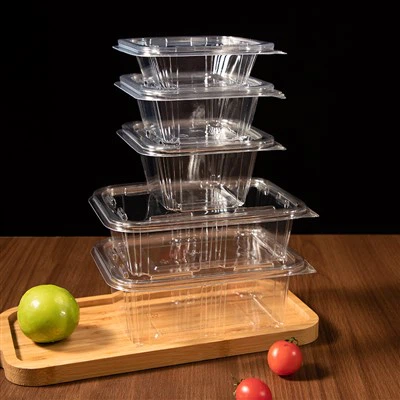 MFPP is significantly more microwave-compatible than PS. MFPP can withstand high temperatures, while PS easily deforms and produces harmful substances at high temperatures. For businesses, even if using PS is cost-effective, if a large number of consumer complaints lead to customer loss, and in serious cases, it could even damage the brand's reputation. This situation, as the Chinese saying goes, is like "losing the watermelon while picking up the sesame seeds." It's crucial to ensure normal business operations before considering other factors. In this regard, MFPP is an ideal choice.
Cost and Long-Term Value
Many may think that PS offers a significant price advantage over MFPP from a cost perspective. However, purchasing lunch boxes shouldn't be determined solely by price; other factors must be considered. The safety and environmental risks of PS cannot be ignored, which can lead to increased long-term costs. While MFPP is more expensive per unit than MFPP, its environmentally friendly properties and superior functional performance offer businesses greater long-term value. It helps brands establish a quality image and enhance market competitiveness.
Environmental Protection and Future Trends
With environmental protection becoming a growing trend, the survival of PS foam containers has become increasingly challenging. Many countries have banned the use of PS foam lunch boxes. Consequently, the use of recycled togo containers has become increasingly popular. Using MFPP can help businesses comply with regulatory guidelines and meet consumer preferences for green concepts. This is also key to future market competition. It is undeniable that environmentally friendly lunch boxes will continue to capture an increasing share of the market.



4. Conclusion
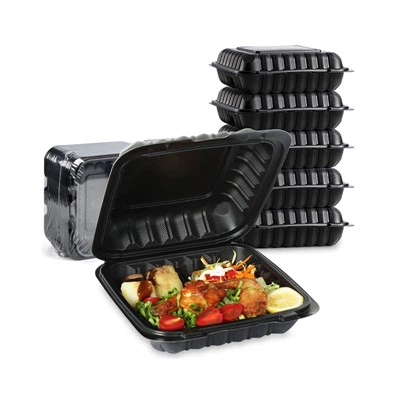
Now, do you understand the difference between PP and MFPP togo food containers? Do you know how to choose? Although PS foam lunch boxes are cheaper, they have no other advantages beyond this. MFPP, on the other hand, has only a higher unit price as a disadvantage, with all other advantages.
Environmental Advantages Support Sustainable Development
As recycled togo containers, MFPP lunch boxes not only meet environmental regulations but also help catering companies establish a green brand image, enhance sustainability, and help them gain a larger market share.
Yangrui's Production Advantages and Customer Value
MFPP togo food containers are one of Yangrui's best-selling products. As a professional manufacturer of disposable plastic lunch boxes, we utilize advanced production equipment (Kiefel machines from Germany) and a strict quality management system (ISO9001). We supply high-quality lunch boxes to numerous buyers, all of which have passed multiple international certifications and meet food safety and environmental standards. Furthermore, customization is a key feature of Yangrui, offering both custom cartons and custom lunch boxes. This reduces procurement risks while also delivering higher customer value.


Where to Buy Togo Food Containers?
YANGRUI offers a diverse range of products, such as plastic food containers, beverage cups, food trays, packaging bags, biodegradable lunch boxes, etc., and has obtained multiple international certifications, including ISO9001, USA FDA, SGS, etc., to ensure quality.
Contact information:
Email: sales@packagingbag5.com
Tel: +86 180 8644 3226


References
- PlasticsEurope. (2022). Plastics and Sustainability: A Guide to Material Properties and Recycling.
- U.S. Food and Drug Administration (FDA). (2023). Food Contact Materials Regulations and Safety Guidelines.
- Ellen MacArthur Foundation. (2021). The New Plastics Economy: Rethinking the Future of Plastics.
- Packaging Europe. (2023). Trends in Sustainable Food Packaging and Recycling Practices.
