

Many office workers choose to bring their own to-go containers with lids to work, so they can simply microwave them for lunch. Not only is it safer to eat, but it's also faster than takeout. What's your to-go container made of? Is it a regular plastic plate or bowl, or one labeled microwave-safe? Are "microwave-safe" labels truly safe? The truth may surprise you.
1. Heating for 3 Minutes Releases Billions of Plastic Particles
 A study published in the journal Environmental Science and Technology in July 2023 showed that microwave heating results in the highest release of microplastics and nanoplastics into food compared to refrigerated or room temperature storage, releasing over 2 billion nanoplastics and 4 million microplastics per square centimeter of container. Researchers selected "food-grade plastic containers" made of polypropylene and polyethylene and heated them in a microwave for three minutes. Analysis of the liquid inside revealed numerous microplastics (approximately 1 micron in diameter) and even smaller nanoplastic particles. An estimated 4.22 million microplastic particles and 2.11 billion nanoplastic particles were released from each square centimeter of plastic.
The researchers also found that the highest number of microplastic particles was generated when plastic containers were used to heat liquids, such as water and milk. However, the release of microplastics was much lower when used only to refrigerate food or beverages.
In other words, it's best to avoid using plastic containers, even those considered "food-grade," when microwaving food.


2. Microplastics Have Been Detected in Multiple Human Organs
Plastic products have become an essential part of our daily lives. However, their widespread use also increases the risk of microplastics entering the body.
Microplastics are difficult for the human body to metabolize and absorb. The unexcreted microplastics accumulate in the body, and exceeding a certain level can cause varying degrees of damage to organs and cells. Even more shocking is that scientists have found microplastics in multiple organs throughout the human body.
The World Wildlife Fund has published data showing that a person can ingest nearly 1,800 microplastic particles per week simply through drinking water! Shellfish and other seafood are the second-largest source, consuming approximately 182 microplastic particles per week.
- Brain: Nanoplastics not only enter the brain but also interact with protein fibers in neurons, potentially increasing the risk of neurodegenerative diseases such as Alzheimer's and Parkinson's.
- Placenta: Microplastics may enter the placenta during pregnancy. The number and size of microplastic particles in the placenta have increased significantly over the past 15 years.
- Heart: Studies have found microplastics in the heart tissue of patients undergoing heart surgery. Microplastics can accumulate and persist in the heart.
- Blood: A 2022 study found microplastics in human blood. This may indicate that microplastics have spread throughout the body's organs. Gastrointestinal: Nine types of microplastics have been detected in human feces. Microplastic particles in the feces of patients with intestinal diseases are 1.5 times higher than those in healthy individuals.
- Lungs: It is estimated that a child inhales up to 35,000 to 45,000 microplastic particles annually.


3. Avoid These Daily Life Activities
Try to Minimize Microwaving Plastic Utensils
Although many plastic utensils claiming to be "food-grade" still release plastic particles when heated in a microwave.
Try to Minimize the Use of Plastic for Food
The aforementioned study also noted that using plastic utensils to hold or refrigerate food releases significantly less plastic particles than microwaving plastic utensils, but releases still occur.
Try to Minimize the Use of Disposable Tableware
This includes disposable plastic cups, plastic drinking glasses, plastic straws, disposable tableware, and takeout containers. When dining out or ordering takeout, minimize the use of disposable tableware and takeout containers to avoid contact between heated food and plastic products.
Don't Litter Plastic Products After Use
Don't litter plastic bottles and bags. Separate and dispose of trash in designated bins to reduce environmental pollution and prevent microplastics from entering the food chain.


4. Reminder: Always Purchase Quality Microwavable To-Go Container
When purchasing and using plastic microwavable to-go containers, in addition to being aware of the risks of microbial contamination due to poor hygiene and the potential for chemicals in the boxes to migrate into food, thus affecting food safety, you should also pay attention to the following:
- Check the packaging: When purchasing lunch boxes, choose well-packaged products. Note the production date and expiration date, and avoid products past their expiration date to prevent contamination by bacteria and mold.
- Check the labeling: Ensure that the product name, material, manufacturer, and/or distributor's name, address, and contact information, production date, and expiration date (where applicable) are labeled in accordance with China's national food safety standard GB 4806.1-2016, "National Food Safety Standard - General Safety Requirements for Food Contact Materials and Articles."
- Look at the appearance: Choose microwavable to-go containers with a smooth, even surface and uniform color. Try to choose colorless, clear plastic to-go containers without decorative patterns.
- Smell: First, smell for any unusual smells or odors. A normal lunch box should be odorless. Using a smelly lunch box to hold food may affect food safety and should be avoided.
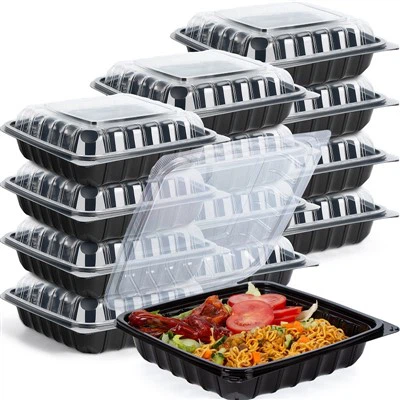


Where to Buy Microwavable To-go Containers?
 Huizhou Yangrui Printing and Packaging Co., Ltd. specializes in producing BPA-free, microwavable, and eco-friendly to-go containers with lids. We offer PP, PET, PLA, and compostable materials, and can customize them to meet the needs of restaurants and food companies.
Contact information:
Email: sales@packagingbag5.com
Tel: +86 180 8644 3226
References
 Zhang, J., et al. (2023). Release of microplastics and nanoplastics from food-grade plastics during microwave heating. Environmental Science & Technology.
- Leslie, H. A., et al. (2022). Discovery and quantification of plastic particle pollution in human blood. Environment International, 163, 107199.
- World Wildlife Fund. (2019). No Plastic in Nature: Assessing Plastic Ingestion from Nature to People. WWF Report.
- Ragusa, A., et al. (2021). Plastic particles in human placenta: The first evidence of microplastics in human beings. Environment International, 146, 106274.
- Chinese National Food Safety Standard (2016). GB 4806.1-2016: National Food Safety Standard – General Safety Requirements for Food Contact Materials and Articles.
