

Environmental Protection Does Not Mean Banning: Exploring the Recycling and Sustainable Development of Disposable Plastic Lunch Boxes
Due to consumer demand and the growth of the fast food industry, disposable plastic lunch boxes have become mainstream packaging. Many believe that environmental protection means a complete ban on plastic, but this is not the case. This article will explain the concept of "environmental protection does not mean banning" and explore how plastic to-go boxes can contribute to sustainable development from the perspectives of recycling, reuse, and alternatives.
1. The Practical Significance of Disposable Plastic Food Containers
Why haven't plastic food containers been replaced? The answer is simple: they are cheap, practical, and convenient-virtually indispensable to the food service industry.
Why the Food Service Industry Still Relies on Plastic Takeout Containers
The food service industry relies on plastic to-go boxes because they are lightweight, sturdy, and inexpensive, making them ideal for large-scale takeout demands. With so many daily takeout orders, switching to pricier, less reliably available eco-friendly containers would immediately inflate business costs. Plastic containers ensure food stays contained and leak-free during transport, while also offering rapid production and consistent supply-making them the top choice for businesses. For restaurants, this represents a win-win in efficiency and cost.
Functionality and Convenience: Consumer Preferences
For consumers, convenience reigns supreme. A quality plastic to-go box prevents leaks and oil stains while maintaining temperature. It opens cleanly, free from greasy residue. Especially for soups, noodles, and stews, plastic containers outperform paper boxes and some biodegradable alternatives. Consumers favor products that are convenient to use, making plastic containers naturally appealing. This preference, in turn, makes it difficult for food businesses to abandon them entirely overnight.
Comparison with Eco-Friendly To-Go Boxes
The market now offers an increasing number of eco-friendly to-go boxes made from materials like PLA, pulp, or sugarcane bagasse. While their environmental value is undeniably high, their cost is also significant, and sometimes their waterproofing and grease resistance fall short of plastic. In comparison, plastic takeout containers offer greater versatility and practicality. In reality, these two types of containers aren't mutually exclusive. They can be used in combination, selected based on different foods and scenarios. This approach balances environmental considerations with cost control.


2. Feasible Pathways for Recycling and Reuse
Plastic food containers aren't destined for disposal after a single use. With proper sorting and processing, they can enter recycling systems to unlock greater value.
Sorting and Processing Methods for Recyclable To-Go Boxes
PP and PET materials are common in recyclable to-go boxes. These containers can be reused after proper recycling and cleaning to create new plastic products-even more takeout containers. PET, in particular, boasts high utilization rates, with the beverage bottle industry already operating mature recycling chains. If businesses clearly label material types on containers and consumers sort them more effectively, recycling rates would significantly increase, enabling plastics to truly enter a circular system.
Challenges and Solutions in the Recycling Process
The reality is that the primary obstacle preventing many plastic food containers from being recycled is residual food grease, which complicates cleaning and sorting. Compounding this, many people neglect proper sorting, resulting in numerous plastic to-go boxes being discarded as general waste. Several solutions exist: restaurants can adopt designs that are easier to clean, consumers can enhance their sorting awareness, governments can intensify waste sorting campaigns and oversight, and recycling companies can develop efficient cleaning equipment. Only through coordinated efforts across these sectors can recycling rates truly improve.
Policy and Industry-Driven Initiatives
Numerous countries and regions are already advancing this cause. For instance, the EU implements circular economy policies, Japan enforces meticulous waste sorting, and major Chinese cities have begun establishing dedicated plastic recycling points. These measures collectively build a comprehensive recycling chain for recyclable to-go boxes. With coordinated efforts from both policymakers and businesses, the reuse of plastic food containers can certainly achieve significant scale.


3. Striking a Balance Between Environmental Protection and Sustainability
Rather than imposing a blanket ban on plastic, it is more effective to find a balance between environmental protection and practical usage. This approach ensures convenience for the food service industry while simultaneously promoting environmental conservation and recycling.
Market Trends for Eco-Friendly Takeout Containers
Eco-friendly to go boxes made from new materials like PLA, pulp, and sugarcane bagasse have seen rapid growth in recent years. Their advantages include biodegradability, strong environmental benefits, and reduced carbon emissions, attracting increasing adoption by restaurants. However, challenges remain: higher costs and inferior leak/oil resistance compared to plastic. Consequently, many businesses are starting with small-scale use for simpler meals, gradually transitioning over time.
Plastic and Environmentalism Are Not Mutually Exclusive
Many perceive plastic as the enemy of environmentalism, but this is not entirely accurate. Especially with recyclable takeout containers, if recycling systems function effectively, plastic can enter the recycling loop, reducing waste. Environmentalism and plastic are not irreconcilable; it depends on the existence of suitable recycling systems and usage practices. For businesses, plastic and eco-friendly containers can coexist and complement each other, yielding better results.
Action Guide for Food Service Businesses
To balance environmental responsibility and cost efficiency, food service businesses can focus on three key areas: First, select eco-certified plastic to go boxes that ensure material safety and recyclability. Second, partner with recycling companies to promote container recovery. Third, gradually introduce eco-friendly to go boxes to meet the demands of environmentally conscious customers. This approach not only enhances your brand image but also attracts more sustainability-minded consumers, boosting your competitive edge.

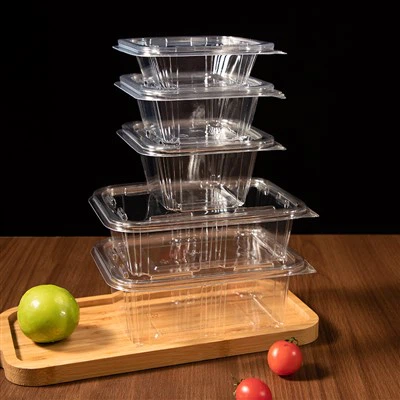


4. Conclusion: Yangrui's Advantages and Customer Value
Overall, environmental protection does not equate to prohibition. Plastic takeout containers still hold value within recycling and circular systems. Food service businesses can reasonably utilize plastics while gradually introducing eco-friendly and recyclable to go boxes.
Yangrui's Environmental Advantages
Yangrui's products incorporate sustainability from the design phase, featuring both recyclable materials and biodegradable solutions. Combined with advanced German KIEFEL equipment and food-grade raw materials, the resulting containers deliver superior quality and strong environmental credentials. They meet regulatory requirements while helping clients enhance their brand's green image.
Yangrui's Food Safety and Certification Assurance
Yangrui containers hold multiple international certifications, including ISO9001, FDA, and SGS. This ensures safe use of plastic to-go boxes under high and low temperatures without releasing harmful substances. Rigorous testing protocols provide customers with greater confidence during procurement, mitigating food safety risks. Tangible Value for Customers Choosing Yangrui's products enables customers to simultaneously address environmental sustainability, food safety, and market competitiveness. Utilizing eco-friendly and recyclable to go boxes satisfies consumer demand for sustainability. Consistent supply and customization services help customers reduce risks, elevate brand image, and secure more orders in competitive markets.
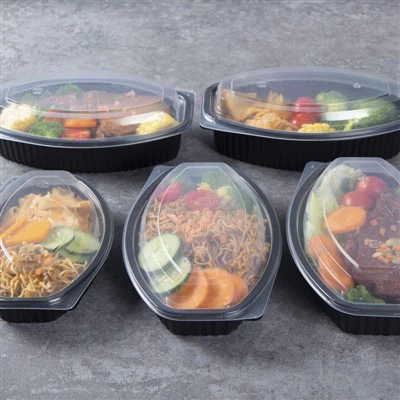


Where to Buy Recyclable To Go Boxes?
 Yangrui offers a variety of disposable lunch box solutions, supporting wholesale and customization to meet the needs of various catering businesses. Whether it's eco-friendly biodegradable products or classic plastic lunch boxes, Yangrui provides customers with a high-quality and stable supply.
Contact information:
Email: sales@packagingbag5.com
Tel: +86 180 8644 3226
References
- European Commission. (2020). Circular Economy Action Plan.
- Ellen MacArthur Foundation. (2019). Completing the Picture: How the Circular Economy Tackles Climate Change.
- National Development and Reform Commission of China. (2020). Plastic Pollution Control Action Plan.
- Andrady, A. L., & Neal, M. A. (2009). Applications and societal benefits of plastics. Philosophical Transactions of the Royal Society B: Biological Sciences, 364(1526), 1977–1984.
- Rujnić-Sokele, M., & Pilipović, A. (2017). Challenges and opportunities of biodegradable plastics: A mini review. Waste Management & Research, 35(2), 132–140.
