

I. Introduction
In today's fast-paced life, restaurant to-go boxes have become indispensable packaging for the takeaway and fast-food industries. According to statistics, China alone uses over 10 billion restaurant to-go boxes annually, primarily made of plastic, paper, and foam materials. However, with increasing consumer concern about food safety and health issues, the safety of restaurant to-go boxes under different temperature conditions has gradually become a social focus.
Restaurant to-go boxes face two major temperature challenges during use: high temperatures during microwave heating and low temperatures during refrigeration and freezing. Studies show that when the temperature exceeds 65℃, plastic takeaway containers can release 16 harmful components, including bisphenol A. In low-temperature environments, some materials become brittle and crack, affecting not only the user experience but also potentially releasing harmful substances. These issues directly relate to consumer health and safety; therefore, understanding the temperature tolerance limits of different container materials is of great practical significance.
II. Analysis of Temperature Tolerance Performance of Restaurant To-Go Box Materials
2.1 Polypropylene (PP) Containers
Polypropylene (PP) is currently one of the safest and most widely used plastic materials for restaurant to-go boxes. PP containers have excellent heat resistance; ordinary PP has a melting point of up to 167℃, and its regular operating temperature range is -6℃ to 120℃. Modified PP can withstand temperatures from -18℃ to 110℃. In microwave heating scenarios, PP is the only plastic material allowed to be directly placed in a microwave oven, with a heat resistance temperature of up to 130℃ or even higher.
PP takeaway containers perform exceptionally well during microwave heating, mainly due to their stable molecular structure. Studies show that PP molecular chains contain methyl side chains, a structure that gives the material excellent thermal stability and chemical inertness. At 110-120℃, ordinary PP softens but does not release harmful substances. Specially modified PP can withstand temperatures up to approximately 140℃. However, even with PP material, caution is still needed when heating high-oil and high-sugar foods, as the local temperature of these foods can exceed 150℃ during heating. For example, the temperature of fried dough sticks can reach 180℃ when taken out of the fryer, and the temperature of candied foods can reach above 150℃.

PP food to go containers also perform excellently in refrigerated and frozen environments. Its embrittlement temperature is far below -20℃, and it maintains good toughness and physical properties in environments between -20℃ and -40℃. The glass transition temperature of PP is approximately 0℃; it loses some flexibility below 0℃, but it does not become brittle. This excellent low-temperature performance makes PP food containers suitable for both hot and cold food storage.

The safety of PP food containers has been widely recognized. According to the national standard GB 4806.7-2023 "National Food Safety Standard for Plastic Materials and Products for Food Contact," PP material does not release harmful substances under normal use conditions. However, it should be noted that the lids of some PP food containers may be made of other materials (such as PE), and the lid should be removed during heating to avoid danger.
2.2 Polystyrene (PS) Food Containers
Polystyrene (PS) is another common material for restaurant to-go boxes, with advantages such as high transparency, high hardness, easy molding, and low cost. However, PS food containers have significant limitations in temperature resistance, which restricts their scope of use.
In microwave heating scenarios, PS food containers exhibit poor heat resistance. PS begins to soften at 75℃ and softens significantly at 100℃, making it unsuitable for holding hot food or for microwave heating. More seriously, when the temperature exceeds 60℃, PS food containers release styrene monomer, which is classified as a Group 2B possible carcinogen by the International Agency for Research on Cancer. Research data shows that after holding 60℃ hot soup for 1 hour, the styrene content in PS food containers can exceed the limit by 3 times. The higher the temperature, the higher the migration rate of styrene, with bisphenol A release reaching 1.2 μg/L at 80℃.
The poor heat resistance of PS food containers is mainly related to their molecular structure. PS is an amorphous random polymer with relatively rigid molecular chains. At high temperatures, chain segment movement intensifies, leading to material softening. The heat distortion temperature of PS is only 70-90℃, and the long-term use temperature is 60-80℃. When the temperature reaches 100℃, PS undergoes significant thermal decomposition, releasing more harmful substances.

However, PS food containers perform excellently in low-temperature environments. Its glass transition temperature is 100℃, and it remains structurally stable below 0℃, making it an ideal container for low-temperature foods such as ice cream and salads. The embrittlement temperature of PS is approximately -30℃, and it will not crack or become brittle at refrigeration temperatures. This excellent low-temperature performance makes PS food containers particularly suitable for holding cold drinks, cold food, and refrigerated food.
It is important to note that most foam food containers on the market are made of EPS (expanded polystyrene) material, which has similar, or even worse, temperature resistance performance than PS. EPS foam has a maximum operating temperature of only 85℃ under no stress, and can withstand high temperatures of 95-110℃ for a short time. Therefore, foam food containers should absolutely not be used for microwave heating or for holding high-temperature food.

2.3 Other Restaurant To-Go Box Materials: PET, PE, PVC, etc.
In addition to PP and PS, there are various other restaurant to-go box materials on the market, each with its own characteristics in terms of temperature resistance.
Polyethylene terephthalate (PET) is a highly transparent plastic material commonly used in beverage bottles and some restaurant to-go boxes. PET has poor heat resistance and can only withstand temperatures below 60℃; it begins to soften and deform above 60℃. The glass transition temperature of PET is approximately 70-80℃, and its melting point is as high as 250-260℃. Under low-temperature conditions, PET exhibits a significant increase in brittleness. When the temperature drops below 0℃, the mobility of PET molecular chains decreases, and the material gradually loses its toughness. The low-temperature embrittlement temperature of PET is approximately -40℃ to -50℃, and it may crack under impact or pressure in environments between -20℃ and -40℃. Therefore, PET food containers are only suitable for holding cold drinks or room-temperature food and should never be used for microwave heating.
Polyethylene (PE) includes two types: high-density polyethylene (HDPE, marked with symbol 2) and low-density polyethylene (LDPE, marked with symbol 4). The heat resistance temperature of HDPE is approximately 90℃, and that of LDPE is approximately 110℃. PE food containers are chemically stable at room temperature, but they are prone to deformation and release of harmful substances at high temperatures. PE food containers are not suitable for microwave heating because they are prone to melting and releasing microplastics in a microwave environment. Under low-temperature conditions, PE exhibits good flexibility and is not prone to brittle fracture.

Polyvinyl chloride (PVC) was once widely used in food packaging, but it has been gradually phased out due to safety concerns. PVC requires the addition of a large amount of plasticizers during production, and these plasticizers are easily released at high temperatures, posing a health hazard to humans. PVC has poor heat resistance and may release harmful substances above 60℃. More seriously, PVC produces highly toxic substances such as dioxins when burned. Therefore, according to national standards, PVC is explicitly prohibited from being used in food packaging.
Polycarbonate (PC) is a high-strength transparent plastic commonly used in water cups and some food containers. PC material contains bisphenol A (BPA), which is released at high temperatures and interferes with the human endocrine system. Studies have shown that even PC products labeled "microwave-safe" release a large amount of bisphenol A in high-temperature environments. Therefore, PC food containers are not suitable for holding hot food or microwave heating, and should especially not be used for infant food packaging.

2.4 Safe Temperature Range for Microwave Heating of Restaurant To-Go Boxes
Based on the analysis of different plastic materials, we can summarize the safe temperature ranges for various restaurant to-go boxes during microwave heating:
| Material Type | Identification Number | Safe Use Temperature Range | Microwave Heating Suitability | Main Risks |
| Polypropylene (PP) | 5 | -18℃ to 120℃ (Modified PP) | Microwaveable | May soften at high temperatures |
| Polystyrene (PS) | 6 | 0℃ to 70℃ | Not microwaveable | Releases styrene above 60℃ |
| Polyethylene Terephthalate (PET) | 1 | -20℃ to 60℃ | Not microwaveable | Softens and deforms above 60℃ |
| High-Density Polyethylene (HDPE) | 2 | -20℃ to 90℃ | Not microwaveable | Easily deforms at high temperatures |
| Low-Density Polyethylene (LDPE) | 4 | -20℃ to 110℃ | Not microwaveable | Easily melts in the microwave |
| Polyvinyl Chloride (PVC) | 3 | Not allowed | Not allowed | Releases harmful plasticizers |
| Polycarbonate (PC) | 7 | -20℃ to 100℃ | Not microwaveable | Releases bisphenol A |

According to the national standard GB/T 18006.1-2009, restaurant to-go boxes suitable for microwave heating must be clearly marked with "Microwave safe" and the safe temperature range (e.g., -20℃~120℃). Consumers should strictly follow the product labeling instructions to avoid safety accidents caused by excessive temperatures.
It is important to emphasize that even for microwave-safe PP food containers, the following points should be noted during actual use: First, the lid should be removed before heating, as many lids are made of other materials that cannot withstand high temperatures; second, avoid heating high-fat and high-sugar foods, as the local temperature of these foods may exceed 150℃ during heating; third, control the heating time, and it is recommended that each heating session does not exceed 3-4 minutes; finally, if the food container deforms or produces an odor after heating, stop using it immediately.
III. Analysis of Temperature Resistance Performance of Paper Food Containers
3.1 Pure Paper Food Containers
Pure paper food containers are environmentally friendly containers made entirely of natural fibers, without any plastic coating. These containers have advantages such as light weight, biodegradability, and low cost, and are widely used in environmentally conscious regions such as Europe and the United States. However, pure paper food containers have significant drawbacks in terms of temperature resistance.
The main raw materials of pure paper food containers are food-grade kraft paper, white cardboard, or bleached sulfate wood pulp cardboard, manufactured through die-cutting and bonding or die-cutting and pressing processes. Due to the lack of any waterproof coating, pure paper food containers quickly absorb water when in contact with liquids, leading to structural softening or even disintegration. In terms of temperature, the temperature resistance range of pure paper food containers is usually 0-60℃; exceeding 60℃ may cause deformation.


In microwave heating scenarios, pure paper food containers pose serious safety hazards. Microwaves cause the water in the paper to evaporate rapidly, leading to the paper becoming brittle and cracking, and potentially even causing a fire. Therefore, pure paper food containers should absolutely not be used for microwave heating. Even holding food at slightly higher temperatures (such as hot soup above 60℃) may cause the container to deform and leak.
Pure paper food containers also perform poorly in refrigerated and frozen environments. When the temperature is below 0℃, the water in the paper freezes, causing the container to become brittle and fragile. In environments below -10℃, pure paper food containers may crack and lose their packaging function. Furthermore, repeated freezing and thawing processes accelerate the destruction of paper fibers, significantly reducing the strength of the container.
The use of pure paper food containers is therefore greatly limited, mainly suitable for holding dry, room-temperature foods such as steamed buns, bread, and biscuits. For foods that require insulation or refrigeration, pure paper food containers are clearly not an ideal choice.


3.2 Coated Paper Food Containers
To address the problem of pure paper food containers not being waterproof, coated paper food containers have appeared on the market. This type of food container features a waterproof coating on the surface of a paper base material, primarily including two types: PE (polyethylene) coating and PLA (polylactic acid) coating.
PE-coated paper food containers are currently the most common type of coated paper food container on the market. The PE coating has good waterproof and oil-proof properties, effectively preventing leakage of liquids. The temperature resistance range of PE coating is usually 80-120℃, with the specific temperature depending on the thickness and process of the coating. Under normal use conditions (temperature below 90℃), PE-coated food containers perform stably without significant changes in performance.
However, PE-coated food containers pose certain safety risks at high temperatures. Studies have shown that when the temperature exceeds 100℃, the PE coating may soften and slightly dissolve, releasing trace amounts of plasticizers. At 100℃, the migration rate of plasticizers in the PE coating increases by approximately 10% compared to 80℃. More seriously, PE coatings deform and melt during microwave heating, and the melted plastic may adhere to the food, posing a food safety hazard.

In refrigerated and frozen environments, PE-coated food containers perform relatively well. PE material maintains a certain degree of flexibility at low temperatures and is not prone to brittleness. PE-coated food containers can be used in environments as low as -20℃ without significant performance degradation. However, it should be noted that during repeated freezing and thawing, the PE coating may separate from the paper, affecting the waterproof performance of the container.
PLA-coated paper food containers are a new type of environmentally friendly coated food container. PLA (polylactic acid) is a bio-based biodegradable material made from natural raw materials such as corn starch. The temperature resistance of PLA coating is slightly lower than that of PE coating, usually 60-90℃. In environments above 60℃, the PLA coating may soften, affecting the performance of the container.
The advantage of PLA-coated food containers lies in their good biodegradability. Under composting conditions, PLA-coated food containers can be completely degraded within 3-6 months, without causing environmental pollution. However, in practical use, the temperature resistance of PLA-coated food containers limits their application range, making them primarily suitable for holding food at temperatures not exceeding 80℃.

IV. Analysis of Temperature Resistance Performance of Foam Food Containers
4.1 EPS Polystyrene Foam Food Containers
EPS (Expanded Polystyrene) is the most common material for foam food containers, possessing advantages such as light weight, good thermal insulation, good cushioning performance, and low cost. EPS containers have been widely used in the takeaway and fast-food industries for the past few decades, but they have serious shortcomings in terms of temperature resistance.
The molecular structure of EPS foam determines its poor heat resistance. EPS is made from polystyrene beads through foaming, containing a large number of closed air bubbles, with an air content as high as 98%. While this porous structure gives EPS excellent thermal insulation properties, it also makes it prone to deformation at high temperatures. The maximum operating temperature of EPS foam is only 85℃, and it can withstand high temperatures of 95-110℃ for a short time without stress.
In microwave heating scenarios, EPS containers exhibit extremely poor heat resistance. When the temperature reaches 75℃, the EPS container begins to soften; at 80℃, it deforms significantly; and at 90℃, severe softening and collapse may occur. More seriously, EPS releases a large amount of styrene monomer at high temperatures. Studies have shown that when the temperature exceeds 65℃, EPS containers release harmful substances such as long-chain alkanes; when the temperature reaches 75℃, the release of styrene monomer increases significantly. Styrene is classified as a Group 2B possible carcinogen by the International Agency for Research on Cancer, and long-term ingestion may cause damage to the liver and nervous system.
The poor heat resistance of EPS containers is also reflected in their sensitivity to temperature changes. Even when containing food at slightly higher temperatures (such as hot soup at 70℃), EPS containers may deform, leading to leakage. In practical use, EPS containers are only suitable for food with a temperature below 60℃.
In refrigerated and frozen environments, EPS containers perform relatively well. The glass transition temperature of EPS is 80-105℃, and no significant physical changes occur at low temperatures. EPS containers can be used normally in environments from -30℃ to 0℃ without cracking or becoming severely brittle. This excellent low-temperature performance makes EPS food containers particularly suitable for holding cold drinks and refrigerated foods.


However, EPS food containers also have some problems in low-temperature environments. First, EPS has a low thermal conductivity, which may lead to uneven temperature distribution of the food inside in a refrigerated environment. Second, EPS material is relatively brittle and easily breaks when subjected to external impact. Especially in environments below -20℃, the brittleness of EPS food containers increases, requiring extra caution during handling and use.
4.2 EPP Polypropylene Foam Food Containers
EPP (Expanded Polypropylene) is a new type of foam material that has recently begun to be used in the high-end food container market. EPP food containers have excellent temperature resistance and environmental characteristics, and are considered an ideal substitute for EPS food containers.
The molecular structure of EPP is similar to that of EPS, but due to the use of polypropylene as a raw material, its performance has improved significantly. EPP has good heat resistance, with a working temperature range typically from -40℃ to 130℃. At a high temperature of 130℃, EPP can still maintain structural stability without significant deformation. This excellent heat resistance allows EPP food containers to be used directly for hot food and even heated in a microwave oven.
The low-temperature performance of EPP food containers is equally outstanding. In extremely low-temperature environments of -40℃, EPP can still maintain good toughness and elasticity without brittle fracture. This excellent low-temperature performance makes EPP food containers suitable for long-term use in deep-freeze environments, especially for food packaging in cold chain logistics.
Another advantage of EPP food containers is their excellent compression resistance. Even under considerable pressure, EPP food containers can quickly return to their original shape without permanent deformation. This characteristic allows EPP food containers to better protect food during transportation and storage.
In terms of safety, EPP material does not contain harmful substances and will not release toxic substances under normal use conditions. EPP is a recyclable material and can be reprocessed and reused after its service life, meeting environmental protection requirements.
However, EPP food containers also have some disadvantages. First, the cost is higher; the production cost of EPP is 3-5 times that of EPS, which limits its promotion in the mass market. Secondly, the processing difficulty is greater, as EPP foaming requires a more sophisticated process, demanding special equipment and technology.

4.3 Comparative Analysis of Temperature Resistance of Foam Food Containers
To more clearly compare the temperature resistance performance of different foam food container materials, we created the following comparison table:
| Material Type | Maximum Operating Temperature | Microwave Heating Suitability | Minimum Temperature Resistance | Main Characteristics | Applicable Scenarios |
| EPS Polystyrene Foam | 85℃ (short-term 95-110℃) | Not microwaveable | -30℃ | Low cost, easily deformed, releases styrene | Cold drinks, room temperature food |
| EPP Polypropylene Foam | 130℃ | Microwaveable | -40℃ | High temperature resistance, low temperature resistance, and environmentally friendly | Hot food, cold chain food |
As can be seen from the table, there are significant differences between EPS and EPP in terms of temperature resistance. Due to its poor heat resistance and safety concerns, EPS food containers are gradually being phased out of the market. EPP food containers, with their excellent temperature resistance and environmentally friendly characteristics, are becoming the new favorite in the high-end market.
In actual use, the temperature resistance performance of foam food containers is also affected by the following factors:
Wall thickness: The wall thickness of the foam food container directly affects its temperature resistance. Thicker containers are less likely to deform at high temperatures, but this also increases costs.

Density: The higher the density of the foam, the better its strength and heat resistance. High-density EPS (density > 30kg/m³) has approximately 20% better heat resistance than ordinary EPS (density 15-20kg/m³).
Usage environment: In actual use, the temperature resistance performance of foam food containers is also affected by the usage environment. For example, in areas with higher altitudes, due to lower air pressure, the heat resistance of foam food containers will decrease. Based on the above analysis, we offer the following recommendations for the use of foam food containers:
EPS containers: Only for food below 60℃, absolutely prohibited for microwave heating, and suitable for short-term use in refrigerated environments.
EPP containers: Suitable for hot food below 100℃, some products are microwave-safe, and suitable for various temperature environments.
Recommendation: If the budget allows, we recommend choosing EPP containers; if choosing EPS containers, be sure to pay attention to temperature control.
Safety reminder: Regardless of the type of foam container, avoid using them for high-fat foods, as fat can accelerate the release of harmful substances.


V. Temperature Tolerance Performance Summary and Risk Assessment
5.1 Summary of Temperature Tolerance Limits for Various Food Container Materials
Based on a detailed analysis of three main types of food container materials: plastic, paper, and foam, we can summarize the temperature tolerance limits of various food containers in microwave heating and refrigeration/freezing scenarios:

Summary Table of Temperature Tolerance Limits for Restaurant To-Go Boxes
| Material Type | Maximum Temperature for Microwave Heating | Safe Use Temperature Range | Minimum Temperature for Refrigeration/Freezing | Main Risk Temperature Points |
| Polypropylene (PP) | 120-140℃ | -18℃ to 120℃ | -40℃ | Softening above 120℃ |
| Polystyrene (PS) | Not Recommended | 0℃ to 70℃ | -30℃ | Styrene release above 60℃ |
| Polyethylene Terephthalate (PET) | Not Recommended | -20℃ to 60℃ | -50℃ | Softening above 60℃ |
| High-Density Polyethylene (HDPE) | Not Recommended | -20℃ to 90℃ | -40℃ | Deformation above 90℃ |
| Low-Density Polyethylene (LDPE) | Not Recommended | -20℃ to 110℃ | -40℃ | Easily melts in the microwave |
Summary Table of Temperature Tolerance Limits for Paper Food Containers
| Material Type | Maximum Temperature for Microwave Heating | Safe Use Temperature Range | Minimum Temperature for Refrigeration/Freezing | Main Risk Temperature Points |
| Pure Paper Food Containers | Not Recommended (Easily catches fire) | 0℃ to 60℃ | -5℃ | Deformation above 60℃ |
| PE Coated Paper Food Containers | Not Recommended (PE melts) | 0℃ to 90℃ | -20℃ | Coating dissolves above 100℃ |
| PLA Coated Paper Food Containers | Not Recommended | 0℃ to 80℃ | -10℃ | Coating softens above 80℃ |
Summary Table of Temperature Tolerance Limits for Foam Food Containers
| Material Type | Maximum Temperature for Microwave Heating | Safe Use Temperature Range | Minimum Temperature for Refrigeration/Freezing | Main Risk Temperature Points |
| EPS Polystyrene Foam | Not Recommended | 0℃ to 60℃ | -30℃ | Release of harmful substances above 65℃ |
| EPP Polypropylene foam | 120℃ | -40℃ to 130℃ | -40℃ | Slight deformation above 130℃ |


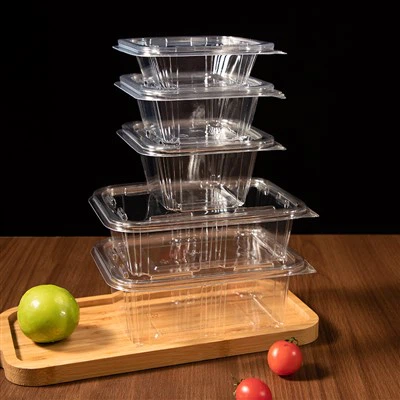

As can be seen from the summary table, there are huge differences in the temperature resistance performance of different materials used for food containers. PP material performs best and is the only safe material for microwave heating; PS and PET materials have poor heat resistance and pose safety hazards; paper and EPS foam food containers are not suitable for microwave heating.
Through a comprehensive analysis of the performance of ordinary restaurant to-go box materials under different temperature environments, this study draws the following main findings:
- Significant differences in temperature resistance performance: Different materials used for food containers have huge differences in temperature resistance performance. Polypropylene (PP) material performs best, able to withstand high temperatures of 120-140℃, and is the only plastic material that can be safely used for microwave heating. Materials such as polystyrene (PS) and polyethylene terephthalate (PET) have poor heat resistance and may deform or release harmful substances at 60-80℃. Paper and EPS foam food containers are not suitable for microwave heating.
- Significant differentiation in low-temperature performance: In low-temperature environments, materials such as PP and HDPE perform well and can be used normally in environments as low as -40℃. However, materials such as PS and PET may become brittle and crack below -20℃. Pure paper food containers have the worst low-temperature performance and may crack below -5℃.
