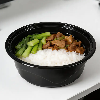
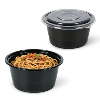
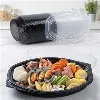
In the US market, PP (polypropylene) restaurant togo containers are gradually replacing PS (polystyrene) restaurant togo containers as the preferred choice for consumers and catering businesses. This shift is not accidental, but rather the result of multiple factors, including increased environmental awareness, policy guidance, performance advantages, and market promotion. By deeply analyzing the differences between the two materials in terms of environmental impact, performance characteristics, policies and regulations, and consumer perception, we can clearly see the underlying reasons for the rise of PP restaurant togo containers.
I. Environmental Perspective
1.1 Comparison of Biodegradability and Environmental Durability
In terms of natural environmental degradation capacity, PP restaurant togo containers exhibit significantly better environmental characteristics than PS restaurant togo containers. According to multiple research data, PP (polypropylene) degrades in the natural environment in 20-30 years, while PS (polystyrene) degrades in over 500 years. This huge difference directly affects the cumulative effect of the two materials in the environment.
However, it's important to note that even for relatively fast-degrading materials like PP, a 20-30 year degradation cycle still means it will persist in the environment for a long time. Traditional petroleum-based plastics, such as polypropylene and high-density polyethylene, take anywhere from 30 to 200 years to degrade in the natural environment. Plastic residues in the soil can hinder crops from absorbing nutrients and water, leading to reduced yields of crops like corn and wheat; plastic debris in the ocean can be ingested by marine life, causing digestive blockages and even death.

More worryingly, research findings on the degradation time of PS materials differ. Some studies show that PS degrades in 50-100 years, but more authoritative research indicates that PS requires over 500 years to completely degrade. Polystyrene, commonly found in disposable tableware and foam plastics, can degrade in up to 500 years; this extremely long environmental persistence makes it a significant source of microplastic pollution.
1.2 Significant Differences in Recycling Performance
In the US recycling system, the recycling performance of PP and PS differs drastically. According to data from the U.S. Environmental Protection Agency (EPA), the total amount of waste plastics mechanically recycled in the U.S. in 2023 was approximately 12 million tons. Of this, PE and PP accounted for 60% and 25% of the recycling, respectively, while PET accounted for only 15%.
However, this data masks a stark reality: the overall plastic recycling rate in the U.S. is extremely low. According to the EPA, only about 9% of the plastics generated in the U.S. are actually recycled. In the U.S., the plastic recycling rate dropped from 8.7% in 2018 to about 5% in 2021.
Specifically for PP materials, the recycling situation is equally concerning. According to data from the American Chemistry Council, the recycling rate of post-consumer PP waste is less than 1%. However, another study showed that the recycling rate for PP bottles was 15.4% (2020 data), and the recycling rate for PP bottles was 15.9%, a decrease from 17.0% the previous year.
The recycling situation for PS materials is even worse. EPS (expanded polystyrene) recycling is relatively successful, with approximately 84,000 tons of EPS transferred from landfills for recycling in 2022, including about 30,500 tons of post-consumer EPS packaging. The potential recycling rate in the US and Canada is 31%. However, this figure only represents EPS material, not all PS material.


More importantly, there are significant differences in the acceptance rates of recycling facilities for different plastics. According to a Greenpeace report, PP (#5) buckets and containers are accepted in only 52% of Material Recycling Facilities (MRFs), plastic flip-top containers in only 11%, and plastic bags and films in only 1%. This low acceptance rate directly impacts consumer willingness to recycle and actual recycling effectiveness.
1.3 Differences in Specific Environmental Impacts
Regarding environmental impact, PP and PS food containers exhibit different levels of harm in different environmental media. In soil environments, both PP and PS persist for a long time and affect soil ecosystems. Polypropylene (PP) plastics degrade slowly in soil, meaning they can persist for extended periods, impacting the structure and function of soil ecosystems.
In marine environments, both materials pose serious ecological hazards. Polystyrene, due to its slow degradation rate, poses a severe environmental danger; recycling and degradation methods are also environmentally unfriendly and may harm the environment. Complete degradation of polystyrene can take up to 500 years. The long-term degradation time for PP is estimated to be between 20 and 500 years, meaning it accumulates in marine environments, further exacerbating the plastic waste crisis.
In landfills, studies show that the most common polymer types are polyethylene (PE) and polypropylene (PP), followed by polyvinyl chloride (PVC), polyethylene terephthalate (PET), and polystyrene (PS). This indicates that both PP and PS are major plastic types in landfills, but PP, due to its relatively shorter degradation time, may have a slightly better long-term environmental impact than PS.
The environmental impact of incineration is another important consideration. Plastic incineration produces volatile pollutants such as carbon monoxide (CO, suffocating), hydrogen chloride (HCl), hydrogen cyanide (HCN, highly toxic), dioxins (carcinogenic), sulfides, benzene, toluene, and xylene, posing health risks including carcinogenicity, teratogenicity, and mutagenicity. Each ton of PE incineration releases 3.1 tons of CO2. While both PP and PS produce harmful gases during incineration, PS, due to its benzene ring structure, may produce more aromatic compounds and toxic substances.
II. Performance Characteristics
2.1 Heat Resistance Comparison: PP's Absolute Advantage
Heat resistance is a crucial performance indicator in lunch box use, directly affecting the usage scenarios and safety of the restaurant togo containers. PP restaurant togo containers demonstrate an overwhelming advantage in this regard.
PP (polypropylene) boasts exceptional heat resistance, with a melting point as high as 167℃ and a typical operating temperature range of -6℃ to 120℃. Modified PP can even withstand extreme environments ranging from -18℃ to 110℃. More importantly, PP is the only plastic that is microwave-safe, non-toxic, and can be used continuously at temperatures above 100℃. This superior heat resistance allows PP food containers to meet the diverse needs of modern consumers for hot food packaging.
In contrast, PS (polystyrene) has a fatal flaw in heat resistance. PS food containers begin to soften at 75℃, and above 80℃, they release styrene monomers, which may harm the central nervous system with long-term ingestion. A local market supervision bureau's random inspection found that some PS food containers, when filled with 60℃ hot soup, exhibited styrene migration levels exceeding the standard by three times, highlighting their high-temperature risks.
The continuous operating temperature of PS is generally between 60℃ and 80℃, and it is prone to deformation at high temperatures. The poor thermal stability of PS (polystyrene) food containers severely limits their application scenarios, making them suitable only for holding chilled foods. PS containers remain irreplaceable in the refrigeration field; their glass transition temperature is 100℃, and they maintain structural stability below 0℃, making them ideal containers for chilled foods such as ice cream and salads.

2.2 Toughness and Durability: The Mechanical Advantages of PP
In terms of mechanical properties, PP food containers exhibit superior toughness and durability, directly impacting the user experience and cost-effectiveness.
PP is a highly tough plastic with good impact resistance and flexural fatigue strength. Experimental data shows that the elongation at break of PP food containers can reach 300%, far exceeding the 50% of PS material. This means that PP food containers are less likely to break when dropped or squeezed. A chain restaurant used PP food containers to deliver soups, and the breakage rate during transportation was reduced by 67% compared to PS food containers. This data fully demonstrates the advantages of PP material in practical applications.

In contrast, PS is a rigid plastic, typically colorless and transparent, similar to glass, but it has lower impact resistance, lower surface hardness, and is easily scratched. PS is known for its high transparency and low cost, but its poor thermal stability is a fatal flaw. PS restaurant togo containers are prone to breakage during use, especially under impact. This fragility not only affects the user experience but also increases transportation and storage costs.
PP's excellent mechanical properties are also reflected in its fatigue resistance. PP material has good flexural fatigue strength, meaning PP restaurant togo containers can withstand repeated opening and closing without easily being damaged. This characteristic is particularly important for restaurant togo containers that need to be used multiple times and is one of the key reasons why PP restaurant togo containers are favored in the market.
2.3 Transparency and Appearance: PS's Traditional Advantage is Weakening
In terms of transparency, PS was traditionally considered to have a significant advantage, but with technological advancements, this gap is narrowing.
PS's transparency advantage was one of its traditional selling points. PS is a rigid plastic, typically colorless and transparent, similar to glass. Polystyrene (PS) molecules contain numerous benzene rings, making them resistant to crystallization. They are typically colorless, transparent, and glass-like, and are non-toxic and odorless. This high transparency allows PS lunchboxes to clearly display the food inside, satisfying consumers' visual demands for food appearance.
However, the transparency of PP materials is constantly improving. PP is a white, waxy solid, completely odorless and non-toxic, and looks similar to polyethylene, but you might notice it is more transparent and lighter. PP has good transparency, but not as good as PS. PP has a semi-transparent and glossy appearance, but its transparency is relatively poor, and it has a smooth and relatively hard texture.


More importantly, modern consumers are placing less emphasis on transparency. American consumers prioritize functionality over aesthetics when choosing lunchboxes; over 68% of users prioritize sealing, microwaveability, and leak-proof performance. This preference has directly driven continuous innovation in structural engineering by brands like LockLock and Rubbermaid. This shift in consumer preferences means that PP's lower transparency is no longer a decisive factor.
III. Policies and Regulations
3.1 Federal Policy Framework
In the United States, although a unified federal ban on polystyrene has not yet been issued, the relevant policy framework is gradually being improved, creating a favorable environment for the promotion of PP restaurant togo containers.
FDA food safety standards have strict requirements for both PP and PS restaurant togo containers. US FDA CFR 21 Part 177 is a key regulation for disposable fast food containers, covering material safety and compliance. This standard covers various plastic materials, such as polystyrene (PS), polypropylene (PP), and polyethylene (PE). According to FDA CFR 21 Part 177, PS materials require multiple tests, such as styrene monomer migration levels needing to be controlled below 0.05 mg/dL.

It is worth noting that the FDA has a relatively higher level of approval for PP materials. PP materials are certified globally as safe for direct food contact applications such as disposable restaurant togo containers, ensuring consumer safety. US FDA 21 CFR §177.1520 approves PP for direct food contact and for microwave heating containers. This official endorsement provides authoritative backing for the market promotion of PP food containers.
Regarding environmental policy, the U.S. Environmental Protection Agency (EPA) released the "National Strategy to Prevent Plastic Pollution," focusing on eliminating the release of plastic pollution into the environment. While this strategy does not directly target PP or PS food containers, it provides a guiding framework for states to develop stricter plastic policies.
3.2 State-Level Bans: The Survival Space for PS Food Containers Shrinks
State-level bans on polystyrene are spreading rapidly, becoming the most important policy factor driving the replacement of PS food containers with PP ones.
As of May 2025, at least 12 states have implemented polystyrene bans. California is at the forefront, with the California Department of Recycling and Reuse (CalRecycle) announcing a ban on the sale, distribution, or import of expanded polystyrene (EPS) food service utensils, such as disposable takeout containers and cups, in California. In 2022, California passed the Plastic Pollution Prevention and Packaging Producer Responsibility Act (SB 54), requiring manufacturers of expanded polystyrene (EPS) food service utensils to refrigerate, distribute, or import them into the state unless they certify to the state that all EPS meets specific recycling rate requirements.
Washington state implemented an EPS tableware ban in June 2023, requiring packaging to be commercially compostable or recyclable. On May 8, 2025, Oregon's governor signed a ban on polystyrene foam containers, making it the ninth state in the U.S. to ban the use, sale, and distribution of polystyrene foam containers.


New York State's ban, effective January 1, 2026, prohibits the use of expanded polystyrene containers (including, but not limited to, coolers and ice packs) that are not fully enclosed in more durable containers or designed or intended for refrigeration.
Other states are also gradually implementing bans. Delaware will prohibit restaurants and businesses from using polystyrene foam (Foam Plastic) containers to serve ready-to-eat food or beverages. Virginia's ban on single-use expanded polystyrene (EPS) containers will be implemented in two phases: food suppliers with 20 or more stores in Virginia must comply by July 1, 2025, while all other food suppliers must comply by July 1, 2026.
3.3 Latest Policy Developments in 2025
2025 is a pivotal year for the polystyrene ban, with several states seeing new policies take effect or enter key legislative phases.
California's SB 1046, which took effect on January 1, 2025, bans EPS food containers unless they meet a 25% recycling rate. The implementation of this law means that traditional PS food containers will have virtually no place in the California market; only specialized PS products that can demonstrate high recycling rates will be able to continue to be sold.
Federal legislation is also progressing. Pennsylvania House Bill 290, introduced in January 2025, would ban food businesses and retailers from using polystyrene containers and cutlery. This proposal has been submitted to the House Committee on Environment and Natural Resources Protection, but no further action has been taken.
Federal Bill S. 3440, also introduced in 2025, stipulates that, effective January 1, 2026, no food service provider, manufacturer, distributor, or retailer may sell, offer, sell, or distribute expanded polystyrene food service supplies. While this bill is still in the legislative process, its very introduction sends a clear signal to the market.


3.4 Active Response from Local Governments
In addition to state-level policies, local governments are actively promoting the implementation of the polystyrene ban, forming a multi-layered policy system.
Montgomery County, Maryland, bans the sale of any polystyrene food service products and loosely packed polystyrene packaging (also known as packaged peanuts), requiring all county agencies, contractors, and lessees to use compostable or recyclable food service utensils.
Many cities have also enacted their own bans. For example, Washington state requires packaging to be commercially compostable or recyclable, while Vermont is considered the strictest state in the East. The implementation of these local policies provides strong policy support for the promotion of PP restaurant togo containers in specific markets.
3.5 Market Effects of Policy Impact
The implementation of these policies has generated significant market effects, directly driving the replacement of PS restaurant togo containers with PP restaurant togo containers.
First, the difference in policy costs has become an important consideration for companies choosing materials. As more and more states implement polystyrene bans, companies using PS restaurant togo containers face multiple pressures, including compliance costs, legal risks, and market access restrictions. In contrast, PP restaurant togo containers are not affected by these bans and can be sold freely nationwide.
Second, policies guide consumer values. Government environmental policies send a clear signal to consumers: polystyrene is an environmentally unfriendly material and should be phased out. This policy orientation strengthens consumers' positive perception of PP restaurant togo containers and increases their market acceptance.

Finally, policies drive supply chain transformation. Faced with the expanding polystyrene ban, food service companies, packaging manufacturers, and retailers are actively adjusting their product strategies, accelerating the transition to recyclable and biodegradable materials such as PP. This end-to-end transformation has created a huge market opportunity for PP restaurant togo containers.
IV. Market Promotion and Consumer Awareness
4.1 The Awakening of Consumer Environmental Awareness
American consumers' environmental awareness is undergoing a profound transformation, directly influencing their choices of lunch box materials.
Environmental protection has become a crucial factor in consumer choices. A 2024 consumer survey showed that 45.2% of consumers prioritized the environmental performance of products and were willing to pay a 10-15% premium for environmentally friendly products. This data indicates that environmental protection is no longer a secondary consideration but has become a key factor influencing purchasing decisions.

Even more noteworthy is the significant increase in acceptance of reusable tableware. According to market research data, in 2024, 35% of consumers indicated a willingness to use reusable tableware, compared to only 10% in 2015. This significant shift reflects a fundamental change in consumer environmental awareness.
While consumer environmental awareness varies across regions, it consistently shows a positive trend. Surveys indicate that 54% of California consumers, 57% of New York consumers, and 64% of Washington consumers would choose compostable packaging over traditional plastics. Washington state consumers have the highest environmental awareness, with 64% willing to choose compostable packaging, a significantly higher percentage than other states.
Consumer concerns about single-use materials are growing. Environmental concerns raised by consumers include: water usage (70%), incinerating excess inventory or waste (69%), using synthetic or genetically modified ingredients or materials (69%), recycling of company materials or packaging (69%), and single-use materials such as polystyrene, plastics, or cleaning wipes (68%). Polystyrene, as a typical single-use material, has become one of the most pressing environmental concerns for consumers.

4.2 Differences in Consumer Perceptions of PP and PS Food Containers
There are significant differences in consumer perceptions of PP and PS food containers, which directly influence their purchasing decisions.
Without additional information or warning labels, consumers showed a clear preference for transparent plastic packaging (usually made of PS), though some preferred foam packaging, believing it offered better protection for products like eggs. However, with more information, consumer preferences shifted significantly.

The survey showed that 81.0% of respondents supported banning EPS takeout food containers. As an alternative, the majority of respondents (66.49%) preferred containers made from sugarcane. While this survey didn't directly compare PP and PS, it reflects a strong consumer demand for environmentally friendly alternatives.
Consumers prioritized functionality over aesthetics. American consumers placed significantly higher demands on the functionality of lunchboxes than on design, with over 68% prioritizing airtightness, microwaveability, and leak-proof performance. This preference directly drives continuous innovation in structural engineering by brands like LockLock and Rubbermaid. This functionality-driven approach allows PP materials to fully demonstrate their advantages.

Consumer perceptions of different plastics are also influenced by recycling infrastructure. American consumers rate PET bottles lower than their German or Swedish counterparts, likely reflecting the gap between the US's 33% bottle collection rate and Germany's over 90% and Sweden's 88%. This perception difference suggests that the sophistication of recycling infrastructure directly impacts consumers' judgments about the environmental friendliness of materials.
4.3 Shifting Marketing Strategies
The packaging industry's marketing strategies are undergoing a fundamental shift, moving from simply promoting product functionality to communicating environmental value.
The rapid growth in market size reflects this trend. North America is the largest market for plastic plates, valued at $1.2 billion in 2024 and projected to reach $2.1 billion by 2034, representing a CAGR of 5.5%. This growth is primarily driven by environmental demands rather than traditional convenience needs.

In terms of material usage, PP (polypropylene) dominates. PP (polypropylene) production reached 8.6 million metric tons, mainly used for microwaveable food trays, takeout containers, and cooked food packaging, thanks to its heat resistance. In contrast, polystyrene (PS) is commonly used for disposable food containers such as cups, trays, and bowls. It is lightweight, cost-effective, and provides good insulation, making it ideal for both hot and cold beverages.
Companies are beginning to emphasize the environmental attributes of their products. In countries with a prevalent fast-food culture, such as the United States, consumers often need to eat while on the go, thus placing high demands on the airtightness and portability of food containers. Many disposable food containers with portable handles, easy-tear openings, and spill-proof designs have appeared on the market. These products not only emphasize functionality but also highlight their environmentally friendly materials and recyclability.

V. Economic Factors
Although users do not directly mention economic factors, cost-effectiveness is often a significant driver of market choices, especially in commercial applications.
5.1 Raw Material Cost Comparison
In terms of raw material costs, PS material has a clear price advantage. Polystyrene (PS) is the cheapest plastic, priced at $0.50/lb, but it is fragile and primarily suitable for disposable items. This price advantage makes PS competitive in cost-sensitive applications.
In comparison, PP material is slightly more expensive. According to market data, the price of PP raw materials in the US is between $1,000 and $1,500 per ton, while the price of food-grade PP raw materials is between $790 and $990 per ton. PP raw material prices are $650-900 per ton, with a minimum order quantity of 5 tons.
In the international market, the price comparison is even more pronounced. According to price data from the Chinese market, the price comparison excluding tax is as follows: PE 10,500 yuan, PVC 8,500 yuan, PS 11,200 yuan, PP 11,500 yuan, ABS 15,300 yuan, and PC 22,000 yuan. This indicates that PP is slightly more expensive than PS, but the difference is not significant.

5.2 Production Costs and Processing Efficiency
In terms of production costs, PP and PS each have their advantages and disadvantages. PP material, due to its high temperature resistance, non-toxicity, high plasticity, and lower production costs, has become the mainstream manufacturing material and is suitable for microwave heating. The production process of PP is relatively simple and energy-efficient, which helps reduce production costs.
However, PS material has a significant cost advantage in processing. Polystyrene, due to its ease of processing and widespread use in packaging, has a moderate to low price, approximately one or two RMB per kilogram. PS material has good flowability and is easy to mold, allowing for the production of products with various complex shapes, which gives PS a cost advantage in certain applications.

5.3 Product Pricing and Market Positioning
Regarding end-product pricing, PP restaurant togo containers have a relatively wide price range, reflecting their different quality levels and application scenarios.
PP restaurant togo containers range in price from $0.04 to $2.99, depending on specifications and quality. Disposable PP plastic restaurant togo containers with lids (takeout boxes) are priced at $0.07, with a minimum order quantity of 10,000 pieces. Wholesale plastic food containers (PP restaurant togo containers) are priced between $0.04 and $0.07.
High-end PP restaurant togo containers can be priced between $0.90 and $2.99, with a minimum order quantity of 1,000 pieces. These products typically feature better quality, more complex designs, or special functions such as airtightness and microwave applicability.
In contrast, PS restaurant togo containers are generally cheaper and primarily target the low-end market. A 16-ounce pack of 50 black polystyrene cups at Gordon Food Service Store costs $5.99, averaging about $0.12 per cup.
5.4 Overall Cost-Benefit Analysis
While PS material has a lower raw material cost, PP food containers have a clear advantage in terms of overall cost-benefit.
Firstly, there are cost savings due to durability. PP food containers have an elongation at break of up to 300%, far exceeding the 50% of PS material. This means that PP food containers are less likely to break when dropped or crushed. A chain restaurant used PP food containers to deliver soups, and the breakage rate during transportation was reduced by 67% compared to PS food containers. This lower breakage rate directly reduced the company's packaging and logistics costs.
 Secondly, there is added value from functionality. PP food containers can be used for microwave heating, high-temperature serving, and other scenarios, while PS food containers are only suitable for low-temperature foods. This versatility allows PP food containers to meet more market demands and create more business opportunities for companies.
Finally, there is a difference in environmental costs. With increasingly stringent environmental regulations, businesses using PS (polystyrene) lunchboxes face rising environmental costs, including waste disposal fees, recycling deposits, and compliance costs. PP (polypropylene) lunchboxes, on the other hand, have relatively lower environmental costs due to their recyclability and lower environmental impact.