

PP lunch boxes, as widely used disposable tableware in daily life, are crucial for environmental protection and resource recycling when properly recycled. According to data from the China National Resources Recycling Association, polypropylene (PP) dominates the Chinese disposable plastic lunch box market, accounting for over 90%. However, the current recycling rate of PP lunch boxes is only 29.6%, far lower than the 94% recycling rate of PET beverage bottles, indicating significant room for improvement. This article will detail the correct recycling methods for bulk togo containers made of PP from a personal user perspective.
I. Material Characteristics and Recycling Value of PP Bulk Togo Containers
1.1 Basic Characteristics of PP Material

PP (polypropylene) is a semi-crystalline thermoplastic with a series of excellent physicochemical properties. Physically, polypropylene is a non-toxic, odorless, and tasteless milky-white highly crystalline polymer with a density of only 0.90~0.91 g/cm³, making it one of the lightest plastics available. This low-density characteristic makes bulk togo containers lightweight and portable during use, but it also presents challenges for recycling containers are lightweight yet bulky, resulting in relatively high transportation costs.
In terms of mechanical properties, polypropylene has high crystallinity and a regular structure, thus possessing excellent mechanical properties. Its strength, hardness, and elasticity are all higher than HDPE (high-density polyethylene). PP material has high impact resistance, strong mechanical properties, and resistance to various organic solvents and acid/alkali corrosion. More importantly, PP material has excellent heat resistance, able to withstand temperatures up to 150℃, making bulk togo containers the only plastic containers that can be microwaved. This heat-resistant material makes it the preferred packaging material for the takeout and fast food industries.
1.2 Identification Methods for Bulk Togo Containers
The most direct way to identify bulk togo containers made of PP is to check the recycling symbol on the bottom. These containers must have a "5" symbol on the bottom (the number 5 inside a triangle, labeled "PP"). This triangle symbol consists of three arrows, signifying "recyclable." According to international standards, plastic recycling symbols are divided into seven types, with numbers from 1 to 7 corresponding to different plastic types. PP (polypropylene) corresponds to number 5.
Besides the recycling symbols, bulk togo containers have some visual characteristics that can help with identification. They generally have lower transparency than PS (polystyrene) containers. In practical use, some microwave-safe bulk togo containers require special attention in their design: the body is made of 05 PP, but the lid is made of 06 PS polystyrene. PS has good transparency, but it is not heat-resistant, so the body and lid need to be processed separately during recycling.
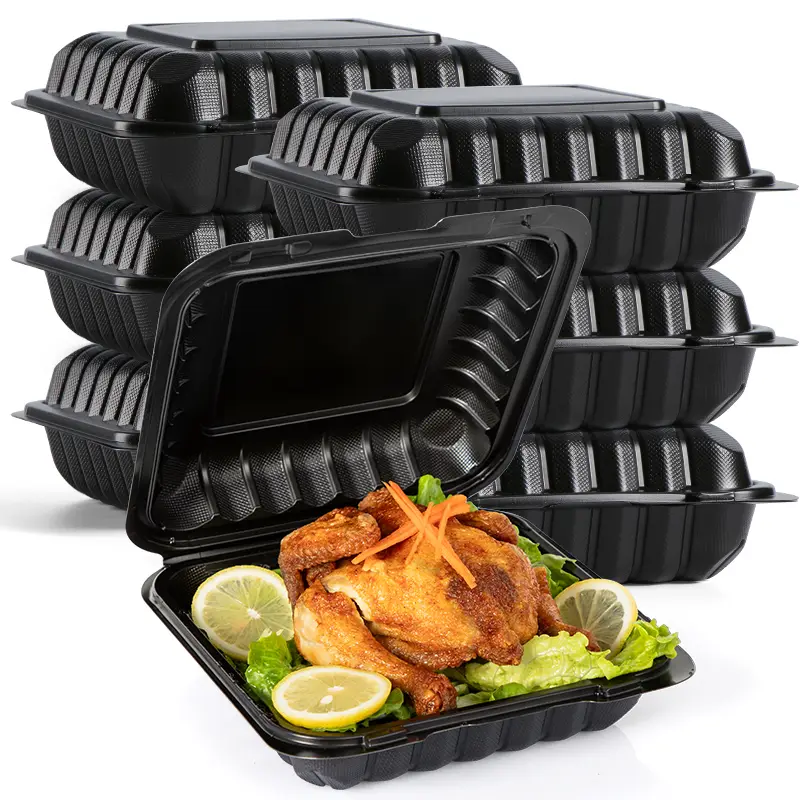

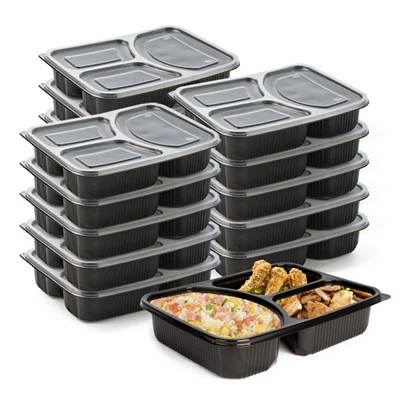

1.3 Recycling Value of Bulk Togo Containers
Bulk togo containers have high recycling value. First, PP is an environmentally friendly and recyclable material, non-toxic and odorless, and meets food-grade standards. From a recycling technology perspective, PP recycling technology is mature. After recycling, bulk togo containers can be processed into plastic basins, plastic chairs, new bulk togo containers, etc., and the performance of recycled products is close to that of virgin materials. This means that recycled PP lunch boxes can be remanufactured into new plastic products, achieving true recycling.
From an economic perspective, China's PP lunch box consumption reached approximately 1.35 million tons in 2023, with recycling volume jumping from 250,000 tons to 400,000 tons, an increase of 60%. However, compared to the 94% recycling rate of PET beverage bottles, the 29.6% recycling rate of bulk togo containers still has significant room for improvement. This is mainly because they face three major problems: difficulty in recycling, mixed composition, and cost-effectiveness. Individual containers are lightweight and have a high contamination rate, resulting in a cost-benefit imbalance in traditional recycling models. Furthermore, the mixed materials (such as some businesses using "starch-based + PP" composite materials) and diverse colors further increase the difficulty of downstream recycling.

II. Pre-treatment Steps Before Recycling Bulk Togo Containers
2.1 Thorough Cleaning: Removing Residual Food and Oil
The first step in properly recycling bulk togo containers is thorough cleaning. This step is crucial because residual food and grease can severely impact recycling efficiency, even contaminating the entire batch of recycled materials and rendering it unusable. According to professional recycling standards, the cleaning process includes the following: First, rinse the surface with clean water to remove dirt and dust. For heavily greased bulk togo containers (such as takeout ones), soak them in a neutral detergent (such as dish soap) for 10-15 minutes, then scrub with a brush. Finally, rinse thoroughly with pure water. In practice, the following specific methods are recommended:
- Discard residual food: Pour leftover food and other scraps from the bulk togo containers into the food waste bin to avoid direct flushing them down the drain and causing blockages.
- Preliminary rinsing: Rinse the inside and outside surfaces with running water to remove most visible food residue and liquid. Be sure to rinse all corners, especially crevices or partitions.
- Soaking to remove grease: If there is stubborn grease, soak the bulk togo containers in hot water (around 60℃) for 10 minutes to soften the grease and dry food residue. A baking soda cleaning method can also be used: Mix 5 grams of baking soda powder with 30 ml of warm water to form a paste. Apply the paste to a sponge and wipe the inside.
- Thorough cleaning: Use a soft sponge or cloth dampened with neutral detergent to wipe the inside and outside surfaces, paying special attention to cleaning the edges, bottom, and inside of the lid. Avoid using steel wool or hard-bristled brushes, as PP material contains 2000-15000 microplastic particles per liter of water after one year of use; using a hard-bristled brush will accelerate microplastic formation.
- Rinse thoroughly: Rinse thoroughly with running water to ensure all detergent and food residue are removed.

2.2 Drying: Preventing contamination of other recyclables
After cleaning, the bulk togo containers must be dried; this is a crucial step in ensuring recycling quality. Inadequately dried containers can cause multiple problems: residual moisture can breed bacteria and produce odors; damp containers can contaminate other recyclables, affecting the overall recycling effect; and moisture can increase transportation costs, reducing the economic benefits of recycling.
There are several drying methods, which can be chosen according to the actual situation:
Air drying: After rinsing, invert the bulk togo containers to drain excess water, or wipe dry with a paper towel, then place in a well-ventilated area to air dry naturally. This method is the most environmentally friendly, but takes a long time and is suitable for sunny weather.
Blot drying: Use a clean towel or paper towel to absorb the moisture inside and outside. This method is suitable for urgent situations, but it consumes paper towels and is not environmentally friendly.
Tumble drying: If using a dryer, the temperature should be controlled below 60℃ to avoid plastic deformation. This method is efficient, but it consumes energy.
Regardless of the method used, ensure the bulk togo containers are completely dry before proceeding to the next step.

2.3 Disassembly and Sorting: Separating Different Components
Many bulk togo containers are designed with accessories such as lids, sealing rings, or dividers. These components may be made of different materials. To ensure proper recycling, they need to be disassembled and sorted:
Disassemble the lid: If there is a lid, separate it from the box body. It is particularly important that if the lid is made of PS (polystyrene) (marked with "6" on the bottom), it must be disposed of separately from the PP body, as PS and PP are different types of plastics and have different recycling methods.
Separate the sealing ring: Some have rubber or silicone sealing rings. These materials are usually not recyclable plastics and need to be disposed of separately.
Dispose of the divider: If there is a plastic divider and it is removable, remove it and dispose of it separately. If it cannot be removed, leave it as is.
Dispose of damaged bulk togo containers: Severely damaged ones can be disposed of in the same category, but care should be taken to avoid injury from sharp broken edges.
Ensure that each disassembled component is clean and dry. They can be placed in different bags to avoid mixing.


III. Requirements and Precautions for Disposing of Bulk Togo Containers
3.1 Confirm Recyclable Label: Only PP Materials are Recyclable
Before disposing of bulk togo containers, you must confirm their recycling label. According to regulations, only those with a "5" label on the bottom (a triangle containing the number 5 and the label "PP") are recyclable. If the container does not have this label, or the label is blurry and illegible, it is recommended not to dispose of it in the recycling bin to avoid contaminating other recyclables.
It is particularly important to note that some may be made of composite materials, such as "starch-based + PP." These types have lower recycling value and are more difficult to process. If you are unsure of the specific material, it is best to consult your local recycling department or check your local waste sorting guidelines.




3.2 Pre-Disposal Inspection Points
Before disposing in the recycling bin, the following checks should be performed:
- Cleanliness Check: Ensure that there are no obvious food residues, oil stains, or odors inside or outside the bulk togo containers. If any residue is found, wash again.
- Dryness Check: Check if completely dry. If there is moisture, continue to air dry or wipe dry.
- Integrity Check: Check if completely disassembled and if parts of different materials have been separated.
- Label Confirmation: Double-check the recycling label on the bottom to ensure it is made of PP (No. 5) material.
3.3 Precautions for Disposal
When disposing of bulk togo containers, please note the following:
- Separate Disposal: Place the clean and dry ones into the recyclable waste collection container.
- Avoid Mixing: Do not mix with other waste, especially food waste or hazardous waste. If you are unsure whether certain parts are recyclable, store them separately and consult the relevant department before handling.
- Disposal Method: Flatten before disposal to save space and improve transportation efficiency. However, be careful not to squeeze excessively to avoid damaging or causing injury.
- Disposal Location: Dispose of at the designated location. Do not litter. If your community implements timed and fixed-point disposal, dispose within the specified time.
- Special Circumstances Handling:
If severely contaminated and cannot be washed (e.g., heavily soiled with oil that is difficult to remove), it is recommended to dispose in a general waste bin, as the recycling value of such bulk togo containers is very low and the processing cost is too high.
If severely damaged, especially with sharp edges, wrap with tape before disposal to avoid injuring recycling personnel.
If there are stickers or labels, it is best to remove them, as the labels may not be made of PP material and will affect the recycling efficiency.


IV. Common Problems and Handling Suggestions for Bulk Togo Containers Recycling
4.1 Differences in Handling Different Types
In daily life, we encounter various types. Different types may have some differences in recycling and processing:
- Takeout Bulk Togo Containers: These are usually heavily soiled with oil, making recycling more difficult. Handling Suggestions: First, wipe off most of the oil with a paper towel, then rinse; if the oil stains are particularly heavy, soak in baking soda or neutral detergent; ensure thorough cleaning, as high contamination is one of the main reasons affecting the recycling rate.
- Supermarket ready-to-eat ones: These are relatively clean and easy to recycle. Handling suggestions: Simply rinse, focusing on removing any food residue; if there are labels, remove them; keep intact and avoid damaging them.
- Home-use ones: These are used frequently and can be reused multiple times. Handling suggestions: If still usable, wash and reuse; recycle only when old or damaged beyond repair. Reuse is both environmentally friendly and economical.
- Specially designed ones: Some have special designs, such as sealing lids or dividers. Handling suggestions: Separate the parts of different materials according to the disassembly and sorting methods mentioned above; if they cannot be disassembled, dispose in their original state; be careful not to miss small parts, such as sealing rings.


4.2 Handling methods for special cases
During recycling, some special cases are often encountered, requiring corresponding handling methods:
- Severely contaminated ones that cannot be washed: If severely contaminated with a large amount of oil or other substances, and the odor or stains cannot be removed even after multiple washes, dispose in a general waste bin. Because these have extremely low recycling value and excessively high processing costs, they may be directly incinerated or landfilled.
- Damaged ones: Minorly damaged can be disposed of normally; for severely damaged with sharp edges, wrap with tape before disposal to avoid injuring recycling personnel; if broken into small pieces, place in a bag to prevent scattering.
- Mixed material ones: Some may be composite materials of PP and other materials, such as "starch-based + PP". These have low recycling value and are difficult to process. If unsure of the material, consult your local recycling department; if confirmed to contain other materials, store separately and do not mix with pure PP ones.

- Odor-prone ones: If you have an odor, such as a musty smell from long-term storage, use the white vinegar method: mix food-grade white vinegar and water in a 1:3 ratio, pour in, and let sit for 15 minutes; or use the lemon method: slice a fresh lemon, place it in, and soak it in warm water for 2 hours.
- Frozen ones: If previously used for frozen food, they may contain a lot of moisture after thawing. Treatment suggestions: First, pour out the moisture; absorb surface moisture with paper towels; air dry in a ventilated area before disposing.
4.3 Practical Tips to Improve Recycling Efficiency
To improve the recycling efficiency of bulk togo containers, here are some practical tips and suggestions:
Establish recycling habits: Develop the habit of cleaning immediately after use to avoid food residue drying and becoming difficult to clean; prepare a dedicated container to store bulk togo containers to be recycled, accumulating small amounts over time; conduct centralized processing and disposal regularly (e.g., weekly).
Master Cleaning Techniques: Using lukewarm water around 60℃ yields the best results, softening grease without damaging the plastic. Baking soda paste effectively removes stubborn grease. Use a soft sponge for cleaning, avoiding steel wool or other hard objects.


Pay Attention to Detail: Pay special attention to the edges, bottom, and inside of the lid where food residue may accumulate. For containers with textured or embossed designs, use a soft-bristled brush to scrub carefully. Ensure all detergent is rinsed off completely to avoid chemical residue.
Utilize Resources Wisely: If relatively new, consider reusing them, such as for food storage or small item organization. Donate intact ones to those in need, maximizing their use. Only recycle when truly unusable.
Stay Aware of Recycling Information: Stay informed about local waste sorting policies and the latest requirements. Join community environmental groups to exchange recycling experiences with other residents. Regularly check community announcements for recycling activities and training information.
