

Why Are Plastic Togo Containers Easy to Deform? Analysis of the Thermal Stability of Five Mainstream Materials
Plastic togo containers have become the most commonly used in the catering industry. However, we will find some problems in daily use, such as the lid of the lunch box tilting after microwave heating, the hot soup collapsing, and the lid's sealing deterioration. This article will explore the causes of deformation and help you choose the right material.

1. What Is Thermal Stability? Why Are Lunch Boxes Easy to Lose Shape?
It is not uncommon for lunch boxes to deform, but what exactly is the problem?
The Basic Principle of Material Deformation Under Heat
The deformation of plastic to-go containers depends mostly on the maximum temperature that the material can withstand. When the ambient temperature of the lunch box is close to or exceeds the maximum temperature, the material will soften and cannot maintain the current shape, causing the lid or bottom to collapse, but this does not mean that the material is of poor quality. Therefore, thermal stability needs to be an important consideration when selecting materials.


Five High Temperature Scenarios
Plastic togo containers may face a variety of high-temperature challenges in actual use:
Microwave heating: The temperature rises rapidly to more than 100℃, and non-heat-resistant materials are prone to shrinkage and deformation.
Direct contact with hot soup/hot oil: Heat conduction causes local softening of the lunch box.
High-temperature transportation: Especially suitable for outdoor delivery in summer, the temperature in the car can reach 60℃, affecting the plastic structure.
Hot pressure when stacking lunch boxes: When stacked too high, the lower lunch boxes are prone to deformation due to heat softening.
Film sealing heat treatment: Some plastic togo containers need to withstand instantaneous high temperatures of heat sealing equipment.
Actual Consequences Caused by Deformation
Plastic togo containers deformation is not a small problem. The deformation of the lunch box is less tight, and food leakage is likely to occur, which affects the customer experience and even the brand rating. In addition, replacing deformed containers will increase labor costs and packaging costs. For the brand, it is not conducive to the long-term development of the company.

2. Comparison of Thermal Stability of Five Mainstream Lunch Box Materials
Different materials have different thermal stabilities. Understanding their respective characteristics can help choose plastic togo containers.
PP (Polypropylene): The Strongest Thermal Stability, The First Choice for Microwave Adaptation
The most commonly used material for plastic togo containers is PP, which has very strong thermal stability and will not soften or deform easily. The maximum temperature can reach above 120°C, and it can be safely heated in microwaves. and it is no problem to hold hot food and hot soup. PP lunch boxes are the mainstream choice of many catering brands.
PET (Polyester): Highly Transparent but Shrinks Significantly When Heated
PET material is more commonly used for cold drinks, salads, and other foods because it has high transparency and good gloss. However, PET cannot be stored or heated in high-temperature environments. If plastic togo containers made of PET are heated in microwaves, they will not only cause deformation but may also release harmful substances and endanger human health.


PS (Polystyrene): Low Cost but Extremely Easy to Heat and Soften
PS material is mostly used to make disposable foam lunch boxes. It also cannot withstand high temperatures, has poor heat resistance, and is easily deformed during stacking and transportation, making it unsuitable for hot food delivery and microwave heating.
PLA (Polylactic Acid): Environmentally Friendly but Poor Heat Resistance
PLA material has the characteristics of being degradable and environmentally friendly, but its thermal stability is very poor, and it generally begins to soften at around 50℃~60℃. PLA products need to be used with caution in high temperature scenarios and are not suitable for microwave heating.
Pulp Molding + Waterproof Coating: Stability Depends on the Type of Coating
Pulp molding products themselves have poor heat resistance, and heat resistance can only be improved by adding waterproof coatings, such as PE and PLA. However, if the quality is not up to standard or heat sealing is not performed, it is still easy to leak or soften when serving hot soup.


3. How to Choose Materials to Avoid Deformation in Different Application Scenarios?
Choosing appropriate materials for different scenarios can effectively reduce the risk of deformation of plastic togo containers.

Hot Soup and Hot Oil Foods: PP Is the First Choice
Plastic togo containers made of PP are very suitable for high-temperature foods such as soup noodles, fried rice, and cooking. The lid with a reinforced buckle design can effectively improve the overall firmness and prevent the lid from falling off due to thermal expansion and contraction.
Microwave Heating Scenario: Avoid PET and PLA
Consumers tend to put plastic togo containers directly into the microwave for heating. However, not all materials are suitable for heating, such as PET and PLA. If heating is required, special attention should be paid to whether the bottom of the lunch box is marked with "microwave-safe".
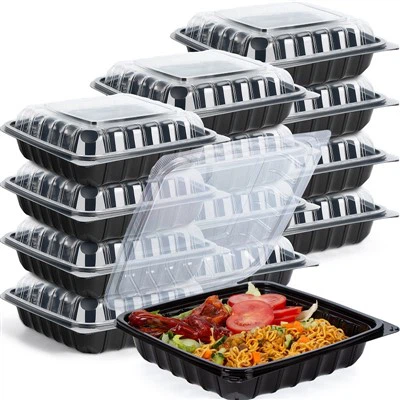

Stacking Transportation and Long-Term Heat Preservation: Focus on Material Structure and Toughness
During the takeaway transportation process, lunch boxes are often stacked in multiple layers. You should choose a lunch box with strong pressure resistance to prevent the bottom from softening and deforming, and maintain the overall stability and heat preservation effect.
4. How Can Manufacturers Ensure That Their Products Remain Stable at High Temperatures?
 Improving the thermal stability of plastic to-go containers not only depends on the material itself, but also requires manufacturers to continuously optimize the process and testing standards.
Material Source Control and Quality Inspection Mechanism
Professional plastic lunch box manufacturers will regularly test the thermal deformation temperature of raw materials to ensure thermal stability. For example, hot water filling and microwave heating tests are carried out to ensure that the thermal stability of each batch of products is qualified before leaving the factory.

Anti-Deformation Technology in Structural Design
The structural design of plastic togo containers directly affects its heat resistance. Many manufacturers can effectively reduce deformation and shedding caused by thermal expansion or external pressure by thickening the wall and automatically locking the lid.
Standards and Certifications Support to Enhance Customer Trust
Yangrui has thermal stability certifications such as SGS, FDA, and BPI. This type of plastic to-go container is more likely to gain customer trust. Manufacturers can clearly mark the temperature range and recommended usage scenarios on the product appearance or website to provide purchase and use references for B-end customers and end consumers.
Where to Buy Plastic Togo Containers?
 Huizhou Yangrui Printing & Packaging Co., Ltd. specializes in the manufacture of disposable lunch boxes, supports OEM/ODM customization, and covers a variety of environmentally friendly materials such as PP, PET, and MFPP.
Contact information:
Email: sales@packagingbag5.com
Tel: +86 180 8644 3226
References
- ASTM D648 - Standard Test Method for Deflection Temperature of Plastics Under Flexural Load

- FDA Food Contact Materials Guidelines
- European Bioplastics: Facts and Figures 2024
- Research Report on the Current Status of Takeaway Lunch Boxes | China Catering Industry Association, 2023
- Review of Research on the Performance of Polypropylene Materials | Polymer Materials Science and Engineering, Issue 6, 2022
