- I. Core Technical Performance of Food-Grade Printing
- II. Printability of Plastic Substrates & Surface Treatment
- III. Environmental Requirements for Food-Grade Printing: Full-Chain Control
- IV. Plastic to-go boxes Food-Grade Printing's Global Compliance Standards
- V. Technology Trends & Industry Advice for To-Go Boxes
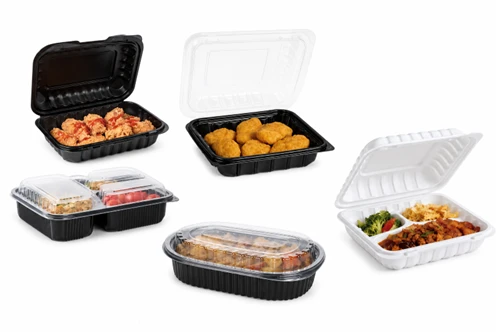
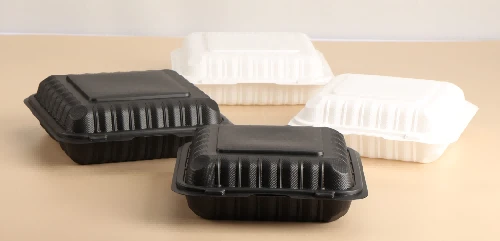
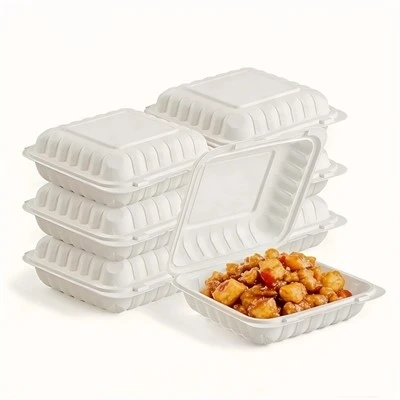
With increasingly stringent food safety regulations, food-grade printing on plastic to-go boxes (single-use takeaway containers) has become a core industry focus. As packaging that comes into direct or indirect contact with food, its printing must not only meet basic requirements for aesthetics and durability but also strictly comply with various national food safety standards, ensuring that inks and processes do not contaminate food. This article systematically analyzes the key aspects of food-grade printing for plastic to-go boxes from the dimensions of technical performance, substrate compatibility, environmental requirements, compliance standards, and industry trends, providing professional and reliable reference for industry practitioners.
I. Core Technical Performance of Food-Grade Printing
The core of food-grade printing on plastic to-go boxes lies in achieving both aesthetic appeal and practicality of printed patterns while ensuring food safety. Key technical performance focuses on two main dimensions: color representation and abrasion resistance, with a clear distinction from non-food-grade printing, especially for to-go boxes.
1.1 Color Vibrancy: Balancing Safety and Aesthetics

Food-grade printing inks have achieved color performance comparable to traditional industrial printing, with water-based food-grade inks and UV-curable inks being the most widely used for  . Water-based inks utilize boil-resistant waterborne polyurethane resins, offering uniform color, high gloss, and accurate reproduction of design patterns, with a near-neutral pH (around 7.2) and minimal skin irritation. UV-curable inks achieve instant curing via ultraviolet light, providing vivid colors and exceptional gloss, suitable for brand presentation on high-end to-go boxes.
It is crucial to note that color performance in food-grade printing for to-go boxes must be premised on safety. Whether water-based or UV inks, their Bisphenol A migration must be controlled below 0.01 ppb, far lower than the 0.1 ppb limit required by the EU framework regulation EC 1935/2004, thereby preventing harmful substances from contaminating food through the color carrier at the source.
1.2 Abrasion Resistance: Adapting to Practical Usage Scenarios

Plastic to-go boxes in storage, transportation, and use are prone to friction and wiping of printed patterns. Therefore, abrasion resistance is a core evaluation metric for these to-go boxes, requiring passage through multiple rigorous tests: Adhesion tests must achieve a 4B-5B rating (ink removal rate ≤5%) to ensure patterns do not peel. Dry rub tests (500g pressure, 43 cycles/minute, 100 cycles) and wet rub tests (200g pressure, 50 cycles) must show no significant wear or fading. Additionally, the printing on to-go boxes must meet requirements for resistance to temperature, oil, acid/alkali, and alcohol. For example, the ink layer must not soften after 30 minutes at 80°C, and must not fade after 50 wipes with 75% ethanol, ensuring suitability for real-world takeaway container usage.
1.3 Core Distinctions from Non-Food-Grade Printing
 The fundamental difference for to-go boxes lies in safety and environmental impact, with specific contrasts being significant: Non-food-grade printing often uses solvent-based inks with VOC content as high as 300-500 g/L, heavy metal (lead, cadmium) content of 800-1200 ppm, and a biodegradation rate of only 15%-28%; such inks are unsuitable for food-contact to-go boxes. In contrast, food-grade printing for to-go boxes prioritizes water-based or UV inks, with VOC content controlled below 50 g/L and 10 g/L, respectively, heavy metal content ≤20 ppm, and biodegradation rates up to 95%. This approach ensures both food safety and alignment with environmental trends for to-go boxes.
II. Printability of Plastic Substrates & Surface Treatment
Common substrates for plastic to-go boxes are PP (Polypropylene), PS (Polystyrene), and PET (Polyethylene Terephthalate). The printability of these three substrates varies considerably, requiring targeted surface treatment to ensure printing quality and safety for the final to-go boxes.
2.1 PP Substrate: Technological Breakthrough for Low Surface Energy

PP is the most common substrate for plastic to-go boxes. However, its low surface energy (typically below 30 dynes/cm) makes it difficult for inks to wet and adhere, leading to issues like beading and peeling in to-go boxes. Therefore, surface treatment is essential. Common methods include flame treatment, plasma treatment, and corona treatment. Flame treatment introduces polar groups through high-temperature oxidation, offering moderate cost and long-lasting effects. Plasma treatment uses high-energy particles to alter surface structure, potentially raising surface energy to 60-70 mN/m, suitable for high-precision printing onto to-go boxes. Corona treatment is simple and low-cost, but its effects are time-sensitive (24-72 hours), necessitating printing soon after treatment for to-go boxes.
Furthermore, printing on PP substrates for to-go boxes requires specialized inks that balance compatibility with the substrate while considering PP's high thermal expansion coefficient. Ink systems with good flexibility and temperature resistance should be selected for durable to-go boxes.
2.2 PS Substrate: Advantages in Printability

PS substrates have moderate surface energy and superior printability compared to PP, often requiring only simple cleaning to remove grease and dust before printing to-go boxes. Their advantages include good surface wettability, high ink receptivity, clear printed patterns, excellent color reproduction, good processability, and lower cost, making them suitable for mass production of mid-to-low-end plastic to-go boxes. Limitations include poorer heat resistance and higher brittleness. Printing should avoid fine lines on these to-go boxes to prevent cracking during use.
2.3 PET Substrate: Premium to-go boxes' Choice
 PET substrates offer high transparency, strength, and good barrier properties, making them suitable for high-end plastic to-go boxes (e.g., transparent containers, premium takeaway packaging). Their printing requires moderate surface treatment: Corona treatment can raise surface energy to ≥38 mN/m, enhancing ink adhesion for to-go boxes. Plasma treatment alters surface chemical structure, improving printing uniformity. Printing should be completed within 24 hours of treatment for PET to-go boxes to prevent surface energy decay.
PET substrates exhibit optimal compatibility with UV-curable inks, resulting in hard, durable patterns post-printing, ideal for premium to-go boxes. High transparency can highlight pattern texture. Its recyclability characteristics must be considered for to-go boxes, selecting ink systems that do not hinder recycling performance.
III. Environmental Requirements for Food-Grade Printing: Full-Chain Control
The environmental performance of food-grade printing on plastic to-go boxes must be managed throughout the entire chain-from ink selection and production processes to recycling-complying with environmental regulations and adhering to sustainable development principles for to-go boxes.
3.1 Environmental Performance Classification of Inks

Currently, food-grade printing inks for to-go boxes are mainly categorized into three types, with significant differences in environmental performance: First, water-based inks (VOCs ≤50 g/L, heavy metals ≤20 ppm, biodegradation rate 82%-95%) are the most widely used eco-friendly inks, suitable for most plastic to-go boxes. Second, UV-curable inks (VOCs ≤10 g/L, near-zero emissions, no wastewater) require higher equipment investment but suit premium to-go boxes. Third, solvent-based inks (high VOCs, low biodegradation rate, containing harmful substances like benzene and ketones) are being phased out of the food-grade printing industry for to-go boxes.
3.2 Environmental Control in the Printing Process
 Environmental control in printing to-go boxes focuses on energy consumption and waste management. Water-based inks can dry at room or low temperatures, reducing energy consumption by 30%-50% compared to solvent-based inks for producing to-go boxes. UV-curable inks achieve instant curing with UV light, further lowering energy use by 50% compared to traditional mercury lamp equipment for to-go boxes. For waste treatment, residue from water-based inks can be treated with coagulants and disposed of as general industrial waste, whereas solvent-based ink residue requires high-cost special waste treatment. Using vision inspection systems to reject defective items can reduce waste rates by 50% in to-go boxes. Additionally, printing scraps from to-go boxes can be de-colored and reused, lowering raw material costs.
3.3 Adaptation to Environmental Certification Systems

Food-grade printing for to-go boxes must obtain relevant environmental certifications to ensure full-chain compliance. Mainstream certifications include FSC (for raw material traceability), Green Printing Certification (Chinese National Standard GB/T 30325-2013), and SGS testing certification (internationally recognized). Certification focuses on indicators like ink VOCs content, heavy metal residues, and biodegradation rates for to-go boxes, while also complying with various national environmental regulations, such as EU restrictions on PFAS (single ≤25 ppb, total ≤250 ppb) for to-go boxes.
IV. Plastic to-go boxes Food-Grade Printing's Global Compliance Standards
As food contact packaging, printing on plastic to-go boxes must comply with the regulatory standards of target markets. Core global standards currently include US FDA, EU EC 1935/2004, the German Printing Inks Ordinance, and China's GB 4806 series. Each standard has different emphases, requiring precise adaptation for to-go boxes.
4.1 US FDA Standards (21 CFR 175.300)
FDA classifies printing inks for to-go boxes as "indirect food additives." Core requirements include: Ink components must comply with relevant regulations like 21 CFR 175, 176, prohibiting harmful substances like benzene solvents and BPA in to-go boxes. The total migration limit is ≤0.01 mg/dm², significantly stricter than many other countries. Substances not listed must obtain a Food Contact Notification (FCN). GC-MS technology is used for testing to-go boxes to ensure migrants do not exceed limits.
4.2 EU EC 1935/2004 Framework Regulation
The EU employs a positive list system, permitting only listed substances for food contact printing on to-go boxes. Core requirements include: Total migration limit ≤10 mg/kg, benzophenone ≤0.6 mg/kg, aromatic amine migration ≤0.01 mg/kg for to-go boxes. Sum of heavy metals (lead, cadmium, mercury, hexavalent chromium) ≤100 ppm. It also focuses on controlling emerging contaminants like PFAS in to-go boxes and requires manufacturers to follow Good Manufacturing Practice (GMP) to ensure printing process compliance.

4.3 German Printing Inks Ordinance (The Strictest Globally)
Effective in 2022 with a transition period until 2026, this ordinance covers both the inks themselves and the printed food contact materials for to-go boxes. It establishes a positive list of 540 permitted substances, with an additional list of 54 pigments allowed during the transition for to-go boxes. For substances without specific migration limits, a global migration limit of 60 mg/kg applies to to-go boxes. Substances not on the list may only be used on non-food contact surfaces of to-go boxes, provided they are non-CMR substances and have migration below 10 ppb. Its stringency far exceeds general EU standards for to-go boxes.
4.4 Chinese GB 4806 Series Standards
 GB 4806.14-2023 "National Food Safety Standard for Inks Used on Food Contact Materials and Articles" was implemented on September 6, 2024. Core requirements for to-go boxes: Inks are classified into direct and indirect contact categories based on contact type, with respective requirements for raw materials and migration. Total migration limit is ≤10 mg/dm² (≤6 mg/dm² for infant food packaging to-go boxes). Heavy metals ≤0.001 mg/kg. VOCs ≤100 g/L. Prohibits substances like fluorescent brighteners and BPA. Ink labels for to-go boxes must specify product category, suitable substrates, and processes.
V. Technology Trends & Industry Advice for To-Go Boxes
Plastic to-go boxes with food-grade printing are evolving towards greater safety, environmental friendliness, and intelligence. Based on the current industry landscape, the following recommendations are provided for to-go boxes practitioners.

5.1 Technological Innovation Trends
Nanotechnology application enhances ink adhesion for to-go boxes; nano-silica can improve ink abrasion resistance by 50%. Bio-based ink R&D has achieved breakthroughs; bio-based resins using corn starch can achieve 70% bio-based content, reducing costs and improving environmental performance for to-go boxes. Digital printing reduces plate-making waste, increasing material utilization by 30% for to-go boxes, while enabling variable printing and enhanced traceability. LED-UV curing technology reduces energy consumption by 50% and improves production efficiency for to-go boxes.
5.2 Industry Compliance and Production Advice
- •
 Prioritize water-based or UV eco-friendly inks for to-go boxes; avoid solvent-based inks to ensure safety and environmental performance from the source.
 - • Select appropriate surface treatment for to-go boxes based on substrate type: Prioritize flame or plasma treatment for PP to-go boxes; focus on corona treatment for PET to-go boxes to ensure print adhesion.
- • Adapt compliance standards to target markets for to-go boxes: Prioritize FDA and EU certifications for export to-go boxes; strictly follow the GB 4806 series for domestic sale to-go boxes.
- • Establish a full-chain quality control system for to-go boxes, strengthening management across ink procurement, printing processes, and finished product testing to ensure compliance.
5.3 Future Outlook for To-Go Boxes
As global demands for food safety and environmental protection rise, low-migration, solvent-free, and recyclable printing technologies will become mainstream for to-go boxes, with increasing application of bio-based materials. Simultaneously, national standards for to-go boxes will gradually converge, optimizing compliance costs and driving the food-grade printing industry for plastic to-go boxes towards high-quality, sustainable development.

Food-grade printing on plastic to-go boxes represents the integration of food safety and packaging aesthetics, with its core principles being "safety compliance, substrate compatibility, and environmental efficiency." to-go boxes practitioners must accurately grasp technical essentials, strictly adhere to national compliance standards, and actively embrace technological innovation to establish a competitive position in the to-go boxes industry while providing consumers with safe, aesthetically pleasing, and environmentally friendly takeaway packaging products.