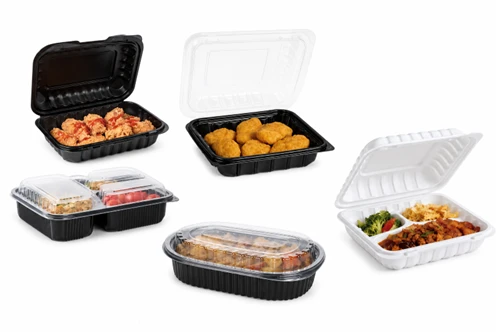
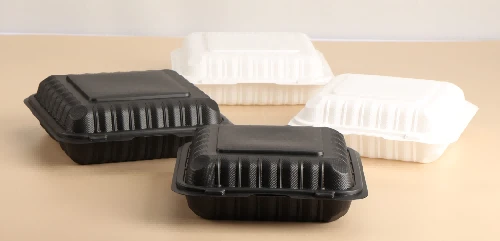
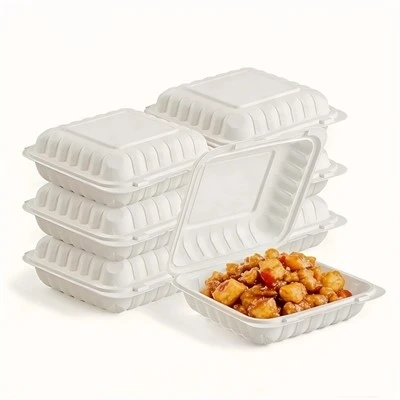
Plastic to go food storage containers with ventilation holes represent a significant innovation in modern food packaging technology. Their design revolves around food safety, preservation effectiveness, and ease of use. Although simple in structure, the ventilation holes play a crucial role in various scenarios, including home storage, food delivery, and microwave heating, directly impacting food quality, safety, and consumer experience.
This article will comprehensively analyze their value and usage methods from the perspectives of the functional mechanism of ventilation holes, applications in different scenarios, comparison of containers with and without ventilation holes, and precautions in special environments.
I. Basic Functional Mechanism of Ventilation Holes

1.1 Air Pressure Balancing and Pressure Release Principle
The core function of ventilation holes is to balance the air pressure inside and outside the food container, preventing safety problems caused by abnormal pressure. When food inside the container is heated, air and water are converted into water vapor, causing a rapid increase in internal pressure. Without a venting channel, this could lead to the lid popping open, container deformation, or even explosion. Ventilation holes maintain air pressure balance through "two-way regulation": releasing hot air when the pressure rises and drawing in outside air when the pressure drops, preventing negative pressure from causing container deformation or making it difficult to open.
Modern ventilation hole designs have evolved into various technical forms, such as "U"-shaped reverse osmosis holes, which allow water vapor to condense inside the small lid, ensuring ventilation while preventing external moisture and liquid leakage, thus combining functionality and practicality.

1.2 Water Vapor Emission and Humidity Control
Ventilation holes effectively control the humidity inside the container, preventing food from becoming soggy due to water vapor condensation. In traditional sealed containers, when storing or heating food, water vapor condenses into droplets on the lid, dripping onto the food and ruining its texture-for example, making fries soggy or bread lose its crispness. Ventilation holes maintain the original texture of the food by releasing excess water vapor, especially suitable for fried foods, baked goods, and other items that require dry storage.
For fresh produce, ventilation holes can also help regulate gas composition: fruits and vegetables such as grapes and berries can release ethylene gas through the ventilation holes, slowing down ripening and extending shelf life; leafy vegetables can maintain a high-humidity environment by controlling the amount of ventilation, preventing water evaporation.
1.3 Design Characteristics of Different Types of Ventilation Holes
Based on the opening mechanism, ventilation holes are mainly divided into three categories, adapted to different usage needs:
Passive ventilation holes
The most common type has mostly 3-8mm circular or rectangular holes. They have a simple structure and low cost, but cannot control the direction and rate of gas flow, making them suitable for general storage and heating scenarios.
Active ventilation holes
Equipped with movable covers, they automatically vent when the food reaches a certain temperature, preventing the lid from bulging while maintaining warmth. They are widely used in patented automatic venting to go food storage containers.
One-way valve ventilation holes
The most technologically advanced type, allowing gas to be discharged in only one direction and equipped with a filter to prevent powder leakage. They are suitable for foods requiring strict humidity control, such as coffee and tea; some high-end to go food storage containers use PE breathable membranes with a pore size of 0.1-1μm, a steam discharge rate of ≥50mL/min, and also prevent liquid leakage.


1.4 Design Standards and Parameters of Ventilation Holes
The design of ventilation holes must follow strict standards to ensure effective function:
Quantity
No fewer than 3, and the shape and size should be consistent; side holes are used for 250-gram to go food storage containers, 3-4 holes on top for 400-500-gram containers, and 4 holes on top for 1000-gram containers, adapting to different capacity needs.
Pore size
3-8mm for ordinary food packaging, and can be precisely controlled at 0.1-10 microns for fresh-keeping packaging; the diameter of the ventilation holes in fresh-keeping boxes is about 0.2cm, and the anti-backflow air holes in cup lids are only the size of a needle tip.
Distribution
Mostly using a circular array or edge distribution, such as a ventilation ring stamped on the lid, with holes arranged in a circle around the center point to ensure even gas discharge; some high-end to go food storage containers use a double-layer ventilation structure, with the upper and lower layers of holes offset, balancing ventilation and leak prevention.


II. The Role of Ventilation Holes in Home Storage Scenarios
2.1 Mechanism for Improving Food Preservation Effects
In home storage, ventilation holes improve the "oxygen-deficient and humid" problem of traditional sealed storage by regulating oxygen content and humidity-a sealed environment easily leads to reduced oxygen, accumulation of carbon dioxide and water vapor, accelerating food spoilage. Ventilation holes allow for gas exchange, replenishing oxygen and releasing excess moisture. Different foods require different preservation mechanisms: leafy vegetables need high humidity (with closed ventilation holes) to prevent moisture evaporation; fruits and root vegetables (such as apples and tomatoes) need to release ethylene gas to prevent accelerated spoilage.
Studies show that the best preservation effect is achieved when oxygen concentration is controlled at 2-5% and carbon dioxide concentration at 3-8%. Ventilation holes precisely regulate the gas ratio, slowing down food metabolism and preserving nutrients and freshness.

2.2 Ethylene Gas Management and Ripening Control
Ethylene is a "ripening hormone." Ventilation holes can control ethylene concentration to achieve both "ripening" and "delaying ripening":
Ripening
Place 2-3 kiwis and 1 apple in a fresh-keeping box with ventilation holes. The ethylene released by the apple will accumulate moderately in the box, ripening the kiwis in 2-3 days while maintaining humidity to prevent wilting.
Delaying ripening
When bananas and apples are stored together, the ventilation holes can promptly release excess ethylene, slowing down the ripening speed of the bananas; some high-end fresh-keeping boxes (such as those made of rice bran material) also add ferulic acid to adsorb ethylene gas, reduce microbial growth, and further extend the shelf life.
2.3 Moisture and Pest Control and Odor Control
In humid areas (such as the rainy season in southern China), ventilation holes can solve the moisture problem in grain storage. Ventilation holes at the bottom of the box accelerate moisture dissipation, making them more suitable for humid environments than sealed containers, and the small hole size prevents pests from entering.
In terms of odor control, sealed lunch boxes are prone to producing odors due to anaerobic respiration. Ventilation holes release odor-causing gases, maintaining the original flavor of the food and preventing different foods from mixing flavors. In terms of cleaning and maintenance, ventilation holes promote air circulation, reducing stuffy and humid environments, reducing bacterial growth by about 40%, and improving food safety.

2.4 Storage Adaptability for Different Food Types
The ventilation hole design can adapt to diverse food storage needs:
Berries
Strawberries, blueberries, etc., are sensitive to moisture. Transparent boxes with 3-4 fine 1mm ventilation holes allow for slow air circulation, removing moisture and preventing mold growth, while the highly transparent material makes it easy to observe the quality..
Fried/Baked Foods
For items like French fries and bread, which need to be kept from becoming soggy, the ventilation holes allow steam to escape. Experiments show that their crisp texture can be maintained for 2 hours, while in a sealed container, it only lasts for 30 minutes.
Cooked Food/Leftovers
The ventilation holes release harmful gases such as hydrogen sulfide and ammonia, while maintaining appropriate humidity to prevent food from drying out, thus ensuring both safety and taste.
III. The Role of Ventilation Holes in Food Delivery Scenarios

3.1 Spill Prevention Mechanism During Transportation
The bumps and tilting during food delivery can easily cause sealed to go food storage containers to leak. Ventilation holes solve this problem through a dual mechanism of "pressure balance + liquid barrier": when tilted, the thin film inside the ventilation hole bulges due to liquid impact, automatically sealing the air hole; high-end to go food storage containers also feature "U"-shaped reverse osmosis holes that create a liquid seal, preventing liquid from flowing out while simultaneously isolating external dust and bacteria.
Experimental data show that food delivery containers with ventilation holes reduce leakage rates by more than 80%-the ventilation holes open for gas exchange during normal transportation and automatically close to prevent leakage during tilting and bumping, achieving "intelligent spill prevention."
3.2 Temperature Control and Insulation Effect
Hot food delivery requires a balance between "venting" and "insulation," and ventilation holes achieve this goal through precise aperture control:
Fried chicken and fries use a "3:2:1" packaging rule: 3 layers of oil-absorbing paper, 2 centimeters of aluminum foil for insulation (maintaining the optimal taste at 65℃), and one directional ventilation hole ≤0.5cm at the top (avoiding the sauce area to prevent the crispy coating from softening).
Although ventilation holes slightly reduce insulation performance by 10-15%, they prevent the lid from bursting open due to excessive pressure and prevent steam condensation from damaging the food's texture. Soups require a larger ventilation volume, while fried foods require controlled ventilation, adapting to the needs of different food categories.

3.3 Air Pressure Regulation and Packaging Integrity
In high-altitude or environments with large temperature differences, changes in air pressure can easily cause to go food storage containers to crack. Ventilation holes can automatically regulate the pressure difference: when the altitude increases, the internal pressure is higher than the external pressure, and the ventilation holes release gas to prevent deformation; professional food delivery packaging also includes one-way exhaust valves and honeycomb-shaped pressure relief holes, forming a multi-level air pressure regulation system.
- Tests simulating an altitude of 3000 meters show that ordinary sealed to go food storage containers have a cracking rate of 35%, while containers with ventilation holes have a rate of only 5%, fully guaranteeing packaging integrity during transportation.
3.4 Packaging Costs and Environmental Considerations
-
Cost Control: Patented to go food storage containers with one-way breathable vents can be sealed without the need for cling film, saving on auxiliary material costs and reducing packaging costs.
Environmental Friendliness: Reduces the use of consumables such as cling film and sealing tape, reducing plastic waste; some to go food storage containers use paper + PE breathable film material, reducing resource consumption, and the modular design facilitates sorting and recycling. Industry statistics show that breathable vent to go food storage containers can reduce packaging material usage by 20-30%, meeting the environmental protection needs of the food delivery industry. -
IV. The Role of Breathable Vents in Microwave Heating Scenarios
4.1 Safety Protection and Anti-Explosion Mechanism
During microwave heating, the rapid increase in water vapor inside a sealed container can easily cause an explosion. The breathable vent prevents this danger by providing a pressure release channel. The State Administration for Market Regulation clearly stipulates that heating in completely sealed containers is prohibited and that a steam outlet must be provided (such as a dedicated vent on the lid or a lifted corner of the cling film). The breathable vent achieves safe heating through "dynamic pressure regulation"-when the pressure rises, the vent expands to release air, always maintaining a safe pressure range.
Some high-end to go food storage containers feature a silicone sub-lid that works with the vent, allowing for heating with the lid on, preventing plastic cracking or scalding from opening the lid, further enhancing safety.
4.2 Preventing Scalding and Steam Management
When opening the lid after heating, the high-temperature steam in a sealed food container can easily cause burns. The breathable vent solves this problem through "gradual venting":
Continuously releases some steam during heating, reducing the steam concentration inside the container; before opening the lid, pressure can be slowly released through the vent to avoid steam impact.
Experiments show that the steam temperature is reduced by 30% and the impact force is reduced by 70% when opening a food container with a breathable vent; some to go food storage containers have a closable silicone sub-lid, allowing for pressure release by opening the sub-lid first before opening the main lid, completely avoiding the risk of scalding.

Key Safety Data
- Steam temperature reduction: 30%
- Steam impact force reduction: 70%
- Heating time reduction: 15-20%
- Nutrient retention improvement: 10-15%

4.3 Heating Efficiency and Food Quality Preservation
The breathable vent improves heating efficiency and food quality:
- Even Heating: Releases steam to prevent "steam film" formation, shortening heating time by 15-20%
- Texture Maintenance: Controls moisture evaporation, maintaining rice plumpness and preventing mushiness
- Nutrient Retention: Reduces localized overheating, improving retention by 10-15%
4.4 Material Compatibility and Guidelines
Microwaveable containers require "material + ventilation holes" combination:
- Material: PP polypropylene (triangular mark "5"), temp resistance -20℃ to 120℃
- Usage: Open lid or poke 2-3 holes even with PP containers
- Integration: Silicone sealing rings provide airtightness at room temp, auto-open when heating
V. Comparison of to go food storage containers with and without Ventilation Holes
5.1 Safety Comparison
| Comparison Item | Container with Ventilation Holes | Container without Ventilation Holes |
|---|---|---|
| Microwave Heating Safety | High (can be heated with lid on) | Low (must be heated with lid off) |
| Explosion Risk | Very Low (<1%) | High (15-20%) |
| Scalding Risk | Low (steam is released slowly) | High (steam burst upon opening) |
| Container Deformation Rate | <5% | 20-30% |
| Applicable Temperature Range | -20℃~120℃ | -20℃~80℃ (limited) |
In addition, containers with ventilation holes also comply with anti-suffocation design – the lid has tiny ventilation holes to prevent suffocation if a child accidentally puts their head in it, providing more comprehensive safety.

5.2 Comparison of Preservation Effect and Food Quality
- Fresh Produce: Ventilation holes release ethylene, extending the shelf life of strawberries by 2-3 days, while sealed containers may spoil the next day; grapes, mushrooms, etc., maintain respiration through the ventilation holes, slowing down ripening.
- Fried/Baked Foods: Ventilation holes keep fries crispy for 2 hours, while they soften after 30 minutes in a sealed container; prevents condensation on the surface of bread and pastries, preserving crispness.
Cooked Food/Leftovers: Ventilation holes release harmful gases, maintaining the original flavor of the food, but the heat retention is slightly inferior to sealed containers; sealed containers are better at preventing flavor transfer, but can easily lead to food becoming soggy.
5.3 Practicality and Convenience Comparison
Advantages of to go food storage containers with ventilation holes:
- Can be directly microwaved without additional steps.
- The interior dries easily, reducing bacteria, and only requires deep cleaning weekly.
- Suitable for multiple scenarios, including storage, heating, and carrying, offering multi-purpose use.
Advantages of to go food storage containers without ventilation holes:
- Good sealing, preventing leakage of liquids;
- Strong heat retention, minimizing heat loss;
- Simple appearance, the non-porous design is easy to clean, and provides better odor and flavor transfer prevention.
5.4 Cost-Effectiveness and Environmental Friendliness Comparison
- Cost: to go food storage containers with ventilation holes have a 15-25% higher manufacturing cost due to their special design, but reduce the use of consumables such as plastic wrap, and have a 30-40% longer lifespan, resulting in lower long-term costs; to go food storage containers without ventilation holes have lower initial costs, but require frequent replacement of auxiliary materials, leading to higher long-term expenses.
Environmental Friendliness: to go food storage containers with ventilation holes use 20-30% less material, and the modular design facilitates recycling; some paper + PE breathable film materials are biodegradable, meeting environmental protection requirements; to go food storage containers without ventilation holes are mostly made of thick plastic, making recycling difficult and generating more plastic waste.
VI. Precautions for Use in Special Environments
6.1 High-Altitude Areas
- In high-altitude areas, the low air pressure can cause to go food storage containers to expand and crack due to pressure differences. Note the following:
- Ventilation Hole Design: Choose to go food storage containers with a one-way exhaust valve + honeycomb pressure relief holes to automatically regulate the pressure difference; avoid covering the ventilation holes with labels to ensure gas circulation.
Usage Adjustments: Extend heating time and observe closely; do not wrap the food container with clothing to prevent excessive internal pressure; choose materials with good barrier properties to prevent food oxidation.
6.2 Extreme Temperatures
High-temperature environments (summer outdoors, high-temperature work):
- Choose PP material lunch boxes (resistant to 120℃)
- Large-diameter ventilation holes to accelerate ventilation and cooling, preventing food spoilage.
Low-temperature environments (frozen storage):
- Silicone ventilation hole containers
- Room temperature acclimation after freezing
6.3 Special Food Types
- Liquid foods: Use large-ventilation-hole lunch boxes with a filter for soups and porridges to prevent liquid overflow; ensure the ventilation holes are clear during heating to avoid sudden pressure increases.
- Carbonated foods: Use pressure-release valve lunch boxes for carbonated drinks and beer; the valve automatically releases pressure when it's too high, preventing packaging rupture.
- Perishable foods: Use multi-layer ventilated boxes for seafood and meat; the outer layer has large holes for ventilation, and the inner layer has small holes to prevent bacteria, ensuring both safety and freshness.
6.4 Cleaning & Maintenance
- Cleaning: Clean the ventilation holes weekly with a soft brush/cotton swab to prevent food residue blockage; do not use steel wool to avoid scratching the plastic and increasing the risk of bacterial growth.
Replacement cycle: Replace every 6-12 months for daily multiple uses, 12-18 months for daily use, 18-24 months for 2-3 times a week, and 24-36 months for occasional use; the risk of bacterial contamination increases by 50% after scratches appear, so replace promptly.


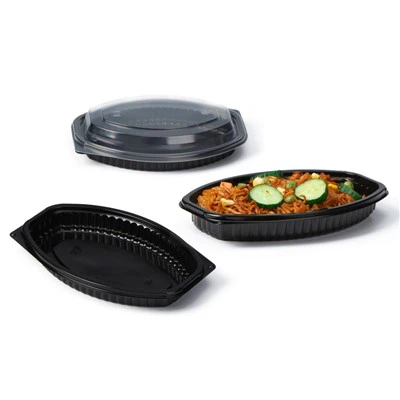


Plastic lunch boxes with ventilation holes ensure food safety and quality in various scenarios through functions such as air pressure balance, humidity control, and gas regulation. They have advantages and disadvantages compared to non-ventilated lunch boxes, and the choice depends on your needs – choose ventilated lunch boxes for safety and versatility; choose non-ventilated lunch boxes for sealing and insulation.
In the future, smart ventilation holes (automatic adjustment) and environmentally friendly materials (biodegradable) will become the development direction, further improving user experience and environmental protection. Consumers need to understand the principle of ventilation holes and use them correctly to protect their health, reduce waste, and promote the sustainable development of the food packaging industry.