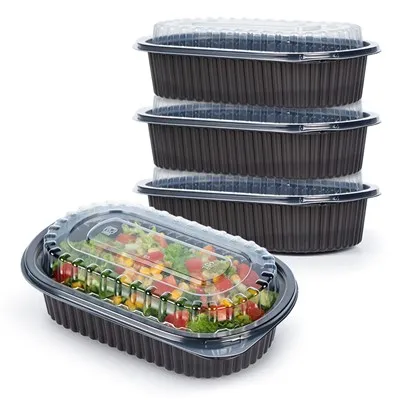
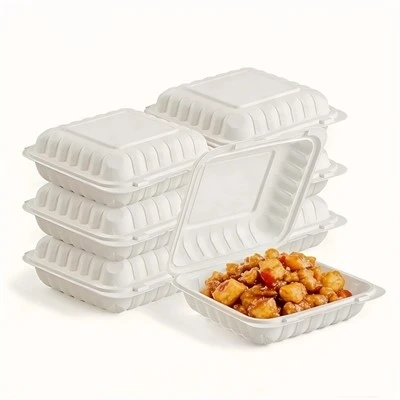
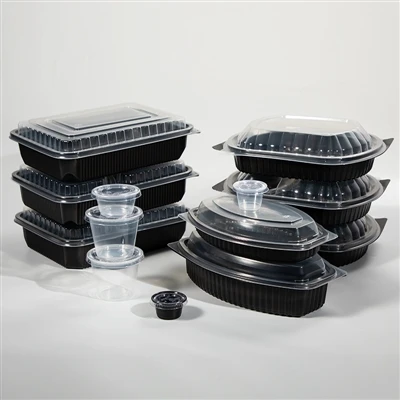
Evaluating the professionalism of a plastic disposable to go food container manufacturing factory requires a multi-dimensional and systematic evaluation system. With the official implementation of the new version of the "General Technical Requirements for Disposable Plastic Tableware" (GB/T 18006.1-2025) on March 1, 2026, and the advancement of environmental protection policies, evaluation standards are continuously being updated. The following provides a systematic evaluation method and judgment criteria based on six core dimensions.
I. Production Equipment and Technical Capability Assessment
1.1 Equipment Advancement and Automation Level
The advancement of production equipment directly determines the efficiency and quality stability of disposable to go food container production. In 2026, plastic disposable to go food container production equipment is developing towards high speed and intelligence, and industry technical standards are undergoing significant changes.

Injection Molding Equipment
High-speed thin-wall dedicated injection molding machines are becoming the industry standard. Key technical parameters include an injection speed of 350-750 mm/s and a cycle time of 3.8-8 seconds. The new generation electro-hydraulic composite system increases the hydraulic natural frequency from 65 rad/s to 90 rad/s, shortening the mold closing/opening time to 0.48s and 0.58s, respectively, reducing the overall dry cycle from 2.3 seconds to 1.8 seconds, and increasing the output efficiency per machine by 30%. For example, the Baojie KF series high-speed thin-wall dedicated injection molding machine completes a production cycle in 5 seconds, producing 8 containers at a time, completing 12 production cycles per minute, and producing 96 containers.
Thermoforming Equipment
Three-station positive and negative pressure thermoforming machines are the mainstream configuration. Standard three-station positive and negative pressure (610×750) thermoforming machines reach a speed of 24 molds per minute and can thermoform various products from thermoplastic plastic rolls such as PP, PET, PS, PVC, EPS, OPS, PEEK, PLA, and CPET. Key parameters include a forming area of 760×540mm, a forming depth of 120mm, and a material thickness range of 0.2-2.0mm.
Intelligence Level
In 2025, the proportion of equipment equipped with Internet of Things technology is expected to reach 38%, and will exceed 65% in 2030, enabling real-time monitoring of production data and remote maintenance. Advanced equipment is equipped with an intelligent fault diagnosis system, monitoring 12 key parameters in real time, reducing downtime to within 15 minutes per incident; integrated visual positioning and adaptive adjustment technology automatically identify size deviations of 0.1mm, ensuring the molding accuracy of disposable to-go food containers reaches ±0.3mm.
1.2 Equipment Brand and Manufacturer Evaluation
The technical strength and market position of equipment manufacturers affect equipment reliability and after-sales service quality.
International brands
HUSKY (Canada, founded in 1953) is a "technological benchmark" in the global injection molding machine and mold industry; Haitian International (China, founded in 1966) is the "leading scale enterprise" in the Chinese injection molding machine industry, with a global market share of 15% and an annual production capacity of over 120,000 units; high-end injection molding machines from Germany and Italy in Europe have advantages in precision molding technology and are widely used in the automotive and food packaging fields.
Leading domestic brands
Ningbo Lishong, Haitian Plastics Machinery, Chen Hsong Group (founded in 1958), Yizumi Co., Ltd., etc. These companies have significant advantages in technological innovation and localized services. Haitian International has a 35% domestic market share, Chen Hsong Group's global sales network covers more than 50 countries, and Yizumi owns more than 230 patented technologies.


1.3 Equipment Maintenance and Capacity Configuration
The condition of equipment maintenance and the rationality of capacity configuration affect production continuity and cost control.
1 Overall Equipment Effectiveness (OEE)
Industry standard: 80%-85%, excellent companies achieve over 95%.
"Companies using WenTai equipment have an average OEE of 92%, higher than the industry average."
2 Capacity Configuration
Professional factories have multiple production lines to ensure capacity:
- Yangrui Printing: 8+ automated lines, 700,000+ pieces/day
- Xinjiang Alar enterprise: 40 lines, 200,000+ sets/day, 50 million sets/year
II. Production Process and Technological Maturity Assessment
2.1 Comparison of Mainstream Production Processes
The production of plastic disposable to-go food containers mainly uses two processes: injection molding and thermoforming, each with its own characteristics and applicable scenarios.
| Process Type | Process Characteristics | Advantages | Disadvantages | Applicable Scenarios |
| Injection Molding | PP/PS granules heated to 200-220℃, injected at high pressure into the mold cavity | High quality, stable structure, high precision | High mold cost, longer production cycle | Complex designs, high strength requirements |
| Thermoforming | Plastic sheets heated to 180-220℃, adsorbed to mold surface (40-60℃) | Lower cost, faster speed, high material utilization | Lower strength, limited shapes | Simple shapes, mass production |

2.2 Process Parameter Control and Stability
Precise control of process parameters is key to ensuring product quality stability.
Injection Molding Process
Core parameters include barrel temperature of 260-380℃, mold temperature of 210-270℃, injection pressure of 100-140MPa, and holding pressure and time adjusted according to the product. Improper temperature control can lead to product yellowing, deformation, or insufficient strength, while improper pressure control can lead to uneven filling or overflow.
Thermoforming Process
Core parameters include thermoforming temperature of 180-220℃, mold temperature of 40-60℃, and injection pressure, which must be strictly controlled to ensure sufficient melting of raw materials and uniform filling of the mold. The three-station positive and negative pressure thermoforming machine uses layered temperature control technology to precisely control the temperature according to the differences in the thickness of the disposable to-go food container walls, preventing scorching in thin areas and incomplete melting in thick areas.
PLA Biodegradable Material Processing
Process control requirements are even stricter. The roller temperature is gradually reduced from the feeding end to the discharge end to 150-160℃ to prevent PLA from sticking to the rollers; the roller speed must be stable to prevent excessive stretching of the PLA; the roller spacing must be consistent on both sides to prevent the finished product from being "thicker on one side and thinner on the other".

2.3 Technical Solutions for Common Quality Problems
Professional factories need to possess the technical capabilities to solve common quality problems.
Deformation Problems
Main causes: uneven wall thickness, cooling speed differences, and excessive injection pressure.
- Optimizing product wall thickness design (wall thickness difference ≤30%)
- Strengthening cooling system design (ensuring uniform cooling)
- Adjusting injection molding process parameters (avoiding excessive holding pressure)
Demolding Problems
Solutions to ensure smooth demolding:
- Increasing the number and area of ejector pins (optimizing ejection position)
- Increasing the draft angle (generally 0.5°-2° for thermoplastics)
- Increasing cooling time (ensuring sufficient product solidification), reducing holding pressure and time, and improving mold surface finish (applying DLC coating if necessary, friction coefficient ≤0.05).
2.4 Mold Technology and Service Life
Mold Material Selection
| Cycle Range | Material | Hardness/Features |
| ≤500,000 cycles | P20 pre-hardened steel | HRC30-35 |
| 500k-5M cycles | 718H steel | HRC35-40, Ra0.1-0.2μm |
Mold Processing Accuracy
CNC machining accuracy ±0.01mm, EDM surface roughness Ra0.8μm, parting line gap ≤0.02mm, ejector pin plate parallelism ≤0.03mm.
Excellent mold design uses mold flow analysis to find optimal gate location, ensuring minimal product deformation.
III. Raw Material Selection and Safety and Environmental Protection Standards Assessment
3.1 Food Contact Grade Raw Material Standards and Selection
The safety of raw materials is a core indicator for evaluating the professionalism of a factory, and it must comply with the GB 4806 series of national food safety standards.

Usable Raw Materials
Polypropylene (PP, high temperature resistance ≤130℃, oil resistance, acid and alkali resistance, the only plastic that can be microwaved, certified by the EU and FDA), polystyrene (PS), polyethylene (PE), polyethylene terephthalate (PET, transparent, lightweight, resistant to weak acids and bases, not resistant to high temperatures ≤70℃), and other food contact grade plastics.
Prohibited Substances
Materials containing lead, cadmium, mercury, hexavalent chromium, polybrominated biphenyls, polybrominated diphenyl ethers, phthalates, bisphenol A (BPA, migration limit reduced from 0.6 mg/kg to 0.05 mg/kg, prohibited in infant products), perfluorooctanoic acid (PFOA), and perfluorooctanesulfonic acid (PFOS).
Raw Material Quality Requirements
Must comply with food contact material standards such as GB 4806.6, be odorless and free of foreign matter, have stable performance, and not release harmful substances during processing and use. The factory must refuse recycled materials, select high-quality PP materials, and use thickened, environmentally friendly materials to ensure cleanliness and non-toxicity.


3.2 Application and Development Trends of Environmentally Friendly Materials
With the advancement of environmental protection policies, the application of biodegradable materials has become an industry trend. Before the end of 2025, the national catering industry will prohibit the use of non-biodegradable disposable plastic tableware.
PLA
Polylactic acid has good biodegradability and thermal processing performance, a biodegradation rate of≥90%, and a disintegration rate of≥90% within 6 months under composting conditions. PLA lunch boxes achieve a 95% decomposition rate in 6 months
PBAT
Polybutylene adipate terephthalate has good toughness and processing performance, often blended with PLA, PBAT/PLA blend materials achieve a disintegration rate of 95%
 The State Administration for Market Regulation revised and published the national standard for "Biodegradable Polybutylene Adipate Terephthalate (PBAT)" in April 2025, which will be implemented on October 1, 2025.
Material Ratio and Performance Optimization: The optimal ratio for the PLA/PBAT blend system is 60:40, and interfacial peeling problems are solved through reactive compatibilization technology; adding lipase microcapsules to PBAT can increase composting efficiency by 50%.
3.3 Supplier Management and Incoming Inspection System
Supplier Qualification Audit
Incoming Inspection Process
 Strictly follow the "four-step method": verify identity (request three certificates from the supplier: business license, food business license, and product qualification certificate), verify information (check quality certificates, labels and markings, and expiration dates), inspect the physical goods (check the appearance of the food; for food requiring special storage, check transportation temperature records), and archive records (record food information and retain purchase contracts, invoices, and other records for at least 2 years).
Inspection Standards and Frequency
Before raw materials are put into storage, the quality control department conducts sampling tests at a rate of 5‰ (no less than 20 samples per batch), focusing on key indicators such as heavy metal content and evaporation residue, aiming for zero exceedances in each batch. Food raw materials that cannot provide a certificate of conformity will be inspected according to food safety standards and product execution standards.
IV. Quality Testing System Assessment
4.1 Testing Equipment Configuration and Calibration
A complete set of testing equipment is the hardware foundation for product quality.
Physical Performance Testing
- Thickness gauge (measures the uniformity of the lunch box wall thickness every 2 hours, sampling at 8 key points such as the bottom and side walls), tensile testing machine (tests product mechanical strength), sealing test instrument (leakage rate ≤0.1% under 0.5MPa pressure, ASTM D3078 standard), temperature resistance testing equipment (-20℃~150℃ extreme temperature cycle test, GB/T 4546 standard).
Chemical Testing
- Infrared spectrometer (infrared spectrum comparison of materials such as PP/PS/PLA, GB 4806.6-2023 standard)
- X-ray fluorescence spectrometer (detects heavy metals, Pb/Cd/Hg ≤0.01mg/kg)
- Gas chromatograph (detects phthalates, DEHP ≤1.5mg/kg, DBP ≤0.3mg/kg)
Microbiological Testing
- Microbiological incubator (detection of total bacterial count, coliforms, etc.)
- Autoclave (sterilization of culture media and instruments)
- Constant temperature and humidity chamber (controls culture environment conditions)
Equipment Calibration Requirements
According to the "Administrative Measures for Accreditation of Inspection and Testing Institutions," equipment must be "traceable, under controlled status, and maintained according to specifications." The calibration cycle is ≤1 year for metrological standards (JJG verification), and ≤1 year or 5000 uses for working measuring instruments, with intermediate checks ≤6 months. All calibration and maintenance data must be recorded in real time, including key information such as operator, time, environmental conditions, and instrument status.


4.2 Testing Items and Standards System
Quality testing must cover the entire process from raw materials to finished products, complying with national standards and industry requirements.
Physical Performance Testing
Temperature resistance (deformation temperature ≥70°C, thermal stability test, GB/T 1038 standard), sealing performance (leakage pressure ≥0.03MPa, vacuum retention rate, GB/T 15171 standard), compressive strength (ensuring that lunch boxes do not deform during stacking and transportation), and dimensional accuracy (checking whether product specifications meet design requirements).
Chemical Migration Testing
Total migration (tested with 4% acetic acid/50% ethanol simulant), heavy metals (migration of harmful metals such as lead, cadmium, mercury, and chromium), phthalates (content of 6 plasticizers including DEHP and DINP), bisphenol A residue (≤0.6 mg/L, Chinese standard), and formaldehyde release (≤0.5 mg/L, total VOC limit, GB 18580 standard).
Microbiological Testing
Total bacterial count (≤100 CFU/g, GB 14934-2016 standard), coliforms (not detectable, GB 4789.3 standard), mold (≤100 CFU/g), and pathogenic bacteria (Salmonella, Staphylococcus aureus, etc., not detectable).


4.3 Quality Control Process and System
A complete quality control process is key to product quality stability. The professional factory implements a "three-level testing standard".
Three-Level Testing Standard Implementation
Raw Material Incoming Inspection
Each batch of raw materials is sampled at a rate of 5% (no less than 20 samples), focusing on core safety indicators such as heavy metal content and evaporation residue. Only qualified materials are accepted into the warehouse.
Production Process Inspection
First-piece inspection (technicians self-inspect all products from the first cavity of each batch after molding, then submit them to a dedicated inspector), in-process sampling inspection (thickness testing every 2 hours, sampling at 8 key points), and key process parameter monitoring (real-time monitoring of temperature, pressure, speed, and other parameter changes).
Finished Product Final Inspection
Appearance inspection (checking that the box body and lid edges are smooth and free of burrs to prevent scratches), performance testing (sealing test: injecting the nominal capacity of water, and leaving it on a level surface for 30 minutes without deformation, seepage, or leakage), dimensional inspection (checking product specifications and shape), and batch inspection (a test report is issued for each batch, and only qualified batches are shipped).
Quality Judgment Standard
Based on defect classification (critical, major, minor) and AQL acceptance standards, the batch is judged as acceptable, requiring rework, or rejected.


4.4 Laboratory Capabilities and Third-Party Testing
Professional factories should have independent testing capabilities and collaborate with authoritative third-party testing institutions.
Requirements for in-house laboratories
Establish biological laboratories, mechanical laboratories, physical and chemical laboratories, thermal laboratories, electrical laboratories, optical laboratories, etc., to test various samples in a categorized manner.
Third-party Testing Cooperation
Collaborate with institutions holding both CNAS and CMA certifications, such as Dalian Product Quality Inspection and Testing Institute (National Packaging Product Quality Inspection and Testing Center), Beijing Zhongke Guangxi Science and Technology Research Institute, and Shenzhen Saite Testing. Test reports from these institutions can be used for customs inspection, customer factory audits, and platform audits.
Standardized Testing Process
- Fill out the quality inspection report application form → courier the products to be tested to the laboratory → the laboratory reviews the products and application form → testing is arranged after successful review → a CNAS and CMA certified test report is issued after successful testing.
-

V. Production Scale and Capacity Assessment
5.1 Industry Scale and Capacity Level
Understanding the industry scale and capacity level allows for the assessment of the target factory's industry position.
Domestic Situation
2024 capacity: 13.8 million tons (20% increase from 2020)
2026 forecast: 14 million tons capacity, 11.5-12 million tons production
Capacity utilization: 83%-85% rebound
Global Situation
2025 capacity: 48.5 million tons
2030 forecast: 62 million tons
CAGR: 5.1% annually
Biodegradable Tableware Market
2026 production: 15.68 billion units
Market penetration: 19.9%
+7.6 percentage points vs 2023
5.2 Characteristics Analysis of Factories of Different Scales
Based on production capacity, plastic disposable to-go food container manufacturing factories are divided into three levels, with the following key differences in characteristics:
| Factory Scale | Production Capacity Range | Core Configuration | Technology & Delivery |
| Large Factories | >100,000 tons/year | Jiangsu Huapeng (280k tons/year), Xinjiang Alar (40 lines) | 300-450 pieces/minute, yield ≥98.7%, nationwide service |
| Medium Factories | 10,000-100,000 tons/year | Yangrui Printing (8+ lines, 700k pieces/day) | Automation ≥80%, million-unit orders, stable delivery |
| Small Factories | <10,000 tons/year | 2-5 lines, tens of thousands pieces/day | Regional focus, high flexibility, limited large-order capacity |
5.3 Capacity Utilization Rate and Order Delivery Capability
The capacity utilization rate reflects factory operational efficiency, and delivery capability directly affects the stability of cooperation:
Capacity Utilization Rate
Industry average: <70%, excellent companies: >95%
"Thailand Zhongxin's first phase: 35,000-ton capacity utilization 100%, yield >98%"
Order Delivery Cycle
Conventional orders: 8-12 days
Urgent orders: as fast as 3 days
Standardized products: "order today, deliver tomorrow" (2M+ pieces/day)
5.4 Production Planning Management and Cost Control
Scientific management is the core of a factory's competitiveness, and key measures include:
Production Planning
Cost Control
- Setting material loss limits (e.g., stamping part loss ≤ 3%), tracing back to the work team if the limit is exceeded; testing low-cost alternative solutions (e.g., replacing some PP with HDPE, reducing costs by 15% while meeting standards); implementing a weekly procurement system to reduce raw material inventory, and controlling hidden costs such as equipment maintenance and rework of defective products.
6. Industry Reputation and Qualification Certification Assessment
6.1 Basic Qualification Requirements
 Legal compliance is a prerequisite for factory operation, and core qualifications include:
Core Certificates: Business license (business scope including plastic products/food-related production), production license for food-contact plastic products (mandatory, production is prohibited without this license), environmental impact assessment approval documents (ensuring production meets environmental requirements).
License Application Process: Enterprise submits materials (business license, site certificate, equipment list, management system, etc.) → Regulatory department conducts on-site audit + product inspection → License issued within 20 working days after successful audit, valid for 5 years, the whole process takes 2-3 months.
6.2 Quality Management System Certification
 System certification reflects the level of management, and the main certifications are as follows:
Basic Certification: ISO9001 Quality Management System (almost all professional factories require this, covering quality control throughout the entire production process).
Food-Specific Certifications: ISO22000 Food Safety Management System (for food-related enterprises, demonstrating food safety control capabilities), BRC certification (British Retail Consortium certification, commonly used by export-oriented enterprises, recognized by international retail brands), FDA certification (essential for market access in the United States, proving that products meet US food safety standards).
Others: FSSC22000 (international food safety certification, optional for high-end food packaging companies), BSCI certification (social responsibility certification, focusing on labor rights, mandatory for some brand customers).
6.3 Environmental Protection and Industry Certifications
Environmental compliance and industry participation reflect sustainable development capabilities:
Environmental certifications: FSC certification (for plant fiber materials such as pulp molding, proving sustainable raw materials), OK-compost/BPI certification (compostable certification, proving product degradability under industrial composting conditions), LFGB certification (German food contact material certification, a key requirement for EU market access).
Industry standard participation: Participating in the formulation of national/industry standards is a reflection of technical strength. For example, Ningbo Times Aluminum Foil led the drafting of the Zhejiang Manufacturing standards for "Heat-Sealing Aluminum Foil disposable to-go food containers" and "Aluminum Foil Products for Catering and Cooking." Such companies usually have a higher voice in the industry.
6.4 Market Position and Customer Evaluation
 Market feedback is the core of reputation, with key reference dimensions:
Market share: In 2025, among leading companies, Kingfa Technology had a market share of 14.3%, Zhejiang Zhongxin Environmental Protection 11.7%, and Jiangsu Zijian New Materials and Jiangsu Huapeng Group 9.4% and 6.4%, respectively; some regional leaders have a market share exceeding 60% in their local markets.
Core customers: Mainstream customers include Meituan/Ele.me and other food delivery platforms, KFC/McDonald's and other chain restaurants, BaWangChaJi/Mixue Bingcheng and other tea beverage brands, and over 3000 group meal institutions; export-oriented companies (such as Fuling Co., Ltd.) have overseas revenue accounting for over 65%.
Customer satisfaction: According to research by the China Institute of Standardization, a complete quality control system improves product consistency by 20%, and customer satisfaction is ≥95%; a 2026 evaluation by the China Quality Association showed that the overall satisfaction of biodegradable disposable to-go food containers was 87.2 points, a significant increase from 2020 (76.5 points).
6.5 Risk Assessment and Negative Screening
 Potential risks need to be screened before cooperation, with a focus on:
Negative records: Recall announcements from the State Administration for Market Regulation (e.g., Xinghua Juzhan Plastic Products Factory recalled disposable to-go food containers due to substandard temperature resistance, Lu'an Yongxin Jia New Materials recalled products due to poor sealing), and feedback from consumer complaint platforms (e.g., problems such as deformed disposable to-go food containers, inaccurate capacity labeling, and odors).
Screening Recommendations: Check the company's litigation records and administrative penalty information; request the factory to provide third-party testing reports from the past year; during on-site visits, observe whether the production environment is clean and whether the quality control process is standardized.
VII. Summary
 Assessing the professionalism of a disposable to-go food container factory requires a comprehensive evaluation across six dimensions: equipment, process, raw materials, quality control, production capacity, and reputation. This assessment should be particularly mindful of the new national standard (GB/T 18006.1-2025), effective in 2026 and environmental protection policies. In practice, it is recommended to use a combination of "on-site inspection + document review + sample testing + market research": observe equipment operation and production environment on-site, review the authenticity of qualifications and test reports, send samples for third-party quality verification, and research industry reputation and customer feedback.
Different customers may prioritize different dimensions: large chain restaurants focus on production capacity and quality stability, food delivery platforms focus on cost and environmental compliance, export traders focus on international certifications, and investors focus on technology and market position. Through scientific evaluation, reliable and professional partner factories can be selected, ensuring supply chain stability.