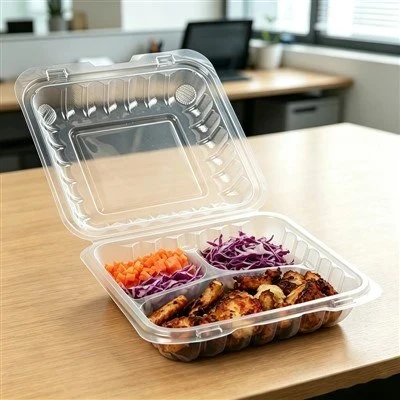
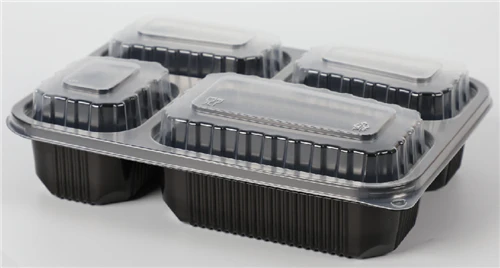
Table of Contents
1.Why Color-Coded To Go Containers Became a Menu Segmentation Standard
2.Black vs. White To Go Containers: What the Color Actually Signals
3.Real-World Example: How a Multi-Unit Chain Cut Order Errors
4.Material Safety, Food-Grade Compliance, and Sustainability
5.How to Choose the Best To Go Containers for Your Restaurant
6.Finding the Right To Go Container Supplier: 2026 Checklist
7.FAQ
8.Conclusion
9.Certificate Display
10. Contact Now
Why Color-Coded To Go Containers Became a Menu Segmentation Standard in Chain Restaurants
Why do chain restaurants use black and white to go containers? The short answer: a busy kitchen cannot afford to read a label on every unit during a 90-second ticket window, so color becomes the label.
Picture a line cook mid-rush. A ticket comes in for a hot entrée and a cold side. There's no time to flip a container over and confirm what's printed on the bottom. Instead, the cook's hand already knows: black for the hot protein dish, white for the cold side. No label-reading, no second-guessing - just a quick, instinctive match between color and category.
That instinct is only possible because of a few operational realities unique to high-volume foodservice:
SKU proliferation.
●A modern fast-casual menu can carry 15–30+ distinct to-go SKUs across entrées, sides, and desserts. Memorizing which label belongs to which dish isn't scalable at rush-hour ticket speed.
Assembly station design.
●Stations are built around visual zones - cooks grab by sight, not by reading. Color coding turns the to go containers
themselves into a wayfinding system.
Ticket time pressure.
●Average ticket times in fast-casual and QSR settings are measured in seconds, not minutes. Any step that requires stopping to read text is a bottleneck.
Color as a non-verbal protocol isn't new - it's an evolution. Early disposable packaging was single-color and purely functional: one commodity container, one purpose. As menus diversified and drive-thru volume grew, operators needed a way to differentiate products without adding labor. Two-color systems emerged as the simplest version of that solution - binary, fast to learn, and cheap to standardize across hundreds of locations.
Industry data backs up why this matters at scale. According to the latest QSR drive-thru benchmarking research, drive-thru speed and order accuracy benchmarks remain two of the most closely tracked metrics in the industry, and operators that reduce friction at the assembly stage consistently perform better on both. Visual sorting cues - including container color - are one of the lowest-cost ways to remove that friction without adding staff or slowing down the line.
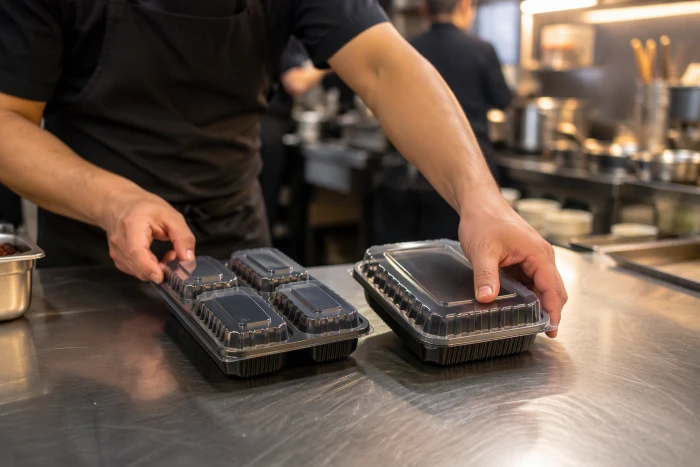
Black vs. White To Go Containers: What the Color Actually Signals
Once you understand that color is functioning as a protocol, the next question is obvious: what does each color actually mean? Black to go containers vs. white to go containers isn't arbitrary - across the national chain menus we've reviewed in packaging sourcing work, the pattern is remarkably consistent.
Black containers are the default choice for:
Hot, protein-forward entrées (center-of-plate items)
Premium or indulgent menu items the brand wants to visually elevate
Dishes where a darker background makes food photography and in-store merchandising photos look more appetizing
White containers are the default choice for:
Sides, salads, and lighter fare
Desserts and cold items
Allergen-conscious or "clean label" items, where a lighter, clinical-looking container reinforces a sense of simplicity and care
Why do chains lean on just two colors instead of five or six? Simplicity scales. A binary system is something a new hourly employee can learn in their first shift - no color chart, no memorization. The moment you add a third or fourth color, training time increases and the system starts to lose the exact speed advantage it was built for. That's also why most chains that do add a third color (commonly red) reserve it for a narrow, high-stakes purpose: allergen alerts or spice-level warnings, not general menu segmentation.
There's a real technical reason black is often the lower-cost choice at scale, too. In PP (polypropylene) manufacturing, black pigment tends to mask minor resin inconsistencies and is generally more forgiving - and therefore cheaper - to produce consistently across huge production runs than certain light or white tints, which show any variation far more visibly. That cost dynamic is part of why black so often becomes the "default premium" color rather than white.
Color isn't just an operations signal - it's a psychological one too. Academic research on packaging color, including a color psychology in food packaging research study examining how packaging color shapes consumer perception, has found that color cues measurably influence how consumers judge freshness, indulgence, and value before they even open the container.
Whichever color scheme a chain lands on, one rule doesn't change: the container must still meet FDA food-contact packaging guidance, regardless of color. Pigment and tint are a merchandising decision; food-contact safety is a non-negotiable baseline underneath it.
|
Attribute |
Black To Go Containers |
White To Go Containers |
|
Typical menu use |
Hot entrées, proteins, premium dishes |
Sides, salads, desserts, allergen-conscious items |
|
Visual signal |
Premium, indulgent, substantial |
Light, clean, simple |
|
Common material tint cost |
Often lower at scale (forgiving pigment) |
Can be higher (visible inconsistency risk) |
|
Reorder frequency |
High - primary SKU in most chains |
Moderate - secondary/side-item SKU |
|
Best paired items |
Burgers, bowls, hot proteins |
Salads, fruit cups, desserts |
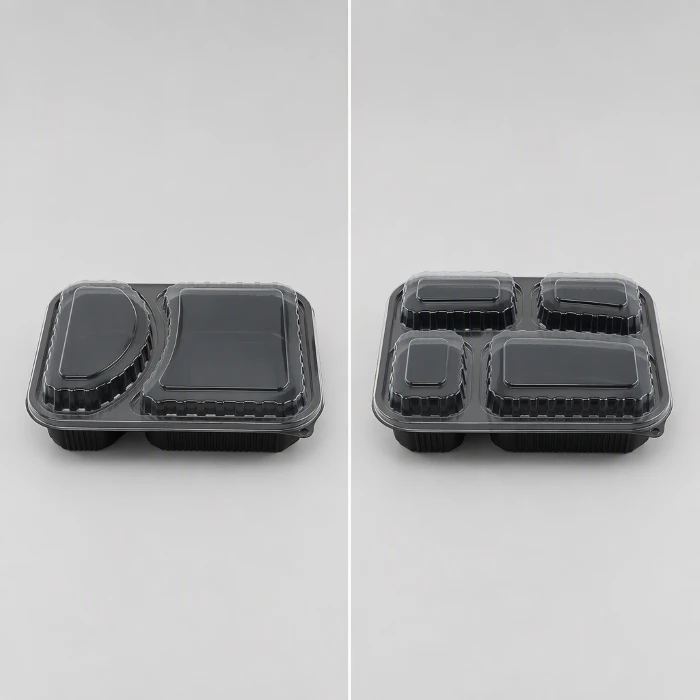
Real-World Example: How a Multi-Unit Chain Uses Two-Color To Go Containers to Cut Order Errors
Here's what a two-color rollout actually looks like in practice. The following is a composite, industry-representative scenario drawn from common patterns across multi-unit operators adopting color-coded to go containers - not a single disclosed brand case.
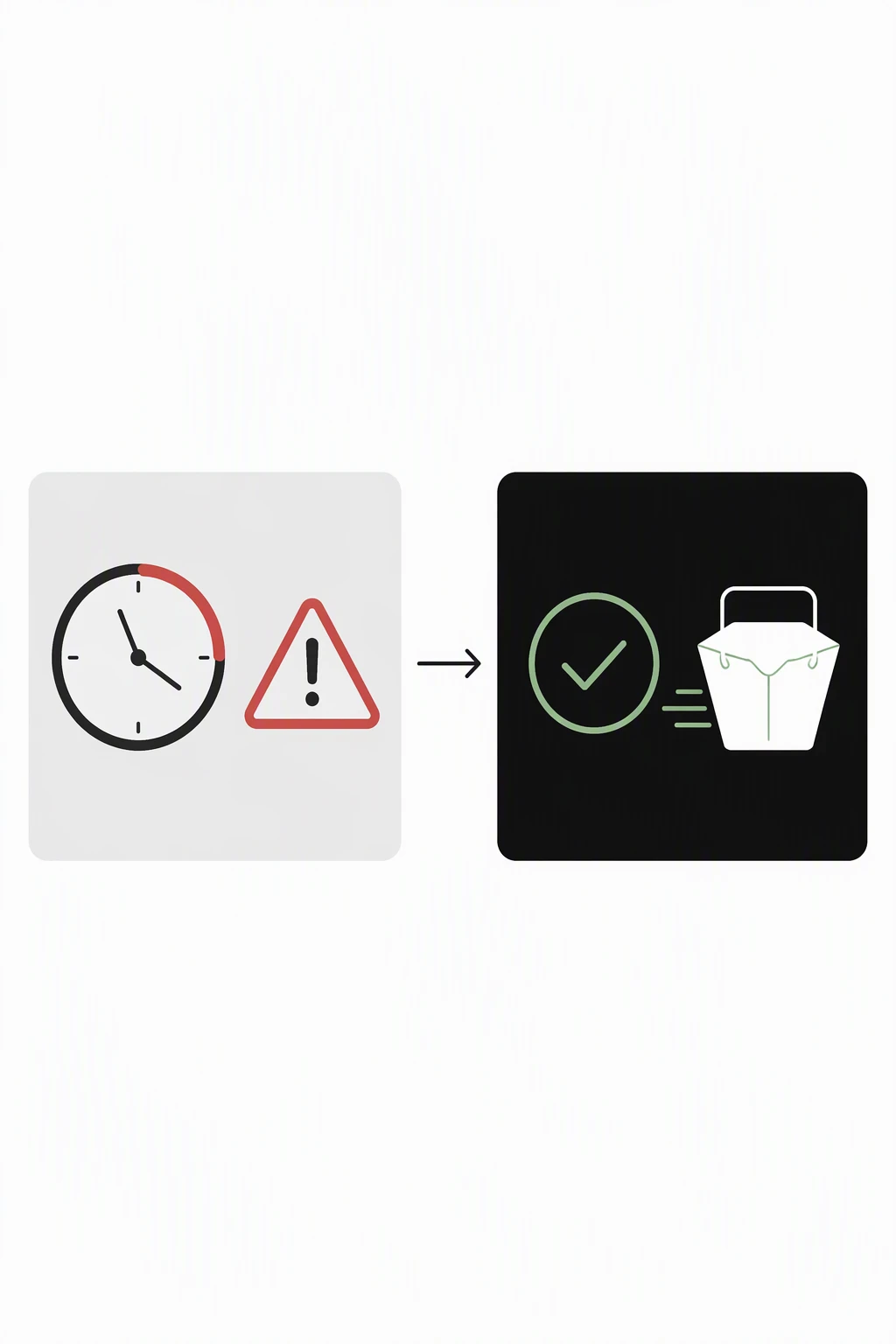
A 40-unit fast-casual chain was running a single-color container across its entire menu. New hires needed close to a full week of shadowing before they could reliably match container to dish without double-checking labels, and the chain's internal QA tracking showed a steady rate of mis-packed orders during peak hours - items swapped between a side and an entrée, or desserts going into the wrong bag.
"Switching from one container to a black-and-white system wasn't a packaging change - it was a training-time change."
The rollout played out in three stages:
Pilot phase:
1. A handful of locations switched to black (entrées) and white (sides/desserts) containers for 60 days, with before/after tracking on ticket assembly time and mis-packed order rate.
Chain-wide standardization:
2. Once the pilot showed a clear reduction in training time for new hires - because color replaced memorization - the chain rolled the two-color system out system-wide.
Ongoing refinement:
3. Supplier consistency became the next challenge. Running two SKUs instead of one meant tighter inventory forecasting, and the chain had to confirm every shipment matched the same black and white tint batch-to-batch across all locations.
Operators who've made similar transitions report measurable order-accuracy gains after adopting SKU-based color coding, a pattern consistent with broader research on how multi-unit restaurant standardization research shows shared, standardized processes reduce variability as a franchise scales - the same logic applies directly to packaging SKUs.
One lesson came up repeatedly: color alone isn't a complete system. Chains that rely purely on color, without any printed label backup, run into real accessibility problems - color-blind staff and customers, or simply a new hire on day one who hasn't internalized the code yet, can't rely on color as the only signal. This is also a formal accessibility standard, not just a best practice: ADA accessibility guidance on color-only signaling explicitly states that color should never be the sole means of conveying information - which is why leading operators pair color with printed labels rather than relying on color alone.
Material Safety, Food-Grade Compliance, and Sustainability of To Go Containers
Color coding only works if the underlying to go containers are actually safe, compliant, and durable enough to survive a delivery bag. Material choice drives all three.
Common resins used in takeout containers:
PP (polypropylene):
The most common choice for reusable-feeling, microwave-safe containers. Good heat tolerance, reliable hinge performance, and consistent color tinting.
PET (polyethylene terephthalate):
Common in clear or lightly tinted containers; good clarity but generally lower heat tolerance than PP - not always microwave-safe depending on wall thickness and resin grade.
Bagasse/fiber:
A sustainable alternative made from sugarcane or plant fiber byproducts, often used where compostability matters more than see-through visibility.
Resin choice affects more than just appearance - it determines whether a container can go straight from a hot kitchen into a microwave at a customer's desk without warping, and whether it will hold color consistency at scale.
Compliance is non-negotiable. Every food-contact container sold in the US market should be traceable back to FDA food-contact material compliance documentation, and BPA-free claims should be backed by actual test documentation - not just a label statement. During sourcing, buyers routinely ask suppliers for this documentation up front, before committing to a sample run, because a non-compliant claim discovered after launch is a brand-risk event, not just a regulatory one.
Sustainability has a real wrinkle specific to color: black plastic is harder for recycling facilities to sort than white or clear plastic. Optical (NIR) sorting equipment used in most municipal recycling programs identifies plastic type by reflected light - and carbon-black pigment absorbs that light instead of reflecting it. Industry guidance on recyclability challenges of black plastic packaging confirms this is a known, documented limitation: black plastic is harder for optical sorters to detect, a known limitation in many municipal recycling programs, which is why some operators are shifting dessert/side containers (already typically white) toward even lighter, more recyclable formulations, while reserving black for items where the merchandising value outweighs the sorting tradeoff.
The broader sustainable packaging market reflects this shift. Recent market research pegs the sustainable packaging adoption statistics for food packaging at a multi-billion-dollar category growing at a steady annual pace, as more operators move toward compostable fiber and more easily recycled resin options without sacrificing performance.
|
Material |
Heat/Microwave Safe |
Typical Certification |
Recyclability |
Best Use Case |
|
PP black |
Yes (resin-dependent) |
FDA food-contact, BPA-free |
Limited (optical-sort challenge) |
Hot entrées, premium items |
|
PP white/clear |
Yes (resin-dependent) |
FDA food-contact, BPA-free |
Moderate–good |
Sides, desserts, visible contents |
|
PET |
Limited - check rating |
FDA food-contact |
Moderate (where facilities accept PET) |
Cold items, salads, clear packaging |
|
Bagasse/fiber |
Yes, generally |
Compostable certification |
High (compostable) |
Eco-focused menus, catering |
Never take a verbal claim at face value - ask any supplier for documented proof, not just a verbal claim, before you commit to a production run. If sustainability is a priority for your brand, you can shop compostable to go container alternatives or view our food-grade compliance certifications directly.
How to Choose the Best To Go Containers for Your Restaurant: A Buying Guide
How do you choose food containers for a restaurant? Start with the same criteria kitchens care about every single shift - not just unit price.
Core buying criteria:
Leak resistance:
Hinged lids and secure seals matter more for delivery than dine-in.
Stackability:
Containers that stack cleanly save space in a hot-hold station and in delivery bags.
Portion sizing:
Match container volume (8 oz, 16 oz, etc.) to your actual portion weights - oversized containers waste money and make food look skimpy.
Microwave safety:
Confirm this explicitly per resin and wall thickness; don't assume.
Cost-per-unit at volume:
Price only makes sense in the context of your real order volume and reorder frequency.
Volume changes everything. A single independent restaurant and a 50+ unit chain are solving different procurement problems:
Independent/single-location:
Lower order volume, tighter cash flow, less tolerance for large minimum order quantities (MOQ).
50+ unit chain:
Needs guaranteed consistency across every location, longer lead-time planning, and warehousing/distribution logistics layered on top of the packaging decision itself.
To Go Containers for Small Restaurant Business
If you're running one or two locations, best to go containers for restaurants doesn't mean the same thing it does for a national chain. You need:
Lower MOQ options
so you're not tying up cash in six months of inventory.
Stock packaging vs. custom branding trade-offs
- stock designs get you to market faster; custom branding builds equity but usually requires a higher MOQ and longer lead time.
A cash-flow-friendly ordering cadence
- smaller, more frequent orders instead of one large annual commitment.
Buyers at this scale ask very specific questions during a quote request - sample lead time, smallest available case pack, and whether stock colors can ship faster than a custom tint. Independent operators also carry a real cost consideration: packaging is a measurable line item against overall operating costs, and the restaurant packaging cost benchmarks for independents data from industry-wide reporting shows that disposables and packaging remain one of the categories most sensitive to volume-based pricing - which is exactly why we offer low-MOQ starter packs built for exactly this scenario.
Quick decision checklist:
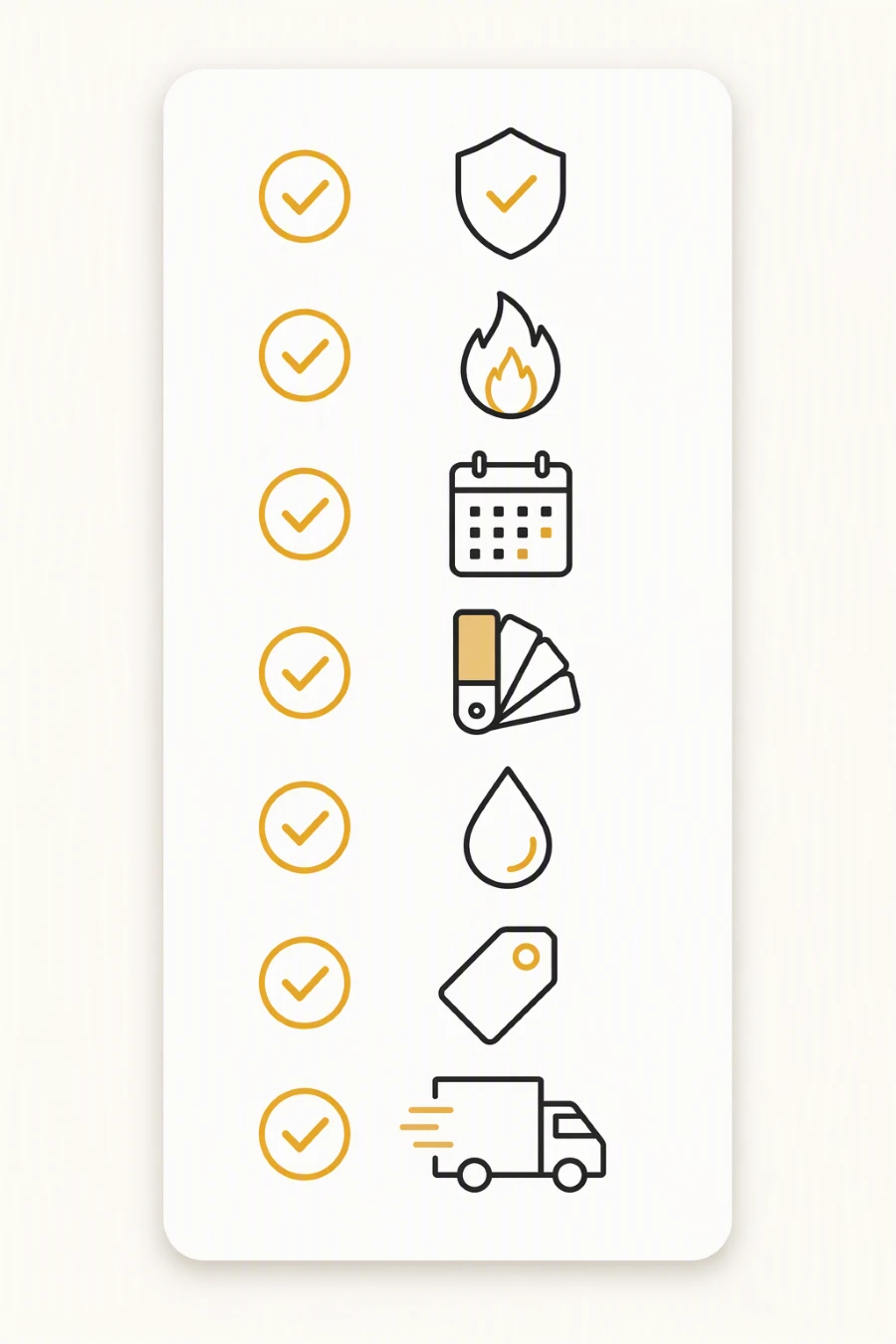
1. ✅ Does the container meet documented food-contact safety standards?
2. ✅ Is it microwave-safe for your specific hot menu items?
3. ✅ Does the MOQ match your actual order cadence and cash flow?
4. ✅ Can the supplier guarantee color consistency across repeat orders?
5. ✅ Does the lid seal reliably for your delivery radius and typical transit time?
6. ✅ Is there a lower-cost stock option available while you evaluate custom branding?
7. ✅ What's the realistic lead time from sample approval to first shipment?
Finding the Right To Go Container Supplier: Sourcing Solutions and a 2026 Checklist
Once you know what you need, the harder question is who to buy it from. Reliable to go container supplier solutions share a few traits that separate them from risky, unverified vendors:
Documented certifications
(FDA food-contact, BPA-free, relevant ISO standards) - not just a claim on a product listing.
Sample transparency
- a supplier willing to send real production-line samples, not hand-picked "best case" units.
Consistent lead times
- especially important heading into peak seasons when capacity gets tight across the whole industry.
A visible QC process
- ask what inspection stages exist between raw material and finished product.
2026 sourcing trends worth watching: Demand for traceable, sustainable materials continues to climb, and buyers are increasingly prioritizing suppliers who can document their resin sourcing and compostability claims rather than taking marketing copy at face value. Regional supplier diversification is also accelerating - as supply chains diversify heading into 2026, buyers are prioritizing suppliers who can prove consistent capacity, a trend reflected in broader supply chain diversification research showing procurement teams building in redundancy rather than relying on a single source. Tariff and freight-cost volatility are pushing many operators to re-evaluate supplier geography as part of standard annual sourcing reviews, a pattern also tracked in 2026 foodservice packaging sourcing trends industry research on shifting material demand and format preferences.
📌 2026 Sourcing Note: Buyers who lock in supplier relationships with proven capacity and transparent documentation now are in a materially stronger position than those sourcing reactively mid-season, when lead times stretch and pricing leverage disappears.
Wholesale To Go Containers Guide
If you're buying at volume, understand the mechanics before you request a quote:
Wholesale pricing tiers
typically step down at specific case-pack or pallet thresholds - ask for the full tier breakdown, not just your current volume's price.
Pallet/case-pack logistics
affect your warehousing footprint; confirm dimensions and stacking configuration before committing to a large order.
Freight considerations
- ocean vs. air, consolidated vs. direct shipment - can shift landed cost significantly depending on order timing and destination.
📩 Request a Sample Before You Commit Before any bulk order, request a physical sample batch to verify color consistency, lid fit, and microwave performance under your own kitchen conditions - not just spec sheet claims.
|
Vetting Criterion |
Why It Matters |
Red Flag to Watch For |
|
Certifications |
Confirms food-contact safety and regulatory compliance |
No documentation provided on request |
|
Sample transparency |
Reveals true production quality, not cherry-picked units |
Samples look noticeably better than bulk delivery |
|
Lead time |
Determines whether you can meet seasonal demand |
Vague or constantly shifting delivery dates |
|
MOQ flexibility |
Protects cash flow for smaller operators |
Rigid MOQ with no tiered options |
|
Freight/logistics support |
Impacts total landed cost and delivery reliability |
Supplier can't explain freight terms clearly |
FAQ
Q: Why do chain restaurants use black and white to go containers for menu segmentation?
A: Chain restaurants use black-and-white to go containers to create instant visual coding across large menus, letting staff and customers distinguish categories like entrées, sides, and desserts at a glance without reading labels, which speeds up assembly and reduces packing errors during peak service.
Q: What is the difference between black and white takeout food containers?
A: Black to go containers are typically used to signal premium, protein-forward, or hot entrée items with a more upscale visual cue, while white to go containers are associated with lighter fare, sides, desserts, or allergen-conscious items, giving kitchens a simple binary system for high-volume sorting.
Q: Are to go containers microwave safe?
A: Most black-and-white to go containers made from PP (polypropylene) are microwave safe, but safety depends on the specific resin and wall thickness, so always confirm the manufacturer's microwave-safe certification - referencing FDA guidance on microwave-safe plastics - before heating food in them.
Q: How do chain restaurants choose to go container suppliers?
A: Chain restaurants typically evaluate to go container suppliers based on food-grade certification, leak resistance, stackability, minimum order quantity (MOQ), lead time, and the ability to supply consistent black-and-white color coding across all locations at scale. If you still have specific questions about your own menu or volume, see our full buying guide above or contact our team with specific questions.
Conclusion: Make Your To Go Containers Work as Hard as Your Menu
Black-and-white food containers aren't a styling choice - they're an operations tool first, and a branding tool second. The chains that get the most value from this system treat it that way: they match color system, material, and supplier reliability to their specific volume tier instead of defaulting to whatever a single vendor happens to stock.
If there's one lesson worth repeating from the rollout example earlier in this guide, it's this: the win doesn't come from picking "the right color." It comes from standardizing a two-color system, documenting it, training to it consistently, and backing it with a supplier who can hold that color match order after order.
Whether you're a single-location independent evaluating your first color-coded switch, or a multi-unit operator standardizing packaging across dozens of locations, the decision framework is the same - safety first, then operational fit, then supplier reliability.
Certificate Display


FDA Certification (SGS): YANGRUI take out containers are make from the safe & new material