Against the backdrop of rapid growth in the global food service industry, the custom food box has emerged as a critical bridge connecting food service businesses with consumers, undergoing an unprecedented transformation. As one of the world's most mature food packaging markets, the procurement behavior of B2B enterprises in North America for custom food boxes not only reflects the region's market development but also signals future global industry trends.
Currently, the North American food packaging market is valued at $111.8 billion (2024) and is projected to reach $148.2 billion by 2030, growing at a CAGR of 4.8%. Within this, the takeout container market in North America accounts for 25% of the global share, second only to the Asia-Pacific region at 38%. Behind this substantial market size lies the growing demand from brand-oriented enterprises for customized, branded packaging solutions.
This report provides an in-depth analysis of the current state of the North American custom food box market, the global sourcing landscape, purchasing drivers, product convenience advantages, and development opportunities for plastic takeout box customization services, offering strategic insights for relevant businesses.
I. Current State and Scale of the North American B2B Custom Food Box Market
1.1 Market Size and Growth Trajectory
 The North American custom food box market is experiencing steady growth. According to recent data, the North American food container market was valued at $52.0 billion in 2024, is expected to reach $61.01 billion in 2025, and grow further to $85.13 billion by 2033, with a CAGR of 4.25% during the forecast period.
Within the broader market, the disposable container segment is particularly noteworthy. The North American disposable container market exceeded $4.04 billion in 2024, representing a significant portion of the overall takeout container market. The rapid expansion of food delivery services is a primary driver, with North America accounting for approximately 28% of the global takeout container market share.
1.2 Geographic Distribution
The geographic distribution of the North American custom food box market is highly concentrated. The United States is the dominant market, capturing 78.0% of North American food packaging revenue (2024) and holding over 50% of the food storage container market.
Canada and Mexico serve as important complementary markets. Canada contributes approximately 15%-18% of regional sales (2025), while Mexico is the fastest-growing market, projected to achieve a CAGR of 4.01% between 2026 and 2031. This geographic distribution reflects the differentiated impact of factors such as economic development, population density, and urbanization on market demand.
1.3 Composition of B2B Customer Segments
B2B customers for custom food boxes in North America are diverse, primarily including:
- Quick Service Restaurants (QSRs): The largest segment, accounting for 28.44% of the North American food service packaging market (2025). Their demand centers on brand communication, product differentiation, and cost control.
- Hotel Food Service: The fastest-growing segment, projected to achieve a CAGR of 3.74% between 2026 and 2031. Marriott's example shows that 92% of its North American hotels have transitioned from buffets to individually packaged breakfast items, significantly boosting demand for custom packaging.
- Institutional Catering: Includes schools, hospitals, and corporate cafeterias. Key needs are food safety, bulk supply, and cost control. Labor shortages are driving increased use of disposable trays to reduce dishwashing needs.
- Ghost Kitchens: This emerging segment accounts for 15% of U.S. commercial food orders, with the fastest growth in secondary cities. Their demand focuses on brand recognition, delivery convenience, and cost efficiency.
1.4 Product Types and Material Distribution
 The product landscape in the North American custom food box market is diverse. By material, plastic packaging remains dominant, holding a 48.42% share of the food service packaging market (2025). However, environmental trends are driving a material shift, with biodegradable and specialty materials projected to grow at a CAGR of 4.32%.
By product type, cups and containers hold the largest share, accounting for 39.89% of revenue in 2025. Trays and containers follow, with a projected CAGR of 3.46% through 2031, driven by the growth of food delivery services and consumer demand for portable meals.
In terms of sustainability, traditional food packaging still holds a 68.86% market share (2025), but sustainable alternatives are growing rapidly at a CAGR of 3.61%, reflecting increasing consumer environmental awareness and regulatory pressure.
II. Analysis of the Global B2B Custom Food Box Sourcing Landscape
2.1 Global Market Size and Regional Distribution
 The global food container market reached a massive $331.7 billion in 2024 and is projected to grow to $431.5 billion by 2030, at a CAGR of 4.5%. Within this, the Asia-Pacific region dominates with a 42% share, followed by North America (29% ) and Europe (22% ).
Asia-Pacific's leadership is driven by its large population base and rapidly growing middle class. China is the core market, holding 38.2% of the global disposable container market in 2025, with daily consumption exceeding 270 million units. Urbanization and changing consumer lifestyles in India, Japan, and South Korea further fuel market growth.
While Europe has a smaller share, it leads globally in sustainability. Germany is the largest European food container market, estimated at $10.079 billion in 2025, accounting for about 25% of the European market. European consumer preference for high-quality, sustainable packaging solutions supports stable market growth.
2.2 Procurement Characteristics of Key Countries/Regions
- United States: Diversified procurement, from centralized purchasing by large QSR chains to decentralized needs of small businesses and individuals. US companies prioritize regulatory compliance, customization capabilities, and supply chain stability.
- China: As the world's largest producer and consumer, Chinese procurement is characterized by economies of scale. In 2024, China exported 500 million disposable containers, primarily to Southeast Asia, the Middle East, and Europe. Chinese buyers focus on cost control, production capacity, and technological innovation.
- Europe: Strong environmental orientation. Germany, France, and the UK have established DIN, NF, and BSI certification systems. Businesses must meet EN13432 degradation standards, FDA food contact safety certifications, and carbon footprint tracking requirements.
- Japan: Known for strict food safety standards and high product refinement. Japanese businesses emphasize quality, stability, design precision, and environmental performance.
2.3 Procurement Differences Across Industries
 Different industries exhibit distinct procurement behaviors:
- Food Service: The largest buyer group. Focus on brand communication, product protection, and cost control. Chain brands like KFC and Starbucks drive premiumization through custom designs, with custom boxes in 2023 priced 30%-50% higher than standard options.
- Retail: Includes supermarkets and convenience stores. Focus on product display, preservation performance, and logistics convenience. Fresh food retailers prioritize anti-fog properties and shelf-life extension, with high-clarity materials and anti-fog coatings extending produce freshness by up to 30% .
- Food Processing: Focuses on functionality, standardization, and cost-effectiveness for product packaging, transport, and storage.
- Institutional Catering: High volume, high standardization, high price sensitivity. Requires strict food safety standards, supply stability, and cost control.
2.4 Global Supply Chain Patterns and Trade Flows
The global supply chain for custom food boxes is characterized by "Asia-Pacific production, global consumption." China is the world's largest production base, meeting both domestic demand and serving a critical role in global supply chains.
Regarding trade flows, Chinese disposable containers are mainly exported to Southeast Asia, the Middle East, and Europe. The North American supply chain is diversified, with imports from China and other Asian countries, supply from neighboring Mexico, and local production.
Notably, nearshoring and friend-shoring trends are reshaping global supply chains. Mexico is becoming an increasingly important supply source for the North American market due to its geographic proximity and cost advantages. Concurrently, North American local production is growing, supported by policy incentives and technological advancements.
III. Core Drivers for B2B Enterprises Purchasing Custom Food Boxes
3.1 Cost-Effectiveness: The Economics of Bulk Procurement
 Cost control is the primary consideration for B2B enterprises. Bulk purchasing yields significant cost advantages, with suppliers typically offering volume-based discounts for orders exceeding 20,000 units. For orders of 250,000 units or more, unit costs can be reduced by over 20%.
From a Total Cost of Ownership (TCO) perspective, while custom boxes have a slightly higher unit price, their overall cost is often more favorable. For instance, PP disposable containers offer excellent flexibility and crush resistance, minimizing damage during stacked transport and delivery, thus reducing food waste and refund costs. Additionally, superior leak resistance directly reduces customer complaints, saving time and resources.
Packaging cost as a percentage of total costs varies significantly by business size. According to industry associations, small and medium-sized food businesses spent an average of 8%-12% of total costs on packaging in 2023, compared to just 5%-7% for large chains. This disparity is driving SMEs to explore joint purchasing and seek high-value suppliers.
3.2 Brand Marketing Value: Packaging as a Brand Vehicle
Custom food boxes have become a crucial brand marketing tool. Restaurants using branded packaging see 22%-34% higher repeat purchase rates, attributed to enhanced visual identity, brand trust, and perceived quality.
The brand value of custom packaging manifests in several ways:
- Enhanced Visual Identity: Unique designs, colors, and logos create strong brand impressions, leading to an average 23% increase in repeat purchases.
- Social Media Potential: Aesthetically pleasing designs encourage sharing on social media, generating low-cost, high-trust word-of-mouth promotion.
- Brand Value Delivery: Custom packaging serves as a strategic asset, conveying brand identity through logos, colors, taglines, and creative designs.
For example, a spice distributor saw a 35% increase in reorders within six months of launching custom packaging. A jewelry wholesaler reduced damage returns by 40% and increased average order value after switching to custom logo boxes with satin linings.
3.3 Environmental Compliance: A Sustainability Imperative
 Environmental compliance has become a mandatory requirement. Approximately 70% of North American consumers prefer eco-friendly packaging, reshaping the market landscape.
Regulatory pressure is intensifying. The 14th Five-Year Plan mandates a 30% reduction in the consumption of non-degradable disposable plastic tableware for food delivery in Chinese cities. The Action Plan for Substituting Single-Use Plastic Products requires reusable containers to account for no less than 30% of takeout packaging by the end of 2025.
The economic benefits of sustainable packaging are also emerging. Biodegradable materials are projected to grow at a CAGR of 4.32% through 2031, driven partly by operators seeking SB 54-compliant alternatives. While initial costs are higher, reduced waste management expenses can result in 25% savings in disposal fees.
Corporate sustainability commitments are translating into procurement actions. NatureWorks invested $600 million in 2025 to expand its Nebraska PLA plant, doubling capacity and improving heat resistance to 110°C by 2027, creating new opportunities for hot food delivery.
3.4 Food Safety and Quality Assurance
Food safety is a foundational requirement. Updated FDA guidance on food contact substances emphasizes migration limits, pushing manufacturers to innovate safer, compliant solutions that maintain food integrity during transport.
 High-quality custom food boxes offer multiple safety advantages:
- Material Safety: Food-grade PP+TPE composite materials certified by FDA, SGS, etc., with temperature resistance from -20°C to 120°C, suitable for microwave heating and refrigerated storage.
- Leak-Proof Performance: Next-generation containers feature three-layer sealing structures with high-strength silicone gaskets, creating a 100% leak-proof physical barrier.
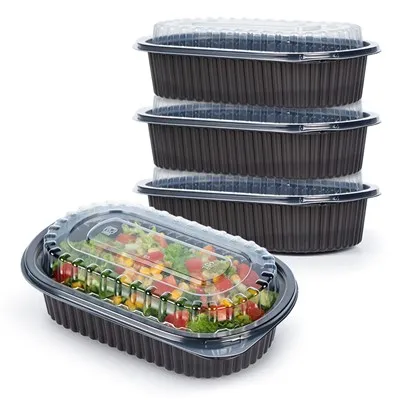
- Structural Stability: Round containers provide uniform stress distribution and 30% higher compression strength; square containers facilitate compartmentalization for separate food items, maintaining flavor integrity.
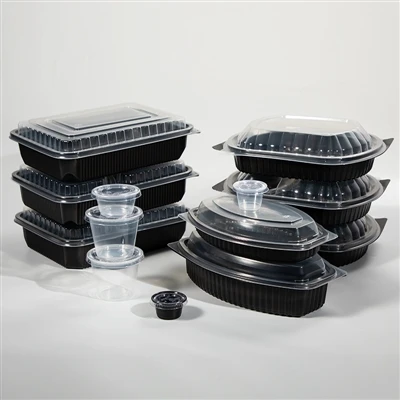
- Functional Versatility: Customizable compartments separate entrees, sides, and sauces, preventing flavor mixing and preserving original taste.
IV. Analysis of Convenience Advantages of Custom Food Boxes
4.1 Ease of Use: Human-Centered Functional Design
 Modern custom food boxes are designed with user convenience in mind.
- Sealing and Opening Balance: Multi-point snap closures ensure leak-proof transport, while easy-open tabs allow consumers to open without tools.
- Heat and Slip Resistance: Ribbed insulation designs reduce hand contact with hot surfaces; positioning grooves enables secure stacking.
- Microwave and Cold Storage Compatibility: Excellent temperature adaptability allows for convenient reheating and safe refrigeration.
- Portion and Compartment Design: Multi-compartment designs separate foods, maintaining flavor integrity.
4.2 Transport Convenience: Optimized Logistics Efficiency
- Lightweight Design: Reduces weight for shipping and last-mile delivery.
- Standardized Shapes: Rectangular designs maximize stacking efficiency in storage and transport.
- Crush and Leak Resistance: Reinforced edges and tight seals prevent leakage, a critical feature for both last-mile delivery and long-distance transport.
- Portability: Lightweight, portable designs with carrying options make them ideal for outdoor events, camping, and delivery.
4.3 Storage Convenience: Maximizing Space Utilization
- Stackability: Space-efficient stacking saves valuable back-of-house space.
- Space Optimization: Round containers can be closely stacked, saving up to 30% of storage space.
- Nesting: Pre-delivery nesting saves space; convenient for consumers post-use.
- Modular Storage: Integrated packaging for meals, condiments, and utensils streamlines storage and retrieval.
4.4 Customization Convenience: Innovations in Flexible Production
- Faster Design Cycles: Advanced manufacturers can provide design proofs within 72 hours.
- Lower Minimum Order Quantities (MOQs): Flexible production supports MOQs as low as 200 case for some products.
- Diverse Printing Technologies: Supports screen printing, heat transfer, foil stamping; up to 10-6 color printing available.
- Full-Service Solutions: OEM/ODM services cover the entire process from initial consultation to final production, including 3D modeling and sampling.
V. Market Opportunities for Plastic Takeout Box Customization Services
5.1 Service Models and Technological Capabilities
 Plastic takeout box customization services are undergoing technological and model innovation.
- Rapid Response: Leading manufacturers (such as YANGRUI)provide design proofs within 72 hours, enabled by digital design tools.
- Material Technology: Food-grade PP thermoformed containers use virgin materials, certified by FDA, SGS, etc., with temperature resistance from -20°C to 120°C.
- Printing Innovation: Low MOPs for lid printing, support for full-color printing, and multi-color body printing ensure color saturation and positional accuracy.
- Flexible Production: Supports MOQs as low as 500 units for some items up to million-unit orders.
5.2 Product Advantages and Differentiation Strategies
- Cost Advantage: Transparent plastic boxes cost only 60%-80% of comparable paper boxes in bulk purchases.
- Versatility: Customizable sizes from single-serving to family-sized, suitable for diverse food types.
- Superior Performance: Food-grade PP+TPE materials with three-layer sealing ensure 100% leak-proof protection.
- Design Flexibility: Full customization, including logo printing/embossing, size and compartment layout, color options, and lid styles.
5.3 Market Positioning and Target Customers
- By Scale: Large-volume, standardized services for chains; low-MOQ, flexible solutions for SMEs.
- By Segment: Specialized solutions for QSRs, hotels, institutions, and ghost kitchens.
- By Scenario: Differentiated products for delivery, takeout, and retail display.
- By Sustainability: Options ranging from conventional plastics to biodegradable and recyclable materials.
5.4 Development Trends and Future Opportunities
- Digital Transformation: The digital printing packaging market reached £24.5 billion in 2024, projected to reach £36.2 billion by 2029 at a CAGR of 8.9%.
- Sustainability Focus: Innovation in recyclable and compostable materials, such as high-performance recyclable PE films and reduced-density PP trays.
- Growing Demand for Personalization: Digital printing enables cost-effective customization for deeper consumer connections.
- Vertical Integration: Examples include International Paper's mill converting 100,000 tons/year of post-consumer cups into pulp.
VI. Market Trends and Development Prospects
6.1 Deepening Personalization
- Design Personalization: From simple logo printing to full brand experience integration.
- Production Flexibility: 3D printing and rapid prototyping accelerate design and production cycles.
- Emotional Value Integration: Packaging strategy evolves from functional focus to incorporating emotional and social values.
6.2 Digital and Intelligent Upgrades
- Digital Printing Adoption: Accounted for 25% of the personalized packaging market in 2024.
- Smart Manufacturing: Intelligent packaging with embedded sensors for real-time freshness monitoring.
- Supply Chain Digitization: End-to-end visibility from design to delivery.

6.3 Differentiated Regional Market Development
- North America: Focus on technological innovation and premiumization, with 39.86% of the global custom packaging market in 2023.
- Asia-Pacific: Transition from scale growth to quality improvement, with the Chinese prepared meal container market growing 58.3% year-on-year in 2024.
- Europe: Leading in environmental standards and sustainability; lightweight container penetration reached 43% in 2024.
6.4 Evolving Competitive Landscape
- Industry Consolidation: A major packaging group acquired a leading fiber container producer for $10.4 billion in early 2025.
- Rising Technological Barriers: Patented technologies, such as QR-coded labels for carbon data blockchain verification, create differentiation.
- Service Model Innovation: Transition from pure product supply to integrated solution provision.
Conclusion
The North American B2B custom food box market is at a critical juncture of transformation. Sustained market growth, diverse consumer demands, increasingly stringent environmental regulations, and continuous technological breakthroughs are collectively driving this market towards higher quality, greater sustainability, and deeper personalization.
For B2B enterprises, the custom food box is no longer merely a container but a vital brand vehicle, a cost management tool, and a key component of customer experience. Thoughtful selection of custom services allows businesses to control costs while enhancing brand value, achieving both economic and social benefits.
 For service providers, opportunities and challenges coexist. Growing demand for personalization, technological efficiency gains, and the sustainability trend offer significant potential. Yet, environmental pressures, cost competition, and technological evolution demand constant innovation and adaptability.
Looking ahead, the North American custom food box market is expected to maintain steady growth, potentially exceeding the $100 billion mark by 2030. Technological innovation, sustainability, and personalization will serve as the three core drivers. Businesses must accurately grasp market trends, embrace change, and forge their own path in this competitive landscape.
For investors, companies with strong technological capabilities and a commitment to sustainability present attractive opportunities. For policymakers, balancing environmental transition with industry support through appropriate policies is key. For industry professionals, continuous learning, innovative thinking, and open collaboration will be essential to thrive in this rapidly evolving market.