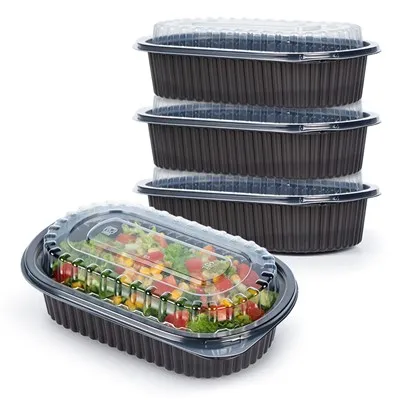
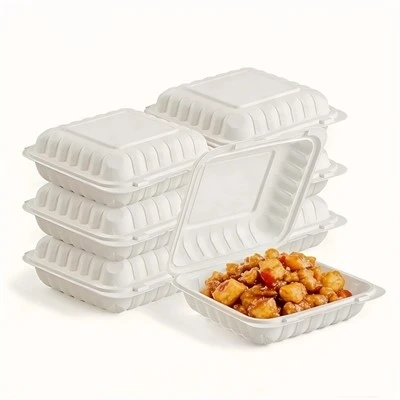
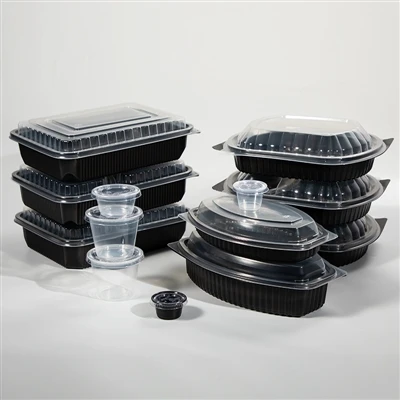
Since 2026, the geopolitical conflict in the Middle East has continued to escalate, disrupting shipping through the Strait of Hormuz and leading to sharp fluctuations and an upward trend in international crude oil prices. This has directly driven a surge in global polypropylene (PP) resin prices. As the core raw material for U.S. plastic takeout containers, the sharp increase in PP prices has quickly been transmitted to the catering packaging industry chain. From takeout fast food container manufacturers and wholesale distributors to various catering stores across the United States, all are facing unprecedented cost pressures.
Starting from the core logic of the PP resin price hike, this article conducts an in-depth analysis of the response measures of the U.S. plastic takeout fast food container market and the comprehensive impact of this price increase on the U.S. catering industry. It also sorts out high-frequency industry FAQs to provide professional and actionable popular science references for catering practitioners and packaging suppliers.
I. The Rise in PP Resin Prices: Why Does It Affect the U.S. Plastic Takeout Container Market?
1.1 The Strong Correlation Between PP and Plastic Fast Food Containers
 Polypropylene (PP) is the core raw material for food-contact plastic packaging worldwide. With its characteristics of high temperature resistance, oil resistance, non-toxicity, odorlessness, and excellent cost performance, it has become the preferred material for U.S. takeout containers and fast food packaging containers, accounting for more than 65% of the U.S. disposable catering plastic packaging market.
In the production cost of U.S. plastic takeout fast food containers, the cost of PP resin accounts for as high as 60%-70%. Even small fluctuations in raw material prices will directly affect the terminal wholesale and purchase prices of takeout containers. According to the "Global Plastic Packaging Market Report" released by Rabobank in March 2026, the Middle East supplies about 35% of the world's naphtha (the core upstream raw material for PP). The geopolitical conflict has led to a tightening of PP resin supply, with U.S. domestic PP imports dropping by 18% year-on-year, and raw material prices rising by 35%-50% compared with the end of 2025, the largest increase in nearly three years.
1.2 The Core Reasons for the Current PP Resin Price Hike
- Disruption of the crude oil supply chain: The Strait of Hormuz handles 20% of the world's petrochemical product transportation. The geopolitical conflict has disrupted shipping, leading to a shortage of naphtha and propylene, the upstream raw materials of PP, which has pushed up raw material costs.
- Linked increase in production costs: Data from the International Energy Agency (IEA) shows that for every $10 per barrel increase in crude oil, the production cost of PP rises by about 3%. In March 2026, WTI crude oil exceeded $110 per barrel, directly driving a sharp increase in PP resin prices.
- Insufficient domestic production capacity in the U.S.: The U.S. relies on imports for more than 40% of its PP resin. Maintenance and production cuts by domestic refineries, coupled with the impact of trade tariffs, have further increased the cost of imported PP resin, exacerbating the imbalance between market supply and demand.
- Synchronized increase in additive prices: BASF, a global chemical giant, announced an increase in plastic additive prices, with the maximum increase reaching 20%, further pushing up the comprehensive production cost of takeout containers.
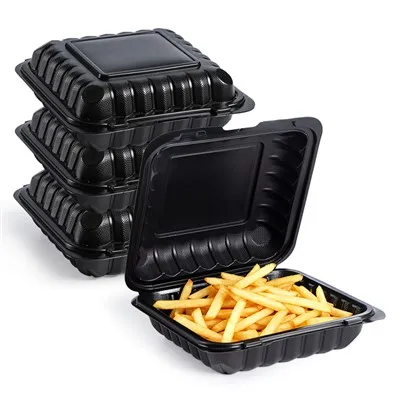
II. Response Measures of the U.S. Plastic Takeout Container Market After the PP Resin Price Hike
Faced with the sharp increase in PP resin prices, U.S. plastic takeout fast food container manufacturers and supply chain players have adjusted their strategies one after another, seeking a balance between cost control, product optimization, and model transformation. The core measures are divided into four categories, all of which comply with U.S. FDA food contact standards and environmental protection regulations.
2.1 Price Increase of Takeout Fast Food Containers and Transmission of Cost Pressure to the Downstream
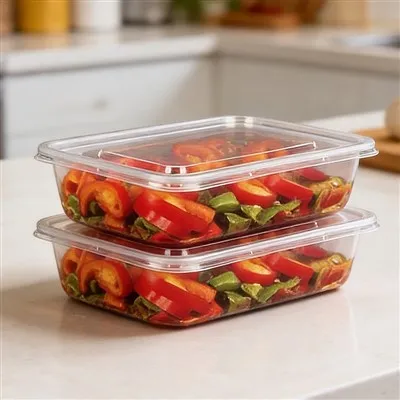 This is the most direct response method in the industry. According to a survey by the Society of the Plastics Industry (SPI), from January to March 2026, the average wholesale price of U.S. domestic plastic takeout fast food containers increased by 12%-25%, among which the price of large-capacity and thickened takeout containers increased by more than 30%.
Manufacturers have partially transmitted the pressure of rising raw materials to downstream catering customers through small and phased price adjustments, avoiding customer loss caused by a one-time sharp price increase. At the same time, for long-term cooperative catering chain enterprises with large-volume purchases, they have launched tiered pricing and appropriately made concessions to stabilize core customers.
2.2 Product Structure Optimization, Balancing Cost and Quality
 On the premise of adhering to FDA food contact safety standards, manufacturers have optimized the design of takeout fast food container products. Through reasonable lightweight thinning (within the scope of not affecting performance), simplified box design, and standardized production, they have improved raw material utilization, reduced raw material loss per unit product, and offset part of the pressure from rising raw material prices.
At the same time, enterprises have eliminated non-standard takeout containers with low profits and high material consumption, focused on the production of general-purpose and cost-effective takeout fast food containers, concentrated production capacity to reduce production losses, alleviated cost pressure, and eliminated illegal practices of using recycled materials or non-food-grade PP resin to reduce costs.
2.3 Raw Material and Supply Chain Adjustment to Reduce Purchase Costs
On the one hand, large takeout fast food container manufacturers have increased the advance purchase and price locking of PP resin, signed long-term supply agreements with raw material suppliers to lock in purchase prices, and avoid the risk of short-term price fluctuations. On the other hand, some enterprises have explored the replacement of food-grade PE materials (within a technically feasible scope). The price of PE resin has increased relatively gently, which can be used as a short-term supplementary option, but it cannot completely replace the high-temperature resistance advantage of PP.
In addition, enterprises have optimized the logistics and distribution system, integrated orders, and carried out centralized distribution to reduce logistics costs, further dilute the comprehensive operating costs, and alleviate the pressure brought by the rise in raw material prices.

2.4 Promoting the Transformation to Recyclable and Environmentally Friendly Packaging
Driven by both the rise in raw material prices and U.S. environmental protection policies, regions such as California and New York have accelerated the promotion of environmental protection reforms in catering packaging. Some large takeout fast food container manufacturers and catering chain brands have begun to pilot the recyclable PP container rental model, reducing the cost of single packaging through repeated use. At the same time, they have increased investment in the R&D of degradable takeout containers, laid out long-term alternative solutions, and reduced dependence on a single PP raw material.
California's SB 54 packaging regulation clearly states that a 65% recycling rate of plastic packaging must be achieved by 2032. The current PP price hike has further accelerated the pace of environmental transformation in the industry.

III. The Comprehensive Impact of Rising PP Resin Prices on the U.S. Catering Industry
The U.S. catering industry is highly dependent on takeout and takeaway businesses. According to data from the U.S. Bureau of Labor Statistics in 2026, takeout and takeaway businesses account for more than 55% of the business volume of catering stores across the United States, and plastic fast food containers are essential consumables. The increase in takeout container costs caused by the rise in PP resin prices has formed a comprehensive and hierarchical impact on the catering industry.

3.1 Rising Operating Costs of Catering Stores and Compressed Profit Margins
For catering stores, the purchase cost of takeout fast food containers is an important operating expense. After the wholesale price of takeout containers increased by 12%-25%, the monthly purchase cost of takeout containers per store increased by 20%-30% year-on-year. Especially for fast-food restaurants, pizza shops, and small community restaurants with a high proportion of takeout, profit margins have been greatly compressed.
A survey by the National Restaurant Association shows that in the first quarter of 2026, more than 70% of independent catering stores across the United States stated that the increase in packaging costs led to a 3-8 percentage point drop in store net profit, and some small and micro catering stores are facing the risk of losses.
3.2 Passive Adjustment of Catering Pricing and Pressure on the Consumer Side
To cover the rising packaging costs, most catering enterprises have adopted two pricing methods: first, a small increase in food prices, with an increase of 5%-10%; second, the addition of takeout packaging fees and delivery service fees to transfer part of the costs to consumers.
 However, price increases directly affect consumers' willingness to order food. Data from the National Retail Federation shows that in the first quarter of 2026, the number of U.S. takeout orders decreased by 4% year-on-year. Among them, price-sensitive consumers are more inclined to dine in or reduce the frequency of ordering, which has a certain impact on the passenger flow of catering stores.
3.3 Intensified Industry Differentiation and Difficult Survival of Small and Micro Catering Businesses
Large catering chain enterprises, relying on the advantages of large-scale procurement and strong financial strength, can sign long-term low-price agreements with takeout container suppliers and have a stronger ability to absorb cost pressure. At the same time, chain brands can further reduce packaging costs by optimizing the supply chain and conducting national unified procurement.
In contrast, independent small restaurants and small and micro catering stores have small purchase volumes and weak bargaining power, so they cannot enjoy purchase discounts and can only bear high takeout container purchase costs. They are at a disadvantage in the competition, and some stores even face the risk of closure, accelerating the survival of the fittest in the U.S. catering industry.
3.4 Forcing Catering Enterprises to Optimize Operations and Transform to Reduce Costs
In the face of the crisis, U.S. catering enterprises have successively launched cost reduction and efficiency improvement models: first, streamlining the types of takeout food to reduce packaging losses of high-soup and easy-leakage food; second, optimizing the use of packaging, eliminating excessive packaging, and selecting takeout container specifications on demand; third, promoting dine-in and self-pickup businesses to reduce dependence on takeout packaging; fourth, group purchasing, where multiple small and micro catering businesses jointly purchase takeout containers in bulk to improve bargaining power and reduce purchase costs.

IV. High-Frequency Industry FAQs
Q1: Will U.S. plastic takeout containers be out of stock due to the rise in PP prices?
No. Although U.S. plastic takeout fast food container manufacturers are facing cost pressures, there has been no large-scale production reduction or suspension. The industry maintains supply through price adjustments and production optimization. Only some niche and non-standard takeout containers have short-term delivery delays, while the supply of conventional takeout containers is stable, so there is no need to worry about out-of-stock issues.
Q2: Can catering stores purchase low-cost recycled PP takeout fast food containers to reduce costs?
 Absolutely not. The U.S. FDA clearly stipulates that food-contact plastic packaging must use 100% new food-grade PP resin, and it is strictly prohibited to use recycled materials or reclaimed materials to produce catering takeout containers. Illegal purchase and use will face a fine of up to $50,000, and also bear the liability for compensation for consumer health damage. Catering stores must not sacrifice long-term interests for short-term gains.
Q3: Will PP resin prices continue to rise in the future?
According to the forecasts of the International Energy Agency (IEA) and Rabobank, if the geopolitical conflict in the Middle East is not alleviated in the first half of 2026, PP resin prices will remain volatile at a high level; if the supply chain recovers in the second half of the year, prices are expected to drop slightly, but it will be difficult to return to the level at the end of 2025. Catering enterprises need to be prepared for long-term high costs.
Q4: Besides price increases, what other methods can catering enterprises use to cope with the rise in takeout fast food container costs?
- Bulk price locking: Sign a 3-6 month long-term purchase agreement with a regular takeout container supplier to lock in the purchase price;
- Streamline packaging: Reduce unnecessary packaging consumables and select cost-effective general-purpose takeout containers.
- Promote self-pickup: Launch discounts for in-store self-pickup to reduce the use of takeout packaging.
- Compliant replacement: Under the premise of compliance, select food-grade PE takeout containers and degradable takeout containers as supplements.
Q5: Will the rise in PP prices accelerate the elimination of plastic takeout containers in U.S. catering packaging?
No, in the short term, but it will accelerate the transformation in the long term. The performance and cost advantages of plastic PP fast food containers cannot be completely replaced at present, and they will still be the mainstream in the short term. However, driven by both the rise in raw material prices and environmental protection policies, the market share of recyclable and degradable packaging will gradually increase. In the long run, the industry will form a diversified pattern of "plastic takeout fast food containers + recyclable packaging + degradable packaging".

V. Welcome to Visit YANGRUI for Consultation and In-Depth Understanding of Product Details
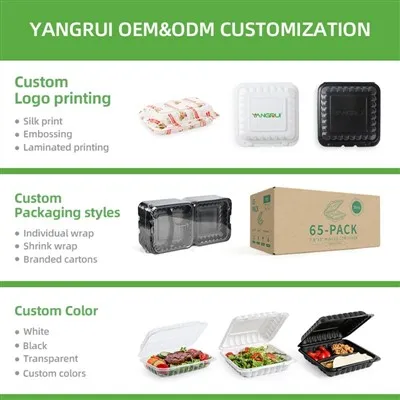
Faced with the industry changes brought about by the rise in PP resin prices, we, Huizhou Yangrui, have been deeply engaged in the food-grade plastic packaging field for many years. We have always insisted on producing with 100% new food-grade PP resin, and have a complete product line of catering takeout fast food containers, a mature supply chain system, and customized service capabilities. We can provide cost-effective, compliant, and stable supply packaging solutions according to the compliance requirements of the U.S. market and the cost control needs of catering customers. Whether you are a catering chain brand, a group meal enterprise, or a packaging distributor, you are welcome to visit our company in person, tour our automated production workshop, and check product qualifications and test reports. We will arrange a professional team to provide one-on-one docking, explain product parameters, pricing systems, bulk purchase discounts, and cross-border cooperation plans in detail for you, and work together to cope with cost challenges and achieve long-term stable win-win results.

Conclusion
The rise in PP resin prices is the result of the combined effect of the global supply chain and geopolitics. Its impact on the U.S. plastic takeout container market and catering industry is essentially the full-industry-chain transmission of cost-side pressure.

For the U.S. plastic takeout fast food container industry, this price hike is an opportunity for industry reshuffling, forcing enterprises to optimize production, improve efficiency, and accelerate environmental transformation. For the U.S. catering industry, it is facing the dilemma of profit compression and increased operating pressure in the short term, but in the long term, it will promote the industry to reduce costs and increase efficiency, optimize operations, and achieve more stable development.
Catering practitioners do not need to be overly panicked. The core is to adhere to the bottom line of compliance, select regular food-grade takeout fast food container products, cope with cost pressure through optimizing procurement and operational adjustments, and at the same time pay attention to the trend of industry environmental transformation and lay out long-term development strategies in advance.