- I. Plastic Food Takeaway Containers Production Process
- II. Paper Food Takeaway Containers Production Process
- III. Production Process of Biodegradable Takeaway Containers
- IV. Production Equipment and Technology Development Trends
- V. Full-Chain Quality Control System
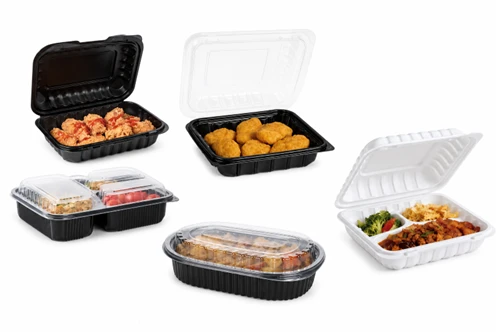
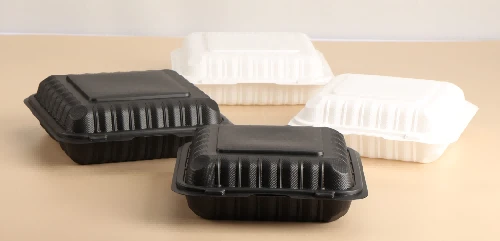
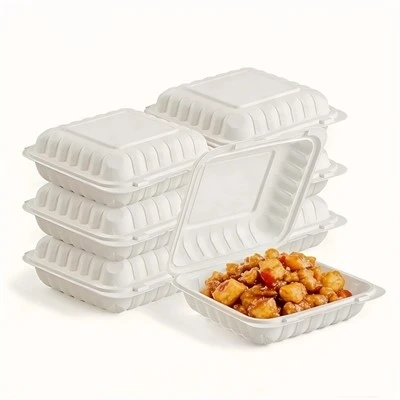
As a key component of the modern catering service system, the production of food takeaway containers is a comprehensive technology integrating materials science, chemical engineering, and precision machinery. The safety, functionality, and environmental friendliness of the products are crucial in every stage, from raw material pretreatment to final quality inspection. This article systematically elaborates on the complete production processes and technical details of three major categories of food takeaway containers: plastic, paper, and biodegradable materials, presenting readers with a core technology map of this industry chain.
I. Plastic Food Takeaway Containers Production Process
1.1 Raw Material Processing
The production of plastic food takeaway containers begins with the rigorous screening and pretreatment of the base resin. Commonly used raw materials include thermoplastic plastic granules such as polypropylene (PP), polyethylene terephthalate (PET), and polystyrene (PS).
Raw Material Inspection and Compliance Confirmation
Before raw materials enter the factory, it is necessary to verify the food-grade raw material certification provided by the supplier (such as compliance with GB 4806.7-2023 "National Food Safety Standard - Plastic Materials and Products for Food Contact") and authoritative third-party testing reports. The quality control department samples at a rate of no less than 5‰, with no fewer than 20 samples per batch. The focus is on testing key indicators such as heavy metal content (e.g., lead, cadmium, mercury, chromium) and melt flow index (MFI) to ensure raw material purity and processing stability.
Pretreatment and Drying
Although materials like PP have low hygroscopicity, residual moisture can easily cause surface defects in products during high-temperature processing. Therefore, raw materials need to be dried at 80℃ for approximately 2 hours to completely remove moisture. This step is crucial for ensuring the surface smoothness of products, especially transparent food containers.
Melting and Plasticizing Process Control
After drying, the plastic granules are gradually plasticized in the injection molding machine barrel through a heating system. Taking PP as an example, the barrel temperature is typically controlled in stages within the range of 200-270℃, with the initial temperature slightly lower to prevent thermal degradation and the subsequent temperature slightly higher to ensure melt flowability. Modern high-speed injection molding machines typically employ a combination of a high length-to-diameter ratio screw (e.g., L/D = 25:1) and wear-resistant alloy bushings. Optimized shear rates for high-viscosity materials allow for precise control of melt temperature fluctuations within ±3℃, providing a homogeneous and stable melt for subsequent molding.


1.2 Injection Molding Process
Injection molding is the core process for the mass production and high-precision manufacturing of plastic lunch takeaway boxes. Its essence lies in the precise coordinated control of temperature, pressure, and time to complete the cycle of melt filling, holding pressure, cooling, and demolding.
- Precise setting of process parameters: Injection pressure is typically set between 100-140 MPa; thin-walled products require higher pressure to ensure complete filling. Holding pressure is approximately 70-80% of the injection pressure, used to compensate for shrinkage and reduce sink marks.
- High-speed and high-efficiency molding technology: Industry-leading specialized injection molding machines can increase clamping speed to over 300mm/s, reducing the single injection cycle to 2.5-5 seconds and enabling multi-cavity production.
- Key points for molding cycle management: Cooling time accounts for over 70% of the molding cycle. A reasonable draft angle (recommended to be greater than 1°) and venting system must be designed to ensure smooth demolding.
1.3 Thermoforming process
Thermoforming is mainly used for producing thin-walled, relatively simple disposable lunch takeaway containers and lids, characterized by high efficiency and relatively low mold costs.
- Sheet Preparation and Heating: Plastic sheets (0.15-1.0 mm) are heated to their softening point (110-130℃ for PET, 140-160℃ for ABS) in a multi-stage heating zone using infrared or hot air.
- Rapid Molding and Cutting: Softened sheets conform to the mold contour within 2-3 seconds under 0.5-1.5 MPa pressure. After cooling, the edge material is removed by precision die-cutting.
- Production efficiency: Modern high-speed thermoforming machines can achieve 10-35 cycles/minute, suitable for large-scale continuous production.


1.4 Quality Inspection System
Quality control of plastic lunch boxes is implemented throughout the entire process, forming a multi-level inspection network.
Raw Material Monitoring
Focus on heavy metal content (atomic absorption spectrometry) and melt flow index. Real-time monitoring of barrel/mold temperature (±1℃ accuracy) and pressure.
Appearance & Dimensions
Inspect surface flatness, bubbles, scratches, deformation, and printing quality; verify critical dimensional tolerances with precision tools.
Hygiene & Safety
Tests for total migration, specific migrations (heavy metals, bisphenol A), and microorganisms. Sampling rate ≥5‰, ≥30 samples per batch.
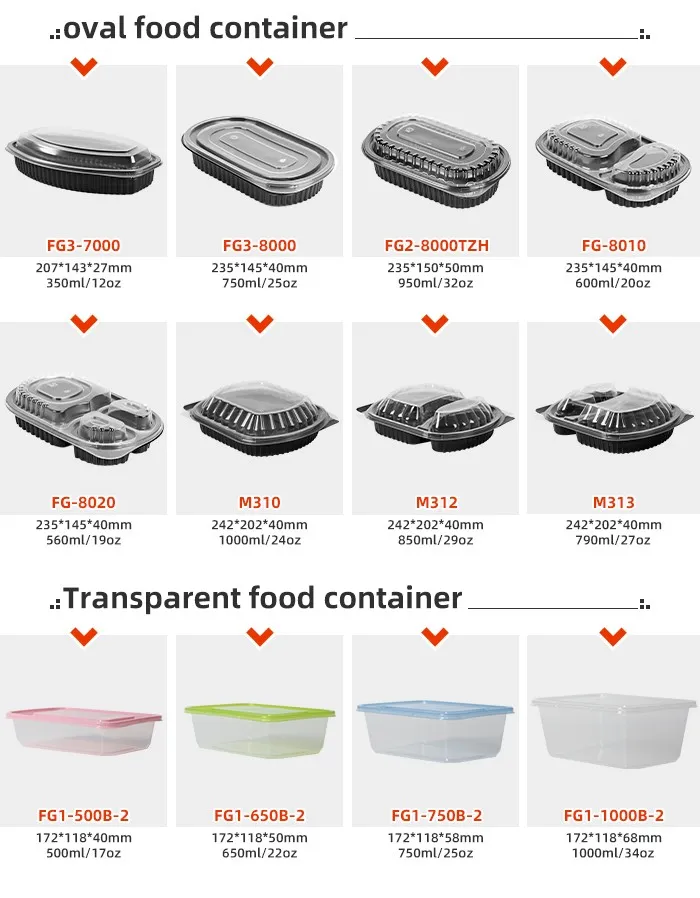
II. Paper Food Takeaway Containers Production Process
2.1 Pulp Preparation Process
The production of paper takeaway containers begins with the preparation of plant fiber pulp.
- Raw Material Selection and Pulping: Recycled paper, sugarcane pulp, bamboo pulp, and other renewable fibers are primarily used. Raw materials are pulped in a hydraulic pulper for about 5 minutes to form a homogeneous pulp.
- Pulp Mixing and Functional Auxiliary Agent Addition: The pulp concentration is adjusted, and food-grade oil-repellent and water-repellent agents are added to give the paper necessary barrier properties.
2.2 Molding Process
Paper lunch boxes mainly use three technical routes: compression molding (pulp molding), stamping, and folding molding.
- Pulp Molding: Pulp is vacuum filtered onto a forming wire to form a wet blank (65%-75% moisture). Dried and set at 180-200℃ and 0.4-0.6 MPa pressure, cycle time 4-8 seconds.
- Stamping and Folding: Suitable for laminated or coated paperboard. After printing, precision die-cut and creasing, then folded and assembled into boxes using gluing, stapling, or ultrasonic welding.
2.3 Surface Treatment and Printing
To meet food packaging requirements, the paper undergoes functional treatments.
Waterproof and Oil-Resistant Coating
A food-grade PE or PLA film is applied to the paper surface through extrusion lamination or coating. This is crucial for ensuring the food box is leak-proof and seepage-resistant.
Safe Printing
Ink that meets food safety standards is used, employing offset printing, flexographic printing, and other processes to ensure clear, accurate, and harmless printed patterns.
2.4 Quality Inspection
The inspection focuses on its specific functional and hygiene indicators.
- Appearance and Coating Integrity: Check surface flatness and damage, with particular attention to coating uniformity and absence of pinholes.
- Physical Properties: Test water resistance, oil resistance, compressive strength, and folding endurance.
- Hygiene and Safety: Test heavy metals, fluorescent whitening agents, and microorganisms to ensure compliance with food contact material standards.
III. Production Process of Biodegradable Takeaway Containers

3.1 Polylactic Acid (PLA) Food Box Production Process
PLA, as a bio-based biodegradable polyester, has more stringent processing requirements.
Strict Raw Material Drying
PLA raw materials are highly hygroscopic and must be dried at 80-100℃ until the moisture content is below 0.025% to prevent hydrolytic degradation during processing.
Modification, Blending, and Molding
Dried PLA is blended with heat-resistant modifiers and nucleating agents to improve processability. The processing temperature window is narrow (80-100℃ for thermoforming), requiring precise temperature control (±2℃).
Typical process: material drying → screw blending → sheet extrusion → thermoforming/injection molding → cooling and cutting.
3.2 Sugarcane Bagasse/Pulp Molded Containers
These products directly utilize agricultural waste fibers, embodying the concept of a circular economy.
Fiber Raw Material Processing
After sugarcane bagasse is extracted, it needs to be washed and cooked to remove residual sugar and impurities, yielding pure fibers.
Wet Molding
Fibers are pulped, then vacuum-adsorbed onto a mold to form a wet preform, which is hot-pressed at 180-230℃ under high pressure. Fibers self-bond through hydrogen bonds; no chemical adhesives needed.
3.3 Special Focus Points for Quality Inspection
In addition to routine items, the core focus is on verifying its degradability and ecological safety.
Biodegradability
According to GB/T 18006.3-2020, under controlled composting conditions (58±2℃, 50-60 days), the relative biodegradation rate should be ≥90%, and the disintegration rate ≥90%.

Chemical Residue
Detection of potential lactic acid monomer residues (PLA materials), antioxidants (such as BHT), heavy metals, etc., ensuring they are within safe limits.

IV. Production Equipment and Technology Development Trends
4.1 Advanced Production Equipment
High-Speed Injection Molding Machines
Haitian MA-II series: injection speeds up to 500mm/s, integrated intelligent control systems enable real-time monitoring and optimization of process parameters, significantly reducing energy consumption.
Automated Pulp Molding Lines
Integrate molding, hot pressing, and trimming, with a capacity of thousands to tens of thousands of pieces per hour. Centrally controlled by PLC for improved efficiency and consistency.
High-efficiency Thermoforming Machine
The three-station model enables rapid sheet feeding, heating, forming, and cutting, adapting to the production of products with varying thicknesses and depths.
4.2 Intelligent Quality Inspection and Environmental Protection Technology
AI Vision Inspection System
Utilizing high-resolution cameras and machine learning algorithms, this system achieves high-speed, automatic online identification of appearance defects (scratches, stains, deformation), with inspection accuracy and efficiency far exceeding manual methods.
Online Process Monitoring
Through an IoT sensor network, key data such as temperature, pressure, and weight are collected in real time to ensure stable and controllable production.
Environmental Protection Technology Enhancement
Continuous optimization of biodegradable materials performance; clean production technologies reduce wastewater and exhaust emissions; closed-loop system enables efficient recycling of scrap materials and energy.

V. Full-Chain Quality Control System
Modern takeaway container manufacturers generally establish a three-tiered quality control system covering "raw materials - process - finished products," adhering to strict domestic and international standards.
Systematic Management
Implementation of a "mandatory inspection of incoming raw materials, inspection during production, and full inspection of finished products before shipment" system. Finished products are sampled at 0.5% per batch for comprehensive physical, chemical, and hygiene testing.
Standard Compliance
Compliance with Chinese national standards (GB 4806.7), EU Framework Regulation (EC) No 1935/2004, and US FDA 21 CFR, covering total migration, specific migrations, and microbial limits.
Precise Testing Methods
Equipped with atomic absorption spectrometry (AAS), gas chromatography-mass spectrometry (GC-MS), universal testing machine, and constant temperature and humidity chamber for scientific quality judgment.

The production of food takeaway containers is a technology-intensive and systematic project. Its development level directly reflects the comprehensive capabilities of the modern food packaging industry in material innovation, process precision, quality control, and environmental responsibility. With increasingly stringent global environmental regulations and rising consumer awareness, biodegradable materials and intelligent, clean production technologies are becoming core drivers of industrial upgrading. A deep understanding of the entire technology chain from raw materials to finished products, along with key quality control points, is of significant practical importance for industry professionals to grasp industry trends, enhance product competitiveness, and promote sustainable industrial development.