

Uncovering the Truth and Myths About Bio-Based Plastics
With environmental awareness increasingly prominent, biodegradable togo containers are increasingly appearing on dining tables and becoming a popular choice in many restaurants. However, are they truly as eco-friendly as advertised? There are actually quite a few misconceptions, and many people are easily misled. Let's delve into the truth.
1. The Concept and Market Status of Biodegradable Togo Containers
The emergence of eco-friendly togo containers is driven by policy initiatives and consumer demand for environmental protection. Biodegradable togo containers are indeed popular, but are they significantly different from traditional plastic containers? How are they actually performing in the market?

What Are Bio-Based Plastics?
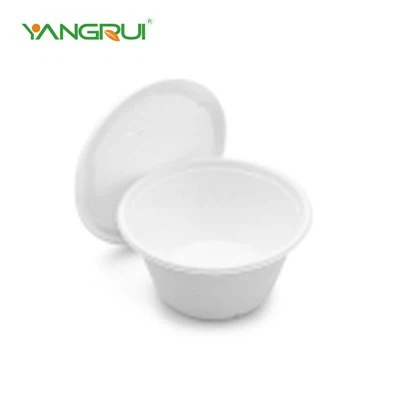
So-called bio-based plastics are made from plant-based materials such as corn, sugarcane, and cassava. The most common types are PLA and PHA. These materials are marketed as "environmentally friendly" and "biodegradable." Compared to traditional plastic togo food containers, they appear to be more eco-friendly, but their performance isn't necessarily superior. PLA containers are the most commonly used, but they easily deform when exposed to hot water or fried foods. While PHA degrades more completely, its production volume is limited, and its price is high. Traditional clamshell togo containers, on the other hand, are inexpensive, durable, and easier to use. This is why many companies use a mix of both.
Market Demand Driven by Policies and Regulations
A major reason for the popularity of eco-friendly togo containers is policy. The EU banned single-use plastics early on, and China's "plastic restrictions" are gradually being expanded, requiring restaurants and takeout businesses to reduce the use of traditional plastics. With the growing takeout business in North America, local consumers are also placing a high priority on environmental protection, and restaurants naturally need to follow suit. However, plastic togo food containers haven't been completely replaced, especially clamshell togo containers used in fast food. Due to their practicality, they remain the preferred choice for many businesses.
Applications of Biodegradable Togo Containers
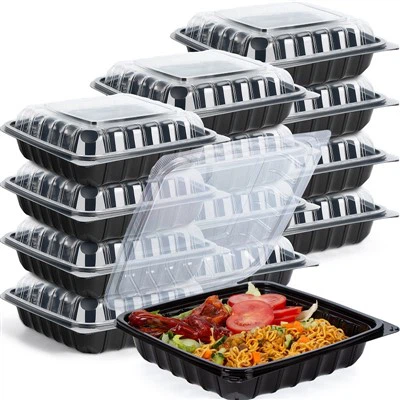
These containers are primarily used for takeout, supermarket prepared foods, and fast food chains. Salads and prepared foods are often displayed in transparent PLA containers. Takeout is all about convenience and portability, and biodegradable to-go containers are popular for their perceived environmental benefits. Clamshell to-go containers with lids are a common sight at fast food restaurants. These can be made of paper pulp, PLA, or other composite materials, making them convenient and environmentally friendly. Ultimately, however, the choice of container depends on the type of food and its storage requirements.


2. The Truth About Bio-Based Plastics: Advantages and Disadvantages
Biodegradable togo containers may seem attractive, but they also have significant advantages and disadvantages. Businesses can easily fall into traps if they're unfamiliar with them.
Advantages: Renewable, Environmentally Friendly
The biggest selling point of these containers is their environmental credentials. They're made from plants, reducing reliance on oil. Environmental protection is a major trend these days, and using biodegradable togo containers can boost brand loyalty, especially in the European and American markets, where many customers are more willing to pay for eco-friendly containers.
For catering businesses, this allows them to comply with regulatory requirements while also conveying a sense of environmental responsibility to consumers. Compared to traditional plastic togo containers, they can also create a more responsible image.

Disadvantages: Required Degradation Conditions
Degradable containers, despite their name, aren't always easy to degrade. They typically require specialized industrial composting environments with high temperatures, high humidity, and the right microorganisms. If simply thrown in a regular trash can, biodegradable togo containers are little different from plastic togo containers and may not decompose for years. However, not all places have professional industrial composting systems, making biodegradable plastics more difficult to produce.
Cost and Performance Disadvantages
Besides the demanding degradation conditions, price is also a major issue. Biodegradable togo containers are generally 30%–50% more expensive than traditional plastics. This undoubtedly increases costs for the already low-profit takeout industry. They also have performance limitations, such as poor heat resistance, which can cause deformation when exposed to high temperatures, and a less stable seal than some clamshell togo containers. As a result, while they can be used for cold dishes and salads, hot soups and fried foods still rely on plastic togo containers.




3. Common Misconceptions About Biodegradable togo containers and the "IQ Tax" Controversy
There are many misconceptions about biodegradable togo containers in the market, some even considered an "IQ tax." Let's deconstruct each one.
Myth 1: All Biodegradable Togo Containers Are Naturally Degradable
Many people believe that any biodegradable togo container will naturally decompose in the environment. However, most require industrial composting conditions. Ordinary household landfills simply don't have such conditions, so they may persist for as long as plastic togo containers. This is the most common misconception.

Myth 2: Bio-based = Zero Carbon Emissions
Many people believe that as long as it's made from plants, it has no carbon emissions. In fact, the production process of biodegradable togo containers is also energy-intensive and emits carbon. Compared to plastic togo containers, they use less petroleum, but they are not completely environmentally friendly. Therefore, bio-based does not equal zero carbon. Don't be misled by labels.
Myth 3: Disposable Eco-Friendly togo containers are the Ultimate Solution
Biodegradable togo containers are merely a transitional solution. A truly more environmentally friendly approach is to reuse food containers, such as glass, stainless steel, or reusable plastic containers. In some locations, fast food brands have begun experimenting with reusable clamshell to-go containers, which customers can return after eating and then wash and recycle, a more reliable approach than relying solely on disposable containers.


4. Future Trends: A Rational Approach to Bio-Based Plastics
In the future, biodegradable togo containers will continue to grow, but we must approach them rationally and choose based on actual needs rather than blindly following trends.
How Can Businesses Avoid the "IQ Tax"?
For catering businesses, different containers are appropriate for different scenarios. For salads and cold dishes, biodegradable togo containers are more suitable; however, for hot meals and long-distance delivery, plastic togo food containers or clamshell togo containers are more reliable. A balanced approach can save money while meeting environmental standards.


Technological Breakthroughs and Material Innovation
Currently, researchers are improving the heat resistance of PLA, and PHA production is gradually increasing, and new pulp and environmentally friendly coating materials are emerging. Biodegradable togo containers will become even more practical in the future. At the same time, plastic togo food containers are also being upgraded, such as with lightweight and recyclable designs, which will be even more environmentally friendly.
Market Education and Consumer Awareness Raising
Consumer education is crucial for environmental protection to have a real impact. Restaurants should inform customers about the appropriate use of biodegradable to-go containers and avoid blindly following the term "biodegradable." Especially with clamshell to-go containers, customers should be informed about which are disposable and which are recyclable. This is a scientific and environmentally friendly approach.


Where to Buy Plastic Togo Food Containers?
 Huizhou Yangrui Printing and Packaging Co., Ltd can provide customers with a variety of options, such as biodegradable togo containers, plastic togo food containers, clamshell togo containers, etc., and supports wholesale customization.
Contact information:
Email: sales@packagingbag5.com
Tel: +86 180 8644 3226
References
- European Commission. (2021). Single-use plastics directive.

- Ministry of Ecology and Environment of China. (2020). Plastic pollution control action plan.
- North American Packaging Association. (2022). Trends in biodegradable food containers.
- Shen, L., & Patel, M. (2008). Life cycle assessment of PLA and traditional plastics. Journal of Polymers and the Environment.
- Rujnić-Sokele, M., & Pilipović, A. (2017). Challenges and opportunities of biodegradable plastics: A mini review. Waste Management & Research.
