Introduction
In the modern world, where sustainability is more than just a catchphrase, the drive for more environmentally friendly methods has changed our perceptions of commonplace products, particularly in the food sector. Restaurants and food businesses are under pressure to use environmentally friendly packaging due to the surge in takeout and delivery.
 Eco-friendly togo containers have become popular because they provide a means to serve meals while on the go with the least amount of negative influence on the environment. The problem is that not all "eco-friendly" items live up to the hype. There are a plethora of solutions available on the market; some are real, while others are merely greenwashing strategies meant to deceive consumers.
This guide dives deep into spotting the real deal, from decoding labels to evaluating materials, all to help you select authentic, eco-friendly togo containers that align with your values and business needs.
We'll dissect it step-by-step, beginning with the fundamentals of environmental certifications, going on to discuss warning signs of counterfeit goods, looking at material-specific labeling, and concluding with useful guidance on sourcing from reputable producers. By the time it's all over, you'll have the knowledge and skills to make decisions that promote a healthier planet without sacrificing convenience or quality.
Understanding eco-friendly togo containers is essential to making a difference, whether you're a caterer, restaurant owner, or just someone who is enthusiastic about cutting waste.

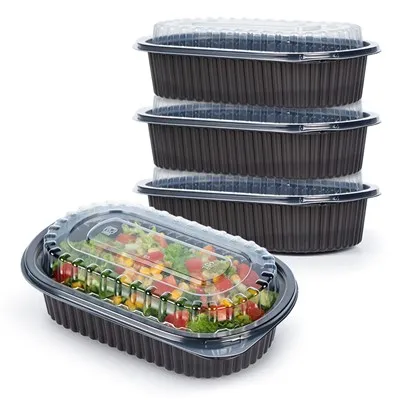
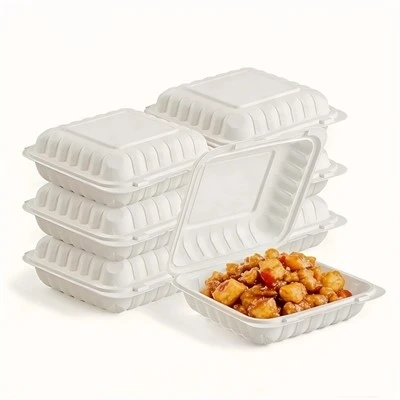
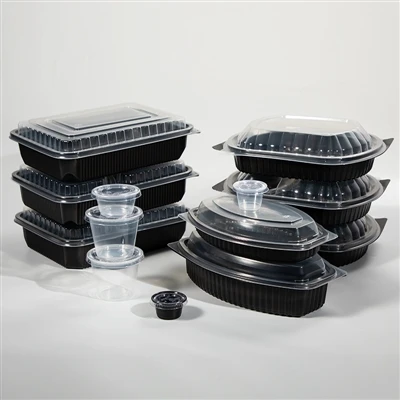
Example of eco-friendly togo containers made from sustainable materials
1. Basic Understanding of Eco-Friendly Labels
Eco-friendly labels aren't just stickers-they're your roadmap to verifying that products like eco-friendly togo containers are truly sustainable. These certifications provide assurance that the item has been vetted for its environmental footprint, from raw materials to end-of-life disposal. Let's unpack what these labels mean, the types you'll encounter, and the standards behind them.
What is an Eco-Friendly Label?
 An eco-friendly label is essentially a seal of approval from a respectable third-party organization that attests to a product's compliance with environmental standards. This might include low-energy production methods and biodegradable materials for environmentally friendly to-go containers. Consider it a badge that reads, "This isn't just talk; we've got the proof."
These labels guarantee that eco-friendly togo containers save waste, preserve resources, and steer clear of hazardous substances that can contaminate food or the environment.
Why are they important?
Using certified eco-friendly togo containers can improve your brand's reputation in a market where consumers want transparency. For example, if you own a cafe, using verified eco-friendly togo containers demonstrates to your patrons that you are concerned about the environment rather than just making money.
Additionally, these labels assist you in maintaining compliance and avoiding fines due to the tighter rules surrounding single-use plastics. Knowing them gives you the capacity to distinguish between goods that actually support sustainability and those that are just promoted as such.
Common Environmental Label Classifications at Home and Abroad
Globally, there are numerous eco-labels that are specific to various areas and areas, each of which aids in identifying genuinely eco-friendly togo containers. The Biodegradable Products Institute (BPI) certification, which ensures that products decompose in commercial composting facilities without leaving hazardous residues, should be sought after in the United States. Similarly, environmentally friendly to-go containers manufactured from plant-based materials frequently bear the Compost Manufacturing Alliance (CMA) mark.
 The European Union's EU Ecolabel, which emphasizes life-cycle assessments, covers a wide range of products outside, including eco-friendly togo containers. Low-pollution manufacturing is certified by China's China Environmental Label, also known as the "Ten Rings" in Asia. The "HOME" and "INDUSTRIAL" versions of TÜV Austria's international OK Compost label are available for environmentally friendly to-go containers that break down in backyard or institutional environments. For paper-based options that guarantee sustainable forestry methods, don't overlook the Forest Stewardship Council (FSC).
These classifications aren't interchangeable-each has unique requirements. For example, BPI focuses on compostability under ASTM D6400 standards, ideal for eco-friendly togo containers used in food waste programs. By familiarizing yourself with these, you can spot which labels best suit your needs, whether for local compliance or global appeal.
Examples of various eco-friendly certification labels and symbols
Eco-Label Certification Bodies and Standards
Every reputable label is supported by organizations and strict guidelines that put eco-friendly togo containers to the test. Standards like ISO 14024 for environmental labeling are established by organizations like the International Organization for Standardization (ISO). The gold criteria for biodegradability are ASTM D6400/D6868 (American) and EN 13432 (European), which stipulate that 90% of the material in eco-friendly togo containers must break down in six months under composting conditions.
Lab tests for disintegration, biodegradation, and ecotoxicity are required for certification in order to make sure that no contaminants or heavy metals are left. These audits are carried out by organizations like BPI or Vincotte (for OK Compost), and only complying goods receive certificates. This entails confirming that statements like "100% compostable" for eco-friendly togo containers aren't overstated.
Gaining an understanding of these standards enables you to ask providers the appropriate questions. To ensure that your eco-friendly togo containers won't become permanent landfill waste, get test reports that are in line with ASTM or EN standards. This information protects your investment in sustainable packaging while also protecting the environment.


2. How to Distinguish Between Genuine and Counterfeit Eco-Labels
With green marketing on the rise, counterfeit labels are a real threat, making it tough to trust claims on eco-friendly togo containers. Arm yourself with tools to spot fakes and ensure you're getting the authentic sustainability you pay for.
Check Certification Number and Organization Information
Each authentic eco-label has a distinct certification number that may be linked to the organization that issued it. To verify eco-friendly togo containers with BPI or OK Compost marks, visit their official websites and enter the number. It's a warning sign if it's absent, unclear, or leads to a dead end.
Online databases are also offered by reputable organizations such as the USDA BioPreferred program. Verify information like the manufacturer's name and expiration date. For eco-friendly to-go containers, this step is essential because imitations frequently imitate designs but lack verified information. You may prevent supporting unethical practices and make sure your packaging actually meets the requirements for eco-friendly to-go containers by conducting this due diligence.
Beware of "Fake Green" Labels
 Greenwashing is a cunning tactic, such as using ambiguous symbols like the earth or leaves on packaging to suggest eco-friendliness without providing evidence. These are marketing gimmicks rather than genuine certifications for environmentally friendly to-go containers. Independent audits, not self-reported claims, are necessary for true labels.
Keep an eye out for terms like "natural" or "earth-friendly" that lack context. Demand third-party certification for eco-friendly togo containers. A product is probably fake if it claims to be "biodegradable" yet does not have ASTM certification. Being watchful guarantees that you are marketing genuine eco-friendly togo containers and shields your company from reputational harm.
How to Determine if Your Eco-Friendly Togo Containers Are Truly Biodegradable
 Test for biodegradability; it's not a given. Examine the materials first: In environmentally friendly to-go containers, polylactic acid (PLA) derived from corn starch or sugarcane bagasse should decompose in compost. Ask suppliers for lab findings and deterioration timelines.
Perform basic inspections: Unlike plastics, real eco-friendly togo containers made of plants won't melt in a microwave. Send samples to testing facilities for compost experiments for more assurance. This attests to the fact that your environmentally friendly to-go containers break down as promised, lowering microplastic pollution and promoting circular economies.
3. Understanding Eco-Friendly Labels on Different Material Togo Containers
Materials matter when decoding labels on eco-friendly togo containers. Each type-plastic, biodegradable, or paper-has tailored certifications reflecting its environmental pros and cons.
Comparison of Togo Container Materials& Environmental lmpact

Comparison of different materials for togo containers and their environmental impact
Plastic Togo Containers
Conventional polymers, such as polypropylene (PP) or polyethylene terephthalate (PET), frequently have recycling symbols, such as chasing arrows with the numerals 1 or 5. These show that eco-friendly togo containers are recyclable rather than biodegradable. Even though they can be used again in manufacturing, many of them wind up in the water due to low recycling rates.
To increase the eco-profile of these eco-friendly togo containers, look for improved labels like "rPET" indicating recycled content. Companies that employ post-consumer recycled plastic use fewer virgin materials. However, to maximize the lifecycle of environmentally friendly to-go containers, combine them with strong recycling programs for ultimate sustainability.
Biodegradable Material Togo Containers
 These shine with labels that indicate a complete breakdown in compost conditions, like as ASTM D6400 or OK Compost. In eco-friendly togo containers, materials like PLA or starch-based composites transform into biomass, CO2, and water without producing any pollutants.
These environmentally friendly to-go containers are perfect for food service and work well with composting initiatives in places like San Francisco or Seattle. Verify whether "home compostable" and "industrial compostable" correspond with your disposal practices. Choosing eco-friendly togo containers that are certified biodegradable reduces landfill waste and attracts environmentally aware consumers.
Recycled Paper or Pulp Containers
Pulp-based options often feature FSC or "100% Recycled" labels, ensuring sustainable sourcing. These eco-friendly togo containers from bagasse or recycled fibers are naturally compostable and sturdy for hot or cold foods.
Verify treatments for grease resistance meet FDA standards for safety. In eco-friendly togo containers, pulp reduces deforestation impacts. Choosing FSC-certified versions supports ethical forestry, making these a top pick for businesses aiming for zero-waste goals with reliable eco-friendly togo containers.
4. Practical Tips for Choosing Truly Eco-Friendly Containers
Selecting the right eco-friendly togo containers boils down to research and partnerships. Here's how to navigate the market effectively.
Understanding the Supplier's Environmental Certification System
Top suppliers flaunt certifications like ISO 14001 for environmental management or BPI for compostability. Demand to see originals for eco-friendly togo containers-valid numbers and scopes matter.
A solid system means consistent quality in eco-friendly togo containers. This transparency builds trust, ensuring your supply chain is green from start to finish.

How to Assess Environmental Performance Before Purchasing
Evaluate based on lifecycle: Source materials sustainably? Degrade quickly? Recyclable? For eco-friendly togo containers, PLA might suit short-use scenarios, while durable options fit reusables.
Factor in carbon footprint and water use. Tools like lifecycle assessments help quantify impacts. Balancing these ensures your eco-friendly togo containers deliver value without hidden costs.
Choosing a Trustworthy Manufacturer – Yangrui's Advantages
When it comes to reliability, Huizhou Yangrui Printing and Packaging Co., Ltd. stands out as a leader in producing eco-friendly togo containers. With certifications including ISO9001, BPI, and FDA, they prioritize safety and sustainability.
Customization options let you tailor eco-friendly togo containers to your branding, from sizes to prints, all while maintaining compostability. Their quality control is rigorous, with in-house testing for durability and leak-proofing.
Partnering with Yangrui means accessing a one-stop shop for eco-friendly togo containers that enhance your operations. But it's more than products-Yangrui supports your green journey with educational resources on certifications and recycling.
In a competitive market, Yangrui's transparent supply chain-from ethical sourcing to end-user support-ensures you're getting premium, eco-friendly togo containers. They offer competitive pricing without skimping on quality, making sustainability accessible.
For businesses eyeing long-term partnerships, Yangrui provides samples and consultations to test eco-friendly togo containers in real scenarios.
Expanding Your Knowledge on Eco-Friendly Togo Containers
Take a closer look at the development of eco-friendly togo containers. Foam and plastic were the norm decades ago, but restrictions in states like California encouraged innovation. These days, environmentally friendly to-go containers made of algae or mushrooms are starting to appear and pushing the envelope.
Decisions are also influenced by regulatory environments. While states like New York require substitutes for single-use plastics, the U.S. EPA promotes compostable, eco-friendly togo containers through regulations. Choosing eco-friendly to-go containers that are innovative and compliant requires knowledge.
Transparency is preferred by consumers; according to research, 78% of consumers support brands that use eco-friendly togo containers. Manufacturers are motivated to develop by this demand, but it also encourages fakes. Verified eco-friendly togo containers should always be given priority in order to meet standards.
Challenges and Solutions for Implementing Eco-Friendly Togo Containers
 Cost is a hurdle-eco-friendly togo containers can be pricier upfront. Offset this with bulk buying or grants for sustainable practices. Durability concerns? Test eco-friendly togo containers for heat and moisture resistance.
Supply chain disruptions? Diversify suppliers of eco-friendly togo containers. Education is key-train staff on proper use to maximize the benefits of eco-friendly togo containers.