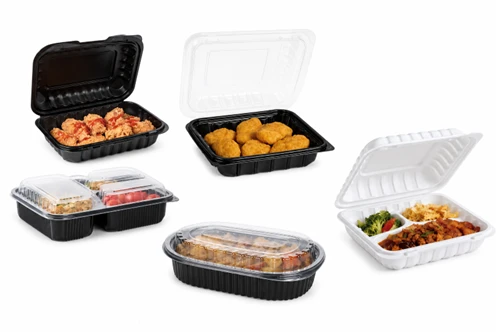
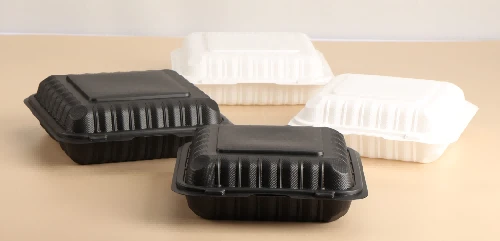
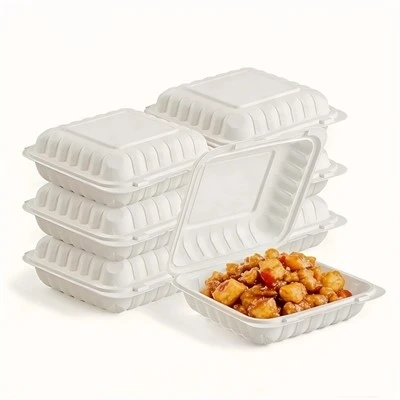
This guide is built as a comprehensive reference for US foodservice buyers, distributors, and procurement teams evaluating a China-based to go containers manufacturer for the first time - not a quick skim. Whether you're vetting YANGRUI specifically or benchmarking it against another supplier, each section below stands on its own, so use the jump links to go straight to the part most relevant to your current sourcing decision. We recommend bookmarking this page and returning to specific sections as questions come up during supplier qualification, sampling, or contract negotiation.<br/>
Table of Contents
1.Introduction: Why YANGRUI's US Market Presence Matters<br/>
2.The US To Go Containers Market: How Much Does China Actually Supply?<br/>
3.YANGRUI's <strong>To Go Containers</strong> Product Line<br/>
4.How to Verify a China-Based Manufacturer Meets US Compliance Standards<br/>
5.YANGRUI vs. Domestic US Distributors<br/>
6.Sustainability: YANGRUI's <strong>Eco-Friendly To Go Containers</strong> Solutions<br/>
7.A Practical Guide: Evaluating YANGRUI's <strong>To Go Containers</strong><br/>
8.Frequently Asked Questions<br/>
9.Conclusion<br/>
<strong>Introduction: Why YANGRUI's US Market Presence Matters to Foodservice Buyers Sourcing To Go Containers</strong><br/>
<strong>To go containers</strong> are one of the most quietly essential purchases a US restaurant, delivery kitchen, or foodservice distributor makes every month - and increasingly, buyers are sourcing them directly from a <strong>China to go containers manufacturer</strong> instead of only through domestic converters and importers.<br/>
As a packaging sourcing consultant, one question comes up almost weekly from US clients comparing overseas vendors: "Is this Chinese supplier actually established here, or just listed on a marketplace?" That question sits at the center of evaluating any <strong>to go containers manufacturer's</strong> real US market presence.<br/>
The tension is straightforward. Overseas manufacturing offers a real cost advantage at volume. But buyers also need confidence in lead time, compliance, and quality consistency before committing order volume to a new factory relationship.<br/>
This guide breaks it down using verifiable signals - trade-data context, product-line fit, compliance readiness, and independently checkable proof points like third-party marketplace reviews - so you can evaluate <strong>YANGRUI</strong>, a China <strong>to go containers manufacturer</strong>, the same way an experienced packaging buyer would.<br/>
A quick fact worth noting upfront: YANGRUI is not simply a factory that ships boxes overseas. Huizhou Yangrui Printing & Packaging Co., Ltd. was established in 2014 in Huizhou, Guangdong, and has since grown into a recognized national high-tech enterprise and an industry AAA credit enterprise - designations that reflect sustained compliance and financial standing, not just production capacity.<br/>
US food-contact packaging imports are tracked through official trade classification data (HS codes), and every container touching food sold in the US is subject to FDA food-contact compliance regardless of country of origin. <br/>
<strong>The US To Go Containers Market: How Much Does China Actually Supply?</strong><br/>
China remains the dominant source country for plastic and paper foodservice-packaging imports into the US, though the exact share shifts with tariff cycles and ocean-freight costs from year to year.<br/>
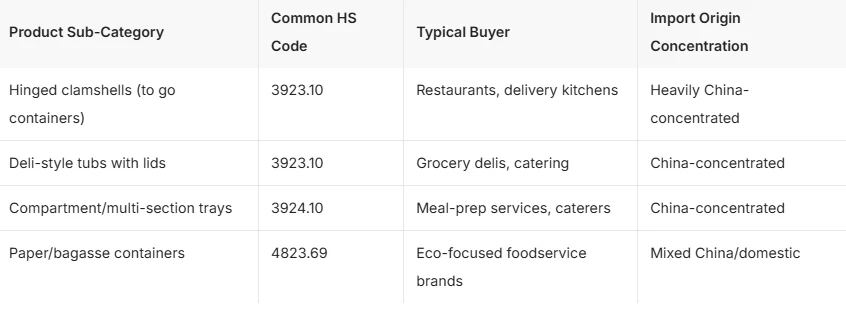
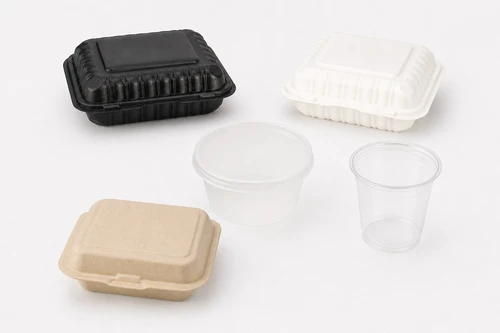
Most <strong>disposable food containers</strong> purchased by US restaurants fall into a handful of sub-categories, all commonly grouped under the umbrella term "to go containers":<br/>
<strong>Hinged clamshells </strong>- the most recognized format for burger box packaging and single-meal takeout<br/> <strong>Deli-style tubs </strong>with snap-on or dome lids<br/> <strong>Compartment/multi-section trays</strong> for meal-prep and catering<br/>
<strong>Leakproof meal prep containers </strong>for delivery-heavy operations<br/>
Import-share data is typically reported at the broader packaging-category level (HS codes 3923.10 / 3924.10-type classifications for plastic articles for the conveyance of goods), not per individual SKU - which is why a specific manufacturer's US footprint is easier to verify through direct proof points than through customs statistics alone.<br/>
<strong>One important caveat</strong>: raw import volume is not the same as brand market share. A manufacturer's actual US presence also depends heavily on private-label and OEM distribution, not just how many containers clear customs under its name.<br/>
There's also a tariff variable worth understanding. Section 301-related duties on Chinese plastic packaging have pushed some US buyers toward dual-sourcing strategies in recent years - relevant context when evaluating any single <strong>to go containers manufacturer's</strong> footprint, including YANGRUI's.<br/>
A common mistake we see: buyers assume a large factory automatically means large US brand visibility. In practice, most <strong>China to go containers manufacturer</strong> operations - YANGRUI included - sell primarily through private-label and OEM channels rather than an end-consumer-facing retail brand. That's actually the normal, expected model for B2B foodservice packaging, not a red flag.<br/>
This is where **YANGRUI's own <strong>to go containers market size</strong> signal gets more concrete: rather than an unverifiable "top manufacturer" claim, the brand's Amazon storefront reached the #1 bestseller position in its category in 2024, a milestone independently visible through public Amazon customer reviews rather than a self-reported statistic.<br/>
To evaluate current sourcing options, browse our to go containers product line directly, or review official US plastic packaging import statistics by country for broader category-level context.<br/>
<strong>YANGRUI's To Go Containers Product Line: What US Buyers Are Actually Sourcing</strong><br/>
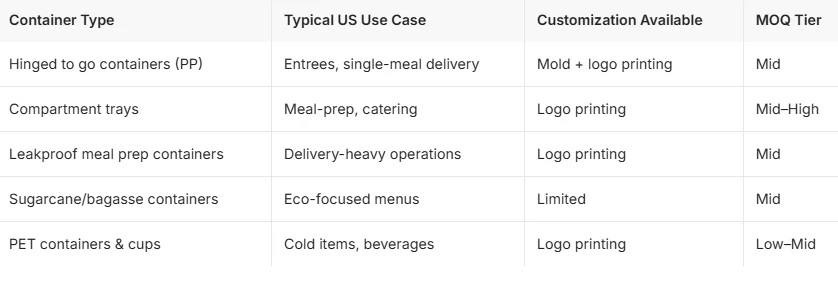
Based on YANGRUI's own catalog, the company positions itself as a one-stop packaging solution - and the product range backs that framing up. Core <strong>to go containers</strong> categories relevant to US foodservice demand include:<br/>
<strong>Hinged containers (PP)</strong> - including standard clamshells and MFPP take out containers<br/>
<strong>Compartment/multi-section trays</strong> - for meal-prep and catering use cases<br/>
<strong>Deli-style tubs with lids</strong>, oval food containers, and leakproof meal prep containers<br/>
<strong>PET containers and PET cups</strong> - for cold items and beverages<br/>
<strong>Sugarcane food containers</strong> and paper bowls - the eco-material lines<br/>
<strong>Film-sealed trays and plastic film rolls</strong> - for grocery/deli sealing applications<br/>
For US buyers, the highest-inquiry categories tend to track directly with use case: single-compartment hinged containers for entrees and delivery, multi-compartment trays for meal-prep and catering programs.<br/>
Several <strong>anti-fog take away containers</strong> and <strong>leakproof meal prep containers</strong> SKUs specifically target delivery-heavy operations, where lid fogging and in-transit leaks are the two most common customer complaints restaurant buyers report.<br/>
On customization: YANGRUI supports <strong>private label food containers</strong> printing, mold customization for proprietary shapes, and tiered minimum order quantities (MOQ) depending on whether a buyer needs a stock design or a fully custom mold. For buyers exploring a <strong>custom logo food container manufacturer</strong> relationship, this typically means a longer lead time upfront (tooling) in exchange for a differentiated shape or branded lid once in production.<br/>
A common buyer question: does a factory-direct model change lead time or quality-control expectations versus buying through a US-based distributor? Generally, factory-direct means longer initial lead times (production + shipping) but more customization control - a trade-off explored further in the comparison section below.<br/>
One verifiable trust signal worth checking directly: YANGRUI's Alibaba.com 5-star storefront documents its B2B transaction history and buyer ratings - a useful cross-check alongside its Amazon-side consumer reviews.<br/>
Recognized foodservice packaging industry classification distinguishes clamshell, tray, and tub formats by structural design rather than material alone - worth understanding before comparing quotes across suppliers, since "PP food containers" and "food container manufacturer" quotes can vary significantly by format even when using the same resin. To confirm exact specs for your use case, request a sample kit before placing a full order.<br/>
<strong>How to Verify a China-Based To Go Containers Manufacturer Meets US Compliance Standards</strong><br/>
FDA food-contact substance regulations apply to any container touching food sold in the US, <strong>regardless of manufacturing country</strong> - compliance is never automatically waived or granted just because a product has cleared customs.<br/>
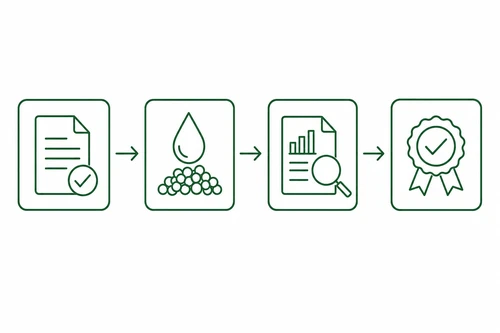
Here's the step-by-step verification checklist an experienced packaging buyer actually runs before placing a first order with an overseas factory:<br/>
<strong>Request a Certificate of Compliance</strong> for the specific product line you're ordering, not just a general factory letter.<br/>
<strong>Confirm resin-grade documentation</strong> - e.g., FDA-compliant polypropylene grade sheets, not just a verbal "BPA free food containers" claim.<br/>
<strong>Check for third-party lab test reports</strong> covering the actual SKU, not a sister product.<br/>
<strong>Confirm factory certifications</strong> such as ISO 9001, and BRCGS/SEDEX where applicable to your retail partner's requirements.<br/>
One nuance buyers often miss: a factory holding an ISO 9001 certification and a specific product line being lab-tested against FDA food-contact standards are two different things. Always ask which SKUs the documentation actually covers.<br/>
On the customs side, proper HS code declaration matters, along with awareness of state-level packaging regulations - including state polystyrene restrictions or PFAS-in-packaging rules that a responsible food packaging supplier should be able to speak to directly rather than deflect.<br/>
YANGRUI's own documentation supports this kind of verification: the company holds <strong>ISO 9001 international quality control management system certification</strong> (achieved in 2019), operates under a national high-tech enterprise designation, and has maintained an industry AAA credit enterprise rating - all checkable claims rather than marketing language alone. Its production facility has also integrated an MES (Manufacturing Execution System) since 2021 for digital, standardized production tracking.<br/>
To move forward on a first order, request our compliance documentation directly - a verifiable, source-transparent step that protects your business regardless of which manufacturer you ultimately choose.<br/>
<strong>YANGRUI vs. Domestic US Distributors: Where Direct-From-China To Go Containers Sourcing Makes Sense</strong><br/>
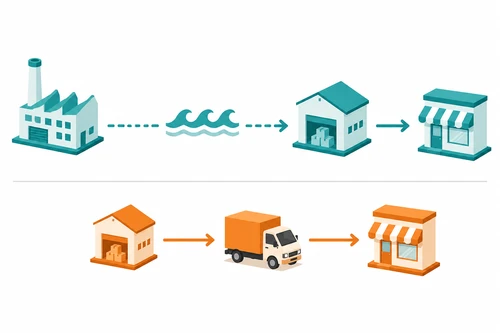
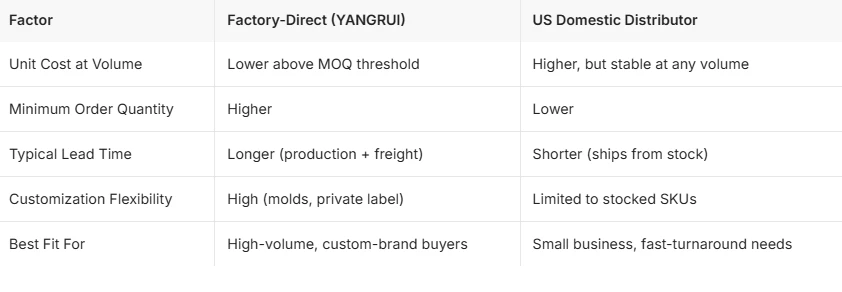
There are two clear paths for sourcing <strong>to go containers</strong>: buying factory-direct from a to go containers manufacturer like YANGRUI, or buying through a US-based distributor/broker that imports and holds inventory domestically.<br/>
The two paths compare across four practical axes:<br/>
<strong>Unit cost</strong> - generally lower factory-direct at volume, once tooling and MOQ thresholds are met<br/>
<strong>Minimum order quantity</strong> - factory-direct MOQs are typically higher than a distributor's shelf-stock minimums<br/>
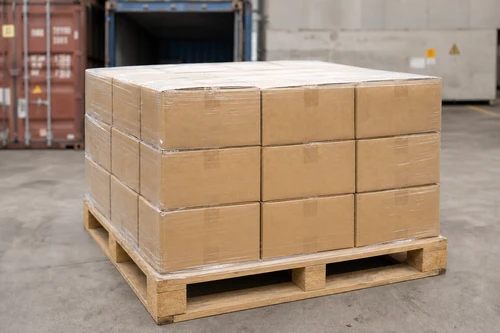
<strong>Lead time</strong> - factory-direct requires production + ocean freight + customs; a distributor ships from existing US inventory<br/>
<strong>Inventory/warehousing risk</strong> - factory-direct means you hold more stock; a distributor absorbs that risk (at a markup)<br/>
Factory-direct sourcing tends to favor higher-volume buyers - chains, large distributors, and growing DTC brands ordering <strong>bulk to go containers</strong>. A domestic distributor often better serves smaller businesses needing smaller, faster-turnaround orders, or anyone testing small MOQ food packaging before scaling.<br/>
The landed-cost math matters more than headline unit price: unit price + freight + duties + warehousing is the real comparison, not the factory quote alone. This is the exact calculation that determines whether wholesale <strong>plastic containers with lids</strong> actually pencil out cheaper than a distributor's stocked equivalent.<br/>
A hybrid approach works well for many mid-size buyers: qualify the factory directly for pricing and customization on <strong>plastic food containers</strong> wholesale, but pilot with smaller distributor-fulfilled orders before committing to a full container-load purchase.<br/>
To get exact landed-cost numbers for your order size, get a bulk pricing quote directly from YANGRUI.<br/>
<strong>Sustainability as a US Market Differentiator: YANGRUI's Eco-Friendly To Go Containers Solutions</strong><br/>
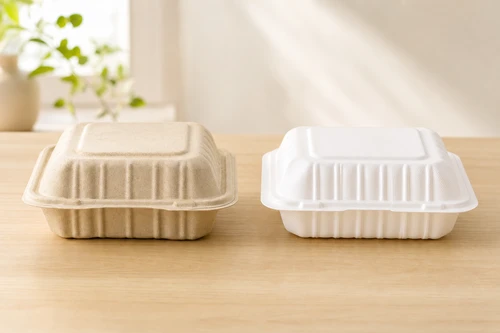
<strong>Eco-friendly to go container solutions</strong> matter specifically for the US market because a growing number of states and cities restrict polystyrene foodware, and some jurisdictions now mandate compostability for certain foodservice packaging categories.<br/>
YANGRUI's catalog directly addresses this trend rather than treating it as a marketing afterthought. The company's <strong>eco friendly food containers</strong> line includes sugarcane (bagasse) food containers and paper bowls, positioned as a direct response to shifting US regulation - not just a "green" label slapped on a standard product.<br/>
Certification transparency is what actually satisfies US buyers' compliance teams. Vague "eco-friendly" claims don't clear corporate or municipal purchasing requirements - buyers need to see BPI-certified compostable packaging or ASTM D6400 certification specifically.<br/>
This is both a compliance necessity and a competitive differentiator. A to go containers manufacturer offering only traditional polystyrene lines increasingly loses out on RFPs from buyers operating in restricted jurisdictions - while a manufacturer with both traditional PP and certified compostable lines can serve either requirement without forcing the buyer to switch suppliers.<br/>
Supplier-side, inquiry volume for compostable and recyclable containers has grown steadily alongside state-level restrictions taking effect - a trend directly reflected in YANGRUI's own stated 2026 plans to further invest in biodegradable materials research and development.<br/>
To compare material options directly, explore our compostable to go containers line against your current specs and local compliance requirements.<br/>
<strong>A Practical Guide: How US Buyers Can Evaluate YANGRUI's To Go Containers Before Placing an Order</strong><br/>
This<strong> to go containers</strong> guide for restaurant owners distills the vendor-qualification process real foodservice packaging buyers use into one actionable checklist - the same questions an experienced packaging buyer asks before committing to a new supplier relationship.<br/>
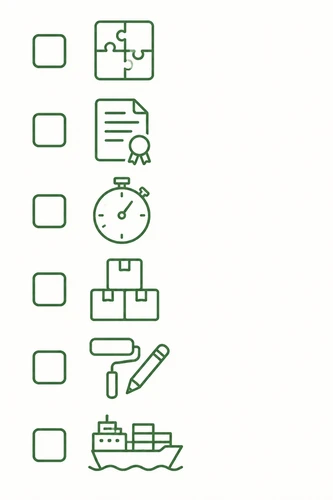
<strong>Consolidated decision checklist:</strong><br/>
Product-line fit for your specific menu and delivery model<br/>
Compliance documentation (see the verification section above)<br/>
Sample lead time and trial-order availability<br/>
MOQ alignment with your actual order volume<br/>
Customization options (private label, mold changes)<br/>
Freight/logistics terms - FOB vs. door-delivered pricing<br/>
<strong>Sample before you scale.</strong> Order a trial batch and test it under real kitchen and delivery conditions before committing to a full container-load order. This is the single most effective way to catch leak, fog, or fit issues before they become a supply-chain problem at volume.<br/>
<strong>Supplier vetting questions to ask directly:</strong><br/>
What is your current production capacity and monthly output?<br/>
What quality-control process runs at the factory floor?<br/>
What export experience do you have specifically with the US market?<br/>
Can you provide references from existing US clients?<br/>
On YANGRUI specifically, verifiable answers exist for each of these: the company's production line count has grown from initial operations in 2016 to 15 lines by 2021 with a monthly capacity of 2,000 tons, its MES-based digital production tracking has been in place since 2021, and it has operated an Amazon-fulfilled US sales channel since 2023 - giving it direct, ongoing exposure to US buyer feedback rather than purely wholesale/export experience.<br/>
A worked example: a mid-size distributor projecting 50,000 units per month of a custom-printed <strong>to go containers</strong> SKU should size a first trial order at roughly 2–5% of that monthly volume - enough to stress-test leak resistance, print quality, and lead time before committing to a full production run.<br/>
One additional signal worth checking: whether the manufacturer has US-facing sales support, English-language documentation, and a clear after-sales contact - a practical marker of real US market presence beyond trade-volume statistics alone.<br/>
<strong>Frequently Asked Questions About Sourcing To Go Containers from China</strong><br/>
<strong>Why do so many US to go containers come from China?</strong> Chinese manufacturers benefit from large-scale plastics production infrastructure and mature mold-tooling capacity, which allows lower per-unit costs at volume - a major reason US foodservice buyers source to go containers directly from Chinese factories.<br/>
<strong>Is it safe to buy to go containers directly from a Chinese manufacturer?</strong> It can be, provided the manufacturer supplies verifiable FDA food-contact compliance documentation and third-party lab test reports for the specific product line you're ordering. <br/>
<strong>What is the typical minimum order quantity for custom to go containers?</strong> MOQs vary by customization level - stock designs generally require smaller minimums than custom-molded or custom-printed to go containers, which need higher volume to justify tooling costs.<br/>
<strong>How long does shipping take for to go containers imported from China?</strong> Total lead time combines production time with ocean freight transit and US customs clearance, so buyers should plan well ahead of a launch date rather than treating factory production time alone as the full timeline.<br/>
<strong>What's the difference between buying to go containers factory-direct vs. through a US distributor?</strong> Factory-direct sourcing generally offers better per-unit pricing at higher volumes but requires longer lead times and larger minimum orders, while a US distributor offers faster, smaller-batch fulfillment at a higher per-unit cost. <br/>
<strong>Conclusion: What YANGRUI's US Market Presence Means for Your Next To Go Containers Order</strong><br/>
Evaluating any <strong>to go containers</strong> supplier comes down to three checks: verify trade and compliance credibility, match the product line to your actual use case, and confirm documentation before scaling order volume.<br/>
For US foodservice buyers, the cost advantage of sourcing from a <strong>China to go containers manufacturer</strong> only pays off if compliance and quality consistency are verified first - a melted-lid complaint or a customs delay costs far more than the savings a lower unit price initially promised.<br/>
This guide reflects packaging and compliance practices current as of September 23, 2026. For YANGRUI's latest certifications, product specs, or current US client references, our team is glad to walk through your specific order requirements.<br/>
Ready to source to go containers from a manufacturer with a verifiable US track record? Get a free packaging quote from YANGRUI today.<br/>
FAQ
Q: Q1: What material do you use for your bulk take out containers?
A: We use 100% new PP material for our bulk take out containers. It's non-toxic, heat-resistant, and compliant with CE and FDA standards, making it safe for food contact. We never use recycled materials, so you can be sure our products are high-quality and safe for your clients. The new PP material also ensures that our take out containers are durable and can withstand the rigors of transportation and daily use, which is essential for buyers who need reliable packaging for their own clients.
Q: Q2: Can you provide customized bulk take out containers with our logo or design?
A: Yes! We offer customization services for take out containers, including logo printing, size adjustments, and color matching. Whether you need a specific design for your brand or a unique size to fit your products, our team can work with you to create a customized solution that meets your needs. We understand that branding is important for buyers, so we make sure our customization process is seamless and efficient, with clear timelines and quality control checks to ensure the final product meets your expectations.
Q: Q3: What's your delivery time for bulk take out containers orders?
A: Delivery time depends on the order size and customization requirements. For regular bulk orders without customization, we can deliver within 7-15 working days. For large or customized orders, we'll provide a clear timeline upfront and keep you updated throughout the production process to ensure on-time delivery. We also offer expedited delivery options for urgent orders, so you can meet tight deadlines without compromising on quality. Our ERP system helps us track orders in real time, so we can quickly address any potential delays and keep you informed every step of the way.
Q: Q4: Do your bulk take out containers meet international safety standards?
A: Absolutely. All our bulk take out containers are tested for safety and compliance, and they meet CE and FDA standards for food contact materials. We can provide test reports and certification documents upon request, so you can be sure our products are safe for your market. We also regularly update our production processes to keep up with new regulations, ensuring that our bulk take out containers always meet the latest safety standards. This commitment to compliance is one of the reasons why we're a trusted supplier for buyers around the world.
Q: Q5: What's the minimum order quantity (MOQ) for bulk take out containers?
A: Our minimum order quantity (MOQ) is 20000, which can be flexibly adjusted according to your actual business needs. For regular bulk take out containers, the MOQ of 20000 caters to both small distributors and large buyers. For customized orders, we will work with you to find a solution that fits your budget and order volume based on the complexity of the customization.
Certificate Display


FDA Certification (SGS): YANGRUI take out containers are make from the safe & new material