Table of Contents
1.Why U.S. Buyers Are Scrutinizing Chinese To Go Containers Suppliers in 2026?
2.Who Is YANGRUI? Company Background, Scale, and Manufacturing Capabilities
3.What Certifications Back YANGRUI's To Go Containers?
4.YANGRUI vs. Other Chinese Food Container Manufacturers
5.What Do Real U.S. Customers Say? Reviews, Feedback, and Market Reputation
6.How to Evaluate a To Go Containers Supplier Before You Order?
7.FAQ: YANGRUI and To Go Containers Sourcing
8.Final Verdict: Should You Source To Go Containers From YANGRUI?
9.Certificate Display
10.Contact Now
Why U.S. Buyers Are Scrutinizing Chinese To Go Containers Suppliers in 2026
Import due diligence isn't optional anymore. Rising tariff volatility, FDA import alerts, and a wave of state-level foodservice packaging laws (PFAS bans, EPR fees, single-use restrictions) mean a bad sourcing decision can cost far more than a delayed shipment - it can mean stranded inventory or a compliance violation.
A typical U.S. distributor's due-diligence checklist before contacting an overseas packaging factory usually includes:
verifying business registration, requesting current certificate copies, ordering paid samples, and asking pointed questions about production line capacity during an intro call. Skipping these steps is how buyers end up with containers that fail a leak test after the deposit is already wired.
For restaurant chains, distributors, and packaging resellers, reputation now outweighs price alone. A container that's $0.01 cheaper per unit isn't a bargain if it arrives without valid FDA food contact substance guidance compliance or fails under a hot entrée.
This article independently verifies four things about to go containers manufacturer YANGRUI:
Its certifications and what they actually cover
Its factory scale and manufacturing capabilities
Real, sourced customer feedback
How it compares to other Chinese to go container suppliers
Think of this as a template - even if you don't end up ordering from YANGRUI, the same verification steps apply to any Chinese to go container manufacturer you're evaluating. See our full certification list before you request a quote from any supplier.
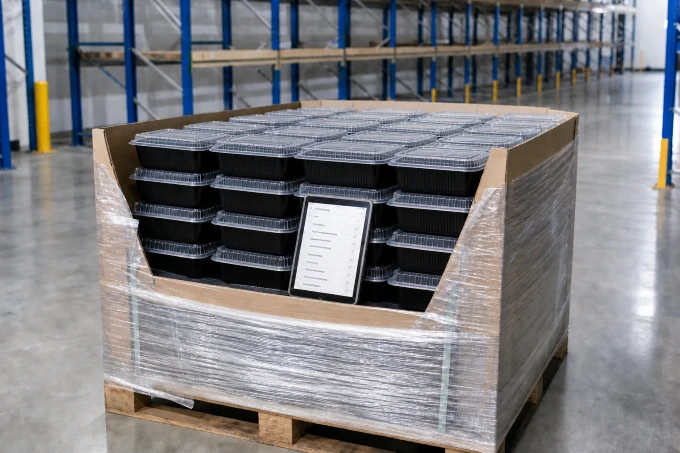
Who Is YANGRUI? Company Background, Scale, and Manufacturing Capabilities
YANGRUI is the brand of Huizhou Yang Rui Printing and Packaging Co., Ltd., a Chinese food container manufacturer founded in 2014 and headquartered in Huizhou, Guangdong. It is not a trading company reselling other factories' output - YANGRUI owns its production facility, holds its own patented product designs, and is registered on Alibaba.com as a "Custom Manufacturer" with onsite factory verification completed by a third-party inspection firm.
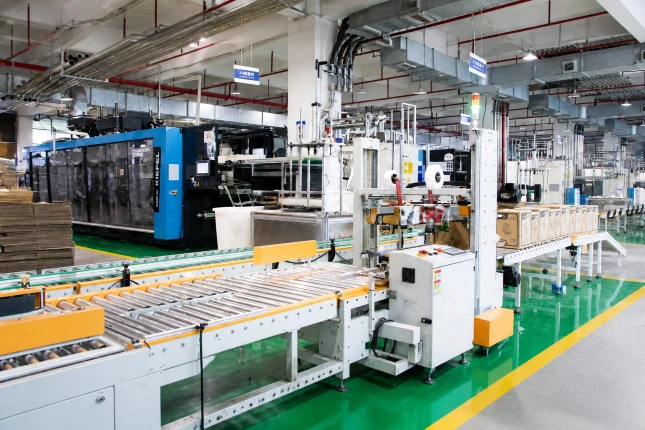
During a virtual or in-person factory audit, a first-time buyer typically checks three things: whether the production line matches the claimed capacity, whether QA checkpoints (incoming material inspection, in-process checks, final outgoing inspection) are actually staffed, and whether the mold-development team is in-house or outsourced. YANGRUI's verified Alibaba.com supplier profile lists 12 automated production lines, more than 10 imported KIEFEL thermoforming machines, and roughly 2,500 tons of monthly production capacity across a facility exceeding 20,000 square meters - details a buyer can cross-check during a scheduled video audit.
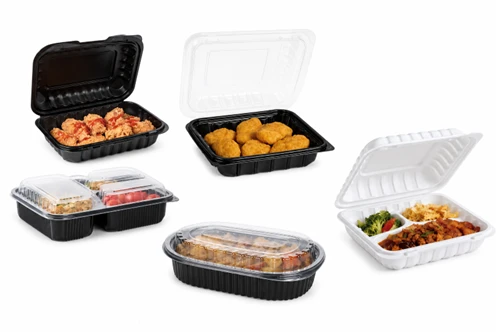
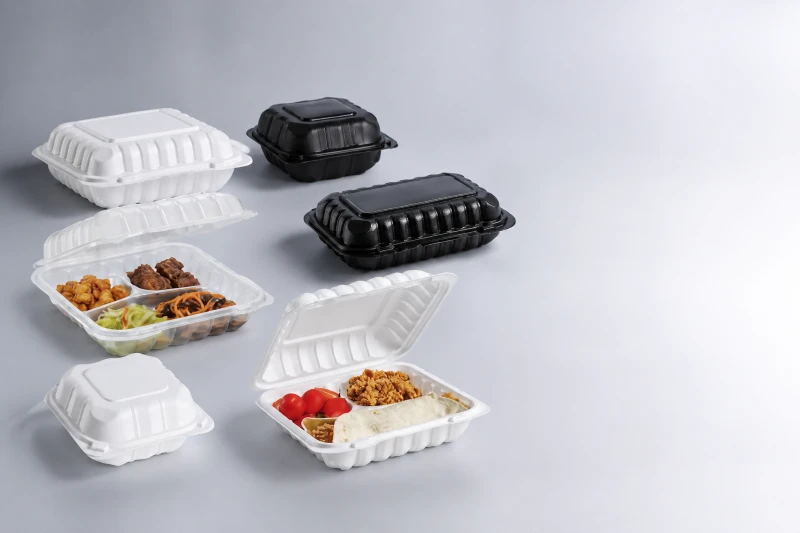
Core product lines span hinged clamshell to-go containers, compartmentalized meal-prep boxes, PP/PET round bowls, food trays, paper cups, and packaging bags - all manufactured from BPA-free, food-grade PP, PE, or PET. Material choice matters: PP tolerates higher heat and is generally microwave-compatible, PET offers clarity for cold/deli display, and PE is common for flexible film components. YANGRUI also markets proprietary anti-leakage and anti-fog design features on several of its hinged food containers lines, which is a meaningful differentiator versus generic unbranded molds sold by trading companies.
Owning a registered trademark and its own product molds - rather than reselling a catalog of generic designs - is itself a reputation signal. It suggests a multi-year investment in tooling and market positioning rather than a short-term reseller relationship. Buyers evaluating any Chinese food storage container manufacturer should ask directly whether the designs are proprietary or licensed from a third party.
|
Attribute |
Detail |
|
Founded |
2014 |
|
HQ Location |
Huizhou, Guangdong, China |
|
Core Products |
Hinged to go containers, meal-prep boxes, PP/PET bowls, trays, paper cups, packaging bags |
|
Materials Used |
BPA-free, virgin food-grade PP / PE / PET |
|
Key Certifications |
FDA, LFGB, ISO 9001, ISO 14001, ISO 45001, CE, RoHS, FSSC 22000 |
|
Export Markets |
North America, South America, Oceania, Middle East, Western Europe |
Buyers who want the full spec sheet can browse YANGRUI's to-go container product line or explore the YANGRUI factory tour before requesting samples.
What Certifications Back YANGRUI's disposable food containers?
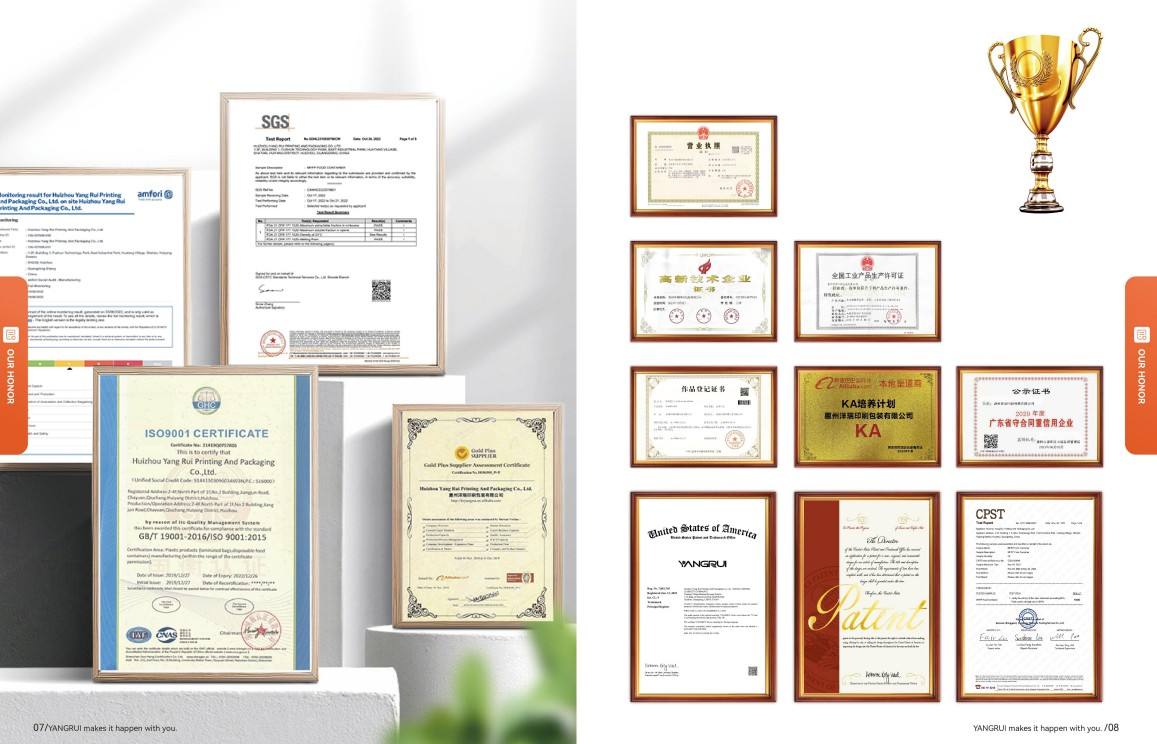
FDA certified to go containers claims are common in supplier listings - but not all of them mean the same thing. YANGRUI's Alibaba.com-verified supplier profile lists FDA and LFGB compliance, ISO 9001 (quality management), ISO 14001 (environmental management), ISO 45001 (occupational health and safety), CE, RoHS, FSSC 22000, and conformity references to EU Regulation (EC) 1935/2004 for food contact materials.
Here's what each actually covers:
FDA compliance
confirms the raw materials and finished product meet U.S. food-contact substance requirements under 21 CFR - critical for any to go containers sold into U.S. foodservice channels.
LFGB
is Germany's food-contact material standard; suppliers holding both FDA and LFGB are signaling they've built products to satisfy two of the world's stricter food-safety regimes at once, which matters if you also distribute into EU-adjacent markets.
ISO 9001
certifies the factory's quality management system - it does not, by itself, certify that a specific SKU is FDA-compliant. That's the nuance many buyers miss:
factory-level ISO certification and product-level FDA compliance are two separate claims, and a serious supplier should be able to produce documentation for both.
BPA-free
on a product listing means the polymer formulation doesn't use bisphenol-A - it does not automatically confirm migration testing, heat tolerance, or leak performance. Ask for the actual test report, not just the marketing claim.
Before wiring a deposit, request a Certificate of Analysis (COA), the relevant third-party test reports, and current (not expired) copies of the certificates themselves - certifications lapse or can be scope-limited to specific product lines. For the regulatory backdrop, see the FDA's own FDA food contact compliance requirements page, and for the EU/German side, the LFGB food-grade material standard overview from Germany's federal risk assessment institute.
|
Certification |
Issuing Body |
What It Verifies |
Relevant Market |
|
FDA |
U.S. Food and Drug Administration |
Food-contact substance safety |
United States |
|
LFGB |
German food & feed code (verified via BfR) |
Food-contact material migration safety |
Germany / EU |
|
ISO 9001 |
International Organization for Standardization |
Factory quality management system |
Global |
|
ISO 14001 |
International Organization for Standardization |
Environmental management system |
Global |
|
CE / RoHS |
EU conformity marking bodies |
Product safety, restricted substances |
European Union |
Buyers who want source documents rather than marketing copy can download YANGRUI's certification documents directly, or read common sourcing compliance questions further down this page.
YANGRUI vs. Other Chinese Food Container Manufacturers: How Does It Compare?
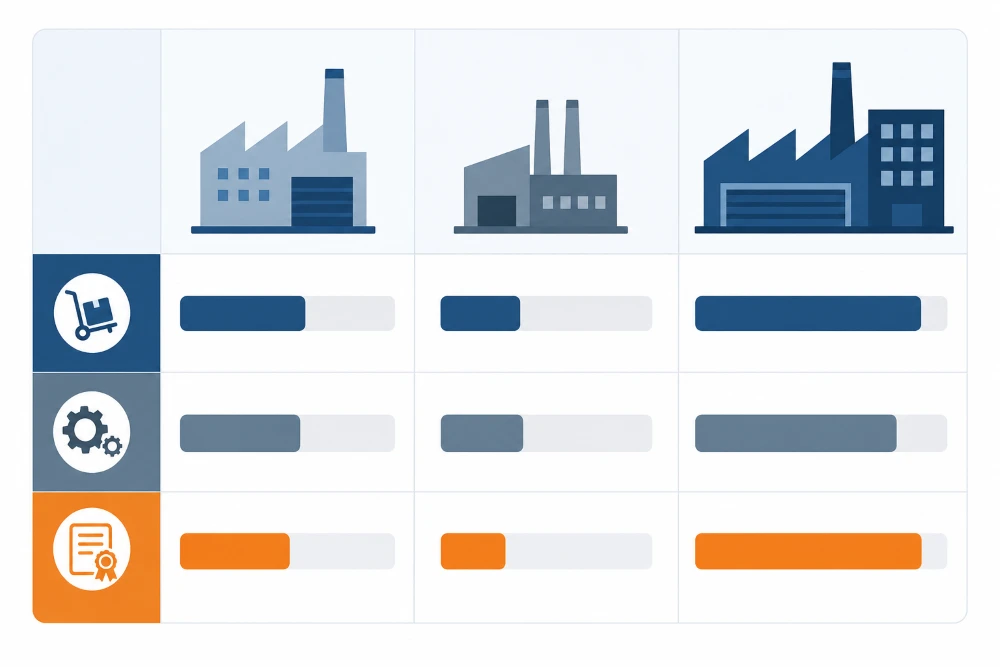
Not every supplier claiming to be a to go containers manufacturer actually owns a factory. The Chinese packaging export market has three broad tiers: large certified factories with in-house tooling, mid-size factories with limited customization, and trading companies that resell factory output under their own storefront.
What separates a serious factory from a trading-company reseller usually surfaces in three questions: Can you show me your own mold-development timeline for a custom shape? What's your minimum order quantity (MOQ) for a first-time custom order versus a stock design? And can I schedule a live video walkthrough of the specific production line making my product - not a generic factory reel?
MOQ economics matter more than buyers often realize. Mold tooling for a custom container shape is a fixed upfront cost; a factory recoups it by requiring a higher MOQ on the first custom order, then typically lowers MOQ on reorders once the mold exists. A trading company sidesteps this entirely by only offering existing stock molds - which limits customization but can mean a lower first-order MOQ.
Where YANGRUI positions itself: proprietary anti-leakage/anti-fog hinged container designs, trademark-owned molds (100+ in its mold library per its own site), a mid-to-large factory footprint (12+ automated lines, ~2,500 tons/month capacity), and a documented certification stack (FDA, LFGB, ISO 9001/14001/45001). That combination is more typical of an established factory than a reseller.
Trade-offs to weigh: a factory with this much certification breadth and mold capacity is generally a stronger fit for buyers who need custom branding or regulatory documentation, but may carry higher MOQs on fully custom SKUs than a stock-design trading company would require.
A practical shortlisting checklist before requesting samples:
1. Confirm business type (verified custom manufacturer vs. trading company) on the supplier's Alibaba.com or B2B profile
2. Compare MOQ for stock designs vs. fully customized molds
3. Request the same certification documents from all 2-3 shortlisted suppliers side by side
4. Check the sold-units count in unbiased marketplace data - it's the online equivalent of digging into a repeat-order history
For an independent look at where the broader foodservice packaging category is heading in 2026, see the foodservice packaging sourcing trends report.
|
Criteria |
YANGRUI |
Typical Trading Company |
Typical Small Factory |
|
MOQ (custom mold) |
Thousands of units per SKU |
Lower (stock designs only) |
Varies, often unpredictable |
|
Certifications |
FDA, LFGB, ISO 9001/14001/45001, CE, RoHS |
Depends on underlying factory (often undisclosed) |
Limited, sometimes unverified |
|
Customization |
In-house mold development, logo printing, private label |
Limited to existing catalog |
Case-by-case |
|
Factory Verification |
Alibaba.com onsite-verified |
Rarely verifiable |
Inconsistent |
|
Material Options |
Virgin food-grade PP / PE / PET |
Depends on sourced factory |
Limited range |
What Do Real U.S. Customers Say? Reviews, Feedback, and Market Reputation
"We've placed monthly orders since 2021 and shipments usually arrive exactly when promised" is the kind of feedback that carries more weight in B2B sourcing than a five-star rating from a single order. Repeat-order relationships, not star counts, are what experienced buyers weigh most heavily when assessing a to go containers supplier's reputation.
Where to look for verifiable signals:
B2B marketplace transaction history
- order volume, response rate, and dispute rate on a platform like Alibaba.com. YANGRUI's storefront shows a
99.71% quick response rate
and individual hinged-container listings with sold counts in the millions of units (one clamshell to-go listing shows over 4.25 million units sold), which is a meaningful proxy for sustained repeat business rather than a one-off promotional spike.
Published customer testimonials
- YANGRUI's own site features named, role-specific testimonials (e.g., an Operations Manager describing stable monthly PET cup orders since 2021, a Head of Purchasing describing steadier quality after switching from a prior vendor, a Purchasing Manager citing zero leakage issues across 20+ containers of kraft paper food boxes over two years). These are self-published, so treat them as a starting point for outreach, not independent proof - ask to speak with a reference directly.
Trade show presence and platform verification badges
- a supplier's Verified Supplier status is checked by a third-party inspection company, not by the platform's marketing team.
What positive feedback typically highlights across these sources: leak resistance for hot/liquid items, consistent quality across repeat shipments, and dependable lead times for urgent large-volume orders (one testimonial describes a 500,000-unit rush order for a product launch being fulfilled faster than a prior supplier managed).
Be transparent about the limits of this section: the testimonials above are drawn from YANGRUI's own published materials and its Alibaba.com marketplace listing data as of this article's publication date. We were unable to independently retrieve YANGRUI's third-party marketplace review pages at the time of writing (some require an active buyer account to view). Readers should verify current ratings and request direct references before finalizing any order.
B2B reputation signals differ from consumer review sites in one important way: a repeat-order relationship spanning two or more years is a stronger trust signal than a handful of five-star reviews, because it reflects sustained satisfaction across multiple shipments rather than a single transaction.
To understand how the platform verifies suppliers in the first place, see the verified supplier badge criteria. Want a first-hand account? Talk to our sales team about references.
How to Evaluate a To Go Containers Supplier Before You Order: A Buyer's Checklist
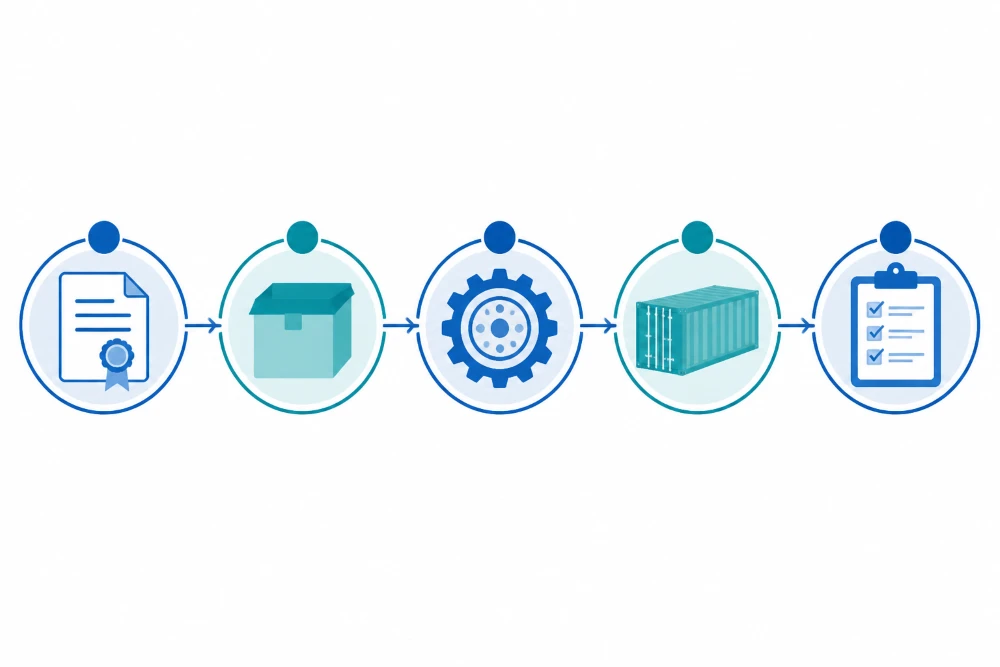
Here's how to choose a to go containers supplier without relying on marketing claims alone - a five-step process any procurement professional can apply on a first overseas order, whether or not you end up ordering from YANGRUI.
Verify certifications directly.
1. Request current certificate copies and the underlying test reports - not just a logo on the website. Cross-check the certificate number where a registry exists.
Order paid samples before bulk MOQ commitment.
2. A sample run should undergo the same specific technical checkpoints you'd apply in-house: a drop test, a microwave-safety test (if applicable to the material), and a leak test with your actual product, not water.
Confirm customization capabilities.
3. Ask for the mold-development timeline in writing, and clarify logo printing methods (in-mold labeling vs. post-print) since this affects both cost and durability.
Clarify logistics.
4. Nail down Incoterms, realistic lead time (not the best-case quote), and the import compliance documentation you'll need on the U.S. side. This is where meal prep container services quotes often hide surprises - get freight and duties itemized separately from unit price.
Establish a quality-control checkpoint process
5. for the first bulk order - a pre-shipment inspection report, photos of a random sample pull, and a clear resolution process if the shipment doesn't match the approved sample.
This checklist applies to evaluating any supplier - it's not exclusively about YANGRUI, and it's worth applying even to a factory with strong marketing materials. For the regulatory side of step 4, see U.S. import compliance basics from U.S. Customs and Border Protection.
|
Step |
What to Verify |
Red Flag to Watch For |
|
1. Certifications |
Current certificate + test report copies |
Only a logo, no documentation offered |
|
2. Samples |
Drop, microwave, and leak test on your product |
Refusal to send paid samples |
|
3. Customization |
Written mold timeline, printing method |
Vague or shifting timelines |
|
4. Logistics |
Incoterms, lead time, import docs |
Unitemized "all-in" pricing |
|
5. QC checkpoint |
Pre-shipment inspection report |
No inspection offered before shipping |
Final Verdict: Should You Source To Go Containers From YANGRUI?
Across this review, YANGRUI checks the boxes that matter most for reputation verification: a factory-level certification stack (FDA, LFGB, ISO 9001/14001/45001, CE, RoHS), an Alibaba.com onsite-verified manufacturer status, proprietary mold designs rather than a resold catalog, and marketplace sales data - including SKUs with millions of units sold - that point to sustained, repeat business rather than one-off promotional volume.
YANGRUI is a strong fit for mid-to-large volume buyers - restaurant chains, distributors, and packaging resellers - who need certified, customizable BPA free food containers solutions backed by documented compliance. It's a less obvious fit for ultra-low-volume or hobbyist buyers who need small quantities of a fully custom design, given typical MOQs on custom mold work.
Whichever supplier you choose, apply the five-step buyer's checklist above before you commit: verify certifications directly, test paid samples against your own product, confirm customization terms in writing, clarify logistics and import documentation, and set a quality-control checkpoint for the first bulk order.
This review reflects publicly available certification, marketplace, and company-profile data as of the publication date above. Certifications and MOQ terms can change - always request current documentation directly from the supplier before ordering.
FAQ: YANGRUI and To Go Containers Sourcing
Q: Is YANGRUI a legitimate manufacturer or a trading company?
A: YANGRUI is a factory-based manufacturer - Huizhou Yang Rui Printing and Packaging Co., Ltd. - headquartered in Huizhou, China, producing to go containers and related foodservice packaging since 2014. It holds its own trademark and product molds and carries an Alibaba.com onsite-verified "Custom Manufacturer" status, which distinguishes it from resale-only trading companies.
Q: What is YANGRUI's reputation based on public evidence?
A: A verified factory profile, a multi-year certification stack, and marketplace sales figures in the millions of units on individual SKUs.
Q: Are YANGRUI's to go containers microwave-safe and FDA-compliant?
A: YANGRUI's to go containers are manufactured from BPA-free, food-grade PP, PE, or PET materials and carry FDA and LFGB compliance per its verified supplier profile. Microwave-safe options exist across several of its hinged and compartment container lines, but microwave suitability varies by specific SKU and material - always confirm the rating on the exact product page before ordering.
Q: What is the typical MOQ for small businesses ordering to go containers?
A: MOQ for custom-branded to go containers for small business buyers sourcing from Chinese manufacturers like YANGRUI commonly runs in the thousands of units per SKU for fully customized molds, while stock (non-customized) designs may carry lower minimums. Exact MOQ tiers vary by product line - request current pricing tiers directly rather than relying on a generic quote. See current MOQ and pricing tiers for specifics.
Q: What should U.S. buyers expect in 2026 regarding lead times and pricing?
A: Buyers sourcing to go containers in 2026 should factor in current tariff conditions, ocean freight lead times of several weeks, and evolving state-level packaging regulations (PFAS restrictions, EPR fees) when budgeting. Because these variables shift throughout the year, requesting an updated quote with current lead times - rather than relying on last year's pricing - is recommended before committing to a bulk order.
Certificate Display


FDA Certification (SGS): YANGRUI take out containers are make from the safe & new material