Table of Contents
The Short Answer: Why Most To Go Containers Can't Handle a Whole Rotisserie Chicken
The Physics of the Problem: Weight, Steam, and Bone-In Geometry
Standard To Go Containers vs. Purpose-Built Whole Chicken Boxes
6 Design Features a Whole-Chicken To Go Container Actually Needs
A Buyer's Checklist: Questions to Ask Before Switching Container SKUs
What This Means for Rotisserie and Grill Shop Brands in 2026
FAQ
The Short Answer: Why Most To Go Containers Can't Handle a Whole Rotisserie Chicken
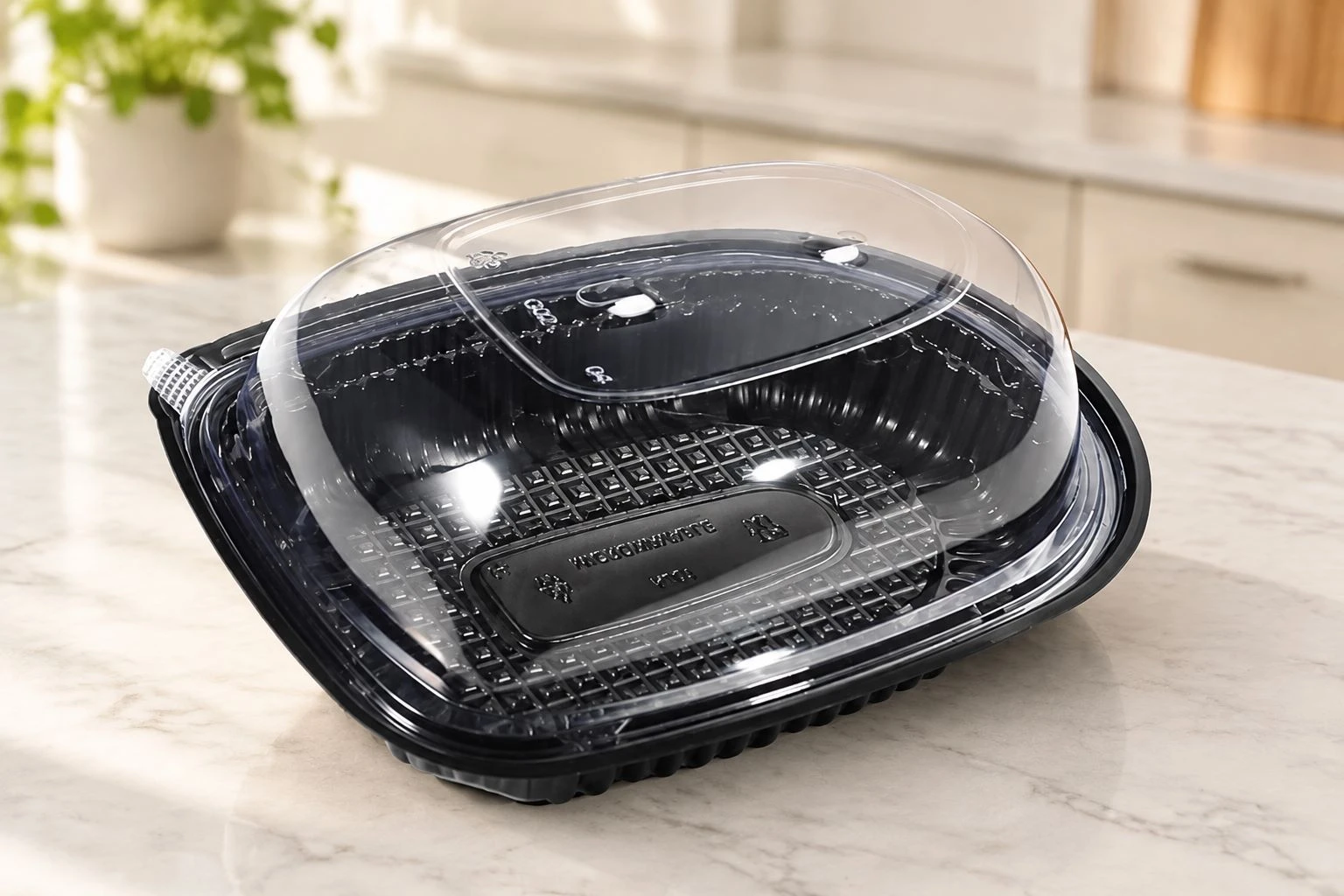
A whole rotisserie or grilled chicken weighs roughly 1.2–1.8 kg (2.5–4 lbs) before sides - well above what a standard single-portion to go container's hinge, walls, and base were ever engineered to carry without flexing or cracking. If you've watched a lid pop open mid-handoff or a base bow under the weight on the walk to a car, you've already discovered this the hard way.
Why do takeout containers collapse under a whole bird when they handle a stacked sandwich or a portion of rice without issue? It comes down to two distinct failure modes we hear about repeatedly from rotisserie and grill shop buyers:
Structural failure - the lid hinge splits, the base bows outward, or a stack of boxes collapses under its own weight during transport.
Moisture-related failure - condensation pools under the lid, the skin that was crisp at hot-fill turns soggy within minutes, or grease works its way through a seam never designed to hold that volume.
This isn't a generic "which container is more durable" article. It's specific to one demanding use case: a whole bird, bone-in, high in both fat and moisture, packed hot - a combination most takeout packaging was never designed around in the first place.
The fix isn't simply "thicker plastic." It's matching wall engineering, vent placement, and base geometry to the actual load and moisture profile of a whole chicken. Container selection for this product category is typically grounded in established food container load-testing standards - the same compressive-resistance testing methodology used across shipping and food packaging to measure how much weight a container design can actually bear before it fails.
If you're sourcing packaging for this category specifically, it's worth starting with our Roasted Chicken Box line rather than retrofitting a standard clamshell to a job it wasn't built for.
The Physics of the Problem: Weight, Steam, and Bone-In Geometry
A whole chicken doesn't distribute weight the way a flat entrée does - and that single fact explains most of what goes wrong. Understanding the actual physics at play is the difference between guessing at a fix and specifying a container correctly the first time.
Weight distribution. The carcass concentrates mass off-center rather than spreading evenly across the base. That uneven load stresses hinge points and one side of the container disproportionately, especially during carrying and stacking - which is exactly when buyers report hinge splits and base bowing.
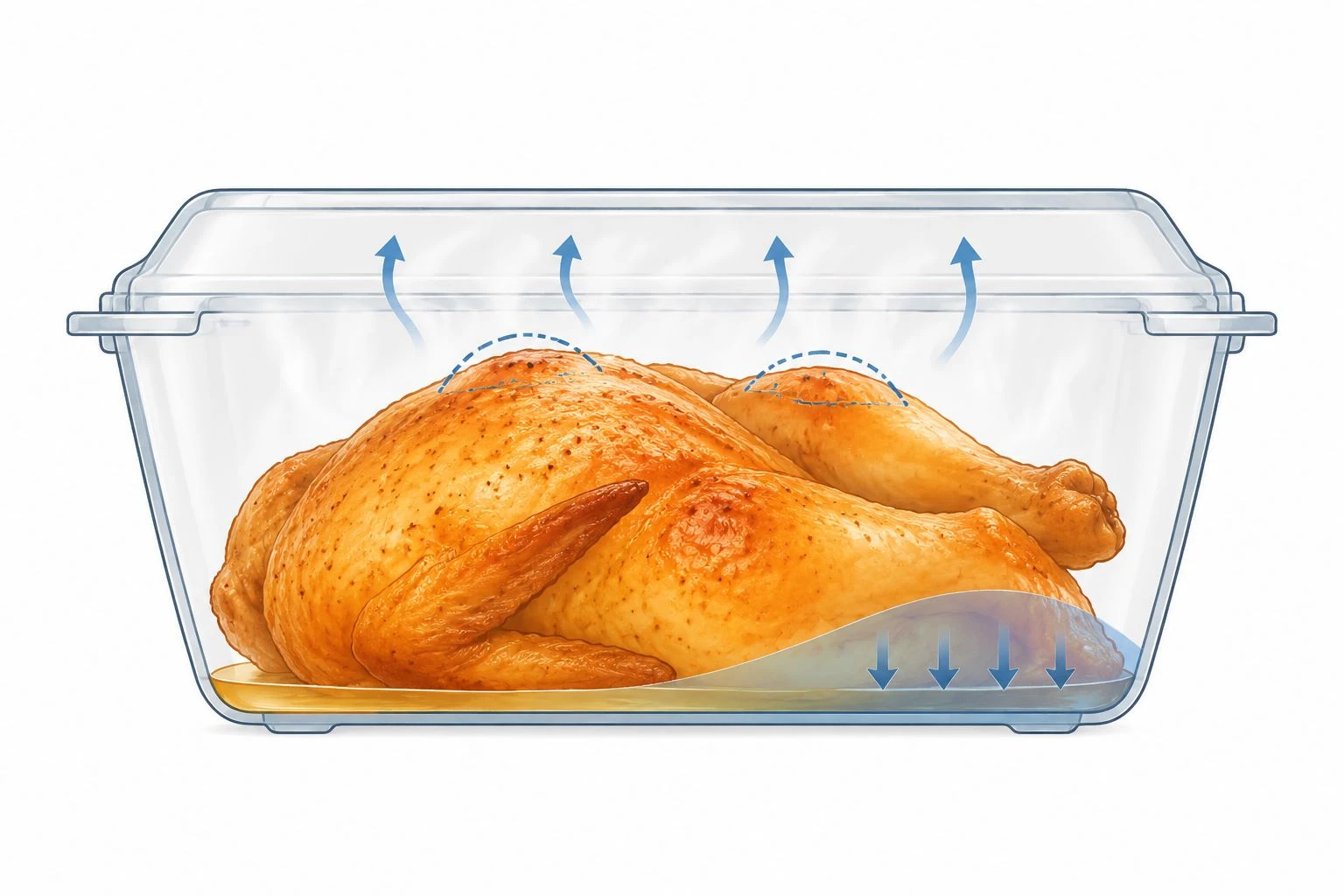
Steam and condensation. A hot, high-moisture whole bird releases significantly more steam volume than a single portion ever would. Seal a container without adequate venting, and that moisture has nowhere to go - it condenses against the lid and drips back onto the skin, turning a crisp exterior soggy within minutes. Learning to package hot food without sogginess starts with accepting that venting isn't optional for this product category.
Bone-in geometry. Thighs, wings, and the ribcage create irregular high points inside the container. Push a lid down over geometry it wasn't designed to clear, and you get direct pressure against the plastic - a common cause of lid stress cracks and incomplete seals that look fine on the counter but fail in transit.
Grease migration. Whole-bird fat rendering during hot-fill produces a higher continuous volume of grease than a portion box ever anticipates. That's why base material and seam design matter more here than in standard takeout packaging - a seam rated for a few milliliters of incidental grease simply wasn't built for sustained contact with rendered fat.
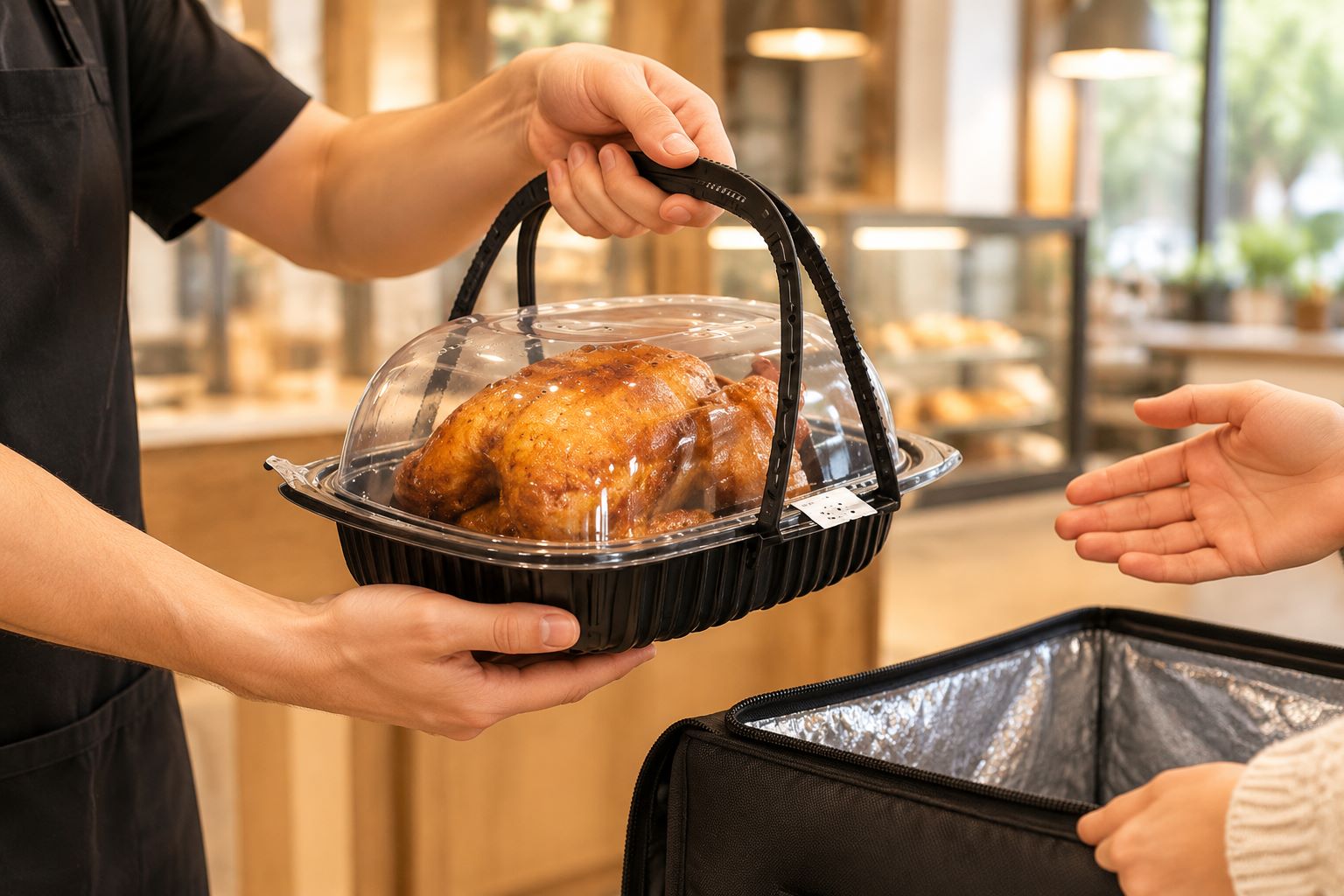
Standard To Go Containers vs. Purpose-Built Whole Chicken Boxes
A purpose-built whole chicken box isn't simply a scaled-up clamshell - it's engineered differently from the mold up. Understanding exactly what's different helps buyers evaluate whether a supplier's "large size" option is actually fit for purpose, or just a bigger version of the wrong design.
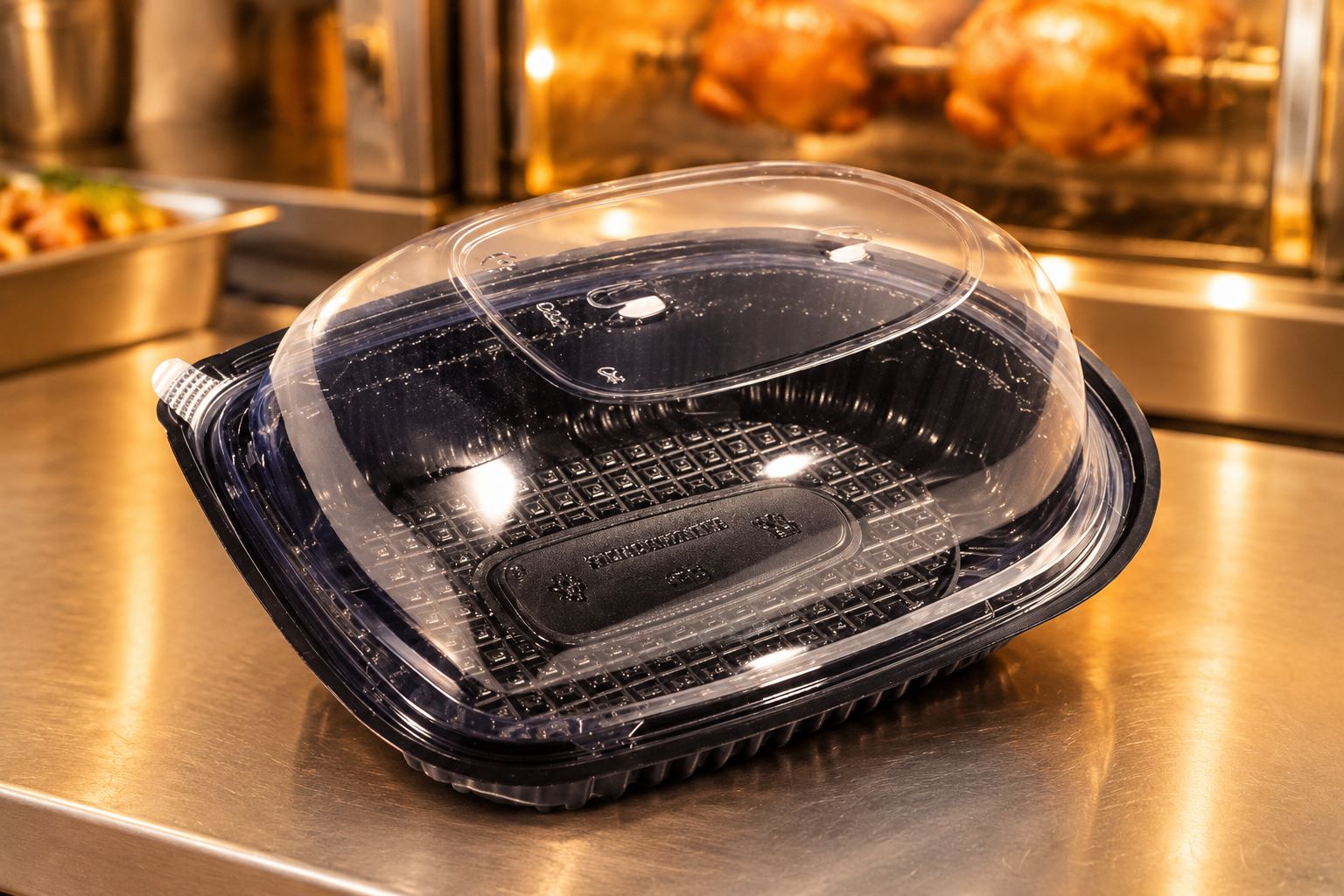
A true whole-chicken box is built with a taller interior cavity, reinforced hinge and corner ribbing, and a larger footprint base - three structural decisions guided by container wall and ribbing engineering standards like compressive-resistance testing, and decisions a standard hinged clamshell was never designed around in the first place.
Wall thickness and ribbing. Standard to go containers optimize for light stacking and portion-size loads - that's the right trade-off for their job. Whole chicken boxes need thicker gauge walls and deeper structural ribbing specifically to resist bowing under concentrated, off-center weight.
Vent design. Standard containers often use minimal or no venting at all, because a portion-size serving doesn't generate much steam. Whole chicken boxes typically need multiple, strategically placed vents to manage a much higher steam volume without fully sacrificing heat retention - a genuine engineering trade-off, not an afterthought.
There's a real economic argument here too, beyond the per-unit price difference. A correctly sized purpose-built box reduces damaged-product returns and customer complaints - a cost that rarely shows up on a packaging invoice but shows up clearly in a P&L once you start tracking it.
This is part of why YANGRUI's Roasted Chicken Box line uses different tooling specs entirely from our standard clamshell lines - the three variables above (wall gauge, rib pattern, cavity height) are what actually differentiate the categories, not just overall size. Worth noting for credibility: "purpose-built" doesn't mean unlimited capacity. Even these boxes have a tested weight range, and matching the right SKU to your actual product weight still matters.
Ready to compare the two side by side for your own menu? Browse our Roasted Chicken Box containers, or get a quote for whole-bird packaging if you're ready to move from research to a trial order.
6 Design Features a Whole-Chicken To Go Container Actually Needs
If you're trying to identify the best to go containers for whole chicken from a supplier catalog, these are the six features that actually separate a purpose-built design from a relabeled portion box.
- Reinforced hinge and corner ribbing. This is the single most common failure point reported during transport. It needs thicker material specifically at stress concentration zones - not just a general increase in overall wall thickness.
- Adequate interior cavity height. Enough clearance over the breast and thigh high points to keep the lid from bearing direct load against bone-in geometry.
- Multi-point venting. Placed to balance steam release against heat retention, and positioned away from areas where grease pools rather than scattered randomly across the lid.
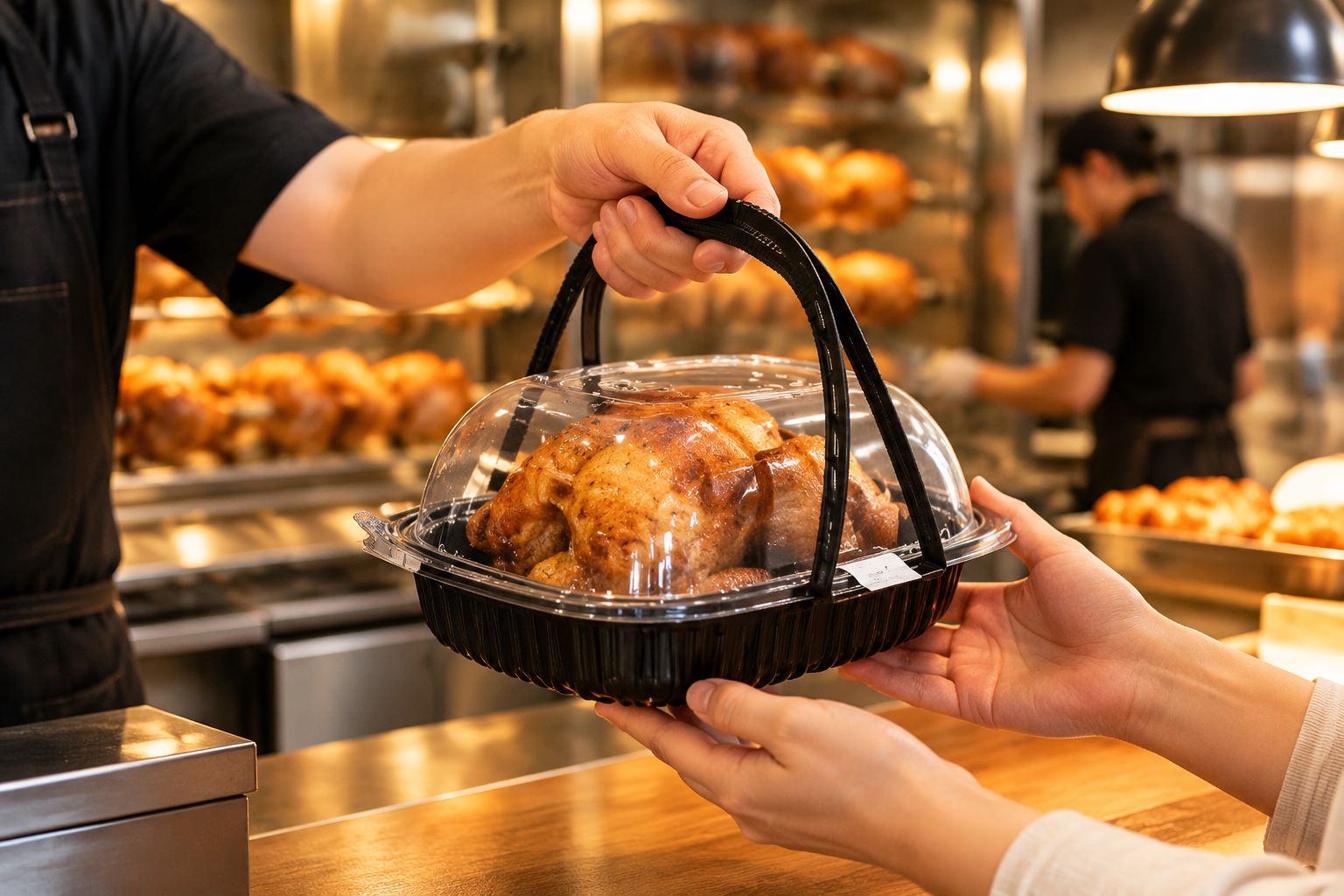
- Wide, stable base footprint. Resists tipping during one-handed carrying and improves stacking stability once containers go into a delivery bag with other orders.
- Grease-resistant base material. Needs to withstand sustained contact with rendered fat over a typical delivery window - commonly 20–45 minutes - without the base softening or the seam seeping.
- Secure but not over-tight closure. A latch or tab system firm enough to prevent spillage in transit, but not so tight that it defeats the venting the lid was designed around.
Want to see how our Roasted Chicken Box line addresses all six? Review our Roasted Chicken Box specifications, or request samples for your market to test these features against your own peak-volume conditions.

A Buyer's Checklist: Questions to Ask Before Switching Container SKUs
Switching to go containers for a new product line is a real decision with real downside if it goes wrong - so it's worth approaching the same way you'd vet any supplier, with specific questions rather than general reassurance.
Ask for the container's tested weight rating, specific to whole-bird or bone-in loads - not a generic "heavy-duty" claim that could mean almost anything.
Ask whether the vent design was engineered for high-moisture, high-steam contents, or simply adapted from a standard portion-box mold without re-engineering.
Ask for a trial order sized to your actual peak-volume shift, not just a small sample batch - stacking and transport issues often only appear at real volume.
For small businesses and independent grill shops specifically, ask about MOQ flexibility. Whole-chicken-specific SKUs sometimes carry different minimum order thresholds than standard portion containers, and it's worth knowing that upfront.
Ask whether the supplier can speak to the regulatory framework relevant to your specific market - GSO for GCC countries, FSANZ for Australia/NZ - rather than offering a one-size-fits-all compliance answer.
Ready to put these questions to the test? Request a trial order for your peak-volume shift and see how a purpose-built container actually performs under your real conditions.
What This Means for Rotisserie and Grill Shop Brands in 2026
To go containers in 2026 are being evaluated by customers who notice when a whole chicken arrives intact and crisp - and just as quickly notice when it doesn't. For a highly visual, highly shareable menu item, container performance directly affects repeat purchase and the reviews that show up online afterward.
For small and independent grill shops, the practical upside is that this doesn't require overhauling an entire packaging program. Most buyers keep standard to go containers for sides and portions, and switch only the one SKU that's actually mismatched to the product: the whole-chicken container itself.
For brands evaluating suppliers ahead of a new market launch - GCC expansion, entry into the Australian market, or similar - container specification is a sourcing detail worth resolving before launch, not after the first batch of damaged-product complaints starts arriving. The GSO and FSANZ frameworks referenced earlier in this guide are a reasonable starting point for that conversation with any supplier you're vetting.
None of this is about overpromising a perfect container. It's about reducing a specific, well-understood risk with a container actually engineered for the job. If you're ready to move forward, get a quote for whole chicken to go containers or speak with our team - we're glad to walk through weight ratings, vent design, and market-specific documentation before you commit to an order.
FAQ
Q: Why does my to go container crack when I pack a whole chicken?
A: Most likely hinge or base stress. A whole chicken concentrates weight off-center rather than evenly across the base, which puts disproportionate stress on the hinge and one side of the container - especially during carrying and stacking. Standard containers simply weren't engineered for that load pattern.
Q: How many vents should a whole chicken container have?
A: There's no single universal number - it depends on container size and expected hold time - but multi-point venting placed away from grease-pooling areas is standard for whole-bird formats. The goal is balancing steam release against heat retention, not maximizing vent count.
Q: Is a roasted chicken box the same as a regular clamshell container?
A: No. A purpose-built roasted chicken box typically has a taller interior cavity, reinforced hinge and corner ribbing, and a larger base footprint than a standard clamshell, which is designed for lighter, evenly distributed portion loads.
Q: What size container do I need for a whole rotisserie chicken?
A: Size the cavity height to clear the breast and thigh high points without the lid bearing direct load against bone-in geometry - generally a taller interior than a standard clamshell provides. The safest approach is requesting a trial order with your actual product before committing to volume.
Certificate Display


FDA Certification (SGS): YANGRUI take out containers are make from the safe & new material