Table of Contents
What's Really Driving Up the Cost of To Go Containers from China in 2026
Understanding the 2026 Tariff Landscape for PP To Go Containers
How to Calculate the True Landed Cost of To Go Containers: A Step-by-Step Framework
To Go Containers from China vs. Alternative Sourcing Options: A Cost Comparison
Freight Timing and Lead-Time Risk: Why When You Order Matters as Much as Where
Best Practices for Small Businesses Sourcing To Go Containers in 2026
Choosing a Reliable To Go Containers Supplier: A Vetting Checklist
Frequently Asked Questions About Importing To Go Containers from China in 2026
Certificate Display
Contact Now
What's Really Driving Up the Cost of To Go Containers from China in 2026
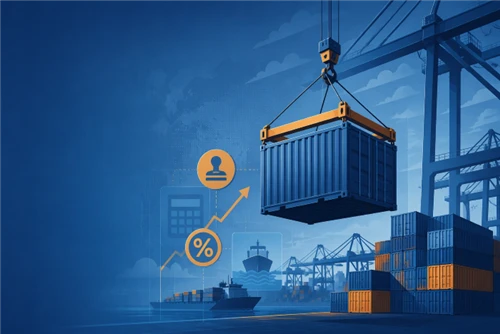
Three cost pressures are converging on buyers of PP to go containers in 2026, and they rarely move in the same direction at the same time - which is exactly why so many procurement teams get caught off guard. Understanding each one separately is the first step toward building a budget that survives the next quote.
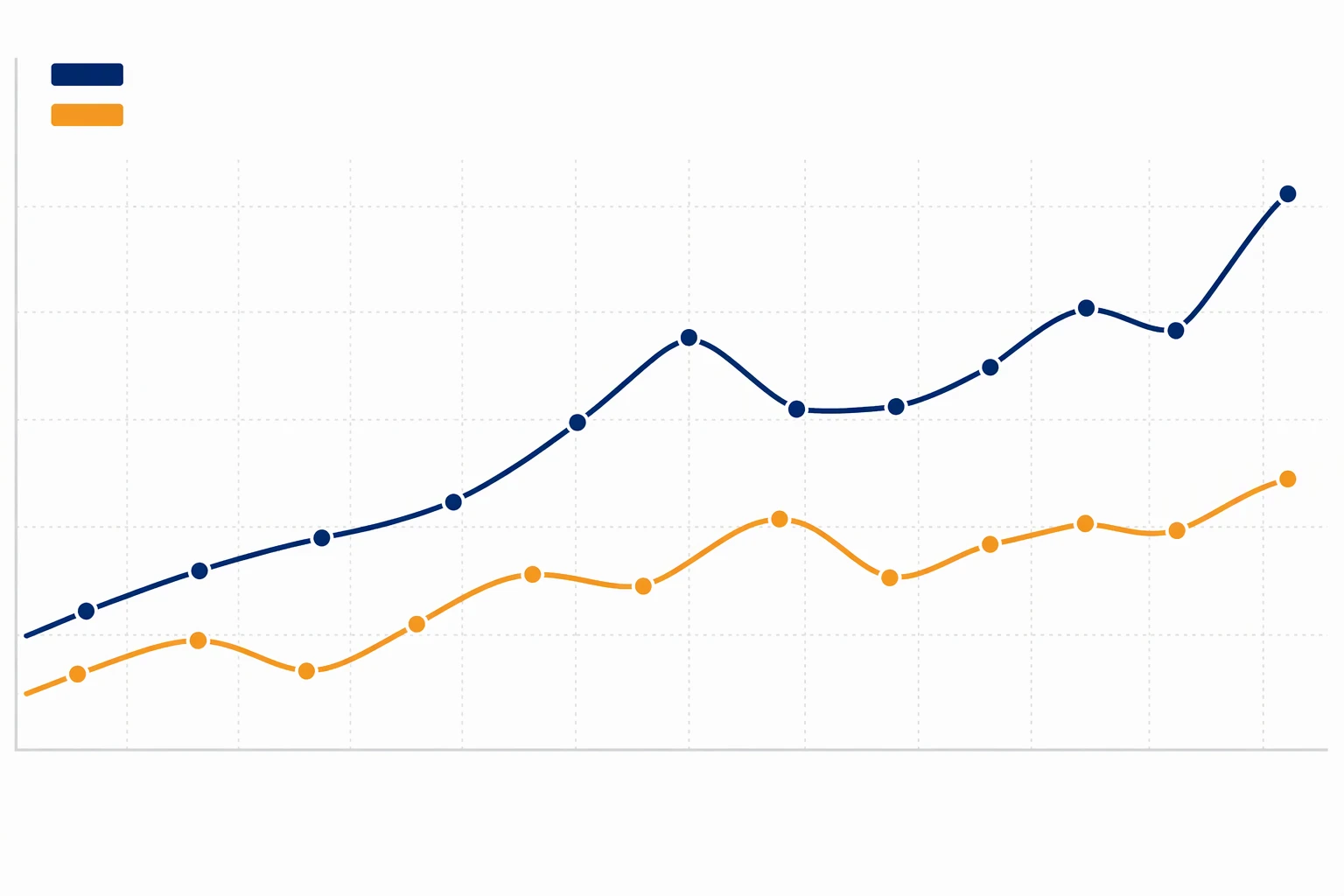
The first is continued Section 301 tariff exposure on Chinese-made plastic tableware and food-service packaging. The second is volatility in polypropylene (PP) resin pricing, which is itself tied to petrochemical feedstock costs. The third - and often the most underestimated - is elevated trans-Pacific ocean freight, which has swung by double-digit percentages week to week throughout 2026.
Why are to go container prices rising in 2026? It's rarely one factor acting alone. A buyer who locks in a factory unit price without separately tracking freight and duty exposure can end up with a landed cost that moves independently of - and often against - the quote they negotiated.
A Real-World Example of the Gap
Picture a mid-size restaurant group that places a recurring order for 16 oz PP clamshells. Their 2025 landed cost per case was stable for most of the year. In early 2026, the same factory, the same spec, and even a slightly lower FOB quote still produced a landed cost roughly 18% higher than the prior year - once freight and duty were added back in. Their packaging budget, built on the 2025 number, was wrong before the first container even left port.
This is the core lesson procurement teams need to internalize: the factory quote is not the cost. The landed cost - FOB price plus freight, insurance, duties, and handling - is the number that actually determines your margin per unit. We'll build that calculation step by step in Section 3.
Who Is Most Exposed
High-volume foodservice buyers
(multi-location restaurant groups, institutional caterers) feel freight-rate swings most acutely because they're moving full containers on a predictable cadence - a rate spike at the wrong moment can hit tens of thousands of units at once.
Occasional or smaller-volume importers
are more exposed to tariff misclassification and unfavorable Incoterms, because they're less likely to have in-house trade compliance support reviewing each shipment.
Both groups need the same underlying tool: a transparent, line-itemized way to see tariffs, freight, and duty exposure before committing to an order - which is exactly what the calculator framework in this guide is built to provide.
To track the freight piece of that equation, procurement teams increasingly watch Drewry's weekly World Container Index, the benchmark index for trans-Pacific and global container spot rates, alongside PP resin price commentary from petrochemical market trackers. On the tariff side, CBP's Section 301 Trade Remedies page is the authoritative source for which exclusions are currently active and which have lapsed - a status that has changed multiple times in 2025–2026 and directly affects the duty line in your landed-cost math.
Understanding the 2026 Tariff Landscape for PP To Go Containers
Before you can calculate a landed cost, you need to know which duties actually apply to your product. This is where many buyers - even experienced ones - lose money without realizing it.
HTS Classification: Where Most Costly Mistakes Start
PP to go containers generally fall under HTS heading 3924, "Tableware, kitchenware, other household articles… of plastics," with specific subheadings distinguishing plates, bowls, trays, and other container types. The exact subheading matters because duty rates and Section 301 treatment are assigned at that granular level, not at the chapter level.
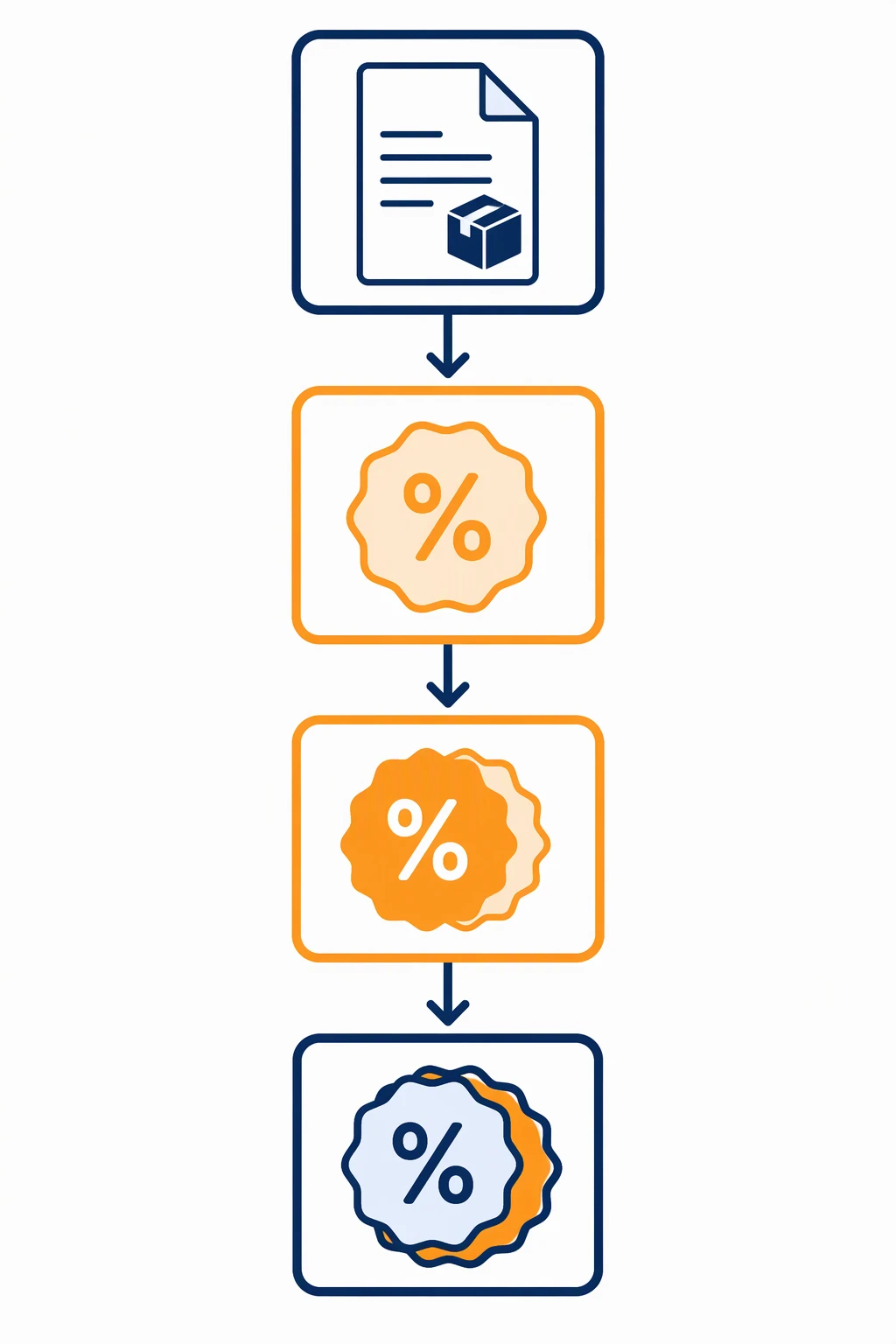
What is the tariff rate on to go containers from China in 2026? It depends on the precise HTS subheading. As one illustrative example, plastic tableware and kitchenware classified under certain 3924.10 subheadings carries a general (MFN) duty rate in the low single digits, with an additional Section 301 duty layer - historically in the 7.5%–25% range depending on the specific product and list - stacked on top for China-origin goods. These figures move; you must verify the current combined rate for your exact subheading before quoting a customer or locking a budget.
A common, costly pitfall: buyers (or their freight forwarders) default to a generic "plastic container" HTS code rather than the precise subheading that matches the product's actual function and material composition. When customs re-classifies the shipment at entry, the result can be a corrected - and higher - duty assessment applied retroactively, sometimes with penalties. Getting the classification right before the first shipment is cheaper than correcting it after the fact.
Section 301 Status Changes - and Why You Must Check Live
Section 301 exclusions are not permanent. They are granted, extended, or allowed to lapse on a rolling basis, and plastic household/food-service articles have moved on and off exclusion lists multiple times since the tariffs were first introduced. A rate that applied to your last order may not apply to your next one.
The authoritative source is CBP's Section 301 Trade Remedies and FAQ page, which confirms that Section 301 remedies apply specifically to products of the People's Republic of China (ISO country code CN) and details how duties are assessed at entry. For the underlying legal classification itself, the USITC Harmonized Tariff Schedule is the official, searchable database - bookmark it, because tariff schedule revisions are published multiple times per year.
If you ever need precedent on how a specific product has been classified in a past dispute, CBP's CROSS rulings database lets you search prior binding rulings by product description or HTS code - a useful sanity check before you commit to a classification your supplier has proposed.
Anti-Dumping and Compounding Duties
Depending on the specific resin grade and manufacturing process, some plastic packaging inputs can also carry anti-dumping or countervailing duty exposure separate from Section 301. These duties compound with - they don't replace - the MFN base rate and Section 301 layer, which is why a "25% tariff" assumption can understate your real exposure if an additional trade remedy applies to your specific product line.
📊 Table: Illustrative HTS Reference Points for PP To Go Containers
|
HTS Code Family |
Product Description |
Base MFN Duty |
Section 301 Status |
Notes |
|
3924.10.xx |
PP plates, bowls, trays (to go containers) |
Low single-digit % |
Subject to additional duty for China-origin - verify current rate |
Confirm exact subheading before quoting |
|
3924.10.40 |
Other plastic tableware/kitchenware |
Low single-digit % |
Subject to additional duty for China-origin - verify current rate |
Catch-all subheading; classification disputes common here |
|
3923.xx |
Plastic packing/transport containers |
Varies by subheading |
Check applicability per subheading |
Relevant if your SKU is classified as packaging rather than tableware |
Table caption: Always confirm the live duty rate for your exact to go containers HTS subheading against the USITC schedule before finalizing a quote.
How to Calculate the True Landed Cost of To Go Containers: A Step-by-Step Framework
This is the section to bookmark. To go containers priced at the factory gate and to go containers priced at your receiving dock are two different numbers, and the gap between them is where margin quietly disappears if it isn't modeled explicitly.
The Landed Cost Formula
Landed Cost per Unit =
FOB Unit Price
+ Ocean Freight (allocated per unit)
+ Cargo Insurance
+ MFN Base Duty
+ Section 301 Duty (if applicable)
+ Customs Broker Fees
+ Domestic Drayage / Delivery
Each component moves independently. Freight is driven by carrier capacity and seasonal demand. Duty is driven by trade policy, which can change between your quote and your shipment date. Drayage is driven by local trucking capacity and fuel costs. Treating landed cost as a single static number is the mistake; treating it as a formula with moving parts is the fix.
Worked Example: 40,000-Unit PP Clamshell Order
Here's how the framework applies to a realistic order size, with assumptions clearly labeled so you can substitute your own figures.
📊 Table: Worked Landed-Cost Example (40,000-Unit Order)
|
Cost Component |
Formula / Basis |
Example Value |
|
FOB unit price |
Factory quote |
$0.095 / unit |
|
Ocean freight (allocated) |
Container rate ÷ units per container |
$0.018 / unit |
|
Cargo insurance |
~0.3% of cargo value |
$0.0003 / unit |
|
MFN base duty |
Applied to FOB value |
$0.003 / unit |
|
Section 301 duty (if applicable) |
Applied to FOB value - verify current rate |
$0.020–$0.024 / unit |
|
Customs broker fee |
Flat fee ÷ units |
$0.002 / unit |
|
Domestic drayage |
Flat fee ÷ units |
$0.004 / unit |
|
Total landed cost/unit |
Sum of above |
≈ $0.142–$0.146 / unit |
This is an illustrative, labeled example - not a quote. Your actual FOB price, container utilization, and current Section 301 rate will shift every line. The point is the method, not the specific numbers above.
In this example, the landed cost runs roughly 45–55% above the bare FOB unit price - a gap entirely invisible if you only look at the factory invoice. This is consistent with the pattern procurement teams report across 2026: factory-quote-only budgeting routinely understates true cost by a wide margin once freight and duty are added back in.
Hidden Costs Buyers Frequently Forget
Sourcing teams consistently report that the single most underestimated line item isn't the duty - it's demurrage and detention charges that accrue when a container sits at port longer than the carrier's free time allowance, which happens often during periods of port congestion. Other frequently missed costs:
Currency fluctuation
between quote date and payment date, especially on larger orders with 30–60 day payment terms
MOQ-driven unit cost shifts
- a quote at 40,000 units often doesn't scale linearly down to 10,000 units; the per-unit landed cost can rise sharply below certain volume thresholds
Container utilization inefficiency
- if your SKU doesn't pack efficiently, you pay for wasted container space
Building a Reusable Calculator
The formula above translates directly into a spreadsheet: one row per cost component, one column per quote, and a formula that sums to landed cost per unit. Once built, you can drop in a new FOB quote, freight rate, or duty rate and immediately see the real impact - rather than re-deriving the math from scratch every time a supplier sends a new price.
This calculation approach follows the cost-and-risk allocation logic defined in the ICC's Incoterms 2020 rules, which specify exactly where seller responsibility ends and buyer responsibility begins under terms like FOB and CIF - a distinction that determines which of the line items above you're actually responsible for paying.
To Go Containers from China vs. Alternative Sourcing Options: A Cost Comparison
Once you know your true landed cost, the next question is whether China remains the right sourcing region at all. The honest answer: it depends on your volume, timeline, and risk tolerance - not on a blanket rule in either direction.
📊 Table: Sourcing Option Comparison for To Go Containers
|
Sourcing Option |
Avg. Unit Cost |
Tariff Exposure |
Typical Lead Time |
MOQ Flexibility |
Best For |
|
China (direct factory) |
Lowest at scale |
Highest (Section 301 applies) |
30–45 days + transit |
Moderate–High MOQ |
Large recurring orders where scale economics offset duty |
|
Nearshore / Domestic (US/Mexico) |
Higher unit price |
None or minimal |
1–2 weeks |
Lower MOQ available |
Buyers prioritizing speed and tariff-risk reduction |
|
Third-country (Vietnam, India) |
Mid-range |
Lower, but monitor for transshipment scrutiny |
35–50 days + transit |
Moderate MOQ |
Diversification without fully exiting China-adjacent supply chains |
Table caption: Comparing to go containers sourcing routes by total cost and risk profile, not list price alone.
Why China-Sourced PP Containers Can Still Win on Total Cost
Even after a 25%-range Section 301 duty, Chinese manufacturers' scale efficiency - high-volume thermoforming lines, in-house mold development, and raw material purchasing power - can still produce a lower total landed cost than a nearshore alternative, particularly for standardized SKUs ordered at high volume. The duty narrows the gap; it doesn't always close it.
When Diversification Makes More Sense
For buyers managing supply-chain risk as seriously as unit cost, a common pattern has emerged: dual-sourcing roughly 70/30 between China and a nearshore or third-country supplier, using the secondary source as both a tariff hedge and a buffer against single-factory disruption. This isn't a universal recommendation - it's a framework that trades a small cost premium for meaningfully reduced concentration risk.
The broader market context matters here too. The global market for plastic/PP food containers has continued expanding through 2026, driven by foodservice growth and sustained demand for takeout and delivery packaging - a trend worth tracking via recognized packaging/plastics market research coverage if you're forecasting multi-year procurement volumes. For buyers evaluating structural supply-chain diversification beyond this single product category, McKinsey's supply-chain diversification research offers a useful framework for weighing concentration risk against cost efficiency at the portfolio level.
Freight Timing and Lead-Time Risk: Why When You Order Matters as Much as Where
Even with sourcing and tariff exposure locked down, when you place your order can swing your landed cost as much as where you source from.
Seasonal Freight Volatility
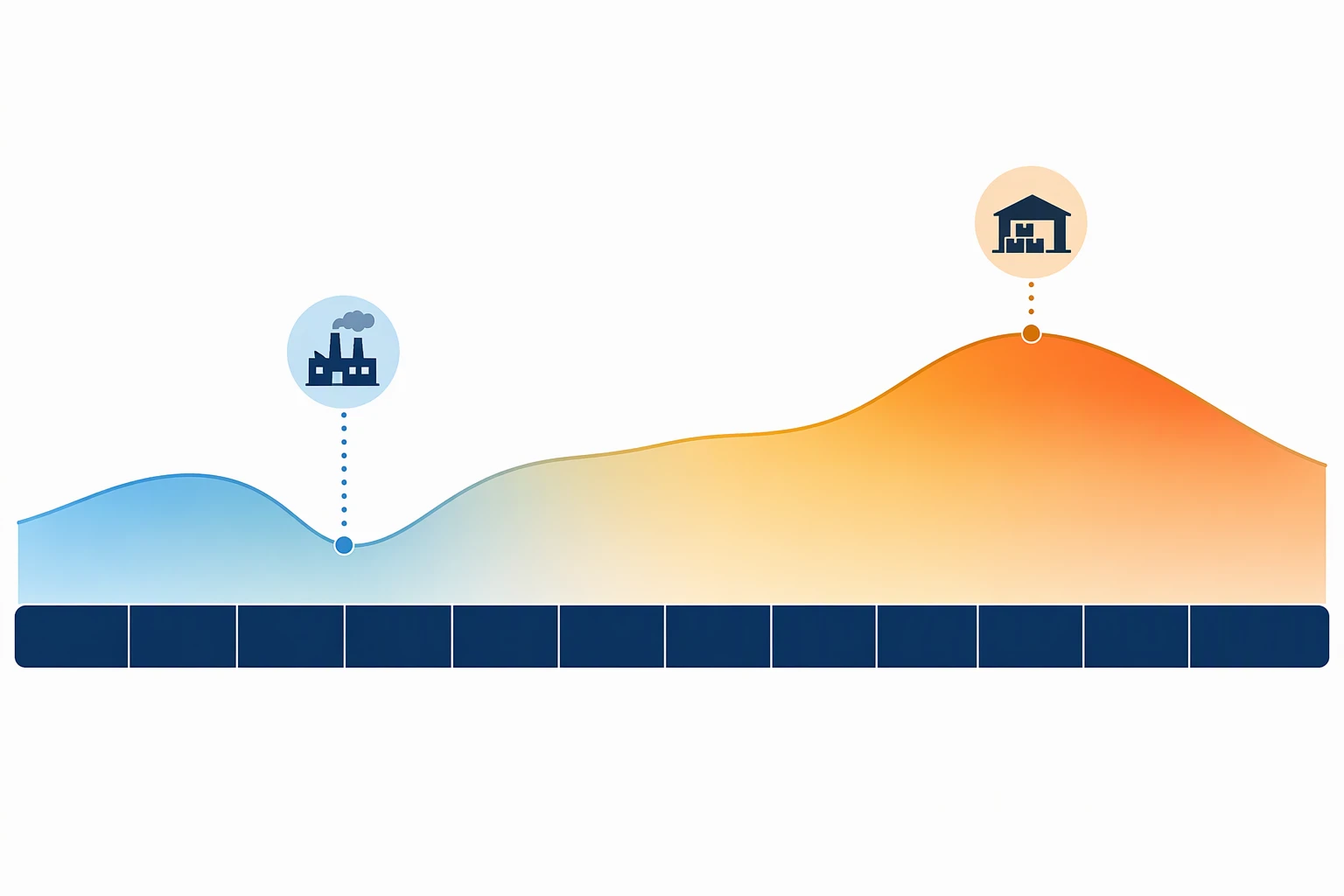
Trans-Pacific freight rates are not flat throughout the year. Pre-holiday peak season (roughly August through October, ahead of Western retail holidays) and the weeks immediately before Lunar New Year - when Chinese factories shut down for 1–3 weeks and shipping demand spikes beforehand - are the two most predictable windows of elevated rates and tighter capacity.
Buyers who place purchase orders 2–3 months ahead of the Lunar New Year factory closure period consistently avoid both the pre-holiday price spike and the post-holiday capacity crunch that catches latecomers off guard. This single timing adjustment is one of the highest-leverage, lowest-cost moves available to any importer.
Port Congestion and Demurrage, Revisited
The demurrage and detention risk flagged in Section 3 compounds during these same seasonal windows - more vessels competing for the same berth capacity means longer dwell times, which directly increases the odds your container sits past its free-time allowance.
📊 Table: 2026 Order-Timing Guide for To Go Containers
|
Period |
Freight Rate Trend |
Factory Capacity |
Recommended Action |
|
Q1 (Jan–Mar) |
Elevated pre-/post-Lunar New Year |
Reduced during factory closures |
Order 2–3 months ahead of closures |
|
Q2 (Apr–Jun) |
Typically moderates |
Full capacity |
Favorable ordering window |
|
Q3 (Jul–Sep) |
Rising into peak season |
Full capacity, high demand |
Book space early; expect rate increases |
|
Q4 (Oct–Dec) |
Peak season highs, then easing |
Full capacity |
Avoid last-minute bookings |
Always confirm current trend data against a live weekly index before finalizing your to go containers import guide timeline for the year.
For a live read on where rates currently stand, Drewry and Freightos' seasonal freight rate patterns both publish recurring commentary on exactly these cyclical patterns - useful for timing your next PO rather than reacting after rates have already moved.
Best Practices for Small Businesses Sourcing To Go Containers in 2026
Everything above assumes a buyer with enough volume to negotiate directly with a factory. Smaller operators face a different reality - and a different set of best to go containers suppliers for small business strategies applies.
Lower-MOQ Strategies
Three common paths let smaller buyers access factory-direct pricing without hitting a full-container MOQ on their own:
Consolidator / group-buying programs
1. - pooling your order with other buyers to collectively reach a factory's minimum
Trading-company intermediaries
2. - slightly higher per-unit cost, but no need for your own in-house trade compliance staff
Direct factory deals at reduced MOQ
3. - increasingly available as manufacturers compete for smaller accounts, though usually at a per-unit premium versus full-container pricing
A common real-world pattern: a single-location restaurant works through a trading company specifically to reach a factory's MOQ threshold by pooling its order with several other small buyers - getting factory-direct pricing without factory-direct volume.
Tariff Transparency Without a Trade Compliance Team
Small operators don't need an in-house customs specialist to get pricing transparency - they need to ask for a line-itemized quote that separates FOB price, freight, and duty, rather than accepting a single bundled number. If a supplier can't or won't break out those lines, that itself is a signal worth noting (more on this in Section 7).
Sample-Before-Commit Discipline
Before committing to a full production run, request a paid sample order and verify it matches spec exactly - lid fit, wall thickness, stackability - before authorizing mass production. This is standard practice, but it's the step most frequently skipped under time pressure, and it's the cheapest insurance available against a bad production run.
Budget for a Tariff Contingency Line
Given how often Section 301 status and freight rates have shifted in recent cycles, build a numbered contingency buffer - 5–8% of total packaging spend - directly into your budget rather than treating tariff changes as an unplanned exception each time they occur.
The U.S. Small Business Administration's guidance for small-business importers is a useful starting point for understanding the broader planning and compliance landscape small operators need to navigate when sourcing internationally.
Choosing a Reliable To Go Containers Supplier: A Vetting Checklist
Everything in this guide assumes the supplier behind your quote is reliable. Here's how to confirm that before you wire a deposit - essential groundwork for any PP to go containers wholesale sourcing services relationship.
Certification Checks
Confirm the supplier can produce, on request:
FDA food-contact compliance documentation
for the specific resin and additive combination used - not a generic "food safe" claim
A current
factory audit report
under a recognized standard such as SMETA (Sedex Members Ethical Trade Audit) or BSCI
Country-of-origin documentation that matches what will appear on your customs entry
Trade Compliance Readiness
Ask the supplier directly: "What HTS code do you recommend for this product, and why?" A supplier who can answer with the specific subheading and reasoning is a stronger long-term partner than one who simply quotes a landed price without explaining the duty assumption behind it. Cross-check whatever they propose against the USITC schedule referenced in Section 2 - don't take the classification on faith.
The "Too Good to Be True" Red Flag
Here's a pattern worth internalizing: a quote that looks dramatically lower than competitors has usually not found a loophole - it has usually simply omitted the tariff line item, leaving you to discover the real cost only once the shipment clears customs. The fix is the same one recommended throughout this guide: insist on a transparent, line-itemized quote rather than a single bundled number.
📊 Table: Supplier Vetting Checklist
|
Vetting Criterion |
What to Ask For |
Why It Matters |
|
Certification |
FDA food-contact documentation, SMETA/BSCI audit report |
Confirms product safety and ethical sourcing compliance |
|
HTS accuracy |
Supplier's recommended HTS code + reasoning |
Prevents misclassification and back-duty exposure |
|
Audit report |
Recent third-party factory audit |
Verifies labor, safety, and environmental standards |
|
Sample consistency |
Paid sample order matched against mass-production run |
Confirms spec reliability before scaling volume |
|
Quote transparency |
Line-itemized quote (FOB / freight / duty separated) |
Exposes hidden tariff omissions before they become invoices |
Table intro: Run every prospective to go containers supplier through this checklist before issuing a deposit.
For the regulatory basis behind the first row, see the FDA's food-contact substance requirements, and for the audit standard referenced in the second, see the SMETA audit methodology overview from Sedex.
FAQ
Q: How do I calculate the landed cost of to go containers imported from China?
A: Add the FOB unit price, allocated ocean freight, cargo insurance, MFN base duty, any applicable Section 301 duty, customs broker fees, and domestic drayage. The sum is your true landed cost per unit - commonly 20–50%+ higher than the factory quote alone, depending on current freight rates and duty status.
Q: What is the tariff rate on to go containers from China in 2026?
A: It depends on the specific HTS subheading your product falls under and the current Section 301 exclusion status, both of which change periodically. Always verify the live combined rate on the official USITC Harmonized Tariff Schedule before finalizing a budget - don't rely on a prior year's rate.
Q: Why are to go container prices rising in 2026?
A: Three factors are compounding: elevated trans-Pacific freight rates during peak and seasonal windows, PP resin price volatility tied to petrochemical feedstock costs, and continued Section 301 tariff exposure on certain plastic tableware and packaging classifications.
Q: Are to go containers from China cheaper than domestic alternatives even with tariffs?
A: Often yes for larger, standardized orders, because China's manufacturing scale efficiency can offset even a 25%-range duty. Smaller orders, or buyers prioritizing supply-chain risk reduction over absolute lowest cost, may find nearshore or third-country sourcing more competitive on a total-cost basis.
Q: What should a small business look for in a to go containers supplier?
A: FDA food-contact compliance documentation, a verifiable factory audit (such as SMETA), accurate HTS code guidance with clear reasoning, and a transparent, line-itemized quote that separates product cost from freight and duty rather than bundling everything into one number.
Certificate Display


FDA Certification (SGS): YANGRUI take out containers are make from the safe & new material